













PHOTOGRAPHY COLLEEN SOUTHWELL
As the silver birch (Betula pendula) trees lose their leaves, they frame a winter view of the paddocks blanketed with mist. Evergreen English box and teucrium topiary balls look like they are dusted in sugar.
Sign up to our mailing list for the best stories delivered to your inbox.
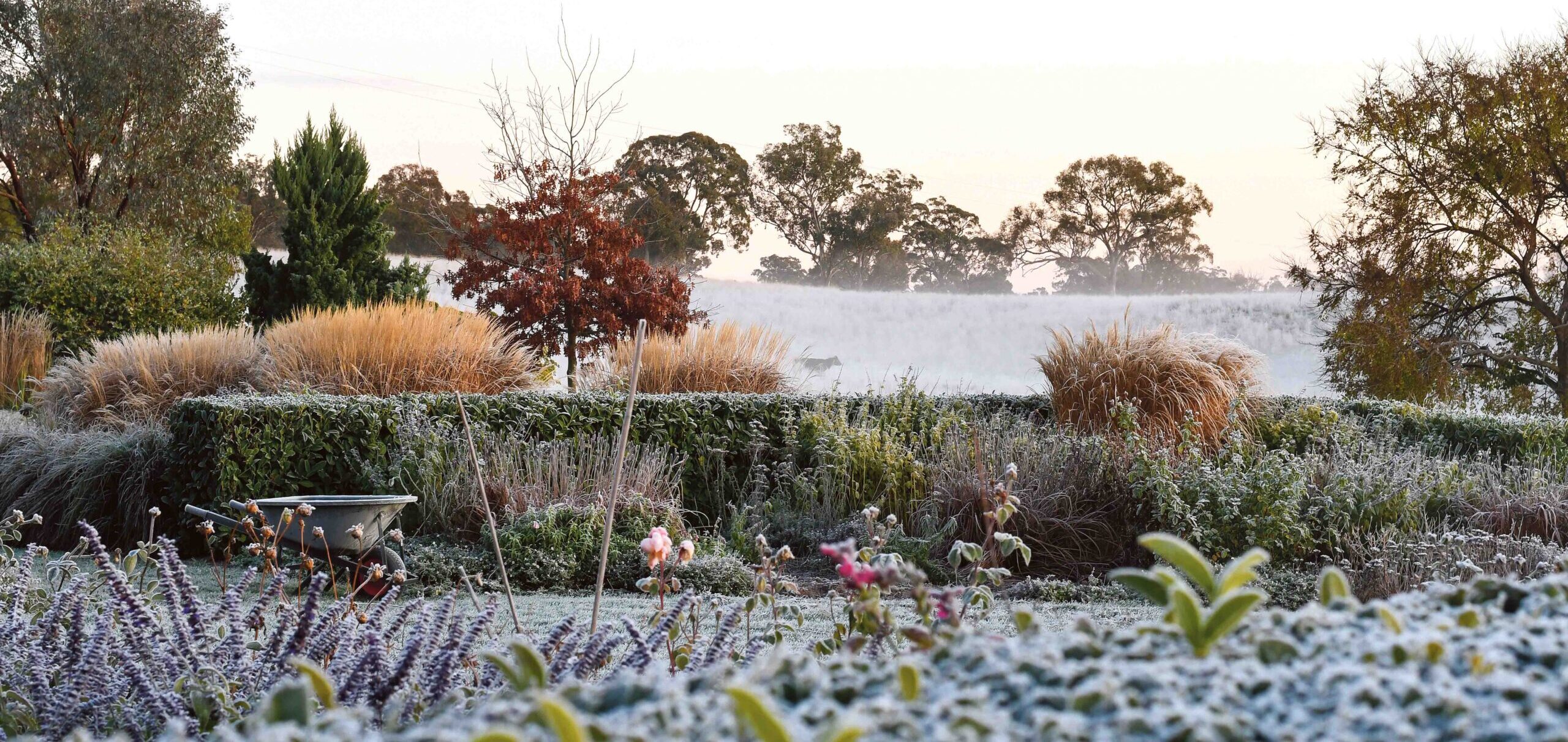
Colleen Southwell finds comfort in the small surprises of a winter garden.
Words and photography Colleen Southwell Portrait Georgia Bragg
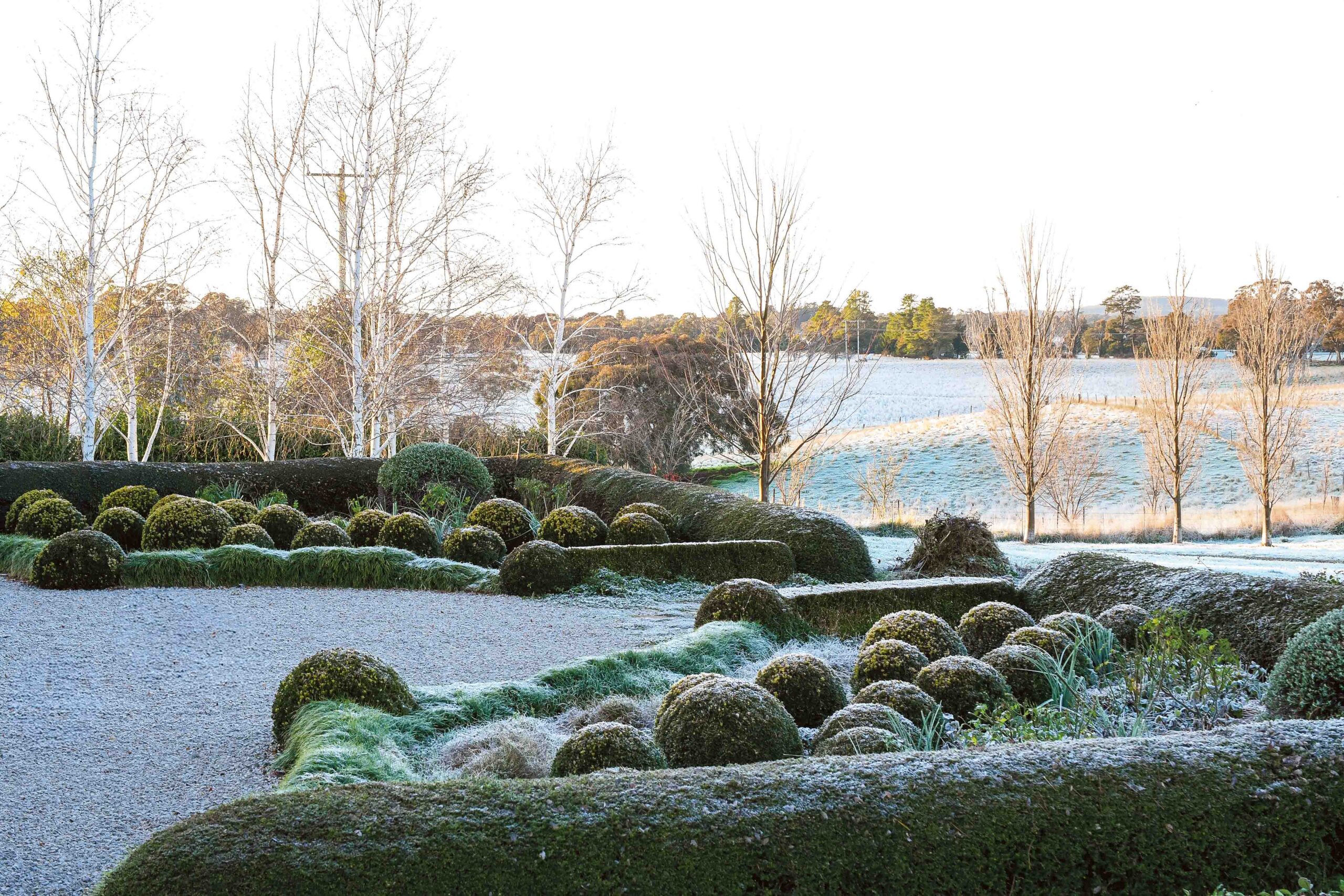
PHOTOGRAPHY COLLEEN SOUTHWELL
As the silver birch (Betula pendula) trees lose their leaves, they frame a winter view of the paddocks blanketed with mist. Evergreen English box and teucrium topiary balls look like they are dusted in sugar.
PHOTOGRAPHY GEORGIA BRAGG
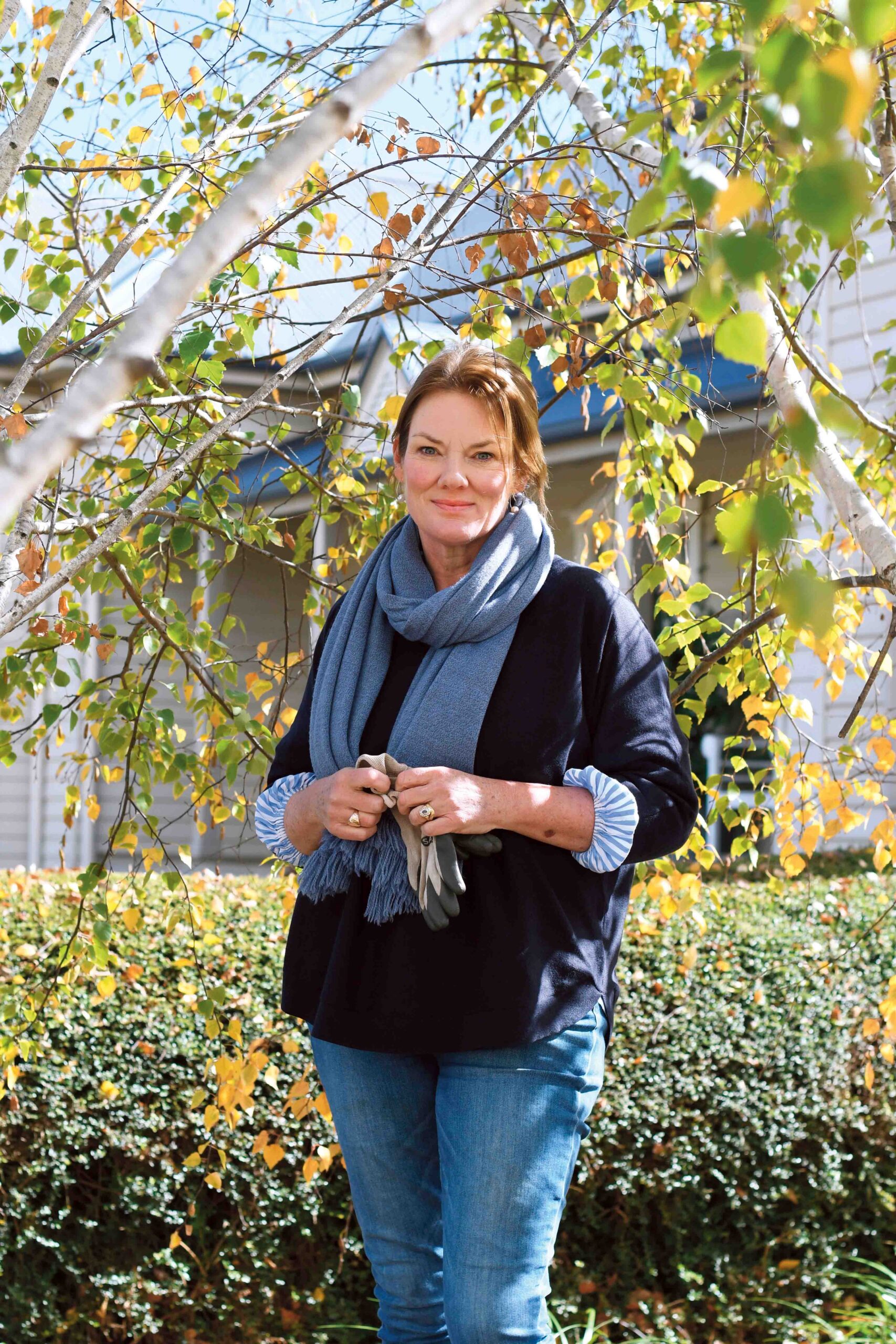
Colleen Southwell in her garden in warmer weather.
I prepared by vowing to revisit lost hobbies and renew old friendships, and assured myself that I’m in good company by rereading Maggie MacKellar’s reflections on letting go, in her thoughtful book Graft.
That moment came recently and my 18-year-old left our home near Orange, in New South Wales’s Central West, to study in the big smoke. I tried to conjure romantic images of our family going to seed and the boys being carried to exotic places on the wind. Then I slumped in a miserable heap and sobbed into the threadbare toys they had left behind.
If a life lived tending the land teaches us anything, it’s that there’s a natural ebb and flow and we must just get on and make the best of it. Winter in our neck of the woods is cold and long, but with that comes an opportunity to pause and prepare for the renewal that follows, both on the home front and in the garden. With both boys away our home feels a little stripped bare, much like our winter landscape. There’s an unfamiliar silence and stillness to my days that I’d forgotten could exist, and I’m slowly finding a new appreciation for the simple things.
PHOTOGRAPHY COLLEEN SOUTHWELL
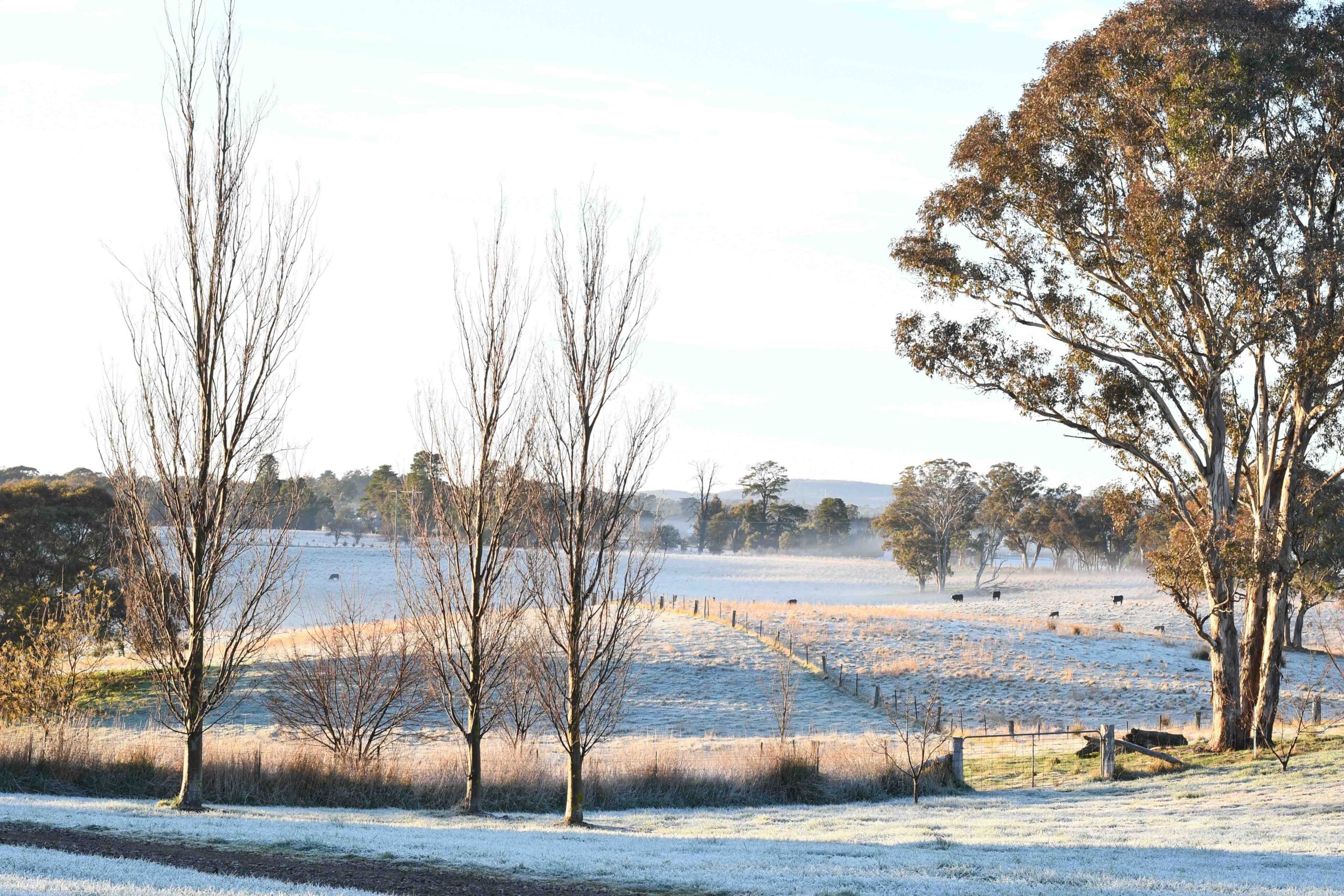
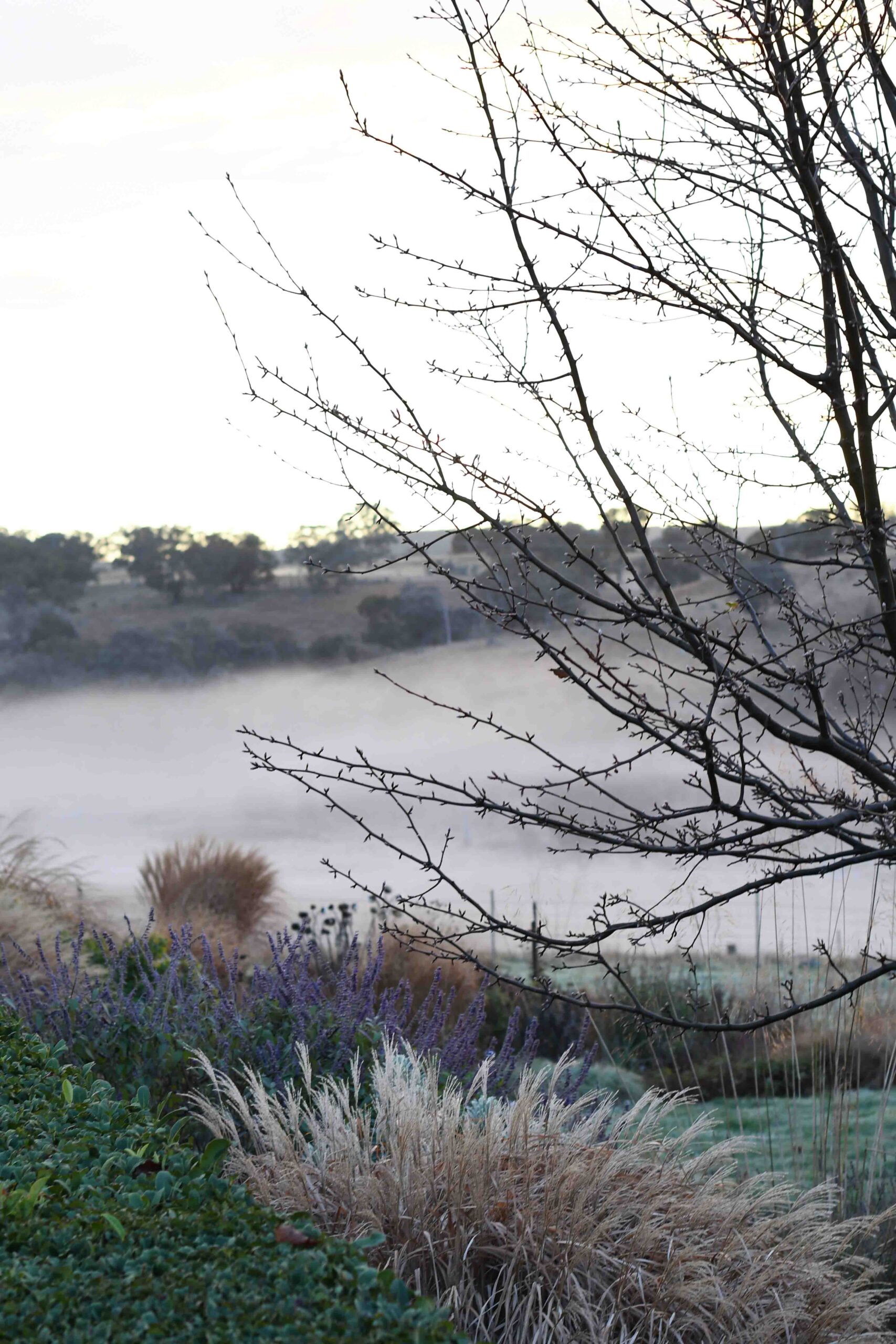
Frost-covered paddocks beyond the garden.
PHOTOGRAPHY COLLEEN SOUTHWELL
Frost nips at the bare branches of an ornamental pear (Pyrus calleryana ‘Aristocrat’), surrounded by an understory of miscanthus and Salvia ‘Anthony Parker’.
Early winter is the quietest moment in our garden, and if I’m honest, I will spend as much of it as time allows sitting by the fireside, gardening vicariously through the pages of books. It’s a good time to plan for the season ahead, to bury my nose in seed and bulb catalogues, to order deciduous trees and shrubs for winter planting, and dream with fingers crossed that a generous spring is brewing.
A crisp winter morning is also, though, a magical time to step outside. I love being in the garden at first light, with bird-nest hair, boots pulled over pyjamas and camera in hand, wandering around the beds that now spread out over a hectare. Frosty mornings demand a daggy fleece dressing gown and beanie for garden excursions: it’s not a pretty sight and I’m thankful for distant neighbours, though the pleasure of the early morning garden is worth the embarrassment if they spot me.
In the absence of abundant flowers, the pared-back winter landscape allows me to see my garden through fresh eyes. Simplified shapes, forms and lines become clear, and those plants that once provided the frame and canvas for a riot of colourful blooms now take the stage with a quieter voice.
PHOTOGRAPHY COLLEEN SOUTHWELL
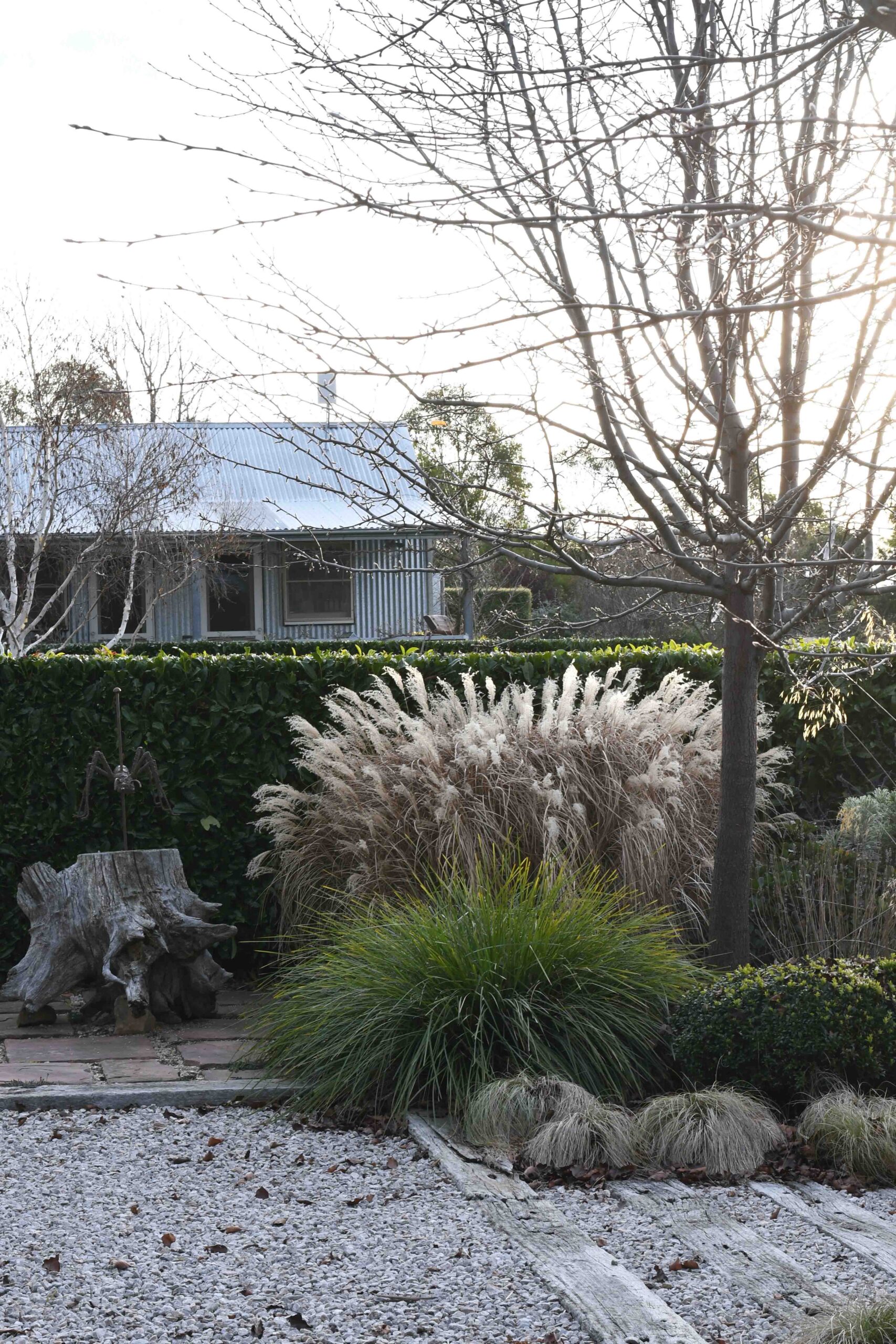
Colleen’s garden beds are layered with smaller plants at the front, medium-height grasses and clipped hedges.
PHOTOGRAPHY COLLEEN SOUTHWELL
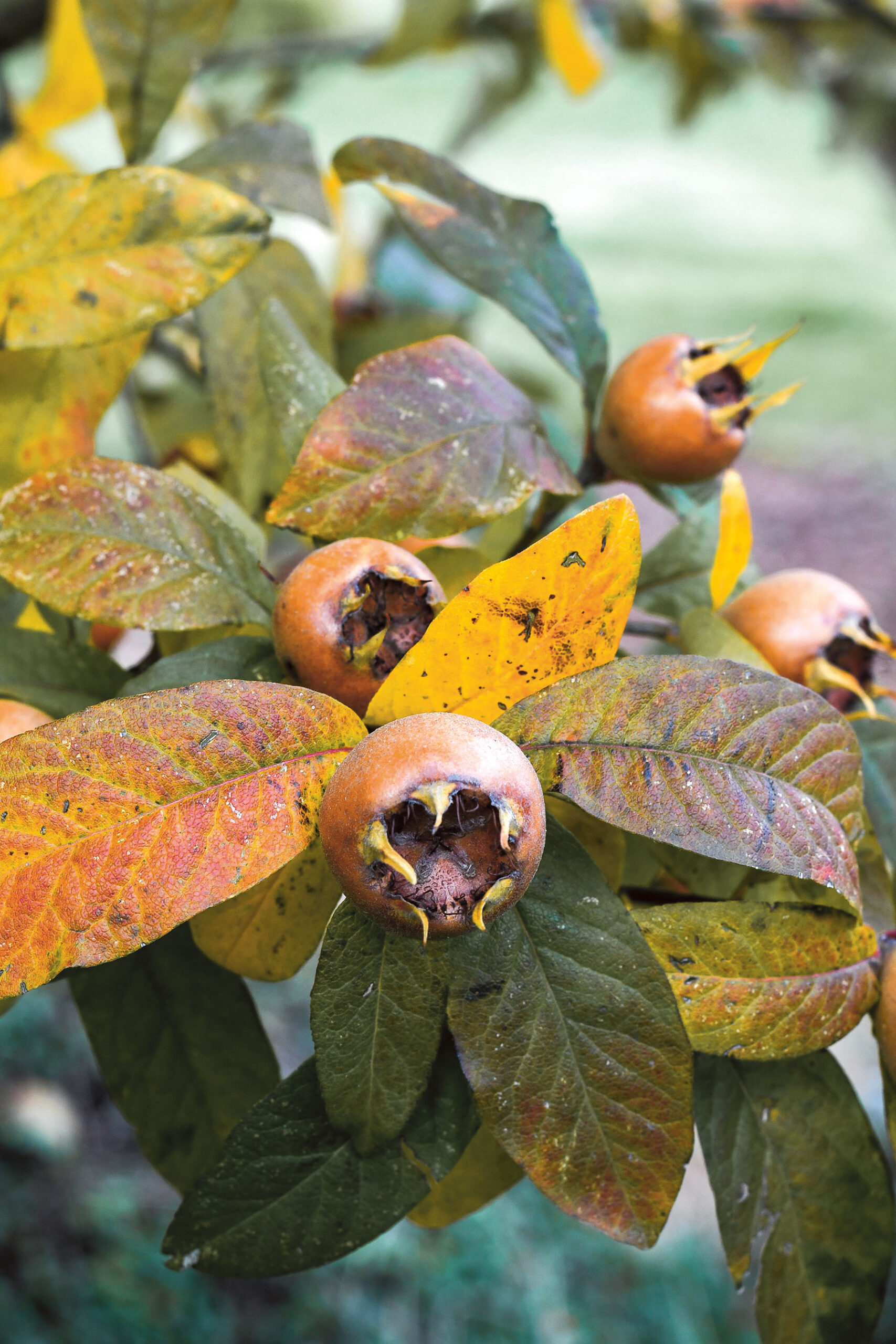
Medlars make a delicious paste.
The naked skeletons of deciduous trees that provided shade in summer now allow glimpses to the distant view, where the paddocks are blanketed in mist. In contrast, the solid shapes of evergreen shrubs and hedges give visual weight.
As foliage falls, new patterns and colours appear in the bark of deciduous trees and the lichen wrapped like lace doilies around their limbs. In cool regions the white bark of silver birches (Betula pendula) or Himalayan birches (Betula utilis) and flaking copper sheets of the paperbark maples (Acer griseum) are a joy, while in warmer climates the patchwork and pearlescent trunks of plane trees and crepe myrtles are equally beautiful.
Every year when the frost settles, the dusted clipped spheres of English box and teucrium look like they’ve been rolled in icing sugar, reminiscent of the old-fashioned but delicious rum balls that always appear at country events. On milder winter mornings, dew hangs in beads along the ribbon foliage of evergreen grasses and the unmown lawn underfoot, testing the water resistance of my perished gumboots.
PHOTOGRAPHY COLLEEN SOUTHWELL
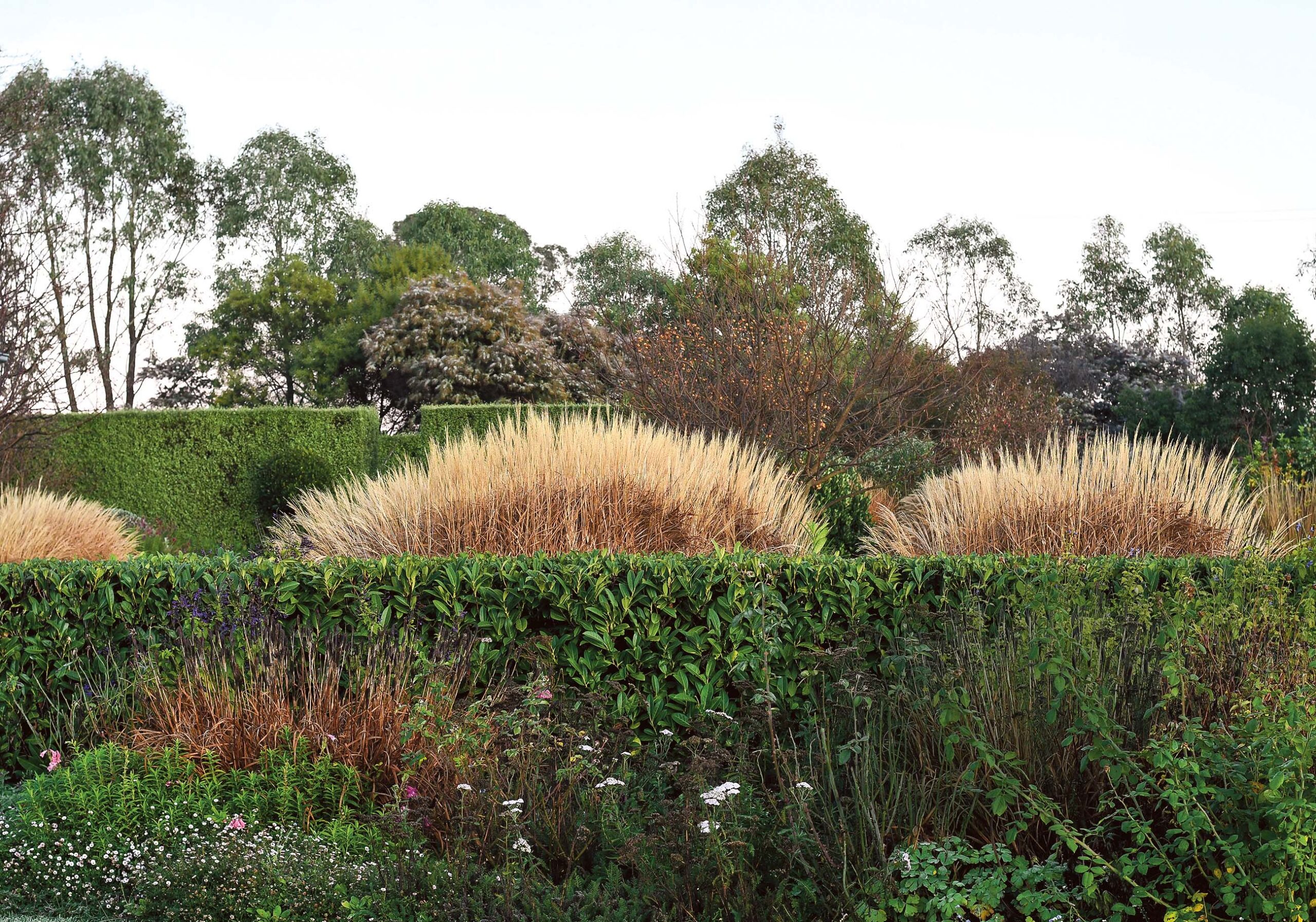
After the frost has melted, the structure of the mixture of evergreen and deciduous plants remains.
The clustered pearls of the snow-berry (Symphoricarpos sp.) and the golden orbs of medlars are particularly wonderful; the medlar (Mespilus germanica) is an attractive tree in all seasons, and the fruit can be used to make a delicious paste to eat with cheese.
Birds’ nests are revealed too, masterfully engineered from recycled garden materials. I find many crafted from the foliage of decaying herbaceous plants and lined with the soft undercoat of our golden retriever, Hugo. When he sheds his thick coat in spring I tuck handfuls of his hair into pockets of the garden for the birds to use.
As tempting as it is to collect them, I always leave the birds’ nests in place, as many will be renovated and filled with babies when spring returns. It makes me think of our brood flying in and out of the nest as the need and occasion arises. One of the greatest gifts of garden-making is growing a home to nurture a family and a welcoming place for them to return to. No matter the season, our garden gate will always be open.
• Winter is a great time to assess your permanent planting. Use layers of evergreen and deciduous plants to provide shelter, define garden spaces, and create an interesting picture.
• Consider the bark and the naked form of deciduous plants as ways of adding colour, texture and pattern to the winter garden.
• Use deciduous trees where you need summer shade and winter sun.
• Include evergreen hedges, trees and shrubs to add solid shape, form and visual weight all year round.
• Avoid pruning frost-damaged plants until the risk of frost has passed: the burned foliage protects new growth emerging underneath.
Colleen Southwell is the Garden Curator. Visit her website at thegardencurator.com.au.
Subscribe to Graziher and you’ll never miss an issue of your favourite magazine. Already a subscriber? Consider gifting a subscription to someone special in your life.

“It becomes impossible to know what is true,” writes Steph Schmidt, a farmer, mother-of-three and founder of Farm Life Psych.

Members of the Graziher community capture rural life as they experience it, from Pompapiel in Victoria to Queensland’s Elrose station.

Take advantage of the cooler temperatures and slower growth, writes Claire Austin.
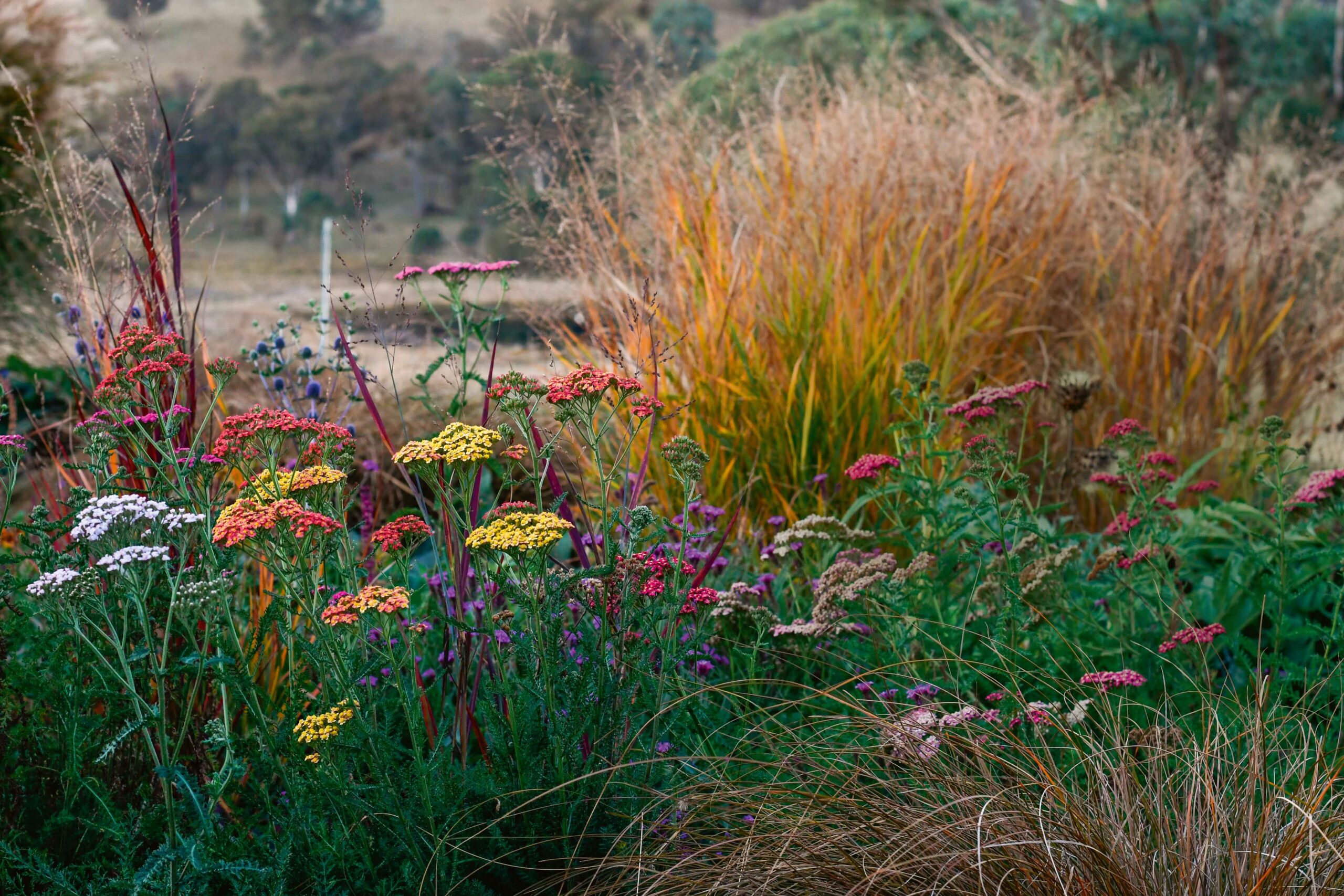
Resisting the urge to tidy up drying grasses and seed heads makes for a more interesting garden.

“More often than not, overwatering is far worse for a plant than not enough moisture,” writes Claire Austin.

