











PHOTOGRAPHY ANTHONY BASHEER
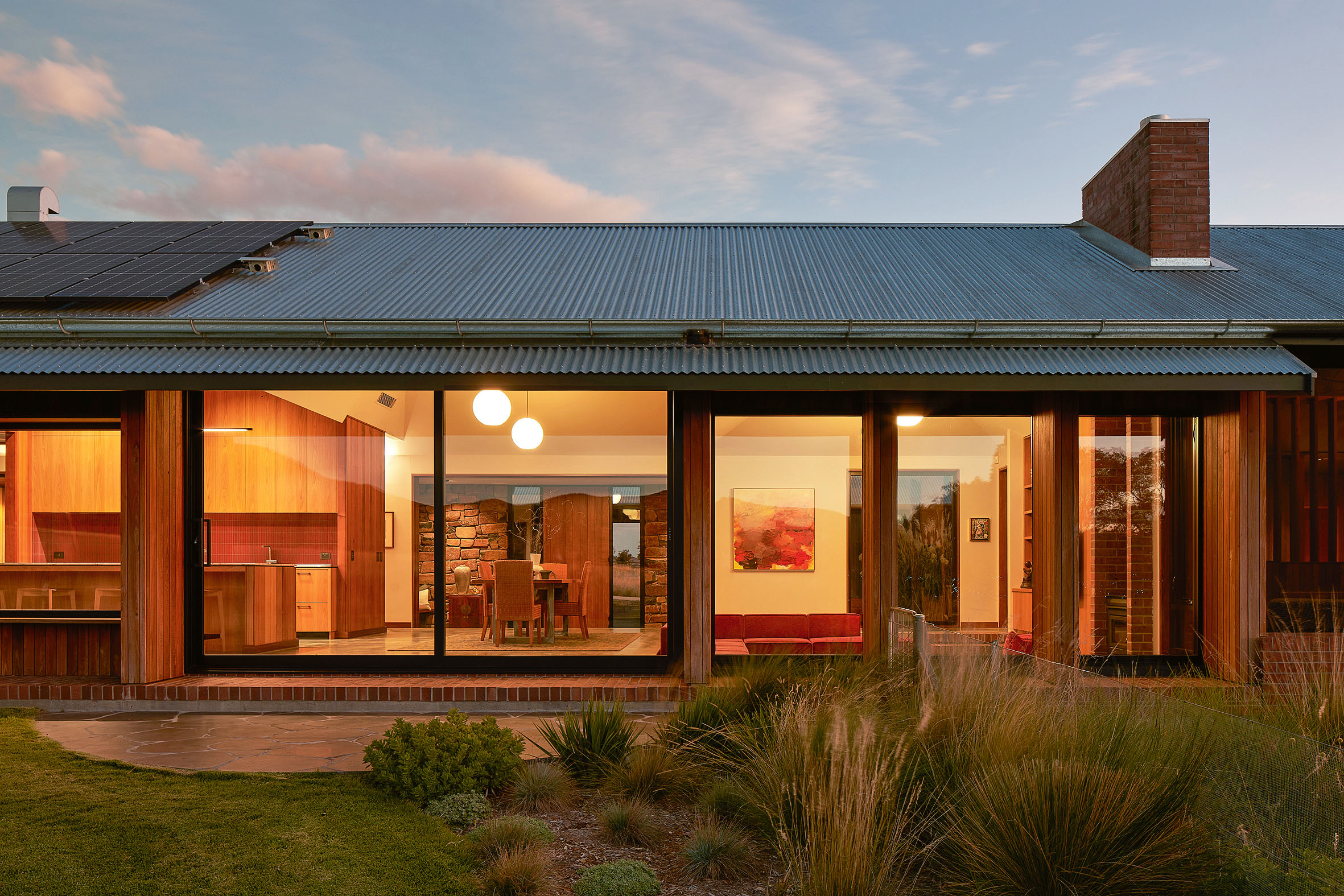
The north-facing open-plan living areas use expanses of glass to maximise the view of the Great Dividing Range.
Sign up to our mailing list for the best stories delivered to your inbox.
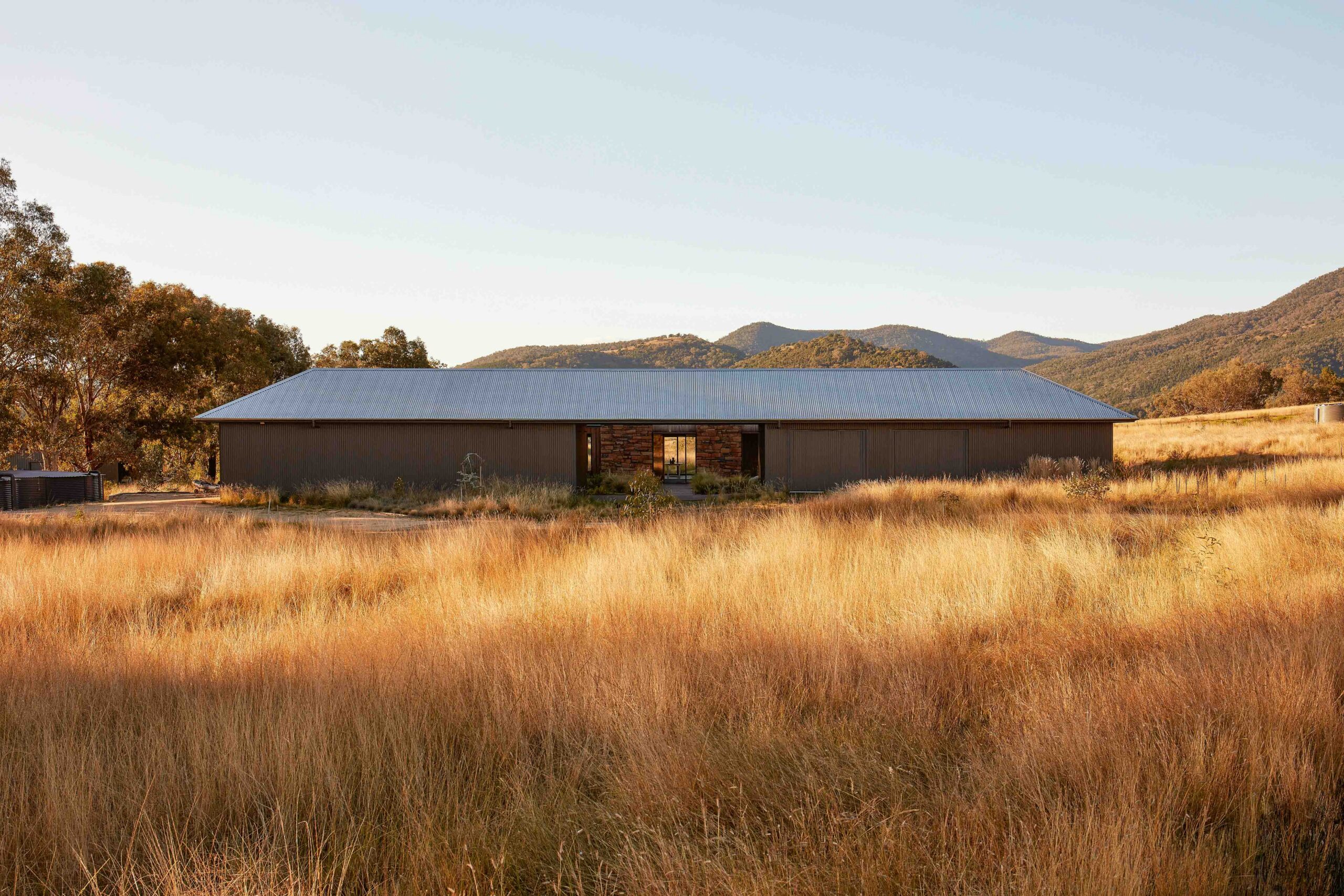
A harsh climate and a wish to blend in with the landscape inspired this energy-efficient contemporary home at Moore Creek, New South Wales.
WORDS AMANDA DUCKER PHOTOGRAPHY ANTHONY BASHEER
PHOTOGRAPHY ANTHONY BASHEER
The north-facing open-plan living areas use expanses of glass to maximise the view of the Great Dividing Range.
PHOTOGRAPHY ANTHONY BASHEER
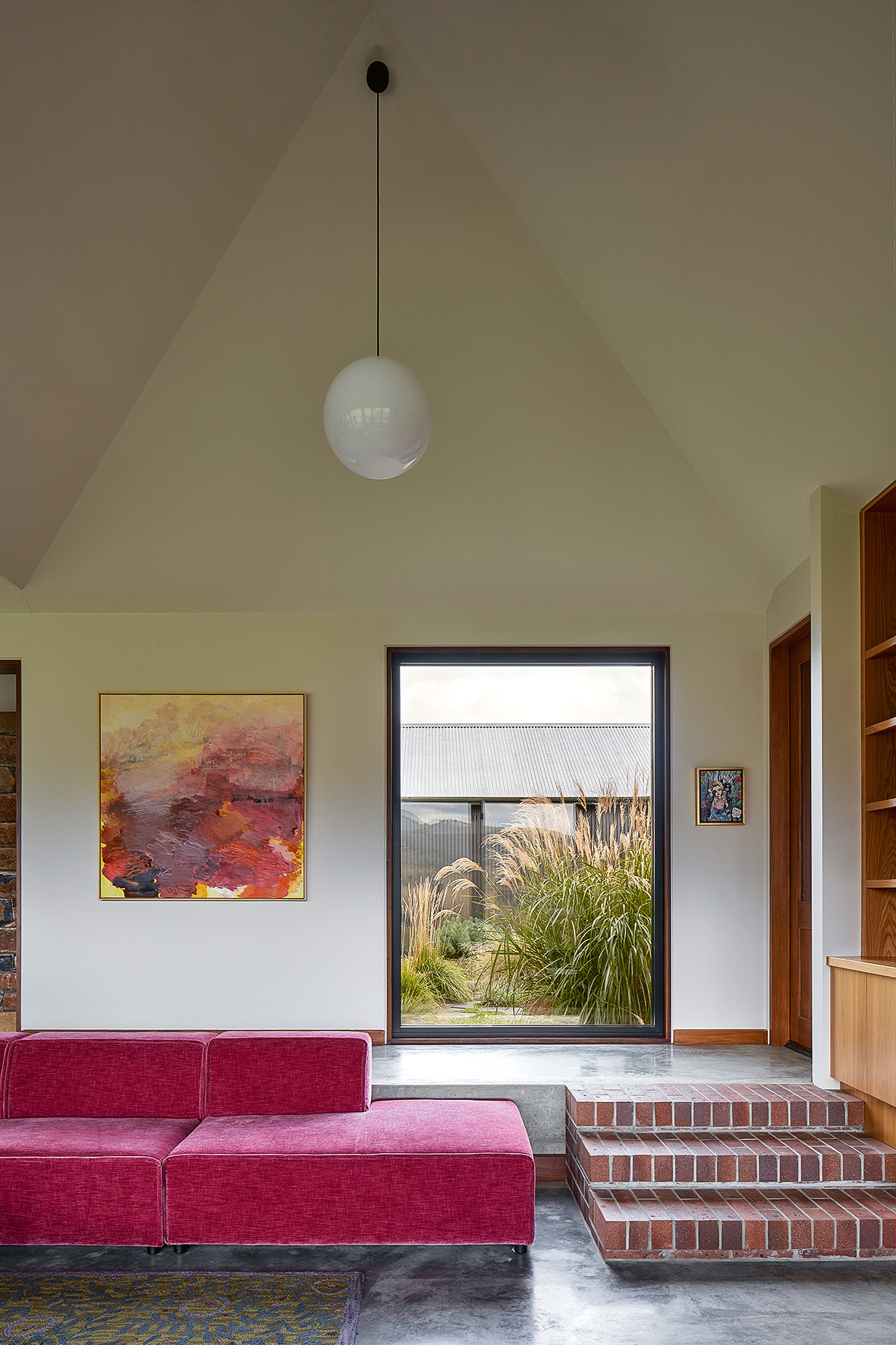
The sunken lounge room is a go-to zone in winter.
The devastating dry that afflicted the Tamworth region in northwestern New South Wales in 2017–2020 affected everything. When the time came to design and build a house on a parched patch of land north of the town, the architect and his clients, now inhabitants of this clever contemporary home, found it hard to imagine it would ever look anything but arid.
Architect Antony Martin, of MRTN Architects, Melbourne, thought the place looked so barren and unwelcoming on his first site visit that he didn’t believe it could support anybody’s dream. “I struggled to see how it could be a good place to live,” he confesses. Owners Jean and David had more faith, having seen the block in better conditions before buying it in 2017.
The returning expats (they’ve lived in Singapore and North Carolina) moved to Tamworth in 2015 to be closer to family. David’s new boat and fishing paraphernalia soon demanded bigger premises than the Federation cottage they’d bought, and the pair started househunting. Nothing appealed.
PHOTOGRAPHY ANTHONY BASHEER
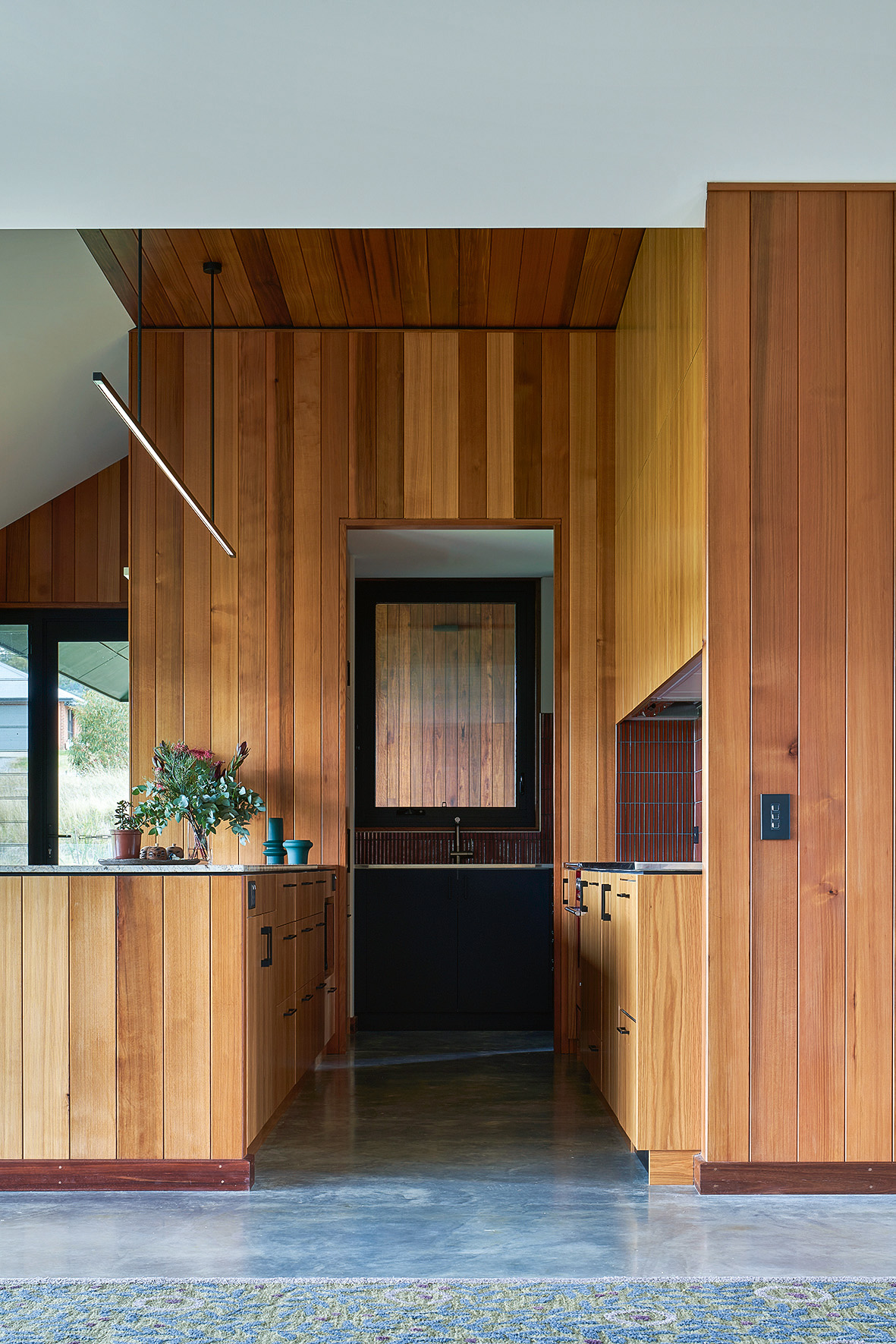
A butler’s sink in the pantry overlooks the north courtyard.
PHOTOGRAPHY ANTHONY BASHEER
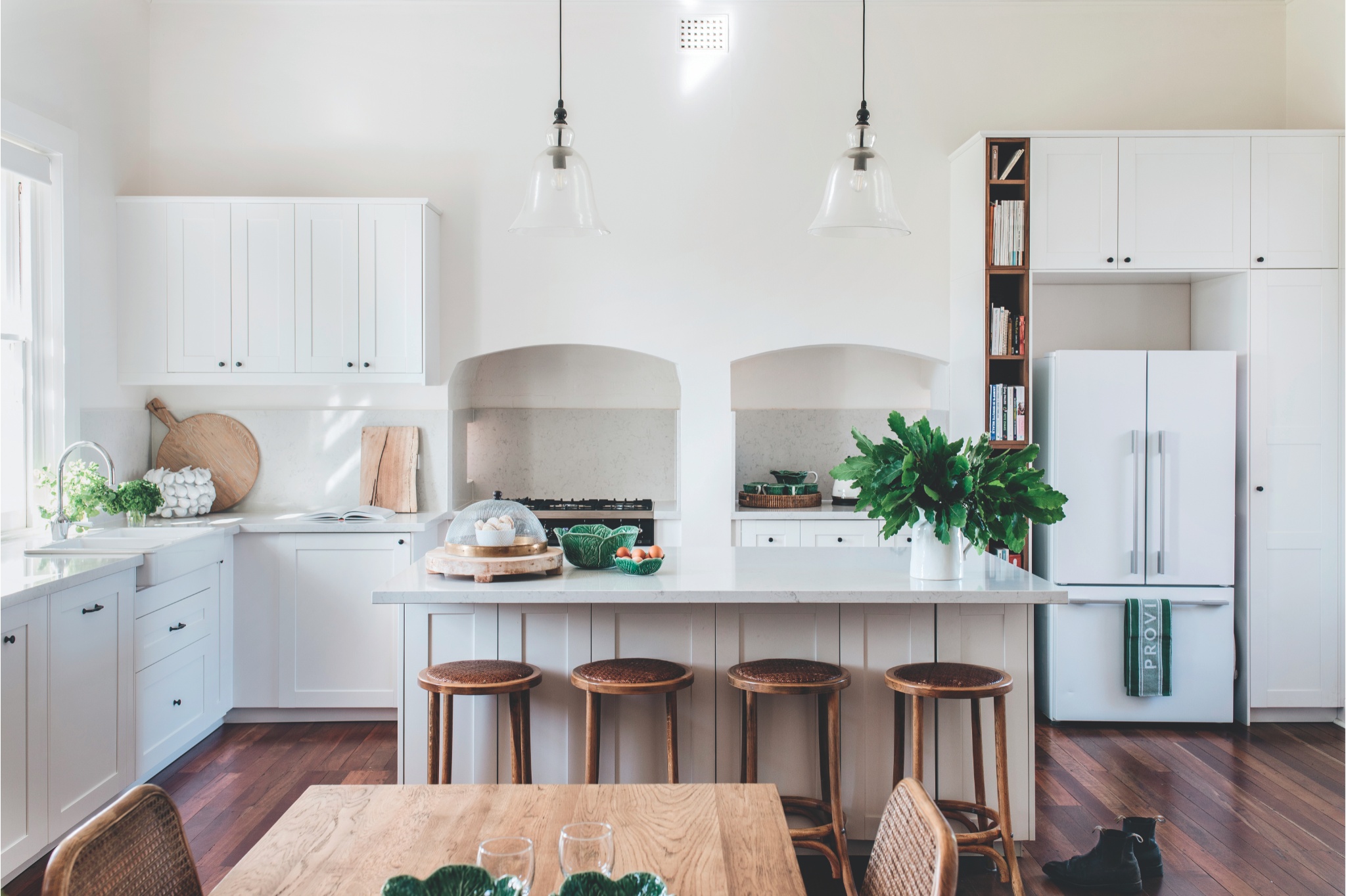
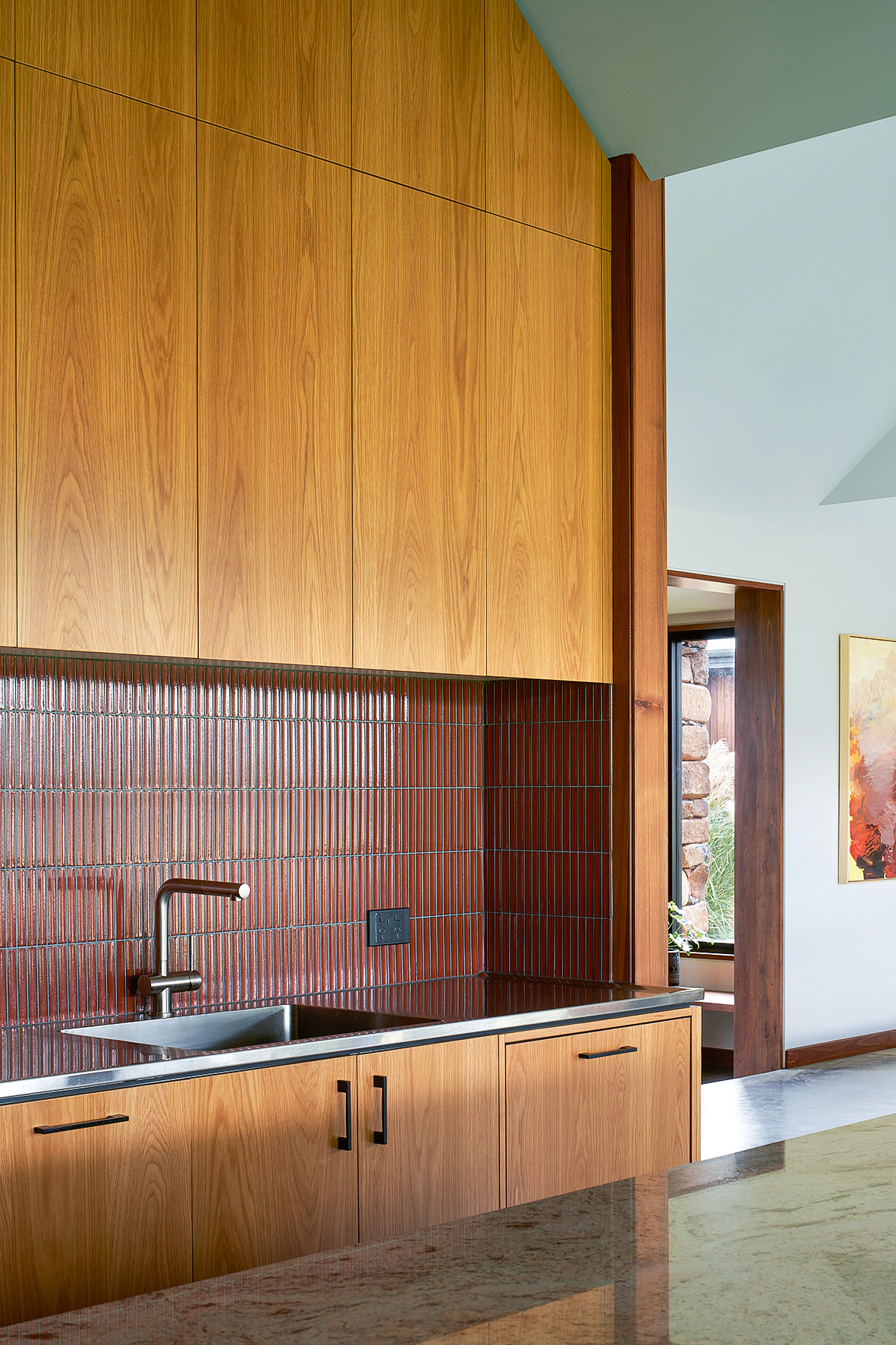
The open-plan kitchen is linked to the lounge room: “Three steps and I’m there with a glass of wine,” says David.
When a two hectare (five acre) block of land came on the market, just down the road from Jean’s sister at Moore Creek, they snagged it and then wasted no time finding an architect who could design them a home that paid homage to rural sheds. Antony’s design for a home inspired by farm buildings in Victoria’s Trentham caught their eye online.“
Though we worked with MRTN Architects remotely, the project progressed as if there was no geographical separation at all,” Jean explains. “They key to this success was the time investment Antony made in the planning phase, which was foundational in establishing a trusting relationship that ensured the project’s success.”
Likewise, says Jean, the build was smooth and seamless. The drought meant there were no rain delays, but at times the team worked in punishing heat.
PHOTOGRAPHY ANTHONY BASHEER
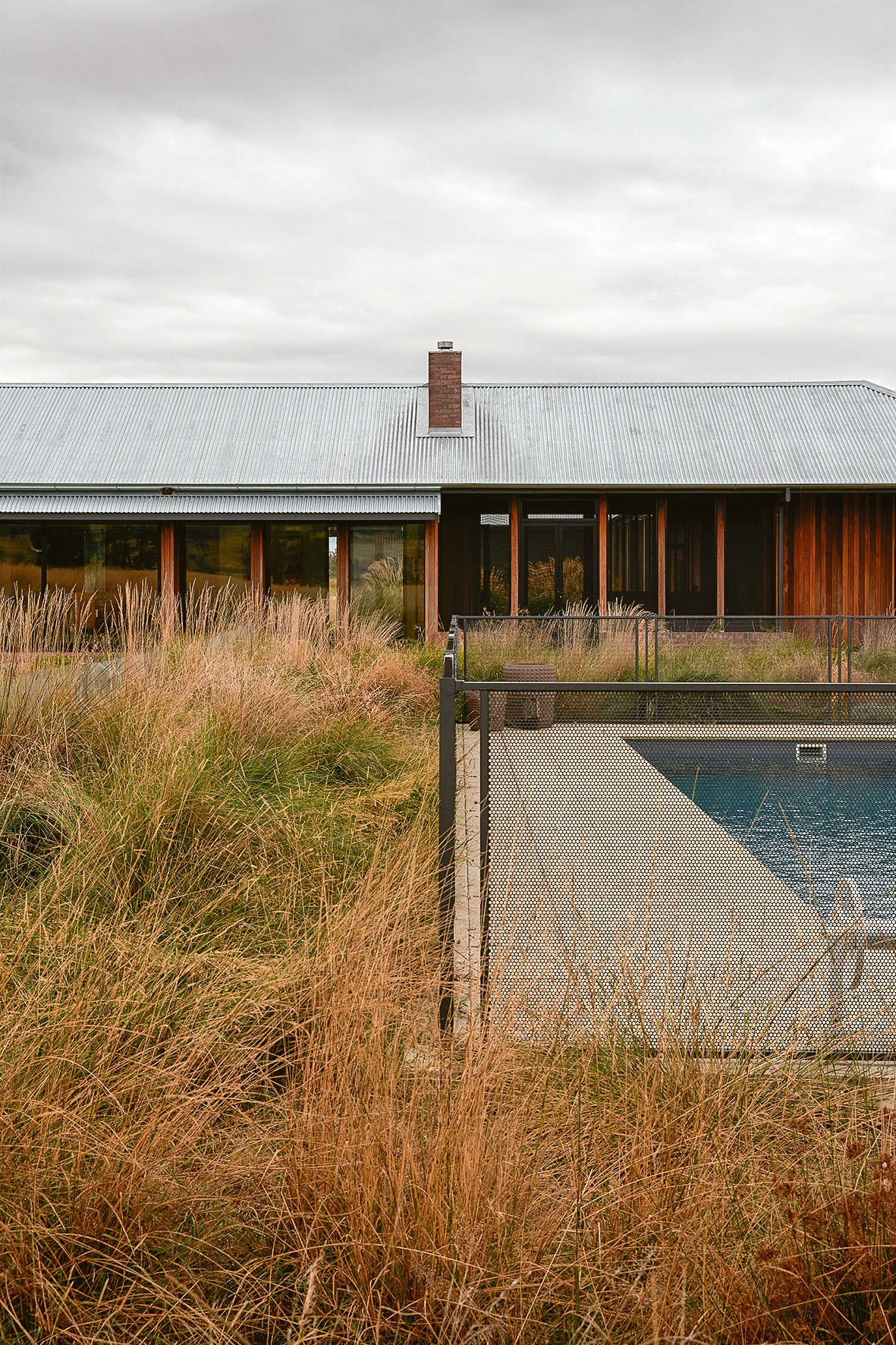
The swimming pool nestles among native grasses.
PHOTOGRAPHY ANTHONY BASHEER
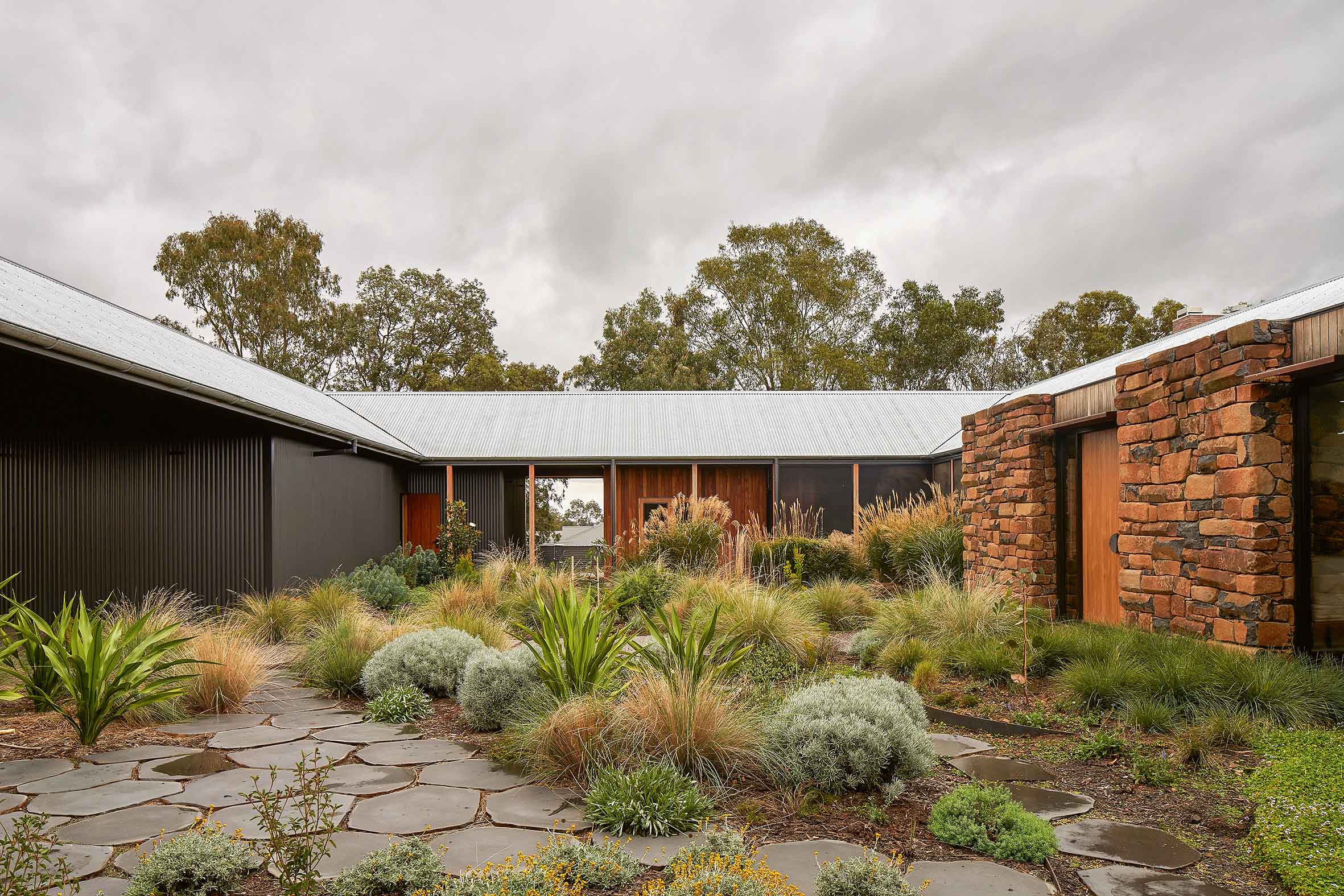
The central courtyard is easy to maintain even in drought, using water fed from the gutters to a 220,000L tank.
Though the expansive gable roof brings the house, carport and shed under a single cover, there are many floor levels, necessitating the pouring of multiple slabs. “Including the sunken living room, there are about 10 different levels around the house that help to define the spaces very easily,” Jean says.
From the road, the property gives little away. In fact, you barely see the house itself. Rather, it’s the corrugated shed and carport walls that greet you, with tantalising glimpses into an almost totally enclosed courtyard garden and local basalt stonework along the back wall of the living area beyond.
“This part of Australia tends to have one or more sheds at the front of the property and a standard brick and tile suburban residence sitting behind it,” Antony says. “Instead, this design brought the shed — in this case two sheds — in under the roof of the home, connected to the house.”
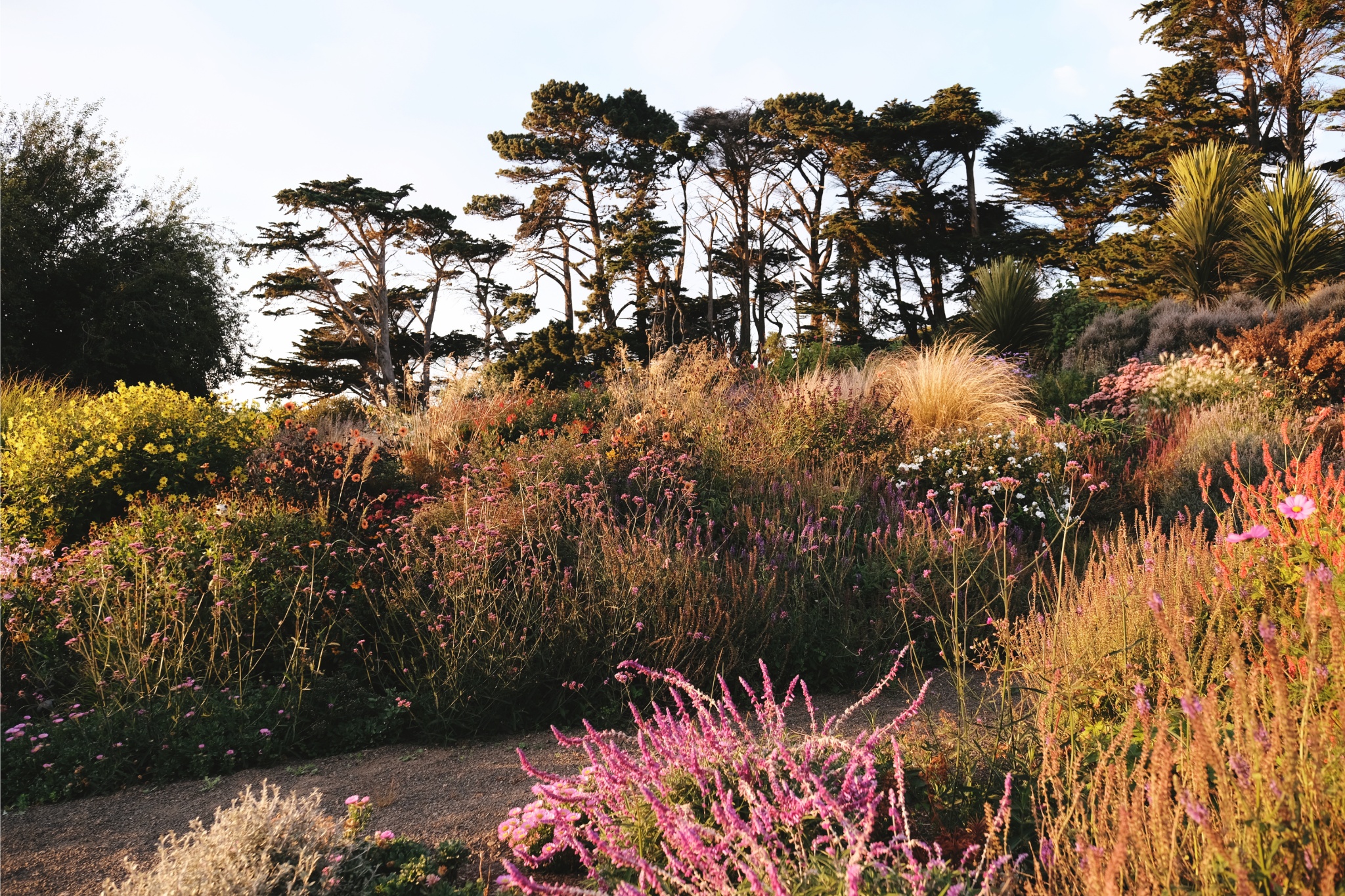
The living areas face north, overlooking the acreage and western foothills of the Great Dividing Range. Sleeping quarters and amenities are located on the wings. David and Jean love their garden courtyard oasis with its native plantings, with the addition of a ‘Little Gem’ magnolia to remind them of North Carolina.
“We needed hardy, drought-tolerant plantings so it would establish quickly but also give a variety of colour,” Jean says. “It’s a bit of trial and error so far. And we have native violets and dichondra groundcovers and billy buttons as borders.”
PHOTOGRAPHY ANTHONY BASHEER
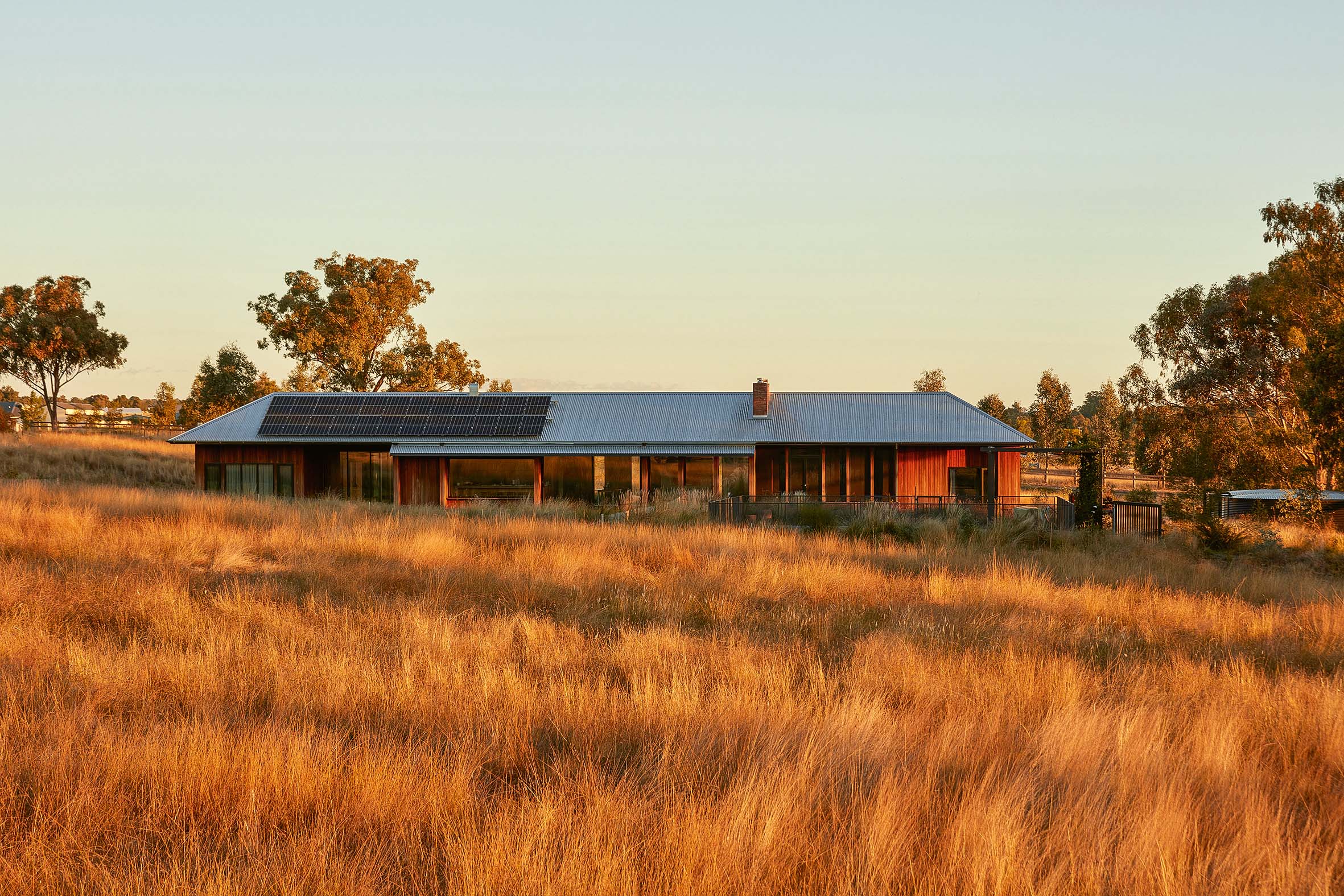
Solar panels keep bills down, while a land regeneration program is re-establishing native grasses and trees.
As the household cook, he appreciates the lounge room’s proximity to the kitchen. “I can talk to Jean if she’s on the sofa with the dogs.”
In summer, the couple loves to spend evenings in the insect-screened room on the western end. “It’s open and breezy, but it’s protected, peaceful and never too hot,” says Jean. Its roof makes it suitable on rainy days too. Two additional covered courtyards lie to the north and east. “There’s always a beautiful spot to sit and feel protected and comfortable,” David says.
Undercover walkways act as breezeways, drawing on timeless design for typically arid environments. “You are protected from the elements coming in from the garage or walking to the laundry while experiencing the openness.”
Solar panels keep the power bills down. And a 220,000 litre water tank fed from the gutters means they need not be parsimonious when it comes to the garden or swimming pool. A concerted land regeneration program re-establishing native grasses and planting trees is beginning to show results.
Jean and David’s new home is everything they hoped for.
“The house truly reflects how we wanted to live,” Jean says. And when the next bid dry comes, they will be ready. Architect Antony Martin regrets his initial doubts: “I’d like to live there myself,” he says, with a laugh.
Subscribe to Graziher and you’ll never miss an issue of your favourite magazine. Already a subscriber? Consider gifting a subscription to someone special in your life.
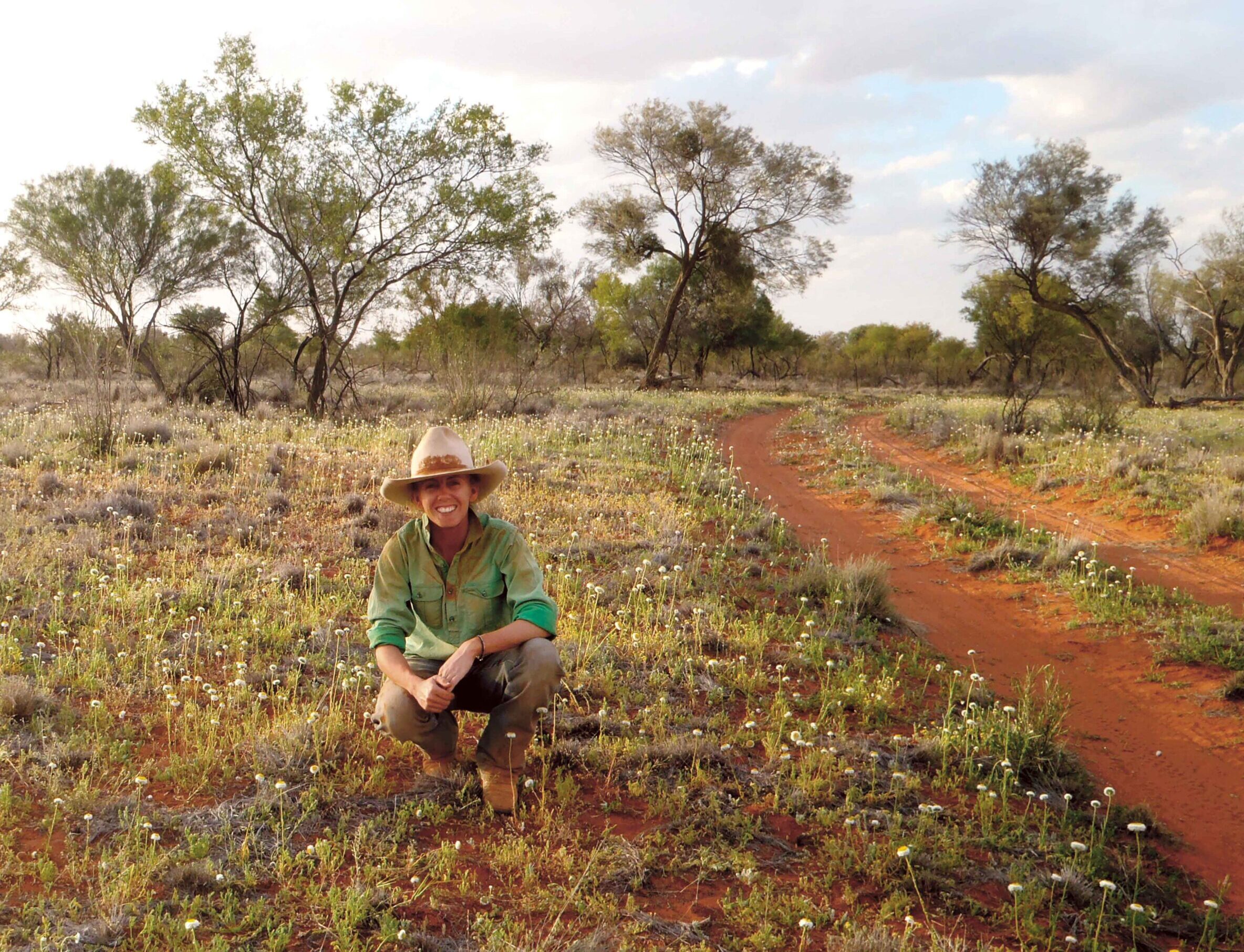
Chris Ferguson says the new scholarship, supported by the Australian Rural Leadership Foundation, will continue her daughter’s legacy.
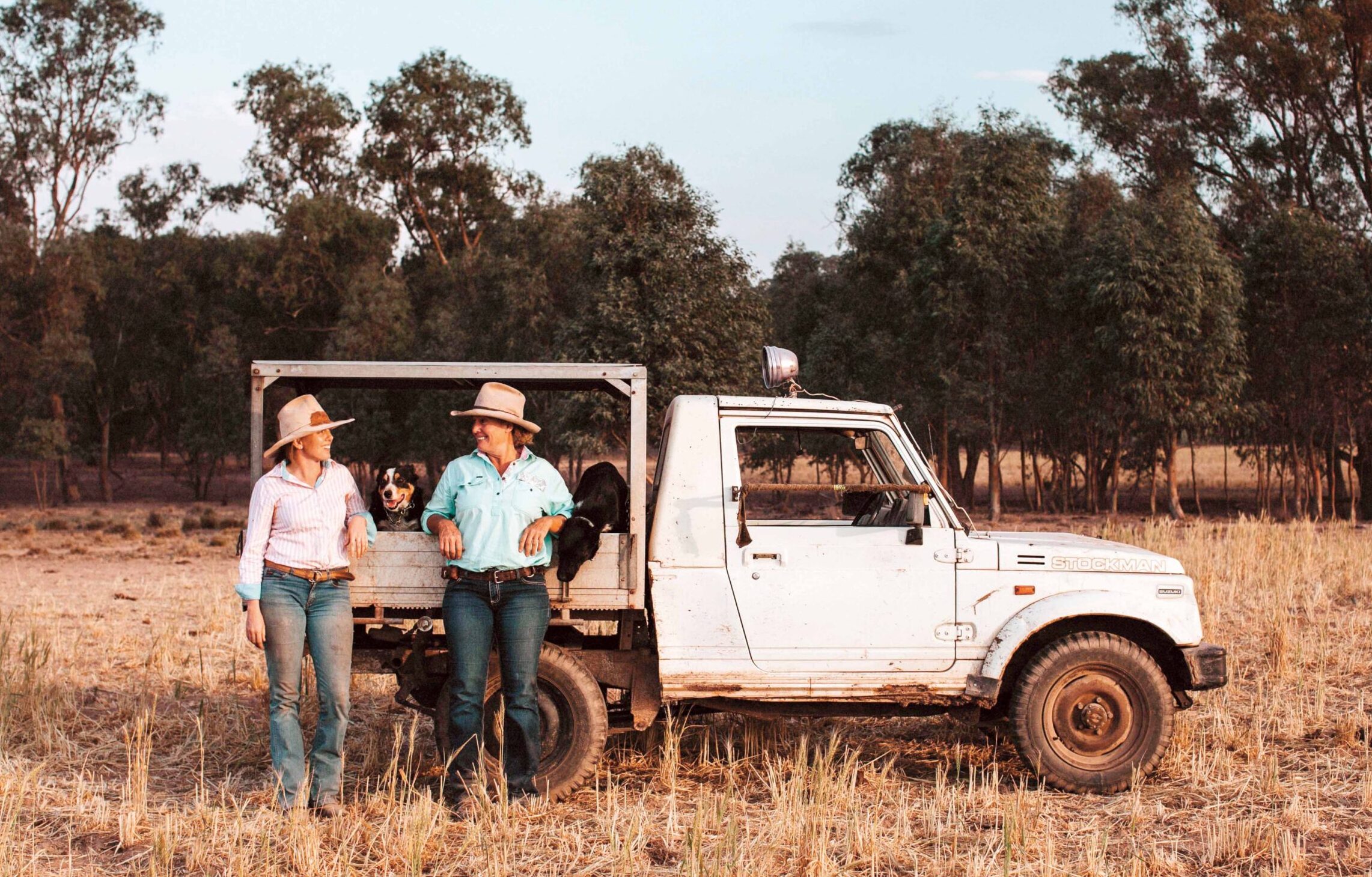
For Chris Ferguson, the grieving process has meant letting go of the life she and Matilda created together.
Gifted plants can become cherished reminders of significant events and may hold memories for generations, writes Claire Austin.

Claire Austin considers the role scent plays in a garden and what to plant for a yard that smells as sweet as it looks.

Current custodian Penny Lamont says the heritage garden is designed for easy-care and dry times.

