Sign up to our mailing list for the best stories delivered to your inbox.
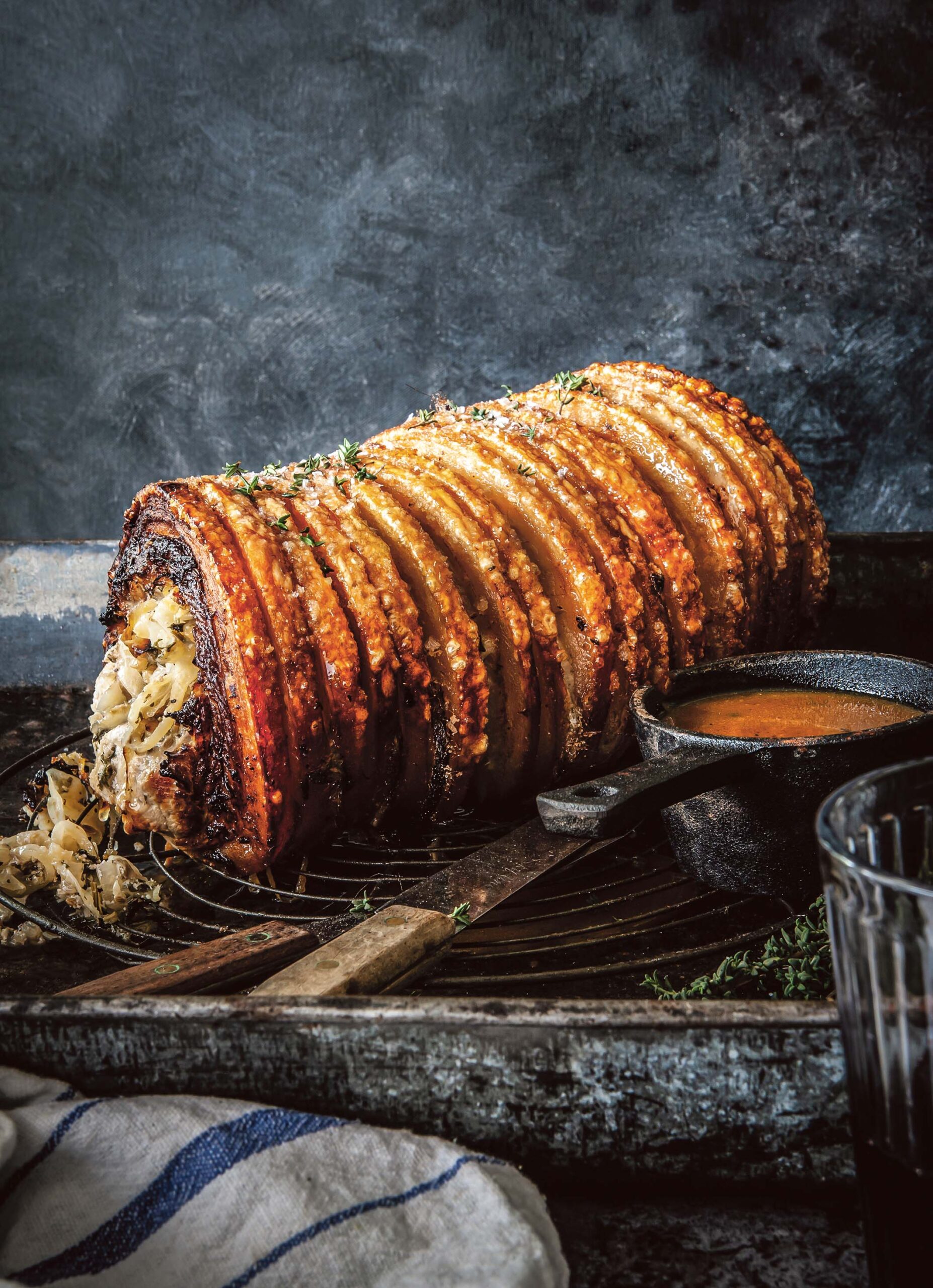
Irish butcher-and-chef duo Rick Higgins and Gaz Smith share recipes for porchetta with a winning stuffing, an indulgent mash and lamb shoulder with mother sauce.
Food styling and photography Katie Quinn
“You want to keep a porchetta really simple — you don’t want to put much in the way of it. I don’t even know if mine is a traditional porchetta stuffing, but it’s really good. And everything is better with stuffing, right? I want this stuffing to really punch you in the face with flavour. It’s got to go toe to toe with three kilos of pork and still be tasty enough for sandwiches the following day if there are any leftovers — and that’s a big if.
“You can eat this porchetta as is, but it works so well in a sandwich. I’d use nice bread, good butter, some really thinly sliced fennel tossed in apple cider vinegar and a little bit of watercress. Perfect.” —Barry Stephens
Recipe by Irish chef Barry Stephens
Serves 4–6 (with leftovers for sandwiches)
3kg piece of pork loin with the belly still attached (tell your butcher you’re making porchetta and they’ll know exactly what you need)
STUFFING
200g butter
2 large white onions, finely diced
2 large fennel bulbs, thinly sliced
6 garlic cloves, minced
3 tablespoons toasted fennel seeds
Fine sea salt and freshly ground black pepper
150ml white wine
150g flat-leaf parsley, finely chopped
20 sage leaves, chopped
Zest of 2 lemons
1. Melt the butter in a large saucepan over medium heat. Add the onion, fennel and garlic, along with the toasted fennel seeds. Season lightly with salt and sweat down until the onion and fennel are softened but not coloured.
2. Throw in your wine and simmer the whole lot for 5 minutes. Season again with salt and pepper.
3. Remove the pan from the heat and stir in the parsley, sage and lemon zest. Leave to cool, then store in the fridge until you’re ready to use.
4. To cook the porchetta, preheat the oven to 180°C.
5. Roll the porchetta and tie it securely. Place it on a baking tray and put foil at each end of the roll to keep the stuffing in. Roast in the oven for 40 minutes, basting it halfway through.
6. Turn the oven temperature up to 220°C and roast for 25 minutes more, basting it again when that time is about halfway through.
7. Remove from the oven and leave to rest before carving into slices and either eating it as is or in a sandwich. Spoon over juices from the roasting tray after carving or serve them in a small dish on the side.
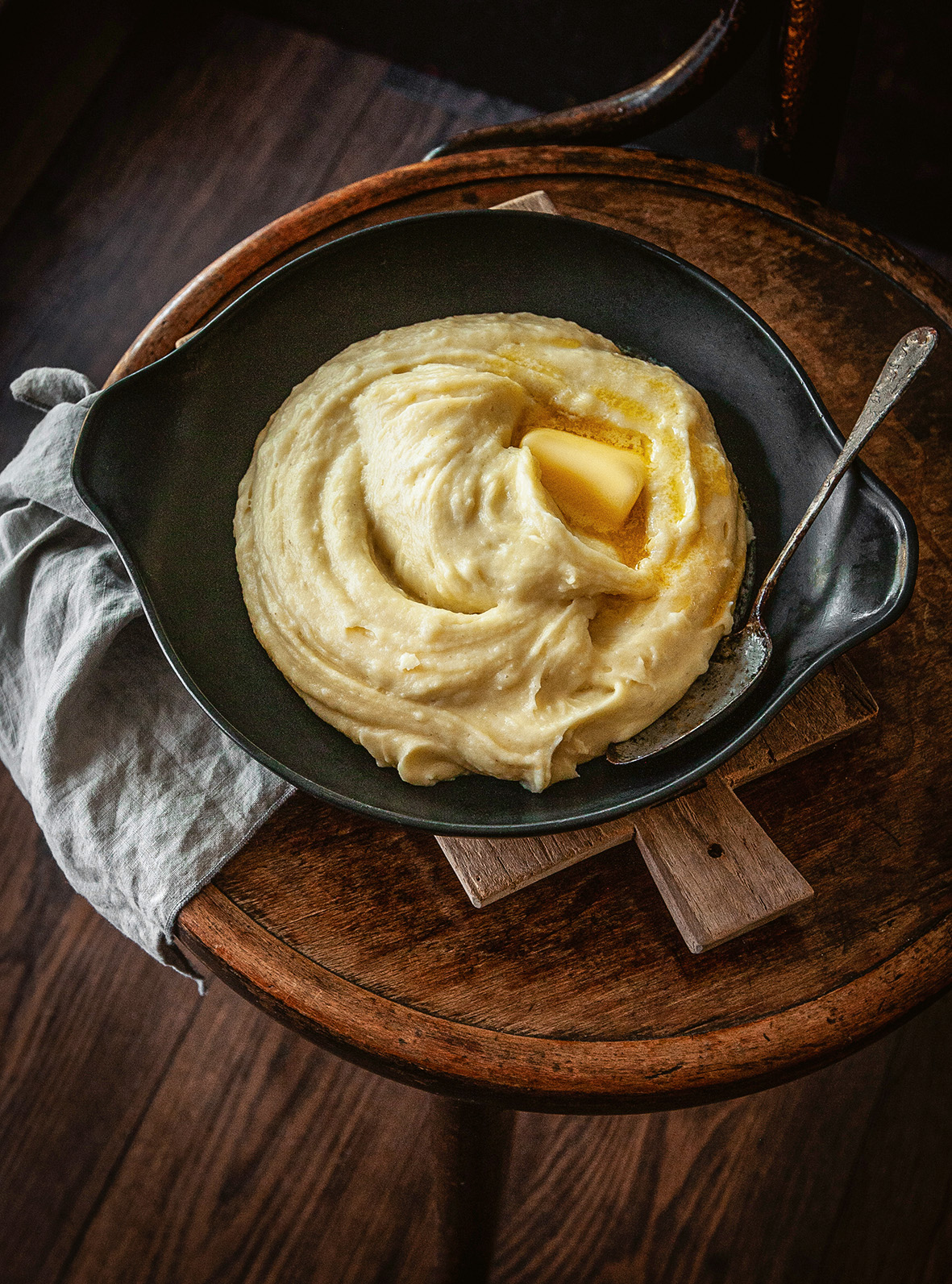
“Sixty per cent potatoes. 40 per cent butter. 100 per cent deliciousness. There’s no secret as to why this is so damn good. When you’re dealing with that amount of butter, how can anything be wrong? Forget about the lumpy mash your granny used to make. This stuff glistens like silk and pours like a mousse. It’s just heaven. Don’t tell anyone, but I actually make 50:50 mash. But that’s just obscene.
“I first had mash like this in Sheen Falls, years ago. I always thought my mash was good, but this was just next level. And each time I make it now, I’m transported right back to that day and the very first moment I ate it, just like in Ratatouille.
“Oh, and by the way, I know that the splash of milk actually makes this more of a 59:39:2 mash. But this isn’t a maths book, so leave me alone.” —Gaz Smith
Serves 4
950g peeled Rooster potatoes*
570g butter
A splash of milk
A generous pinch of fine sea salt
1. This is an easy one. Simply steam the whole peeled potatoes until a skewer goes through them easily. They should be slightly floury on the outside and ever-so-slightly firm on the inside.
2. Heat up the butter and milk in a small saucepan just until the butter has melted, then add to the hot potatoes. Never throw cold butter or milk into your mash or it will end up lumpy. The potatoes should be hot, the milk should be warm and the butter should be melted.
3. Mash it all with a masher and a generous pinch of salt. This step is all the more important because you’ve steamed the spuds rather than boiled them in salty water, so don’t be stingy.
4. Finish them off with a whisk if you want to get jazzy (see the chef’s tip). Eat with a spoon and a massive smile on your face.
* Rooster potatoes are an Irish variety. If you can’t get them, try any good mashing potato such as coliban or Dutch cream.
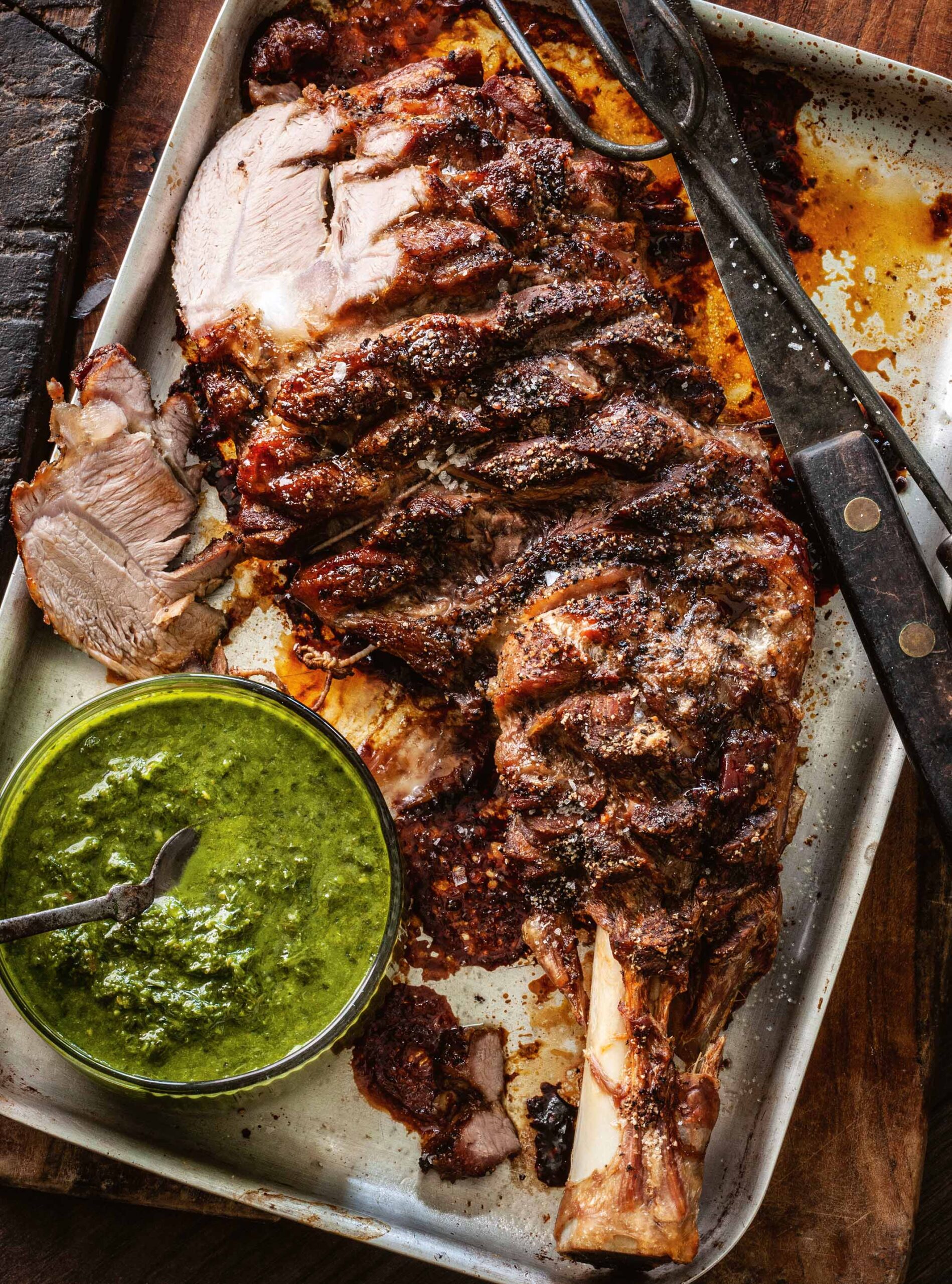
“Look, I’m not trained as a chef. I’m a cook. If you want to be technical, a mother sauce is one of five French classical sauces, which can then be turned into a bearnaise or a mornay. But for me, a mother sauce is just an all-rounder sauce that you can use on anything.
“You can chuck this sauce on just about anything. It’s amazing as a marinade, but you can also brush some lamb chops with it as you put them on the grill and it’ll be just as good. Put this on fish if you want. There are no rules here.
“When it comes to food, anyone who says you can’t do something is an idiot. It’s like the people who say you can’t have red wine with fish. Bullshit! You can do whatever the hell you want.” —Barry
Serves 4–6
2kg free-range lamb fore shoulder
Sunflower oil, for rubbing
Fine sea salt and freshly ground black pepper
A squeeze of lemon, to serve
MOTHER SAUCE
200g flat-leaf parsley
200g chives
100g mint
80g capers
3 garlic cloves, peeled
300ml olive oil
Zest of 3 lemons
100ml freshly squeezed lemon juice
2 tablespoons honey
50ml red wine vinegar
1 heaped teaspoon ground cumin
1 teaspoon chilli flakes
1. To make the mother sauce, blitz all the ingredients in a food processor or blender and set aside until ready to use.
2. To cook the lamb, preheat the oven to 200°C.
3. Lightly score the skin of the lamb using a small sharp knife to make a 2cm crisscross pattern.
4. Rub a glug of sunflower oil all over the meat and put the lamb on a baking tray, then season well with salt (say, three good pinches) and a generous amount of pepper. Cover the tray securely with foil.
5. Roast in the oven for 45 minutes, then turn the heat down to 120°C and roast for a further 3–4 hours or as long as you want. Bear in mind, though, that if you cook it for longer than 4 hours, you’ll need to turn the oven down to 100°C.
6. When you’re ready to eat, turn the oven up to 220°C. Remove the foil, baste the lamb well and return it to the oven for another 20 minutes. At this stage, it’ll be fully tender, but whacking it under high heat will give the lamb some colour.
7. Just before serving, drizzle the lamb with 6–7 tablespoons of mother sauce and a big squeeze of lemon.

This is an edited extract from And for mains… by Gaz Smith and Rick Higgins with Nicola Brady. Additional recipes by Barry Stephens. (Nine Bean Rows)
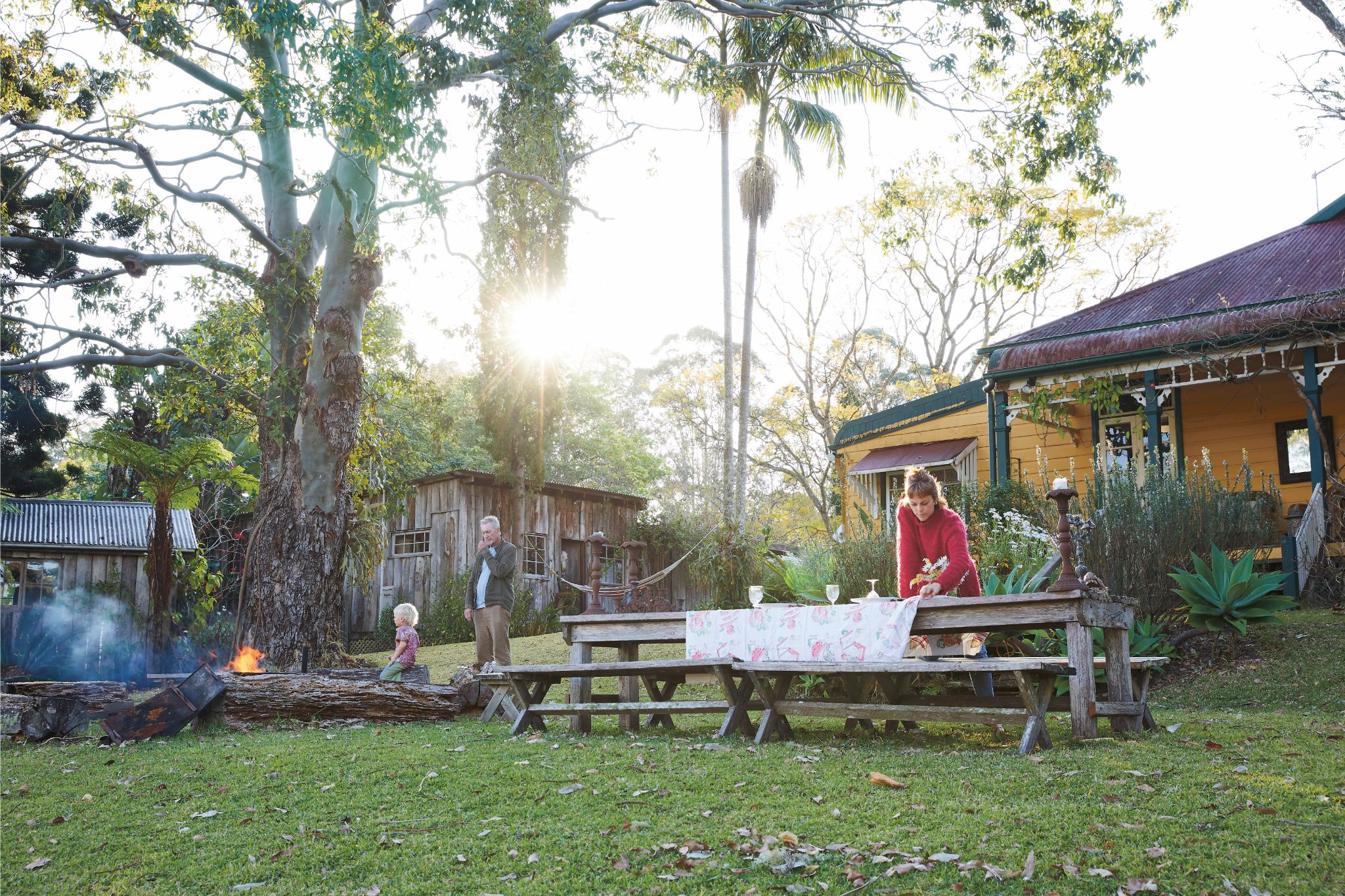
Matilda Brown and Scott Gooding share their favourite dishes from The Good Farm Cookbook.
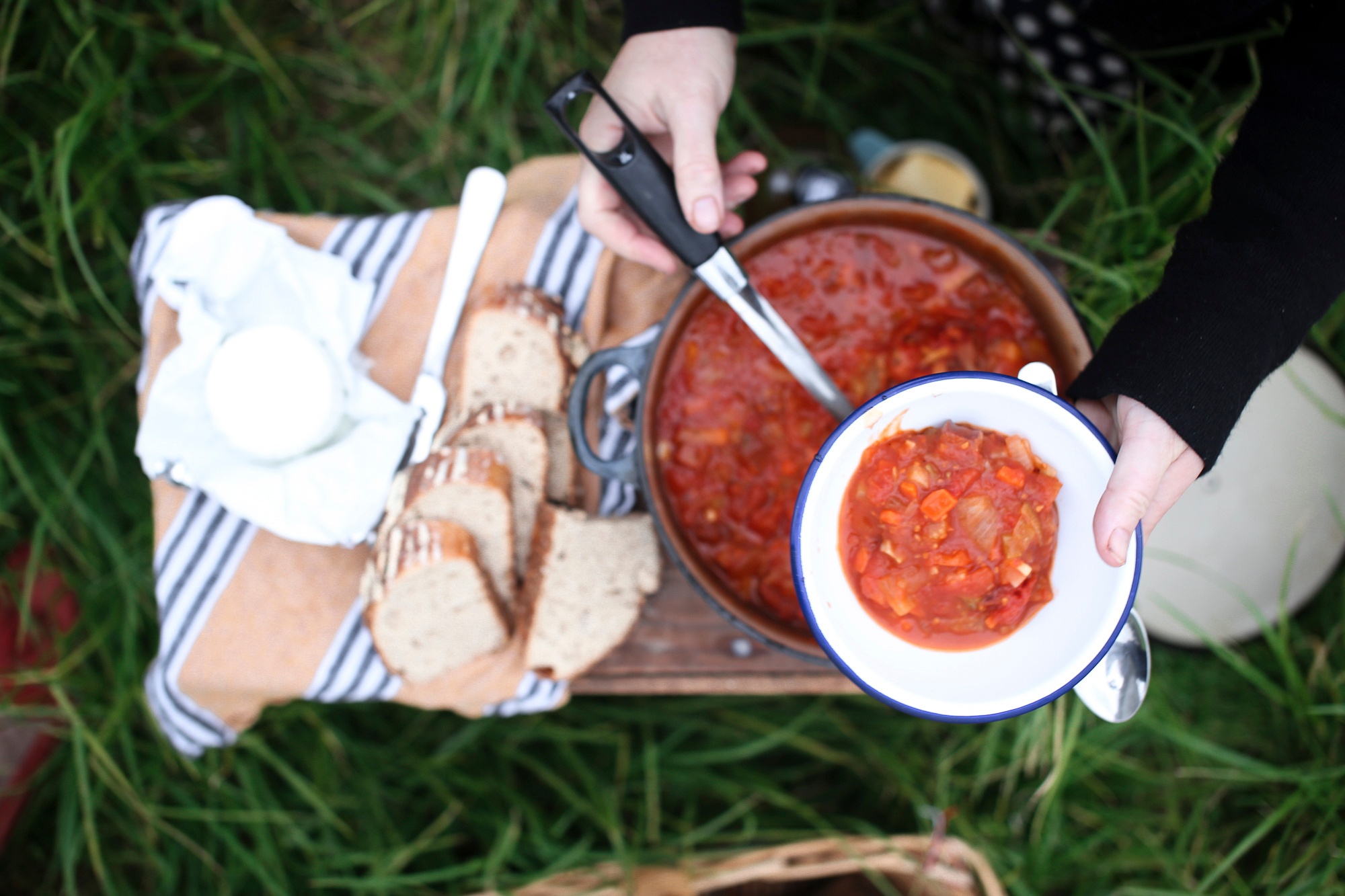
Plus, an easy tomato and chorizo stew for the perfect paddock picnic.
Gifted plants can become cherished reminders of significant events and may hold memories for generations, writes Claire Austin.

When Kaitlin Brownhill started her medical training, she had no idea she’d wind up in Mount Isa, Queensland. But she loved it — and now has her sights set on becoming a rural generalist.
Gifted plants can become cherished reminders of significant events and may hold memories for generations, writes Claire Austin.

A harsh climate and a wish to blend in with the landscape inspired this energy-efficient contemporary home at Moore Creek, New South Wales.
Claire Austin considers the role scent plays in a garden and what to plant for a yard that smells as sweet as it looks.