




PHOTOGRAPHY MICHELLE CRAWFORD
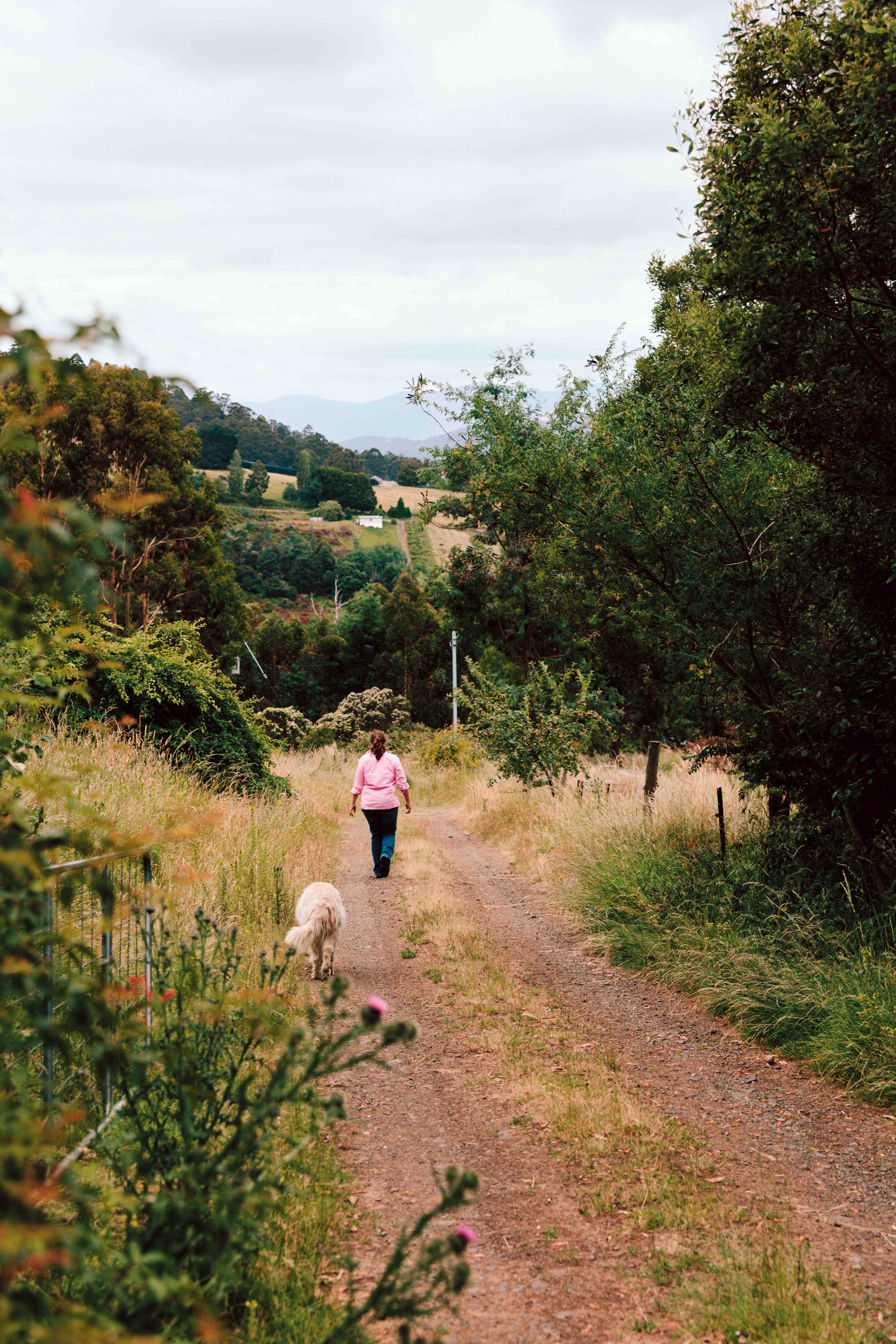
Celia Leverton heads off-farm with Lola, her Maremma sheepdog.
Sign up to our mailing list for the best stories delivered to your inbox.
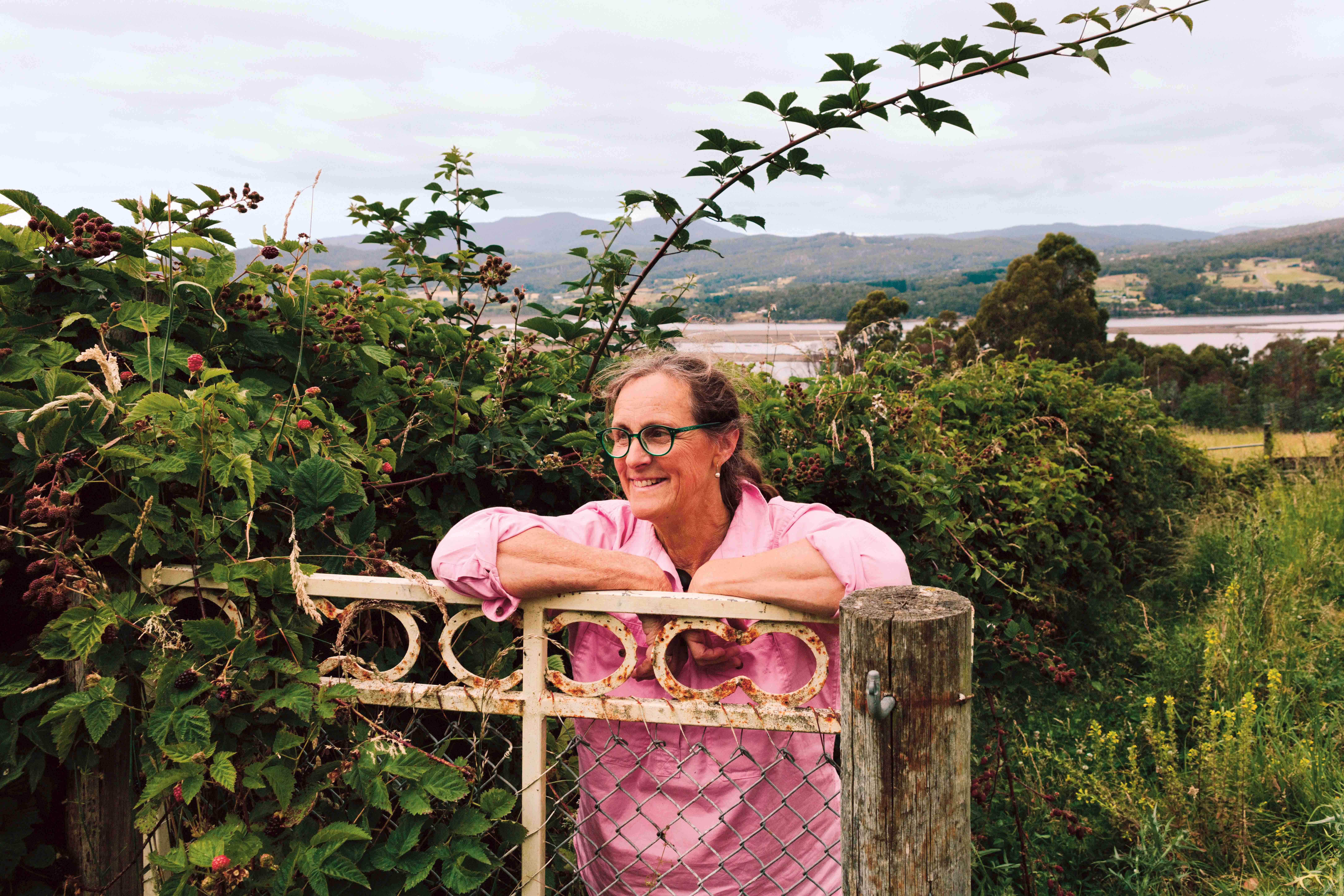
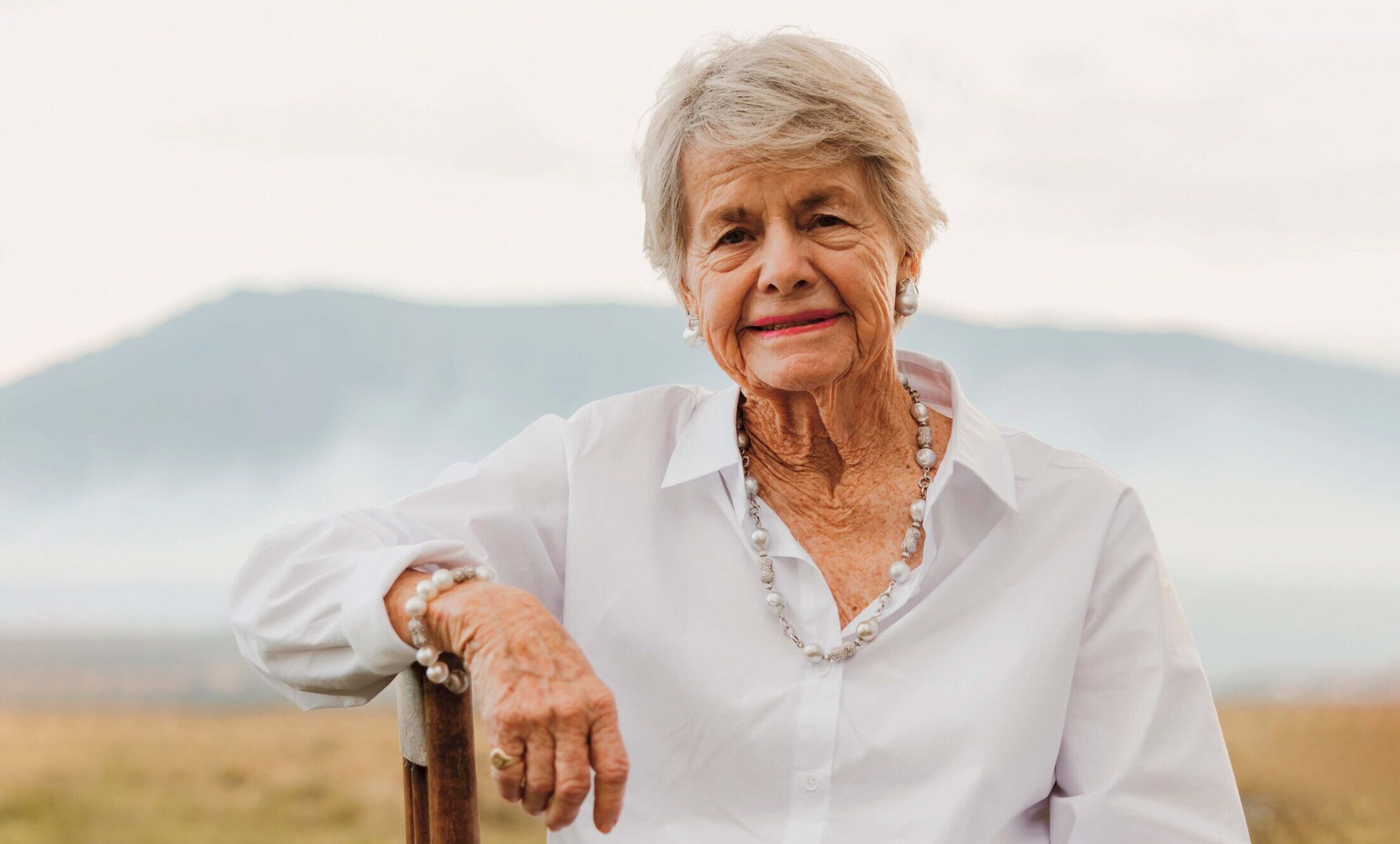
Celia helps farmers profitably restore depleted land through low-impact, low-risk changes.
WORDS AMANDA DUCKER PHOTOGRAPHY MICHELLE CRAWFORD
PHOTOGRAPHY MICHELLE CRAWFORD
Celia Leverton heads off-farm with Lola, her Maremma sheepdog.
PHOTOGRAPHY MICHELLE CRAWFORD
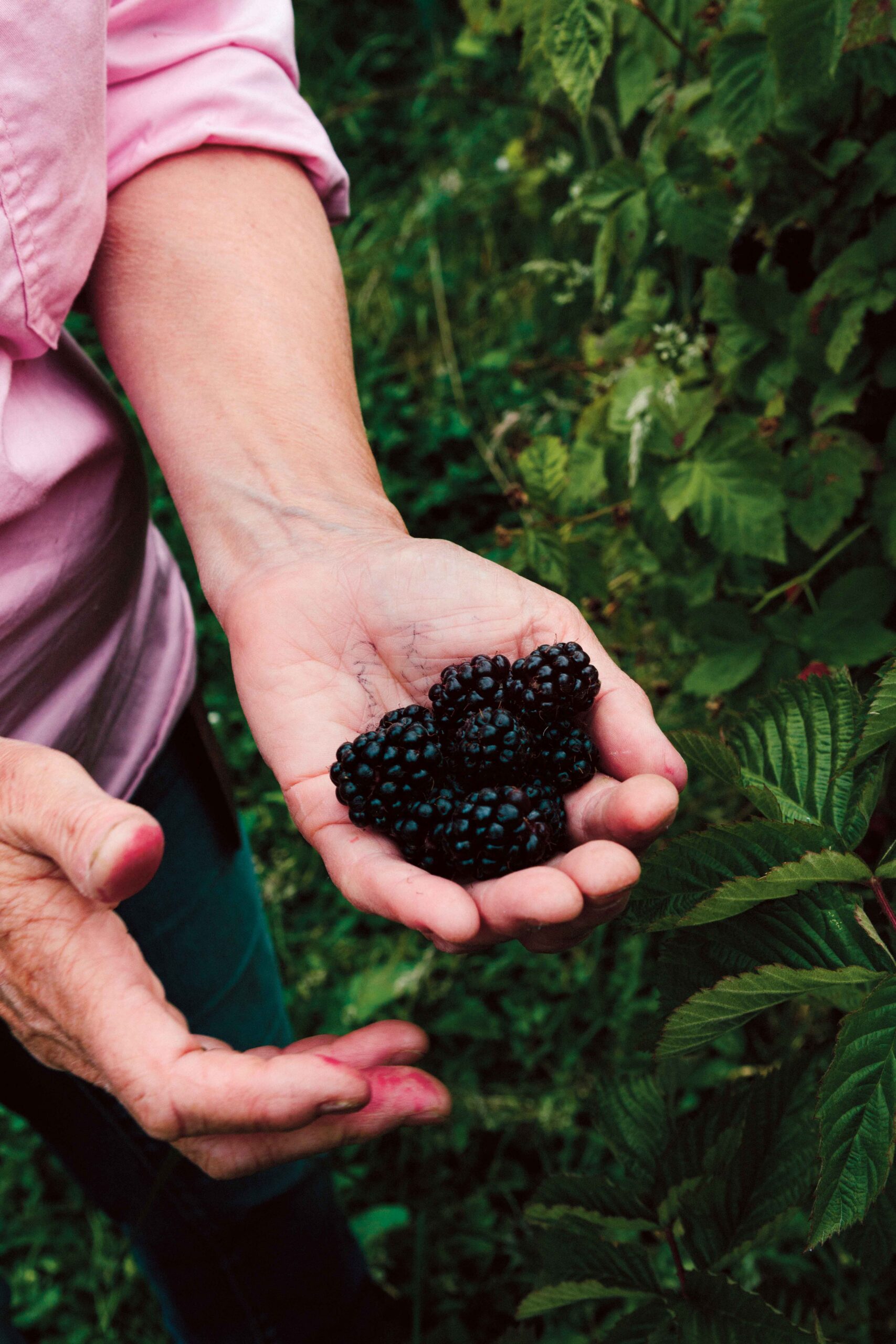
Ripe blackberries at Whistlers Ridge, Celia's property near Franklin, Tasmania.
“I love that more and more women are becoming involved,” says the co-founder and president of Regenerative Agriculture Network Tasmania (RANT). “There’s just something in us that’s very nurturing, that wants this change.”
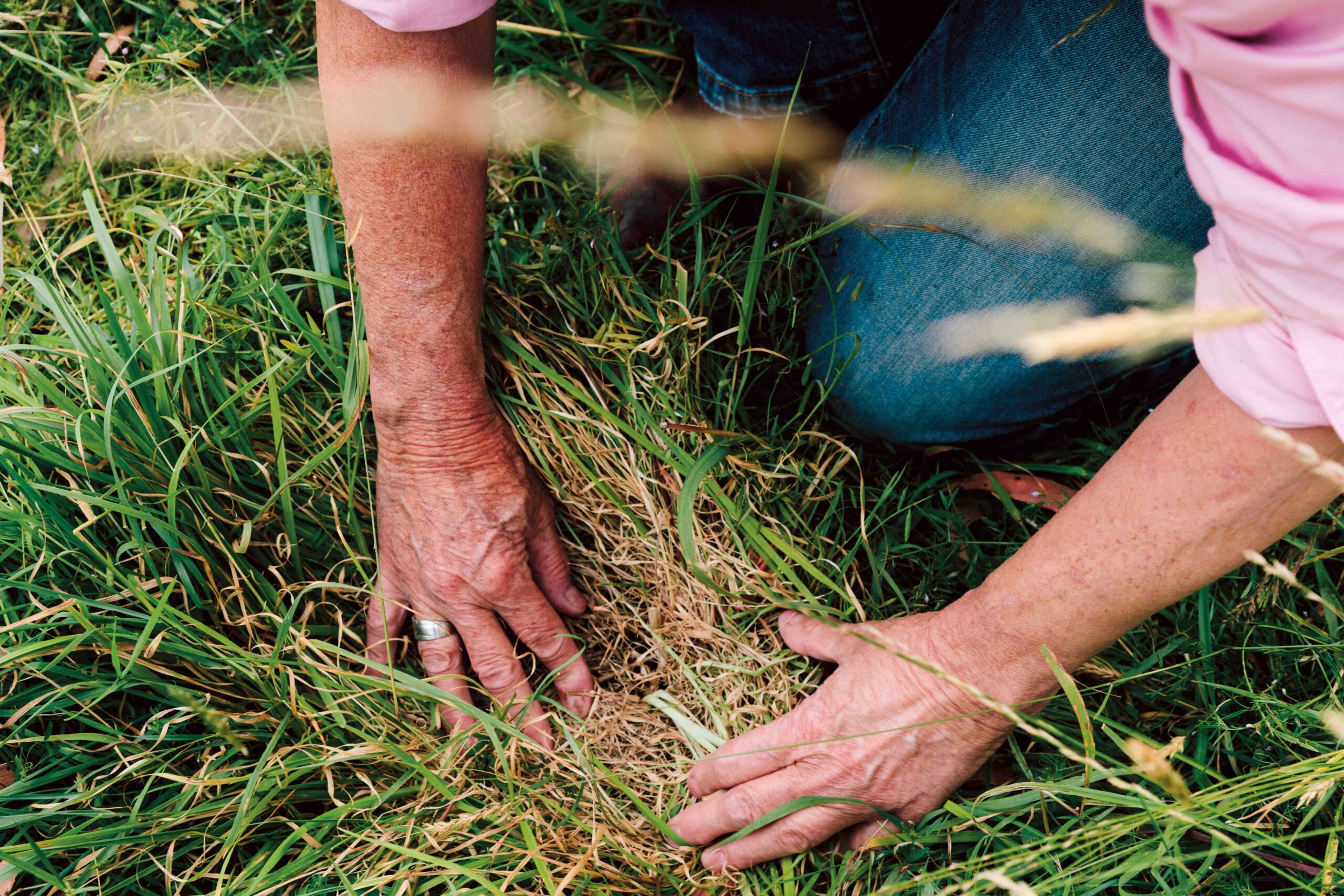
There’s a bit of industry pushback to the ‘regenerative’ label. “Farmers hate it, consumers love it,” Celia says with a shrug. What does it really mean, though? Unlike most active land rehabilitation programs, regenerative agriculture’s focus is on productive land rather than shelter belts or riparian and remnant bush conservation zones. RANT’s charter is to help farmers profitably restore depleted production land through low-impact, low-risk changes to their operations.
Over the past five years, Celia has led RANT to build communities of farmers around the state who encourage one another, share data and celebrate their trial outcomes. On the ground, the goals are increased biological diversity above and below the soil surface; fully functioning water infiltration and nutrient cycling system and 100 per cent year-round groundcover, even in drought. Mostly, this is achieved through intensely managed rotational grazing, first trialled in small ladder-like strips in specific microclimates, then rolled out over larger areas. High stock densities, high utilisation and very long recovery times are key.
“It is outcomes driven, rather than being proscriptive,” Celia explains. She is behind the rollout of 65 farm trials on 10 farms in Tassie over the past five years, working with project scientist Graeme Hand, a leading holistic farm management consultant who trained with rotational grazing pioneer Allan Savory.
Recently, Celia’s work with RANT was recognised with an Australian Government Climate Innovation Award through Landcare Australia that acknowledged “pivotal steps towards combating climate change while producing food and fibre sustainably and profitably”. Last year, she travelled the world as a Churchill Fellow to visit 40 regenerative farms in the US, UK and Scotland. She won an AgriFutures Development Award, supported by Tasmanian Women in Agriculture, in 2020.
PHOTOGRAPHY MICHELLE CRAWFORD
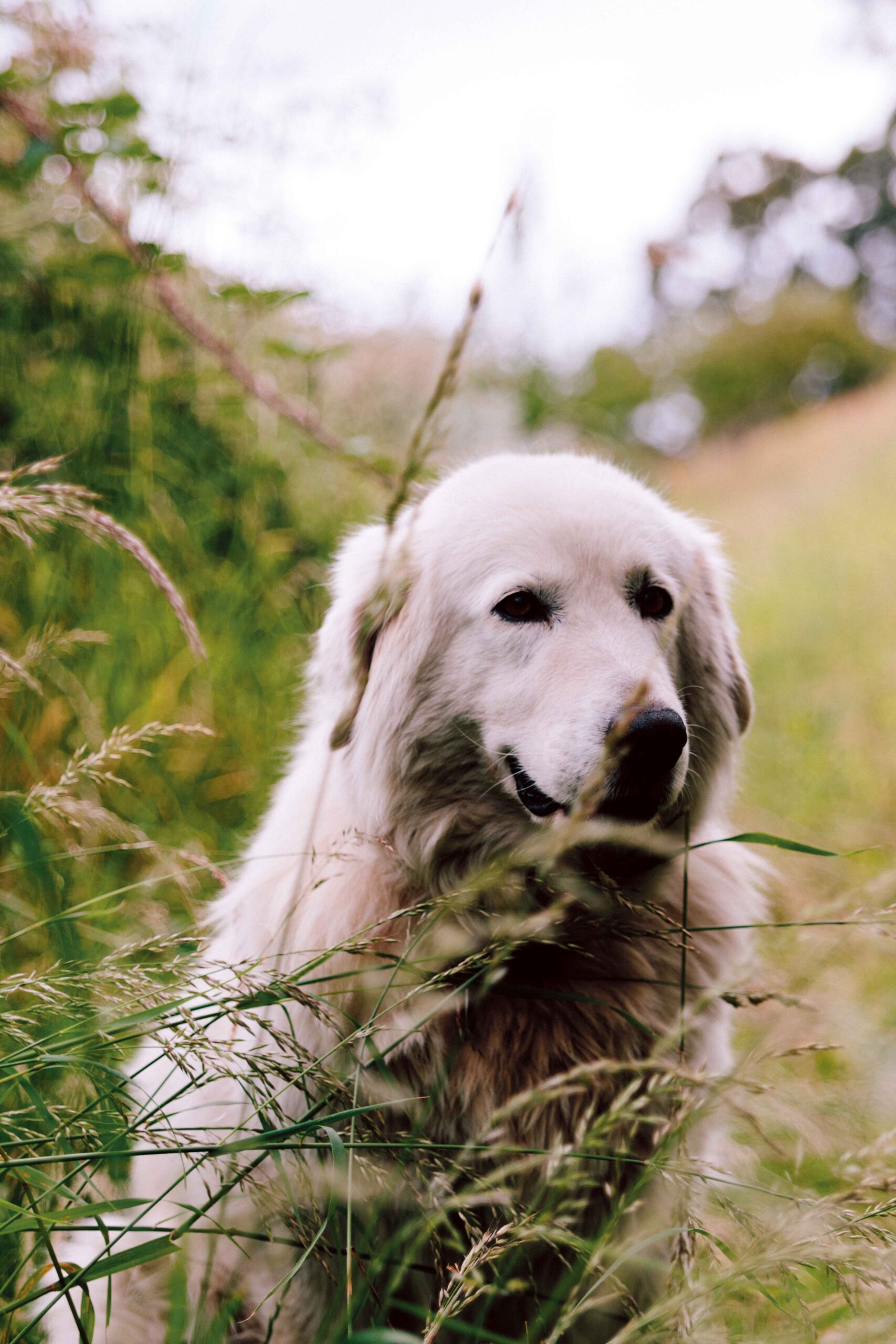
Lola keeps watch.
PHOTOGRAPHY MICHELLE CRAWFORD
RANT’s charter is to help restore depleted production land.
After scaling back to pursue the Churchill Fellowship, the 61-year-old has spent the summer watching the grass — and, inevitably, the weeds — grow while focusing on family. But the lull won’t last forever. Later this year, she plans to restock and return to the meticulous practice of strip grazing and monitoring soil health.
Regenerating the land has no clear start or finish but, as Celia knows, it’s always possible to hit pause, then pick up right where you left off. “It’s observational, active and adaptive,” she says.
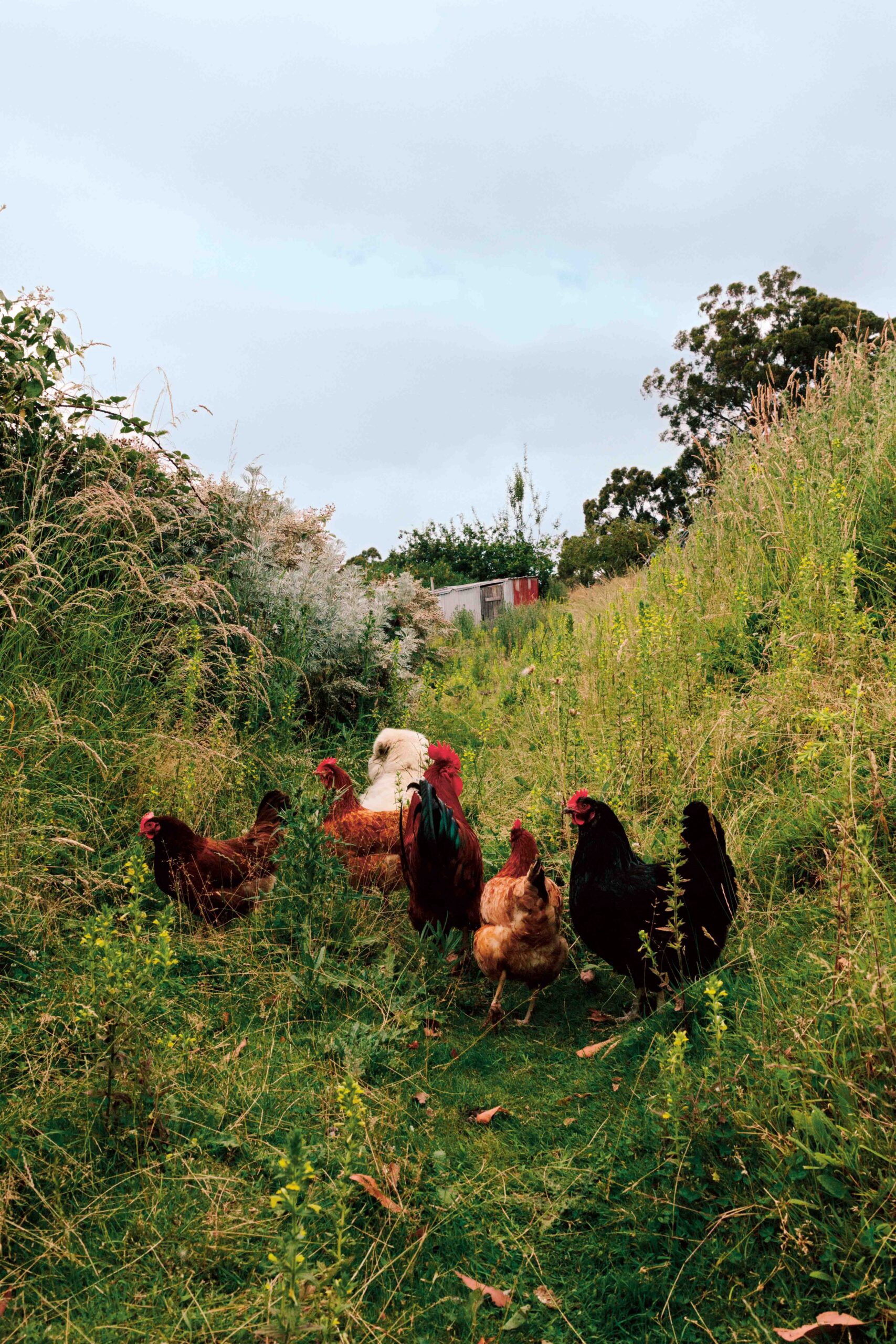
A single mother of four adult children, she built a life and a livelihood on the food and profits from her intensively managed six hectare farm. Cattle, sheep, 600 pastured hens and market gardens have all flourished under her care, without a trace of conventional pesticides or fertilisers.
“There wasn’t one big epiphany about chemical use,” she reflects. “But I do remember thinking, ‘I can’t take my kids into that paddock because it’s just been sprayed, yet in a few days we’ll be drinking milk from it.’”
Celia grew up in Hobart but has always been a country girl at heart. “I think I said ‘gee-gee’ before ‘Mama’,” she says. “I wanted to farm. I’ve never wanted to do anything else.” During her childhood, she had free rein at her cousins’ farm at Margate, south of the city, becoming an accomplished showjumper as well as budding farmhand. After attending Glenormiston Agricultural College in Victoria, she found work as a freelance farm secretary.
PHOTOGRAPHY MICHELLE CRAWFORD
Free-range chickens are part of Celia’s sustainability plan.
PHOTOGRAPHY MICHELLE CRAWFORD
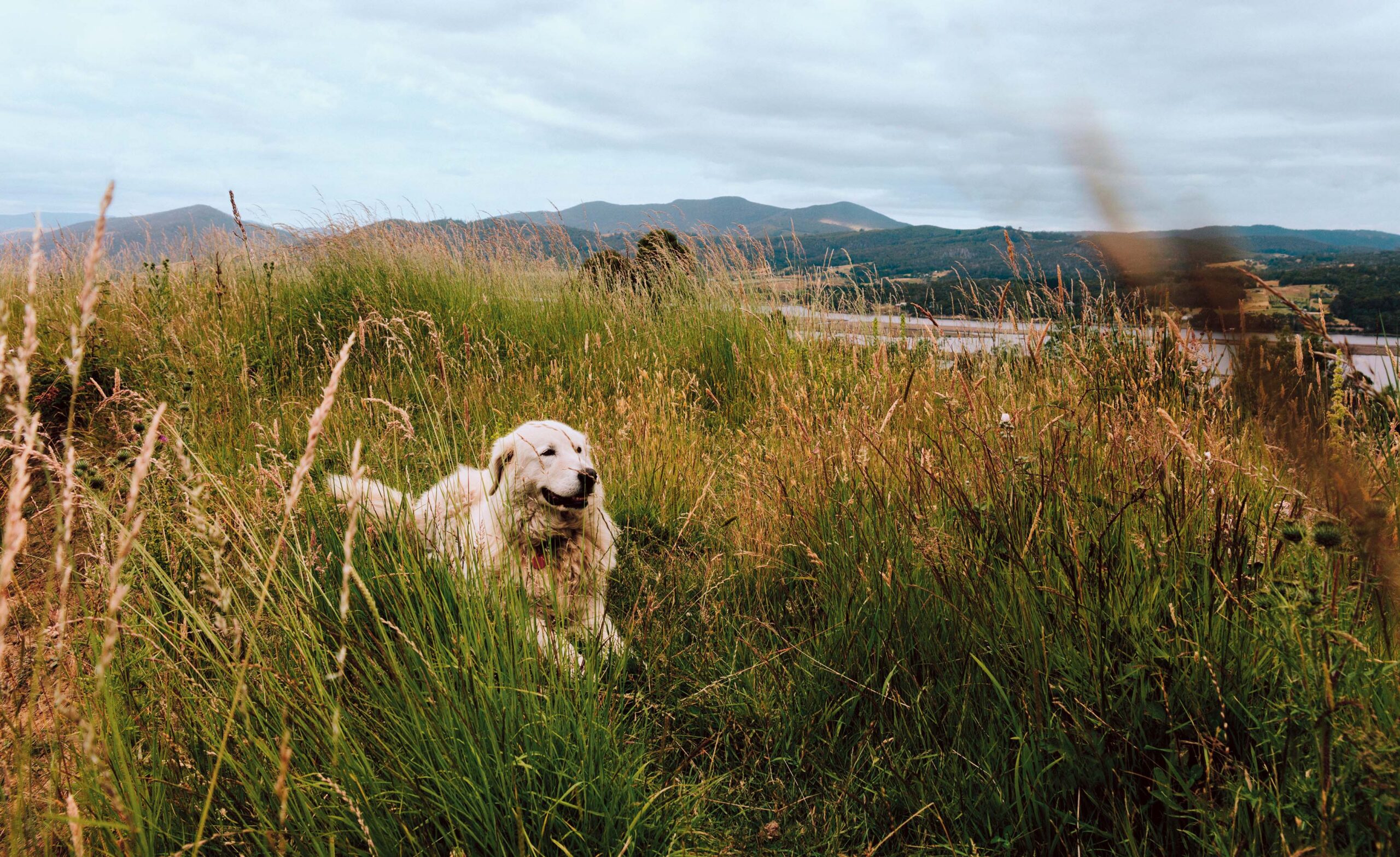
Lola and Celia will be hitting the road in a camper-van before the property is re-stocked.
She says it took just a year for sexism to drive her out of the industry. “I was so ground down by the discrimination and harassment by other stockmen and the farmer turning a blind eye to it,” she says. “The farm secretarial side of things was no better. Men would be standing over the top of you, leering down the front of your shirt. You wore skivvies. It was relentless and exhausting. I went off to groom for the Argentinian polo team then to work for the ABC as a rural reporter.”
At 30, she married a dairy farmer from the state’s north and had four babies over the next decade. The marriage ended while her fourth child was still an infant. She took her children home to the beloved Huon Valley of her childhood, buying Whistlers Ridge, and they lived first in a family shack near Cygnet then in a tent on site for six months while their cosy timber home was built.
“It was a wonderful lifestyle,” she says, smiling. Celia homeschooled the children — two boys and twin girls — while transforming the former orchard into pasture and garden beds.
PHOTOGRAPHY MICHELLE CRAWFORD
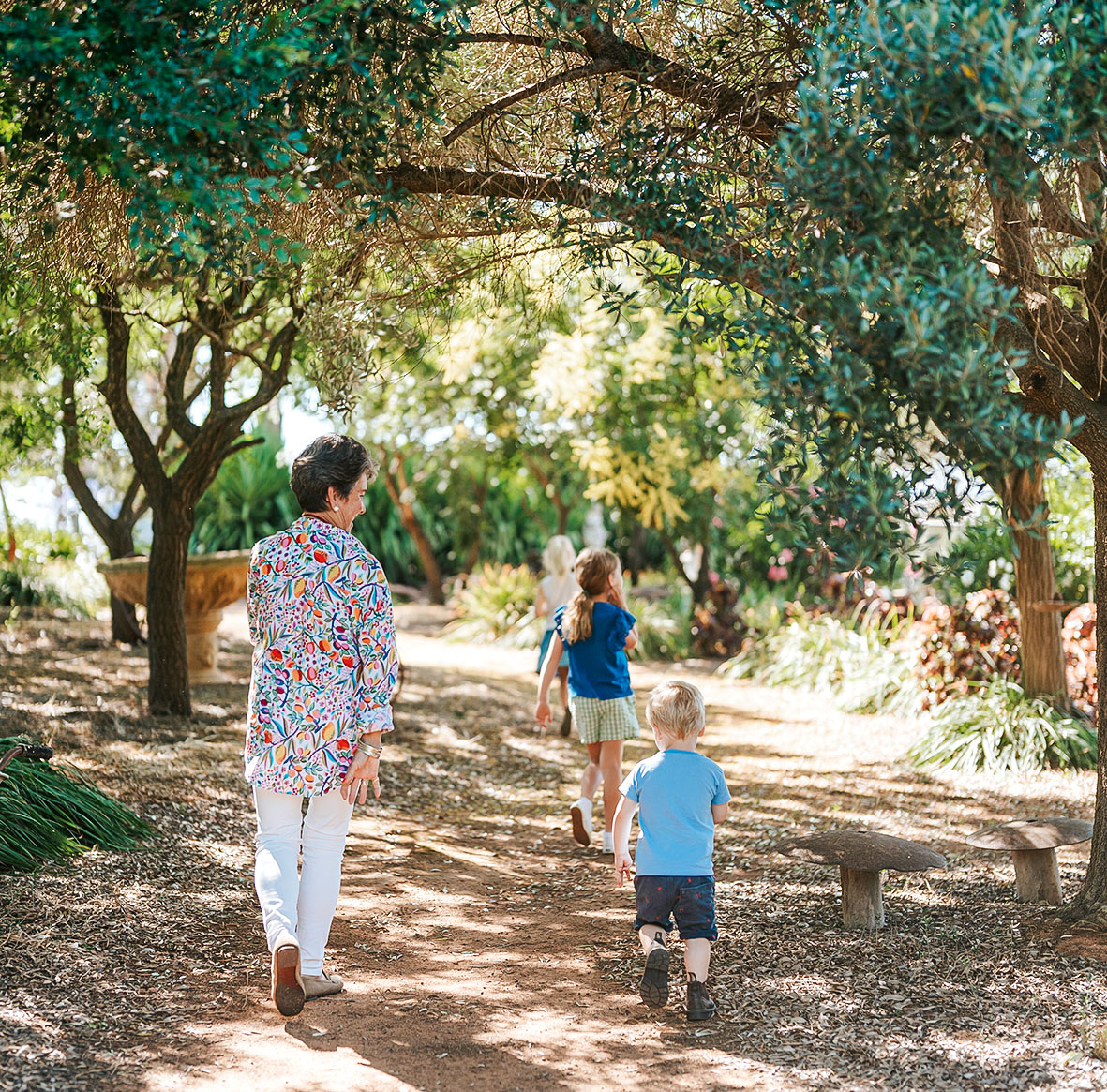

Celia strolls along a hilltop at Whistlers Ridge, backdropped by the Huon River.
Today, with her children all out of the nest and either employed in agriculture or studying it, Celia is pondering her next move as she deliberately applies the permaculture principle of people care to herself.
“I’ve always been drawn to the people care side of things, yet it’s the first thing that drops off when things get hard,” she says. “Farming has to work at every level. It’s got to be good for the land, profitable and good for the people. We only have to look at the mental health crisis within the farm sector.
“The move from profitability to an intense focus on productivity comes at a high price for both the land and the people. When money is tight and people are stressed, the land suffers. You don’t have the headspace or the financial capacity to actually look after the land, because you have to push things so hard. These things are intrinsically linked and women are particularly attuned to recognising this indivisibility.”
Having noticed signs of burnout in herself, Celia plans to practice what she preaches by taking off with Lola, a maremma sheepdog, in her camper-van for a month or two before hitting the saleyards to buy new stock. Only when she has restored herself will she turn to restoring her pasture to peak health, too. It’s a refreshingly pragmatic approach, grounded in no-nonsense philosophy. “I don’t know if it’s eternal optimism, but I’ve always been solutions-focused. I never want to whinge about something. If there’s a problem, you just fix it.”
If this story raises issues for you, call 13 11 14 for Lifeline’s 24-hour telephone crisis line.
Subscribe to Graziher and you’ll never miss an issue of your favourite magazine. Already a subscriber? Consider gifting a subscription to someone special in your life.
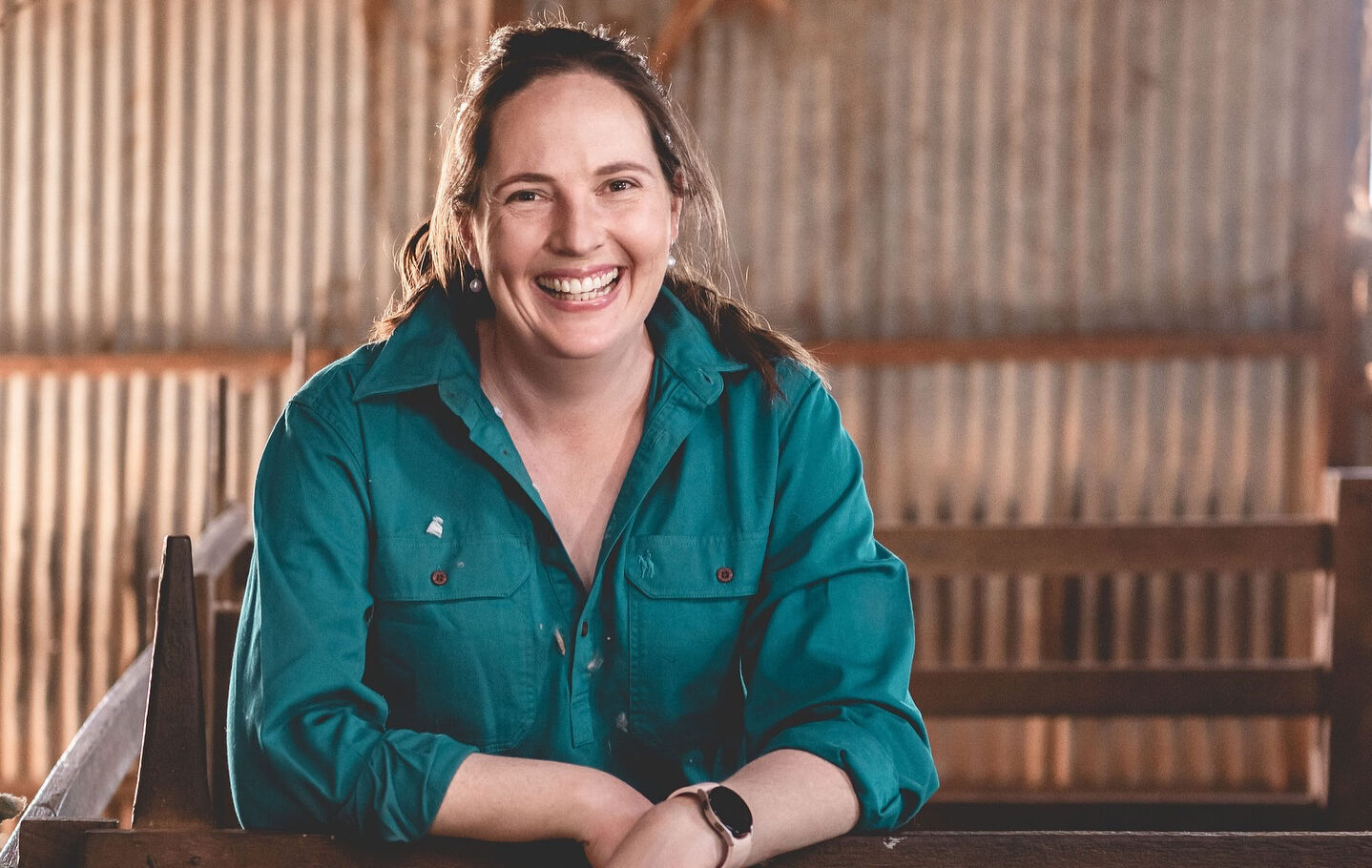
“It becomes impossible to know what is true,” writes Steph Schmidt, a farmer, mother-of-three and founder of Farm Life Psych.
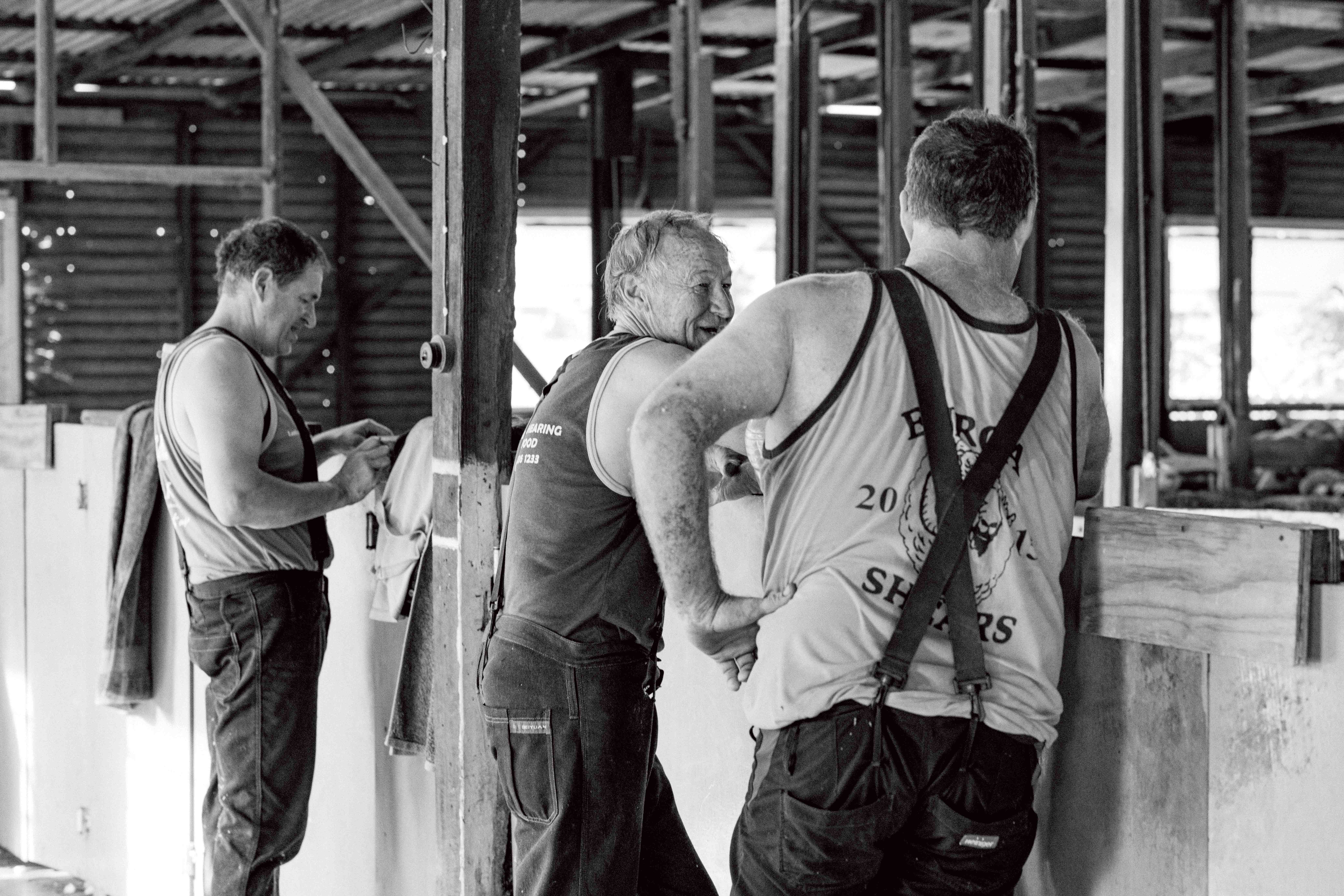
Members of the Graziher community capture rural life as they experience it, from Pompapiel in Victoria to Queensland’s Elrose station.
“It becomes impossible to know what is true,” writes Steph Schmidt, a farmer, mother-of-three and founder of Farm Life Psych.
Members of the Graziher community capture rural life as they experience it, from Pompapiel in Victoria to Queensland’s Elrose station.
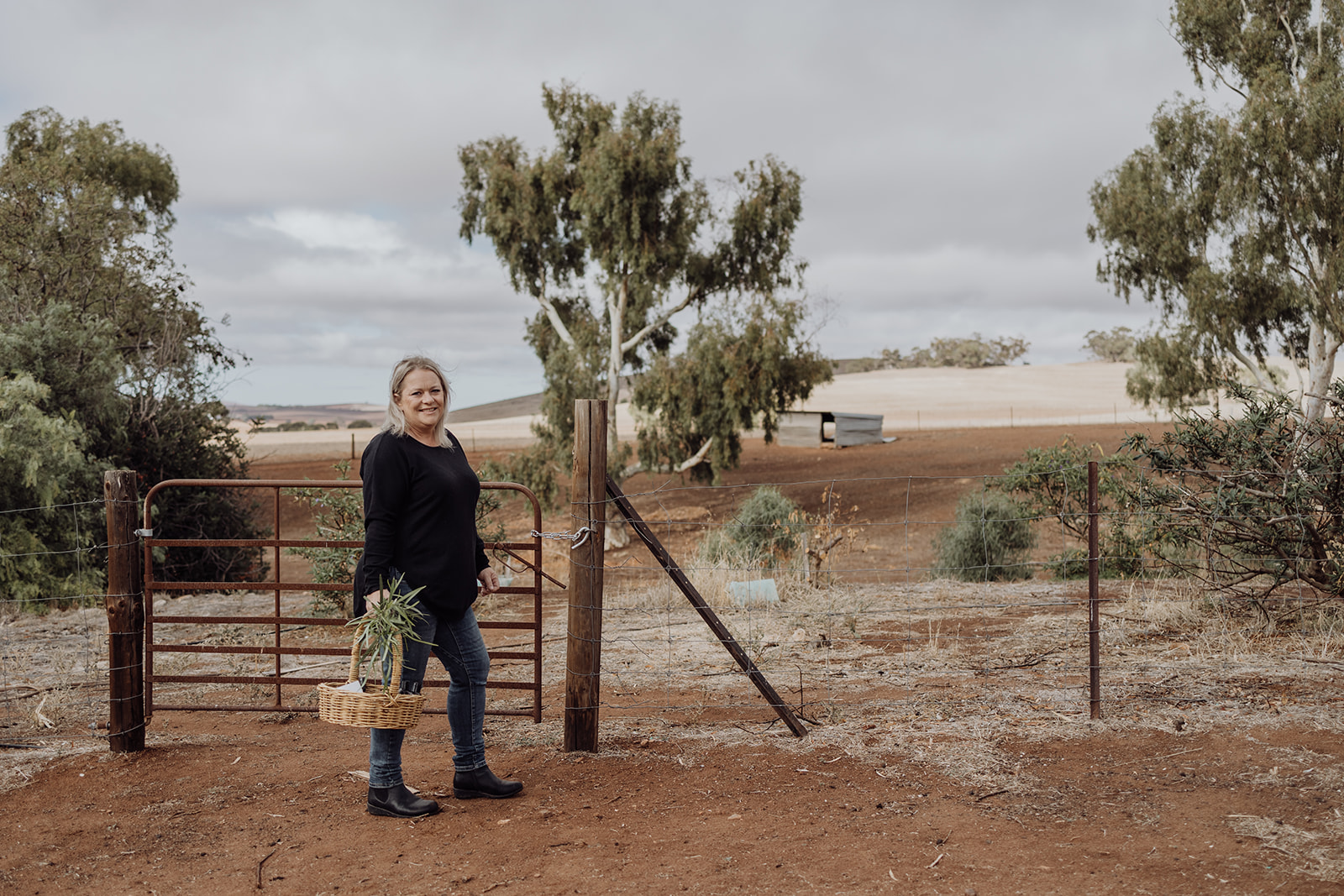
The South Australian massage therapist and mum of four turned to bush salves when she could no longer use her hands to heal.

