






PHOTOGRAPHY GEORGIA BRAGG
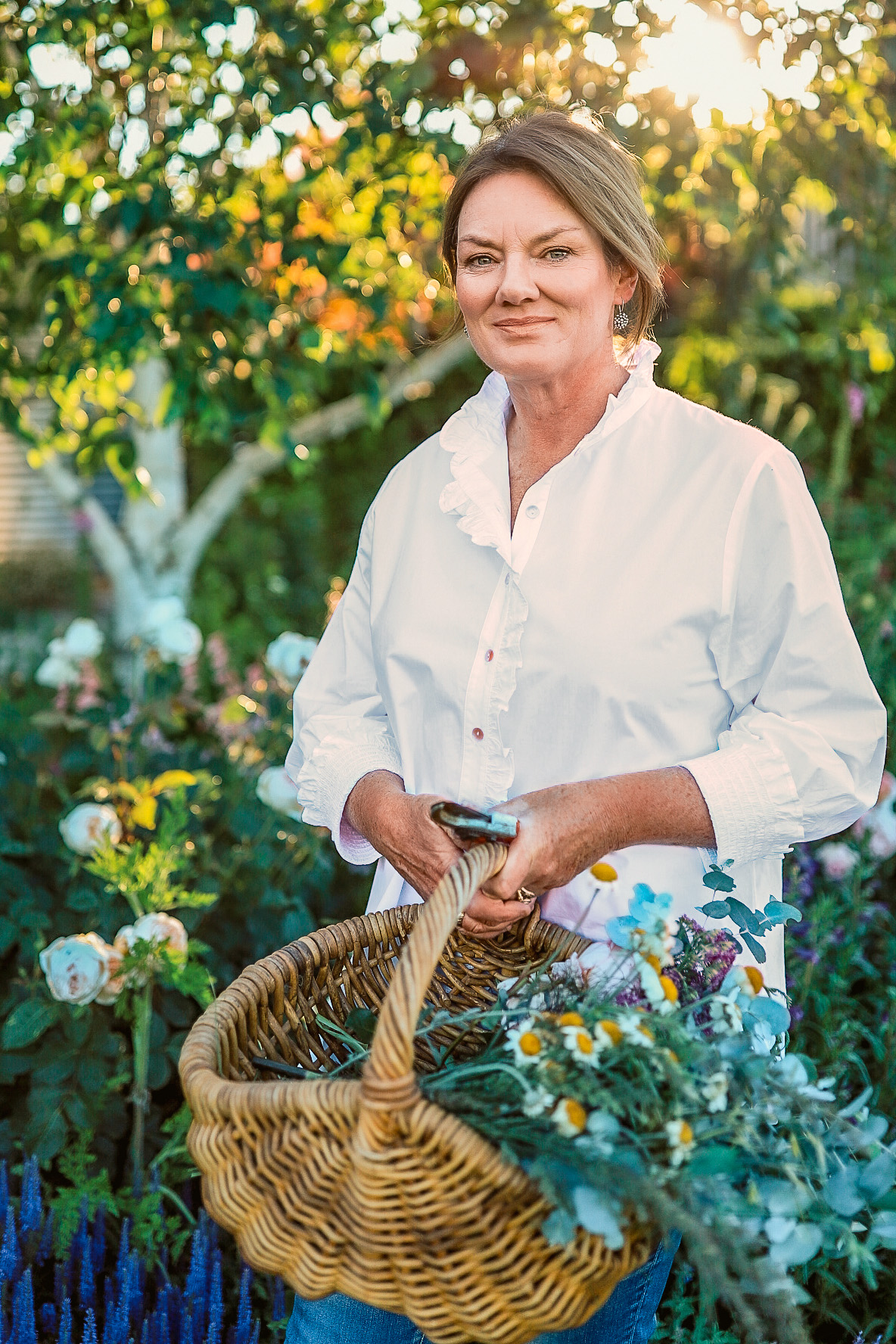
Colleen Southwell loves the aster family “with their button centres and petal skirts, a target for bees and butterflies.”
Sign up to our mailing list for the best stories delivered to your inbox.
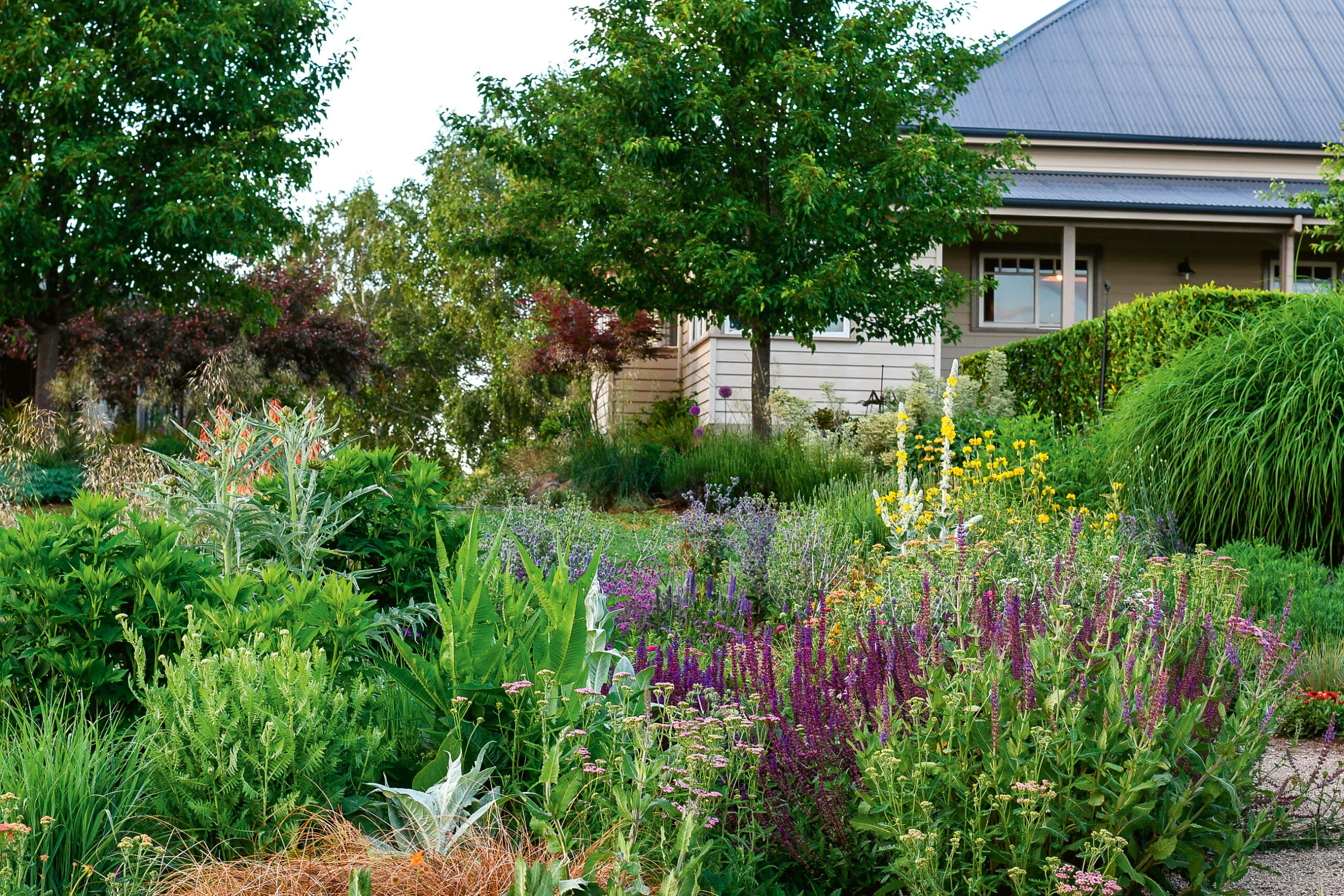
The Graziher columnist mixes umbels, daisies and ornamental grasses at her garden in the Central West of New South Wales.
WORDS AND PHOTOGRAPHY COLLEEN SOUTHWELL PORTRAIT GEORGIA BRAGG
PHOTOGRAPHY GEORGIA BRAGG
Colleen Southwell loves the aster family “with their button centres and petal skirts, a target for bees and butterflies.”
PHOTOGRAPHY COLLEEN SOUTHWELL
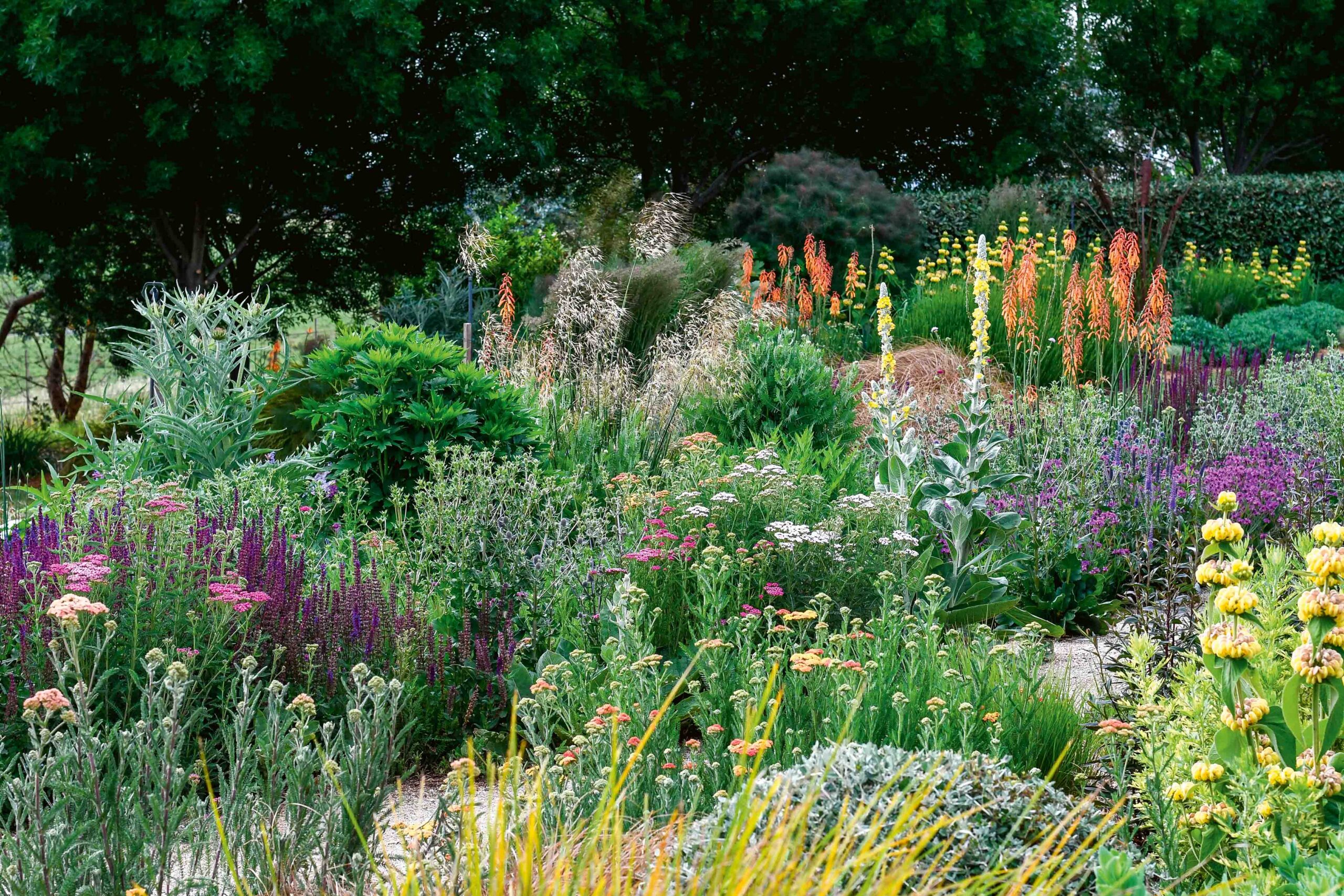
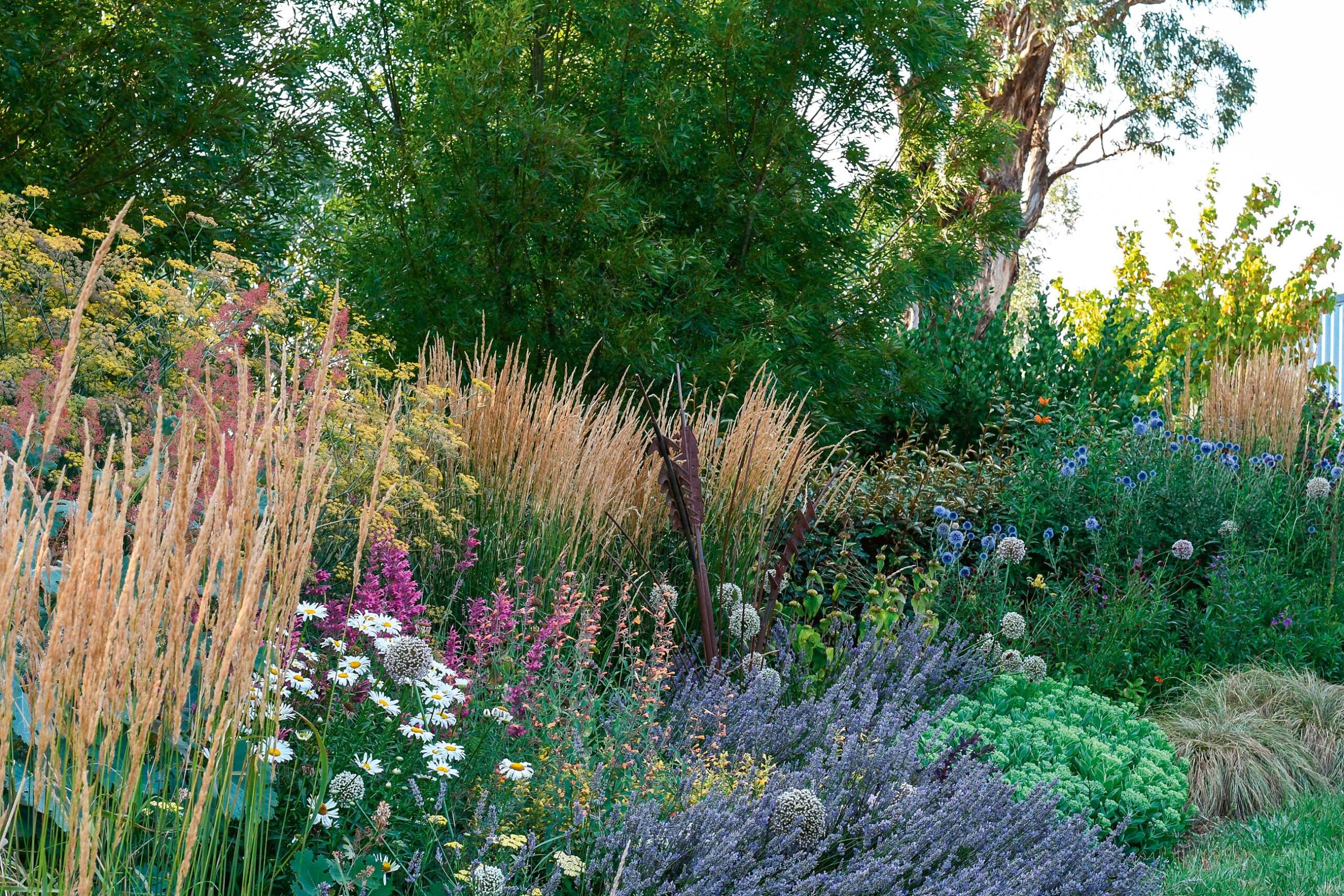
Summer flowers in different forms, from sparkly Stipa gigantea ornamental grass and spires of Kniphofia and Salvia to umbelliferous flowers, such as Achillea ‘Walther Funcke’ and ‘Cerise Queen’.
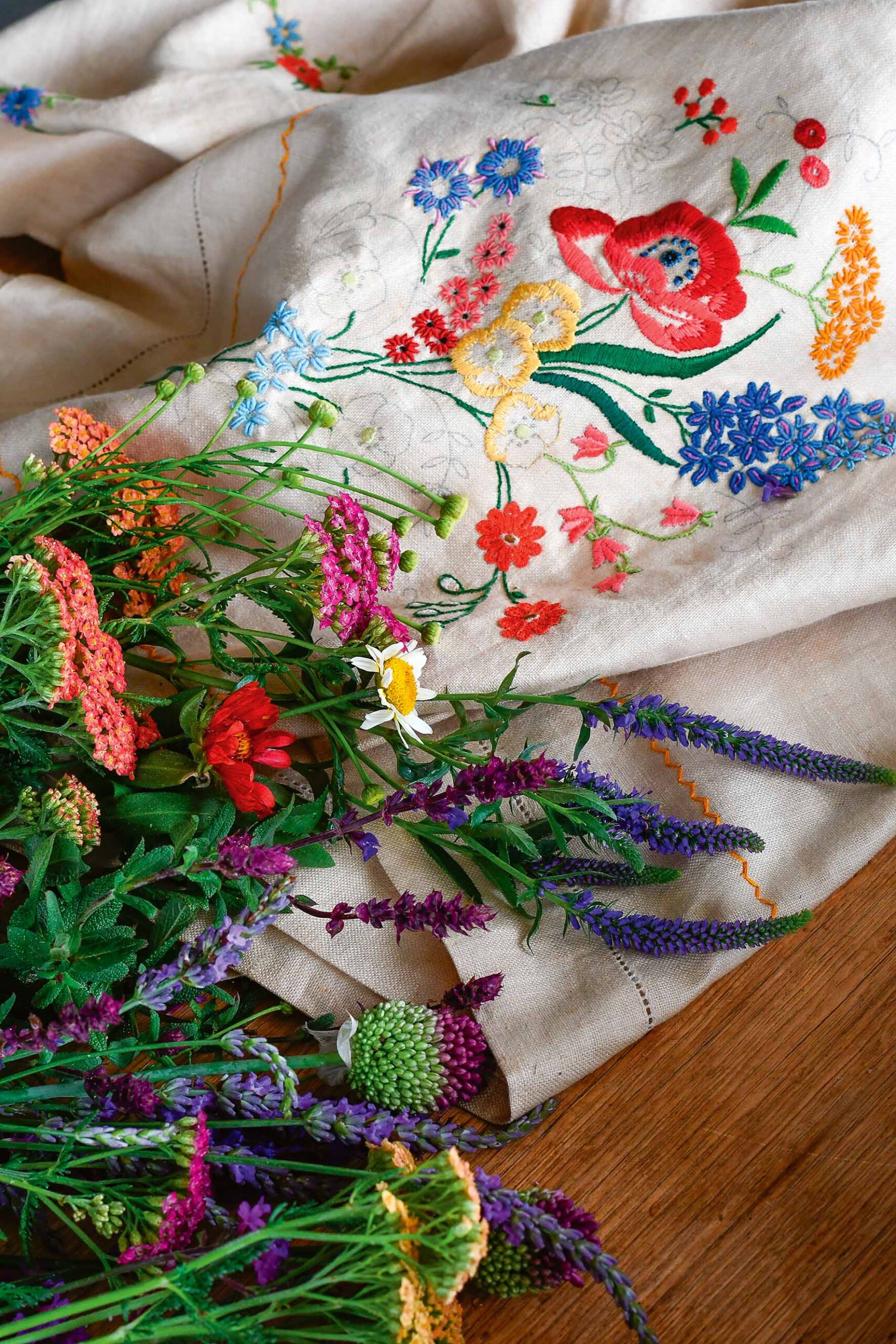
The linen has aged to yellow over the years, while the remnant of her careful handiwork has weathered time well. I imagine her hands holding the cloth and guiding the needle, creating a piece once intended for the table, with family gathering around for tea and conversation.
Hanging beside it is an embroidery I made in my teens, a parterre of running stitch hedges filled with a garden of colourful French knots. Mum and Grandma taught me to embroider, and I spent many hours embellishing fabric with needle and thread, making pieces to be handed on, as the tablecloth was to me.
Now, as a gardener surrounded by a tapestry of flowering perennials, I reflect on the parallels between stitching a tablecloth and growing a garden: both are intended as gathering places, made with colour, texture and story, and each also reflects the gentle care and attention of the maker.
Flowers are the jewels of the late summer garden; it’s a time when many perennials are in full dance, rich with colour and mingling in a myriad of shapes and sizes like living embroidery stitches. In needlework we compose with thread and cloth, while in the garden we weave plants with landscape to craft beauty.
PHOTOGRAPHY COLLEEN SOUTHWELL
Colleen’s grandmother left this unfinished embroidery that now inspires Colleen in her garden.
PHOTOGRAPHY COLLEEN SOUTHWELL
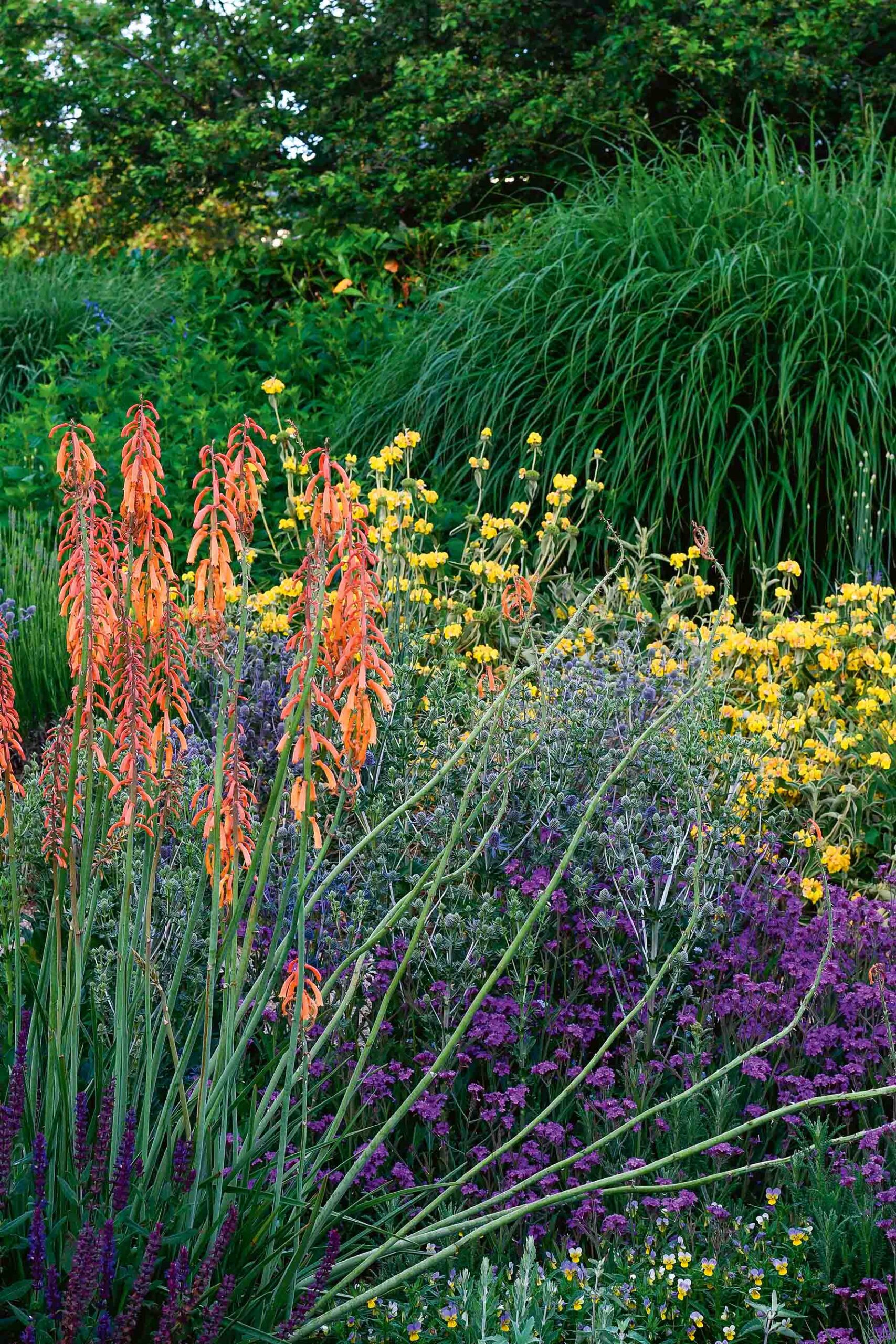
Kniphofia thomsonii var. snowdenii makes a strong vertical statement.
A garden filled with a variety of flowers is healthy and engaging. Diversity brings life and energy, and attracts birds and insects to the blooms that take their fancy. By growing an array of flowers, we create a welcome home for many little lives, and a joyful and immersive place for ourselves.
A flower form I can’t live without is the umbel (think of an umbrella with spikes radiating from a central point and canopy overhead). Lacy and airy, these romantic blooms draw beneficial insects such as ladybirds. I plant umbelliferous flowers such as Daucus carota ‘Dara’ (ornamental carrot) among my roses to encourage ladybird larvae to feast on the aphids. Yarrow (Achillea spp.), though not technically an umbel, also sports a canopy flower and comes in a wonderful range of colours.
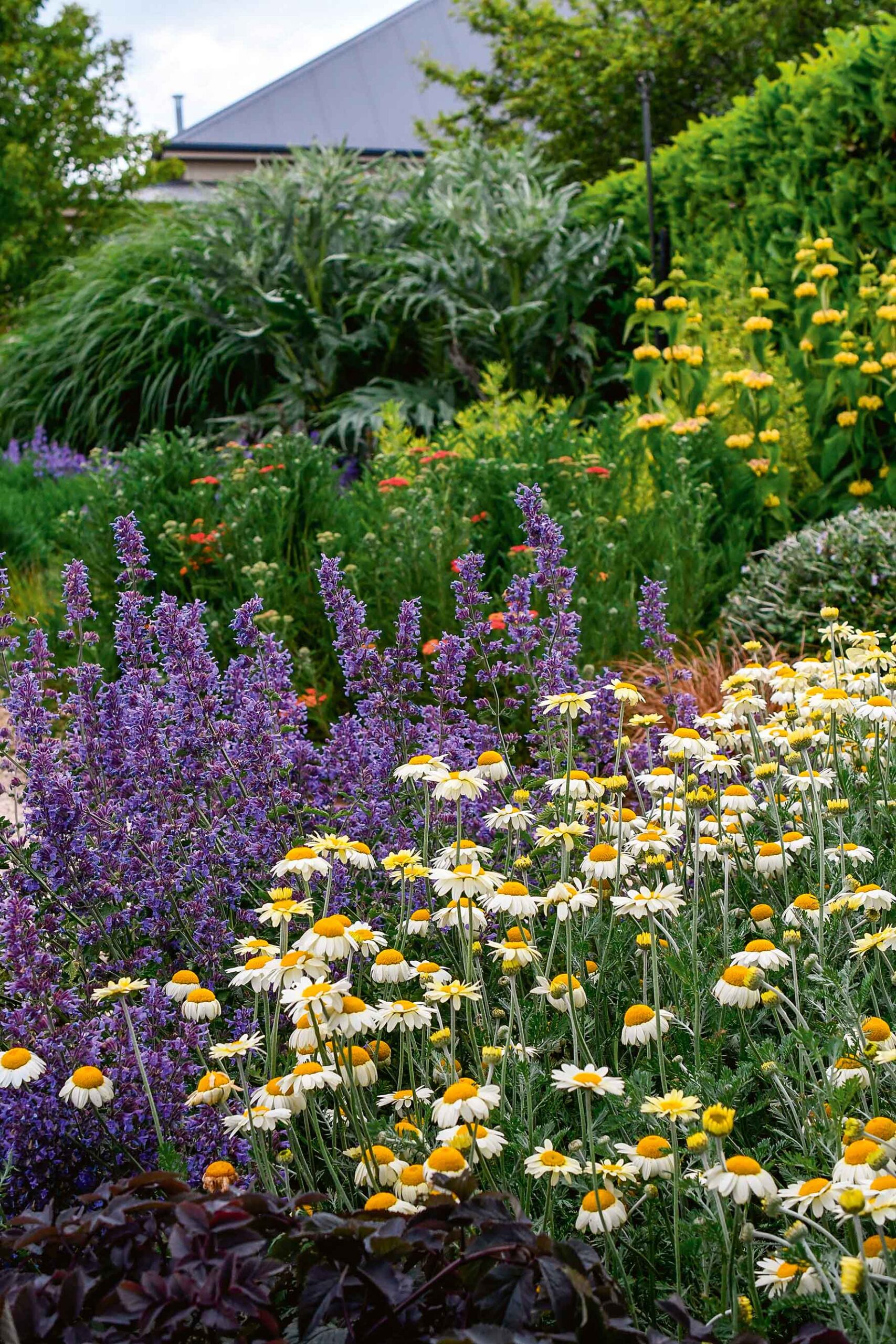
Other must-have flowers are daisies and stars. Their open faces are cheerful, while their button centres and petal skirts are a target for bees and butterflies, providing an easy landing pad for pollen and nectar collection. I particularly love Anthemis ‘Susanna Mitchell’ with its bold golden discs and white petals, the sunny flowers of rudbeckia and the sparkly little stars of aster and our native brachyscome.
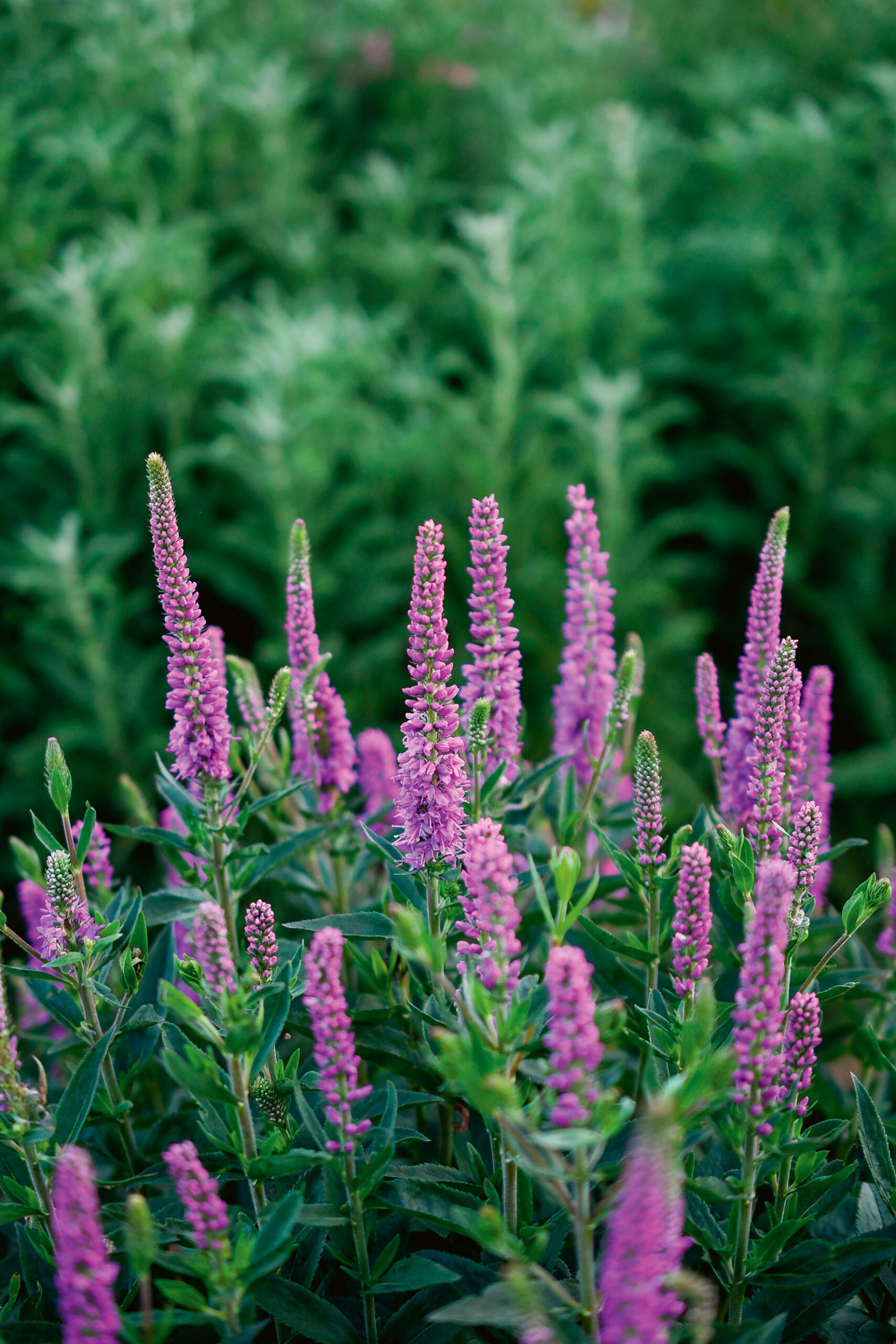
PHOTOGRAPHY COLLEEN SOUTHWELL
Veronica ‘Purpleicious’ flower spikes.
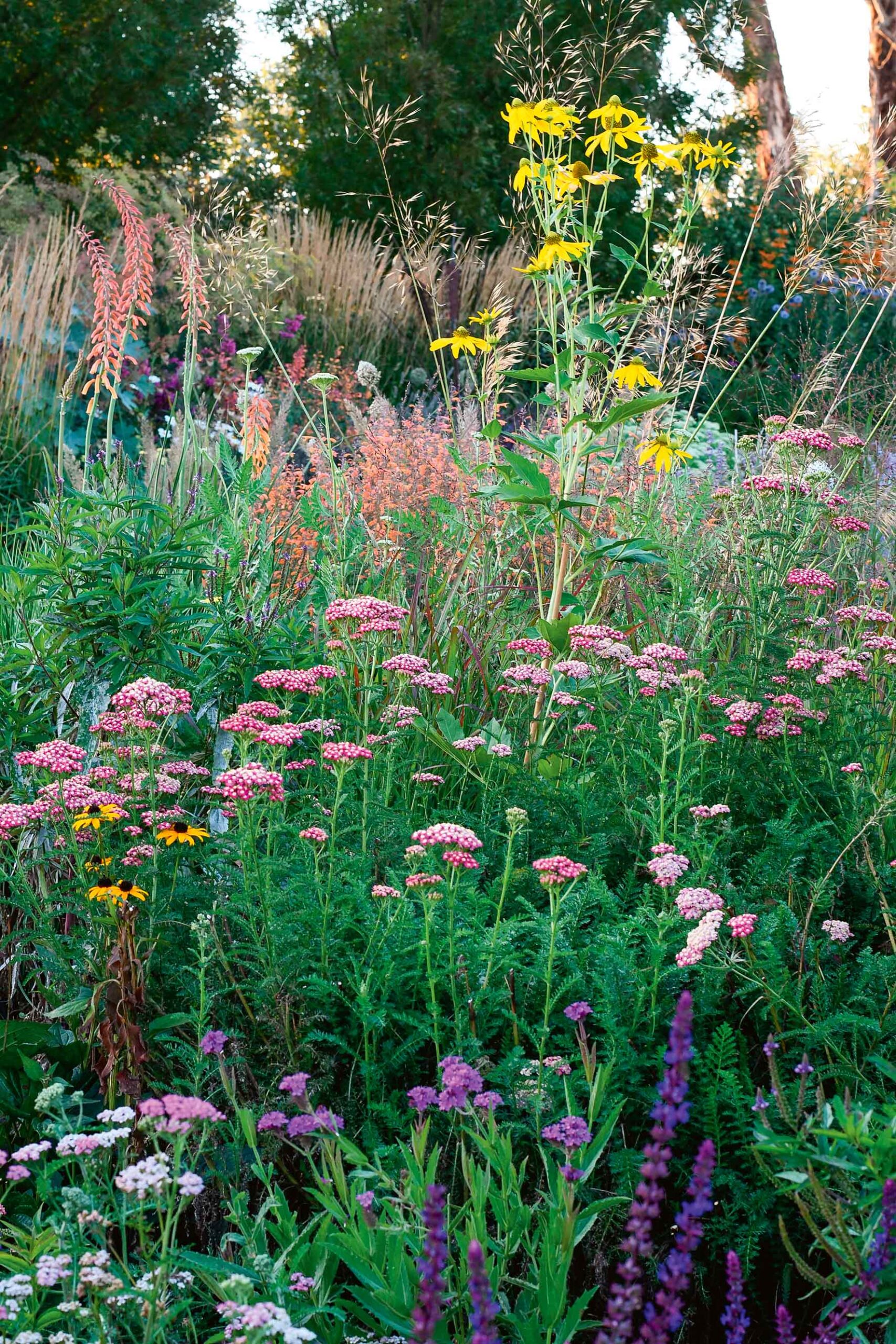
PHOTOGRAPHY COLLEEN SOUTHWELL
Achillea ‘Cerise Queen’, rudbeckia and purple vervain join ornamental grasses for contrasts in colour and shape.
Some stand tall among their peers, like the poker spikes of Kniphofia thomsonii var. snowdenii; its tangerine colour pairs well with the blue and purple flowers of Verbena rigida (vervain) and Salvia nemorosa ‘Caradonna’. Verbascum ‘Polar Summer’ has tall stems spotted with buttery flowers and sumptuous velvet buds that beg to be touched. Other flower spires, including Verbena hastata ‘Blue Spires’ and Veronica ‘Purpleicious’ gather en masse like choir members singing in chorus. The hues of purple are much loved by native blue-banded bees.
It’s worth adding the spherical pompoms of alliums to a garden to punctuate the mixture and provide contrast with plumes of ornamental grasses. Allium hollandicum (Persian onion or Dutch garlic) carries globes that are 10 centimetres wide on tall rigid stalks, while Allium sphaerocephalon, known as the drumstick allium, is smaller but still packs a punch. As members of the onion family, alliums can be helpful for deterring insect pests and attracting beneficial wasps. Equally wonderful for pops of colour are the metallic blue orbs of the southern globe thistle (Echinops ritro) and the yellow baubles of native billy buttons.
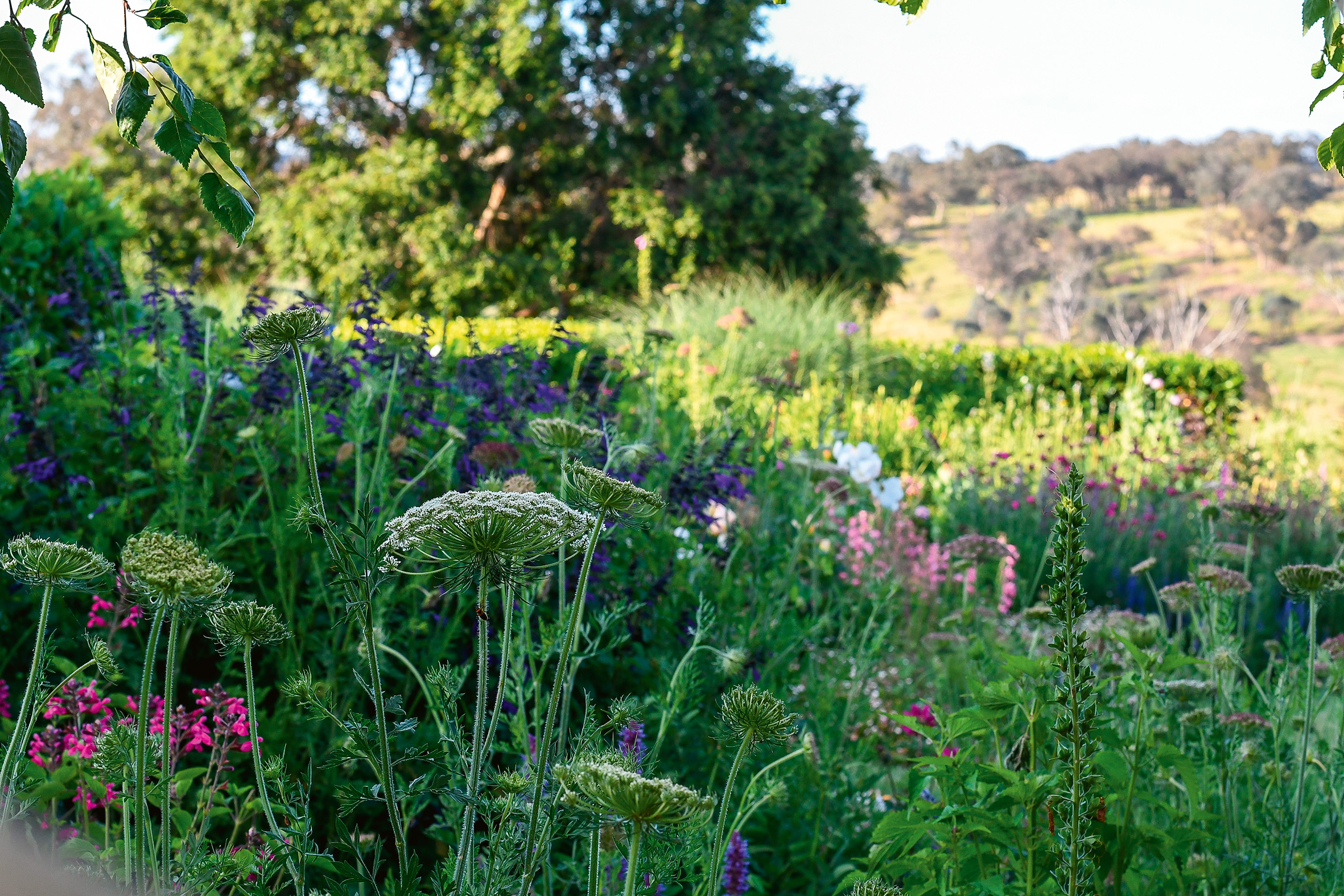
PHOTOGRAPHY COLLEEN SOUTHWELL
The flowers of ornamental carrots attract beneficial insects, while the bell-shaped flowers of salvia and pink pentstemon attract nectivorous birds.
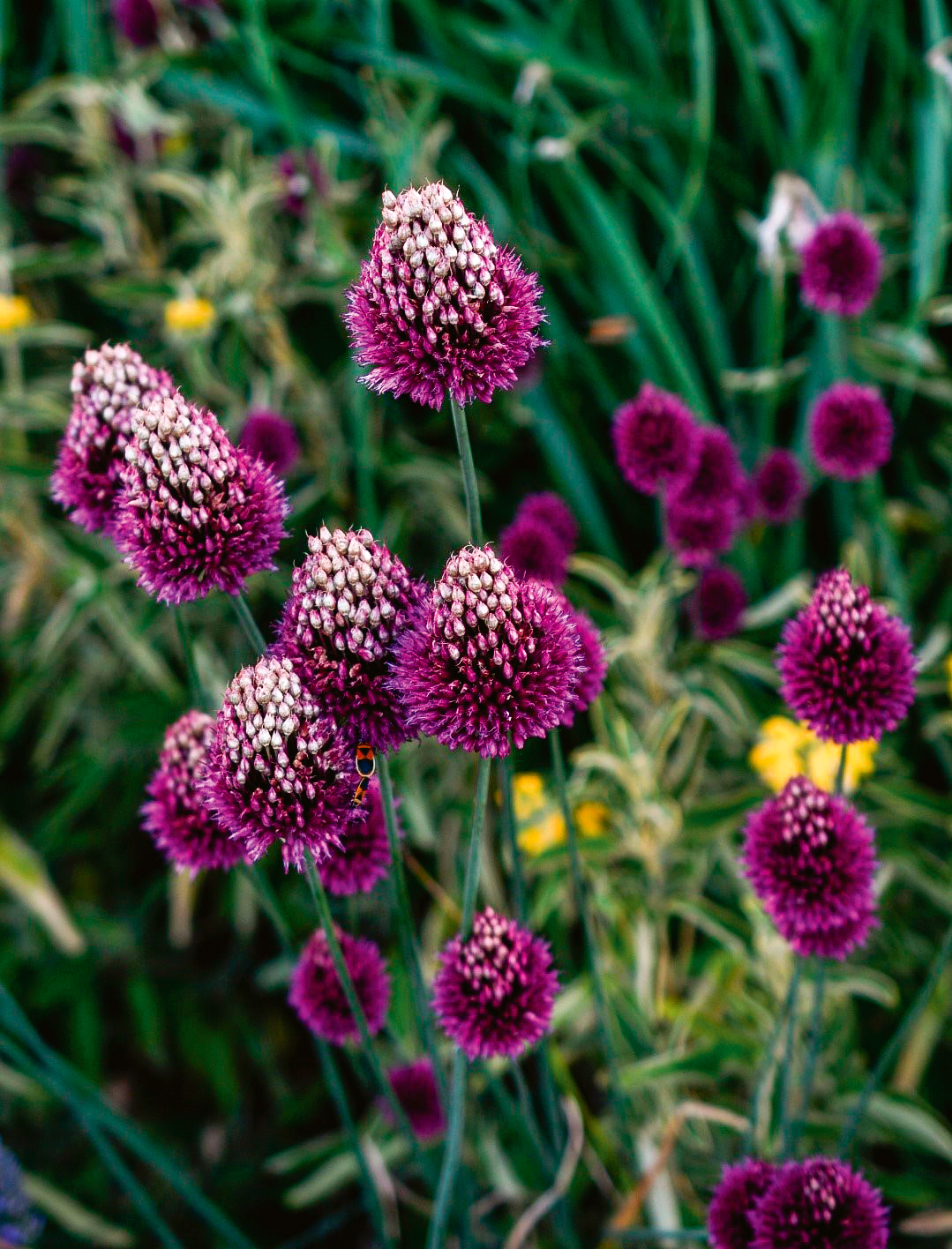
PHOTOGRAPHY COLLEEN SOUTHWELL
Drumstick allium (Allium sphaerocephalon).
The garden of Ann-Maree Winter, near Arthurs Seat on Victoria’s Mornington Peninsula, is a great example of using
a blend of flowers to great effect. Ann-Maree is courageous with her choices and combinations, and the result is spectacular.
New Zealand textile artist Fleur Woods creates beautiful floral needlework, offering a unique source of inspiration for palettes of colour and texture in the garden and on fabric. Her book, The Untamed Thread (Koa Press, 2023), is a visual feast and a wonderful read for makers and gardeners alike.
When woven together like the threads of an embroidery, a mixture of flower shapes and colours create a textured and abundant picture, and also encourage a diversity of life in the garden. The result is a healthy and enriching home for ourselves and those we share it with.
PHOTOGRAPHY COLLEEN SOUTHWELL
Mixing various flower forms creates a diverse and healthy garden tapestry. Here, starry asters and daisies, as well as the fluffy globes of alliums, sit among tall grasses and spires of agastache and lavender. For contrast, blue globe thistle flowers stand among the grasses and various pink and purple flower spikes fill the middle of the bed.
PHOTOGRAPHY COLLEEN SOUTHWELL
Nepeta ‘Otway Towers’ contrasts with Anthemis ‘Susanna Mitchell’.
A garden speaks of its maker, just as an embroidery shows the hand of the stitcher. Experiment with a palette of flower forms and colours.
• Aim for a mixture of flower forms and colours to create a rich tapestry of blooms and encourage a diversity of birds and insects.
• Keep plants with similar growing needs together, but don’t be afraid to experiment with new combinations.
• Think beyond pastels and incorporate rich jewel colours to cope with the harsh Australian summer light.
• Grow a mixture of native and exotic flowers if you can.
Subscribe to Graziher and you’ll never miss an issue of your favourite magazine. Already a subscriber? Consider a gift subscription for someone special in your life.
Once a veterinary nurse, Rebecca Shelley now runs a flourishing online seed store.

“It becomes impossible to know what is true,” writes Steph Schmidt, a farmer, mother-of-three and founder of Farm Life Psych.
Members of the Graziher community capture rural life as they experience it, from Pompapiel in Victoria to Queensland’s Elrose station.
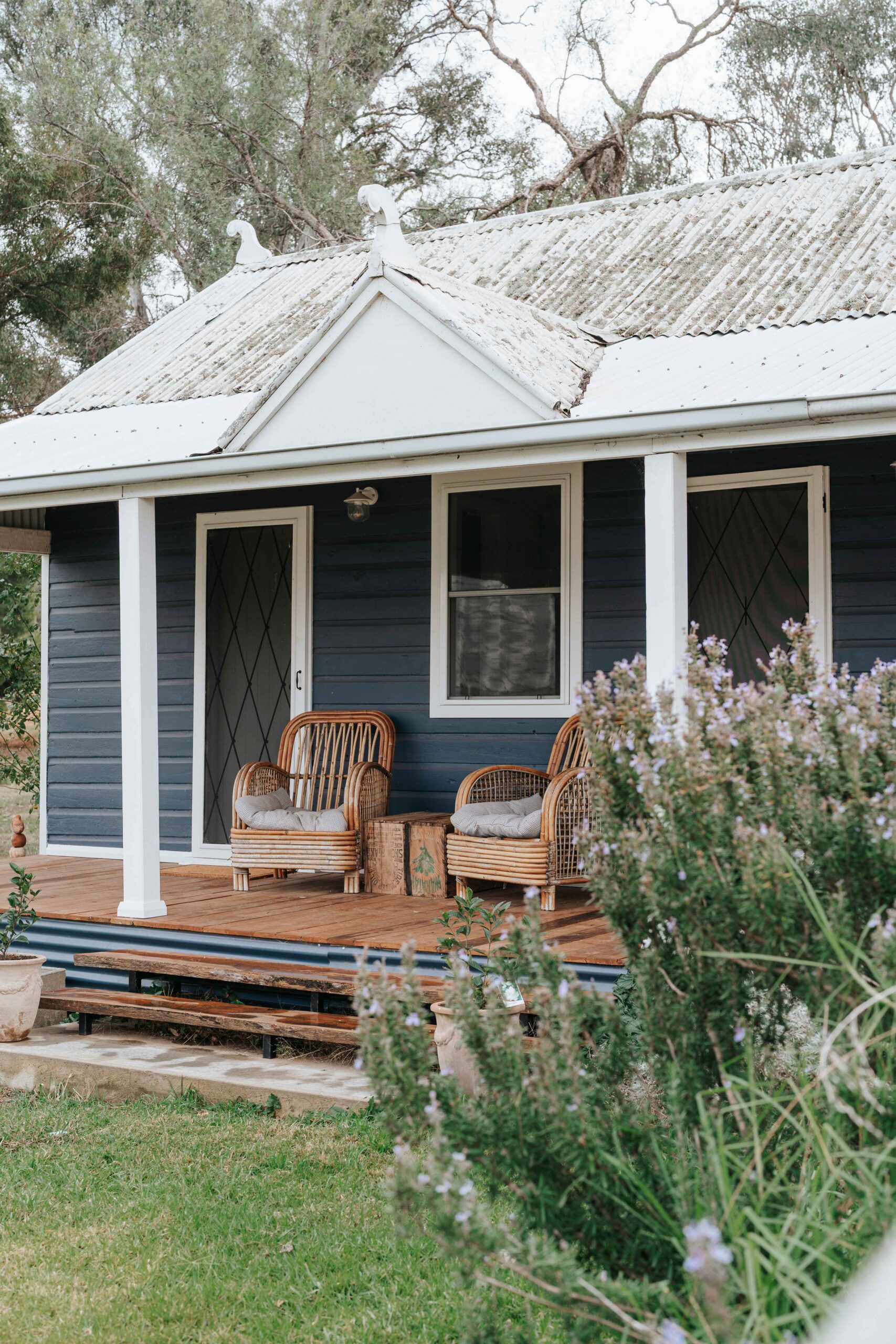
A weatherboard cabin in Alexandra MacAlpine’s garden becomes a guest cottage, thanks to the imagination of her sister-in-law.
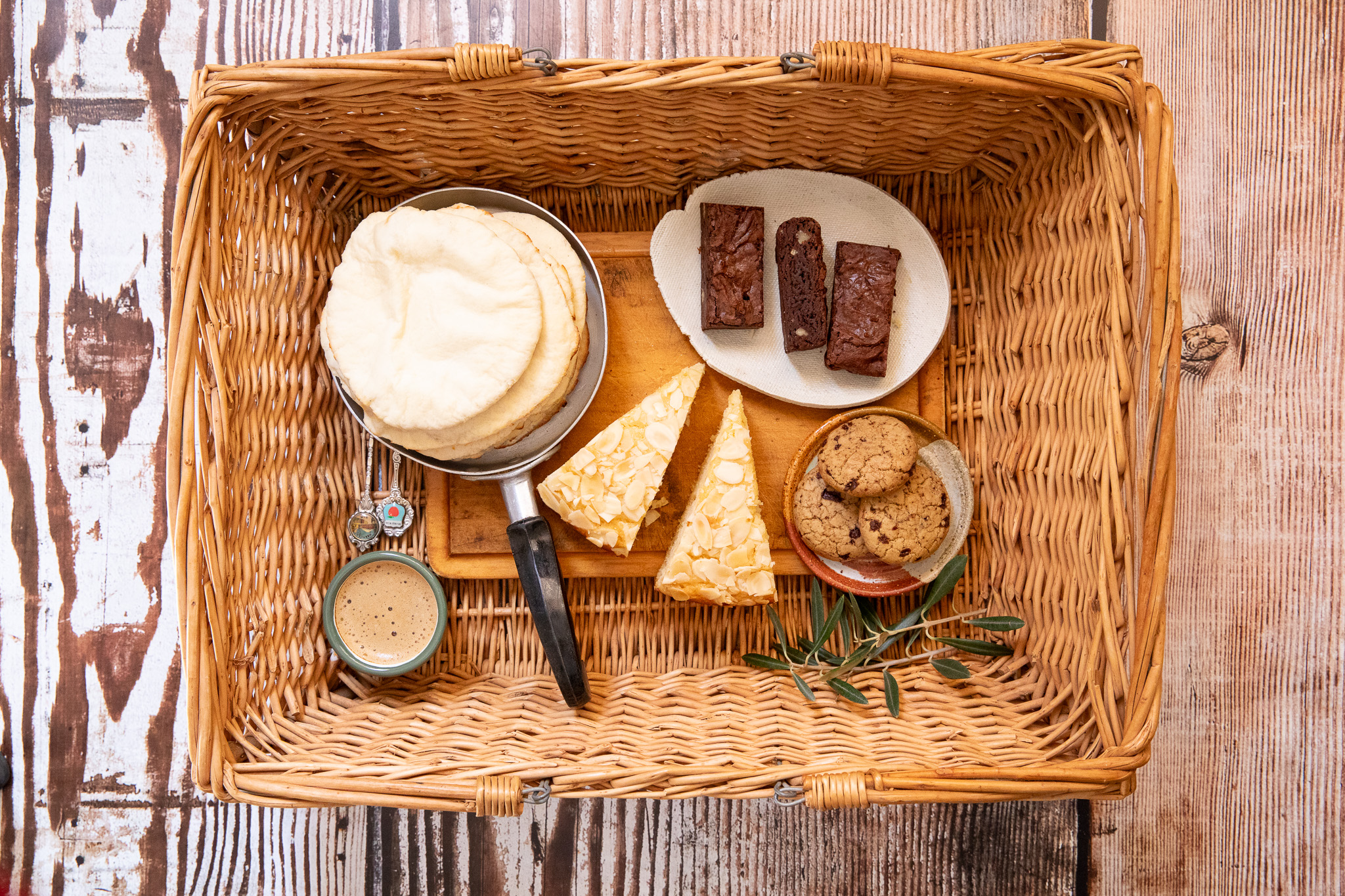
The annual olive harvest inspires Jane Smith to share recipes that showcase the tangy flavour of freshly pressed oil.
Take advantage of the cooler temperatures and slower growth, writes Claire Austin.

