









PHOTOGRAPHY GEORGIA BRAGG
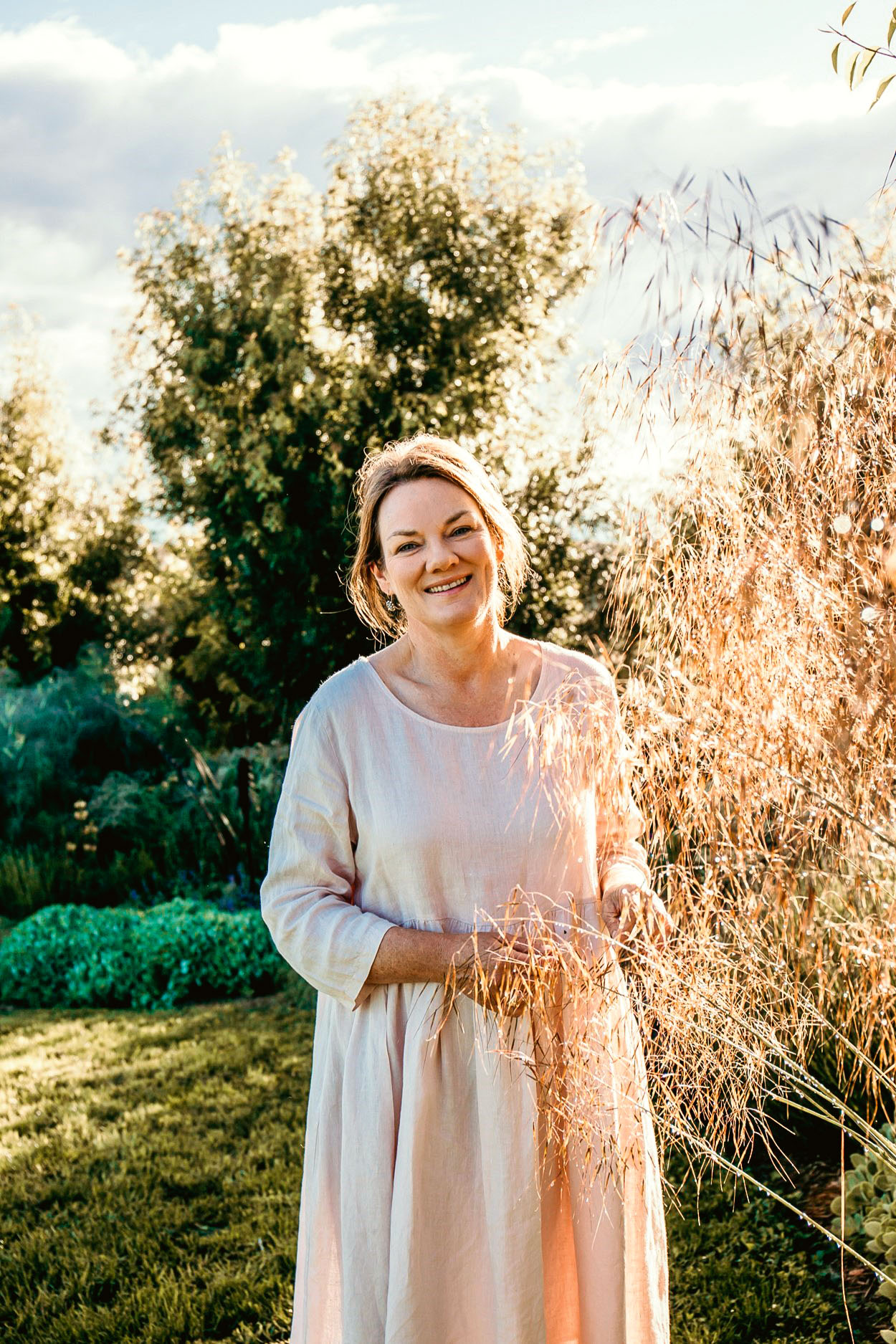
Colleen Southwell appreciates the embrace of dried grass seed heads in the autumn.
Sign up to our mailing list for the best stories delivered to your inbox.
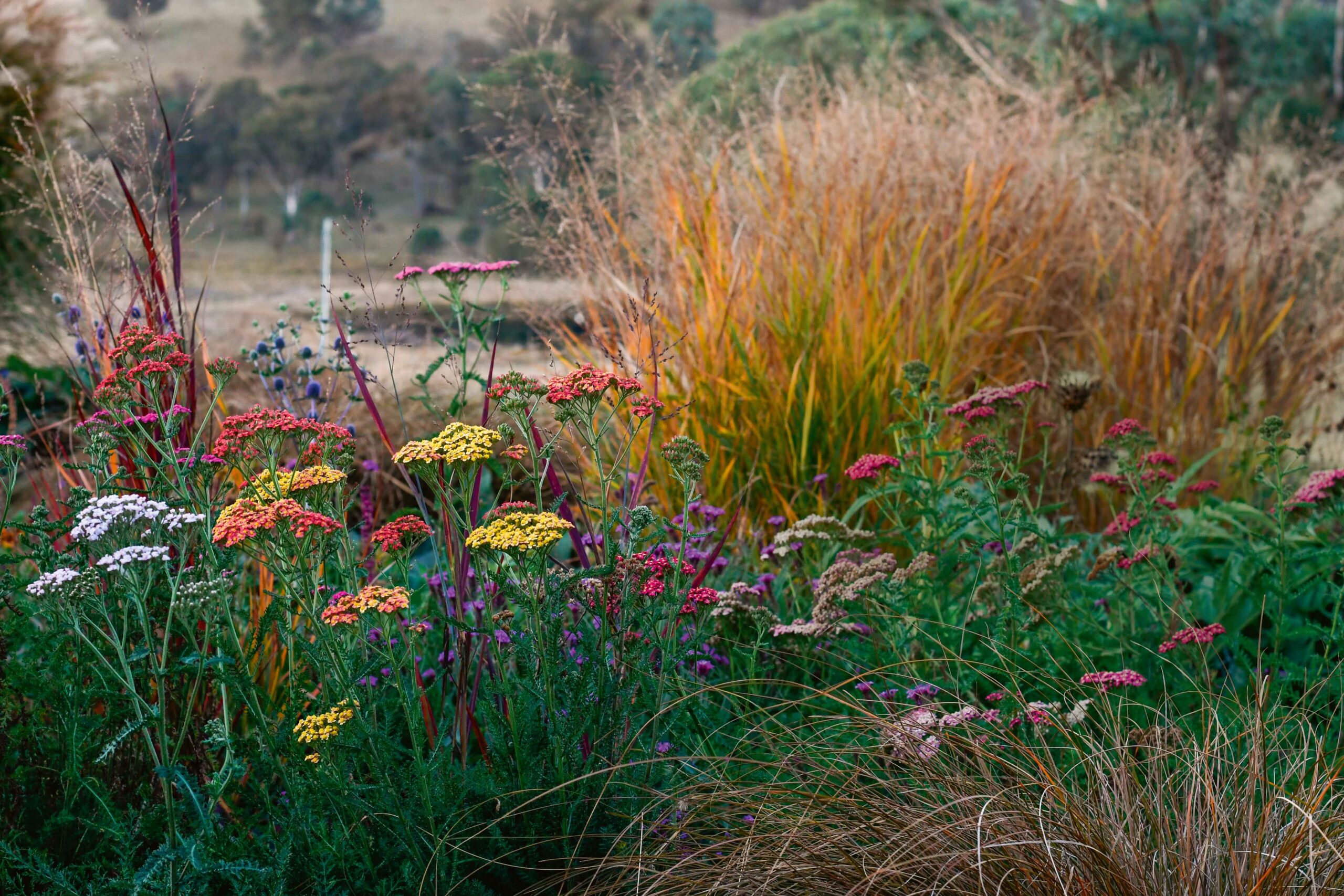
Resisting the urge to tidy up drying grasses and seed heads makes for a more interesting garden.
Words Colleen Southwell photography Colleen Southwell and Georgia Bragg
PHOTOGRAPHY GEORGIA BRAGG
Colleen Southwell appreciates the embrace of dried grass seed heads in the autumn.
PHOTOGRAPHY COLLEEN SOUTHWELL
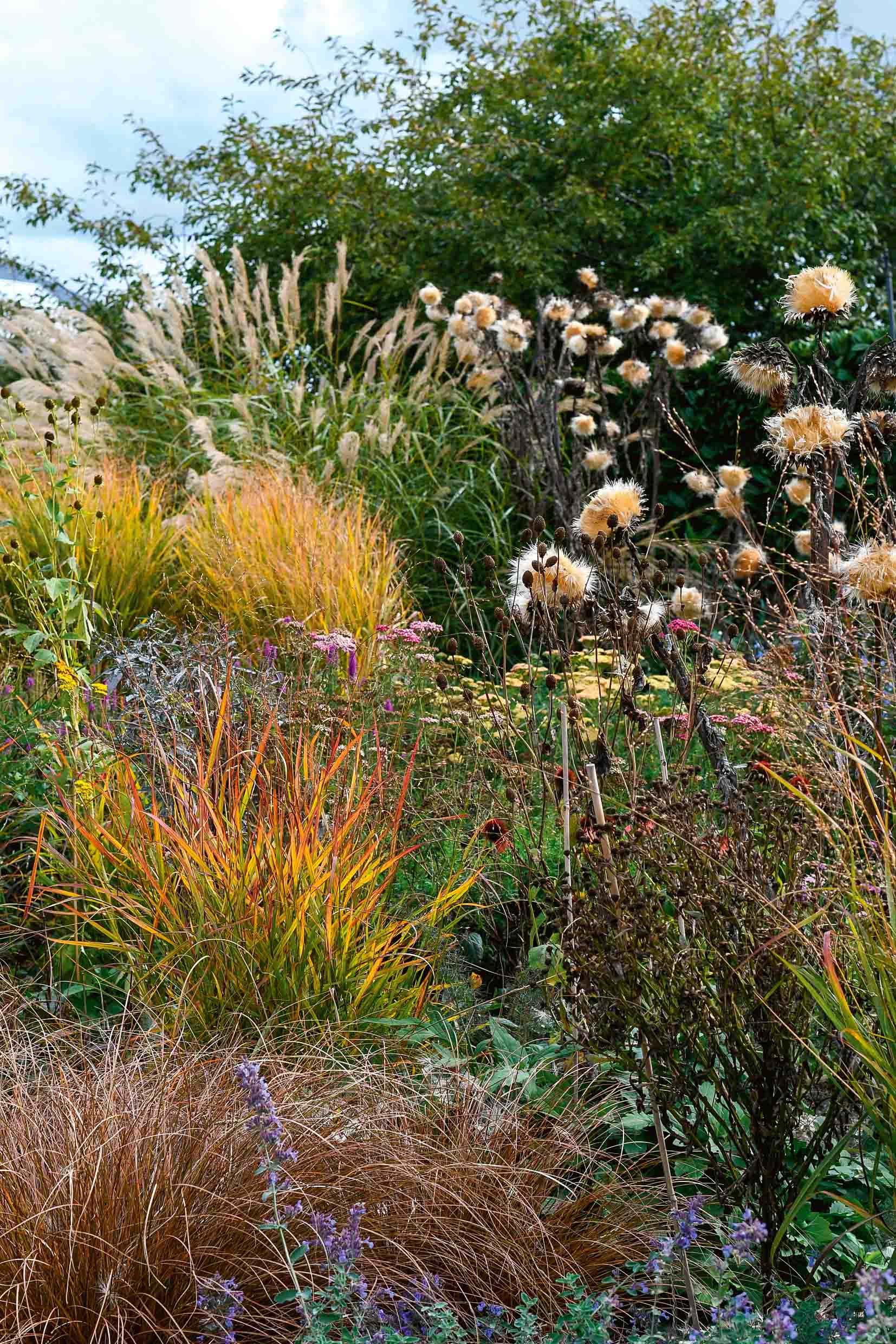
Fluffy pods and dark stems of the thistle-like cardoon show up against the gold and copper miscanthus, panicum and sedge.
On a recent trip from Orange to Canberra, we stopped to stretch our legs in Crookwell, New South Wales. While I happily browsed the wares in Ensemble & Co as I waited for my coffee, my husband ducked into the op shop nearby. He’s known for making friends with the locals: unloading trucks for shop owners, helping stack café chairs and spinning yarns with farmers about the weather and the state of the markets.
When I emerged I found him modelling a Harris tweed jacket, purchased from the op shop for less than the cost of my coffee. His love for this legendary fabric began during his days as a jackaroo on Riverina merino studs, and has continued through his decades in the sheep industry. For his 50th birthday I gave him a new Harris tweed, all the way from the isle of Harris in the Outer Hebrides of Scotland: a jacket with a trim cut, less boxy than his original 90s version that still hangs in our wardrobe in memory of the glory days.
PHOTOGRAPHY COLLEEN SOUTHWELL
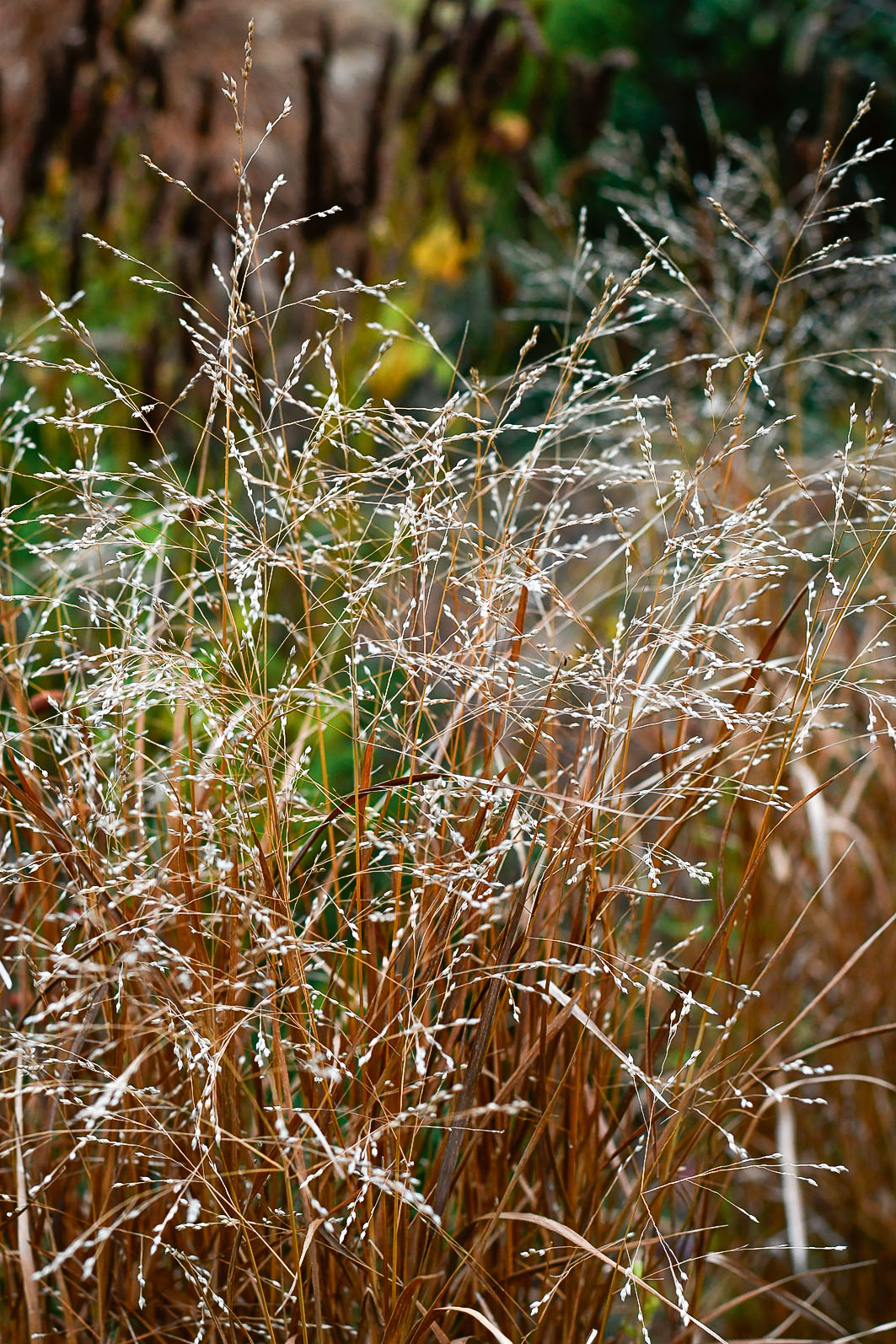
Panicum rubrum.
PHOTOGRAPHY COLLEEN SOUTHWELL
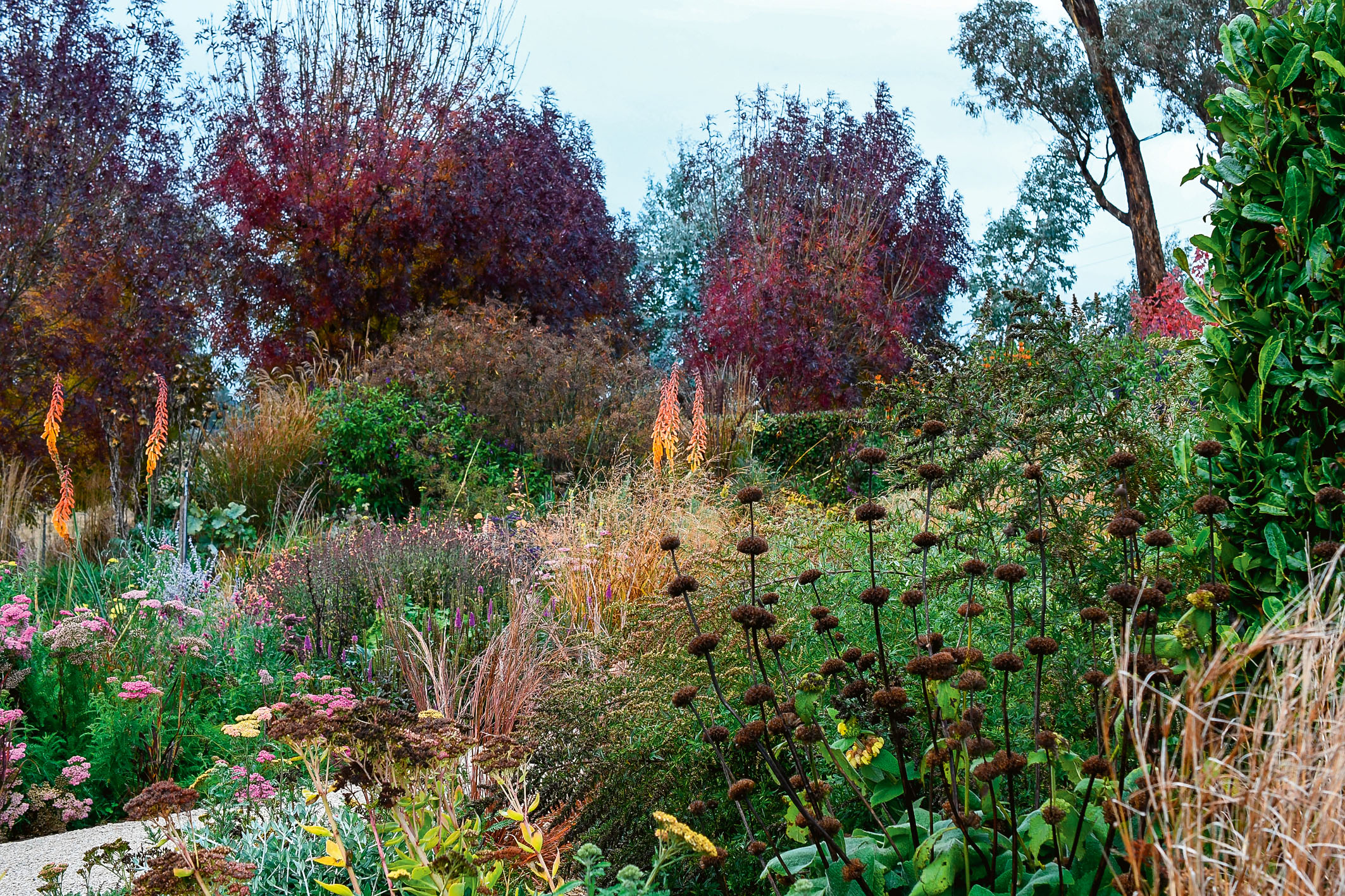
The dark seed heads of Phlomis russeliana are a sculptural element, while the burgundy leaves of claret ash (Fraxinus angustifolia) ‘Raywood’ provide a backdrop of autumn colour.
As we roll through autumn towards the slumber of winter, my garden reminds me of Harris tweed: the bright jewels of summer colour turn to a warm neutral palette, and plants lean into each other in a weave of drying foliage and seed heads.
Celebrated Dutch plantsman and designer Piet Oudolf told The New York Times in 2008, “Brown is also a colour,” thus encouraging gardeners to find beauty in herbaceous plants in their stages of decline. (Find Oudolf’s inspiring work in Piet Oudolf at Work by Piet Oudolf, Cassian Schmidt and Noel Kingsbury, published by Phaidon in 2023, or visit oudolf.com.)
In times past, gardeners would whisk away the decaying remnants of summer abundance, but these days we’re learning to embrace the natural ebb and flow by selecting plants for seasonal change, and resisting the urge to tidy up as autumn deepens.
PHOTOGRAPHY COLLEEN SOUTHWELL
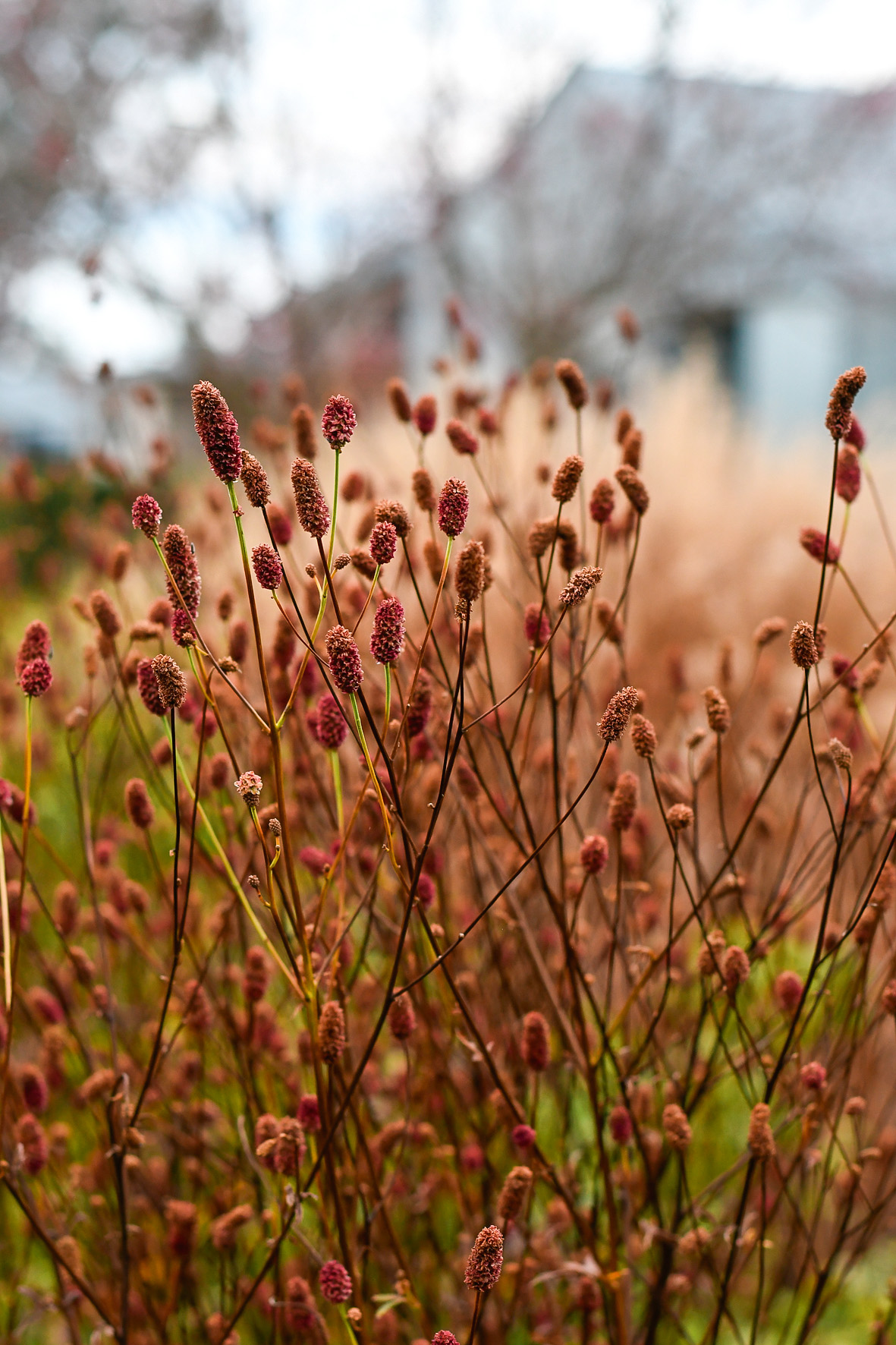
Sanguisorba ‘Cangshan Cranberry’ seed heads.
PHOTOGRAPHY COLLEEN SOUTHWELL
There are many choices you can make to add interest to the garden as the days shorten, and I select as much for dry seed heads and silhouettes as for foliage and flowers. The dry material provides striking colour and form through the cooler months and looks magical flecked with frost or dew in low morning light. It can offer valuable shelter and nesting material for birds and insects — as proven by the threads of cobweb illuminated on a dewy morning — and, like a warming blanket of Harris tweed, it protects the life beneath.
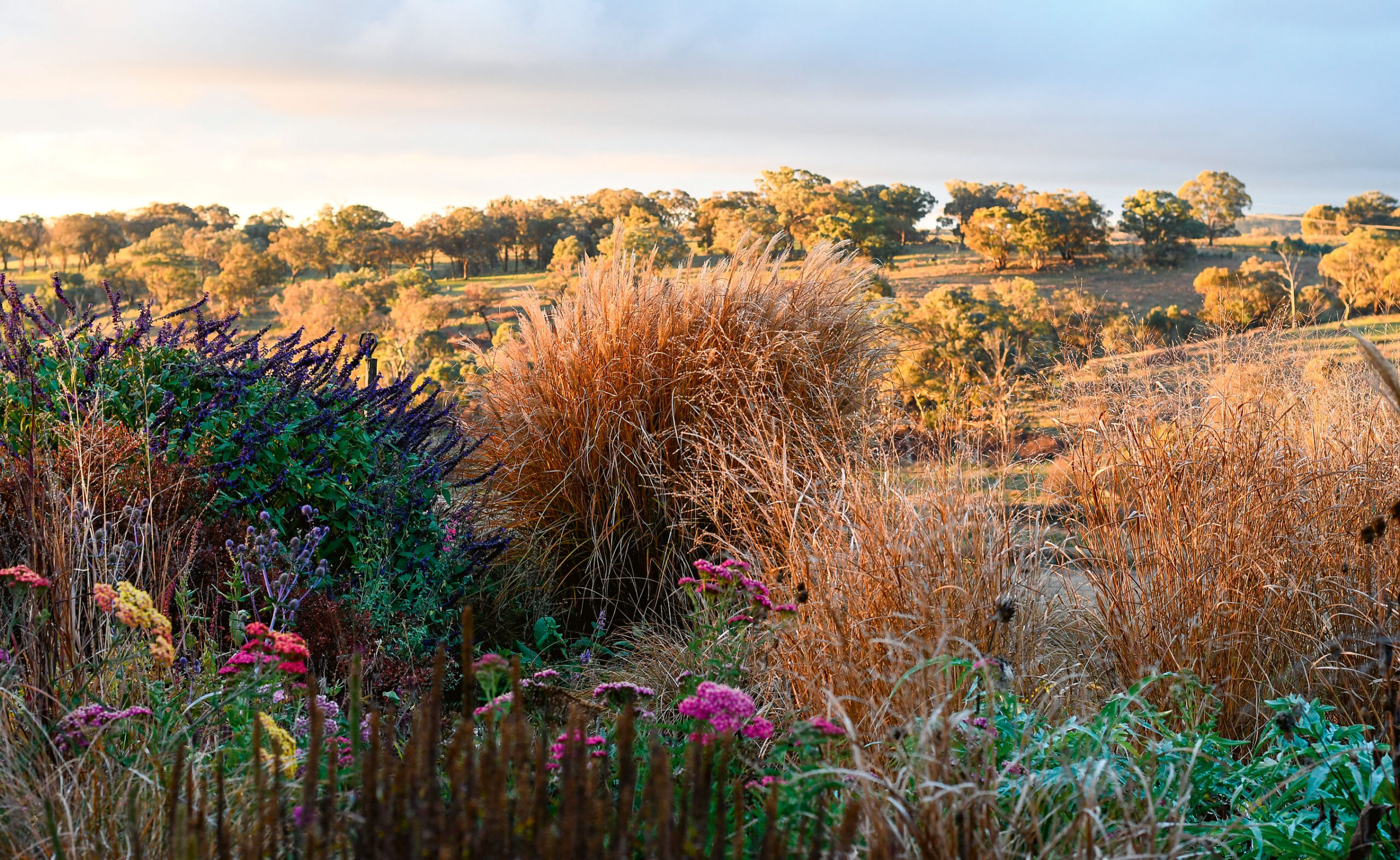
Wonderful choices are herbaceous ornamental grasses, such as miscanthus, panicum and calamagrostis, for their colour wash of silver, gold and copper, and the way they catch the light.
PHOTOGRAPHY COLLEEN SOUTHWELL
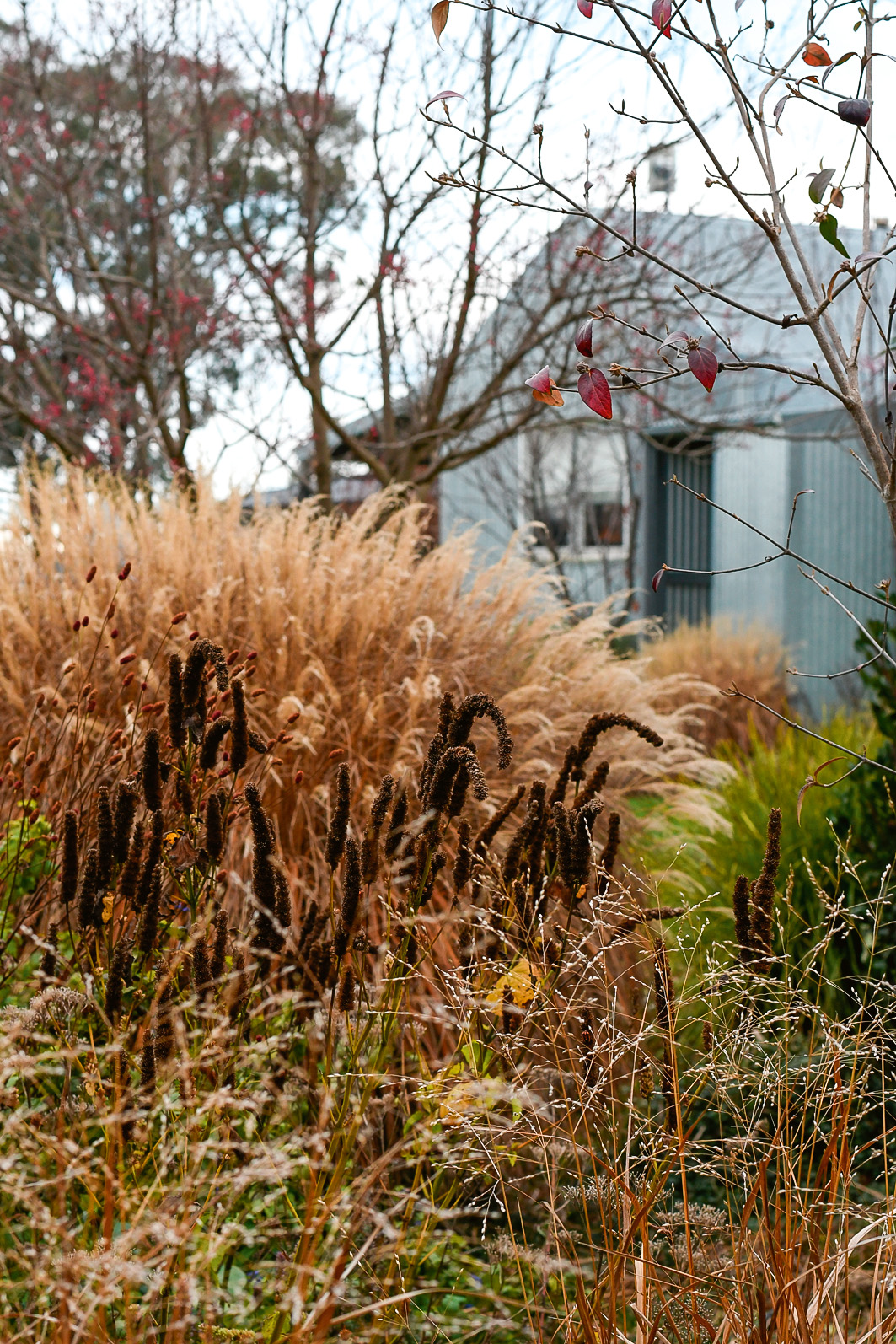
Chocolate coloured seed heads of Agastache ‘Blue Fortune’ stand against a background of golden miscanthus.
PHOTOGRAPHY COLLEEN SOUTHWELL
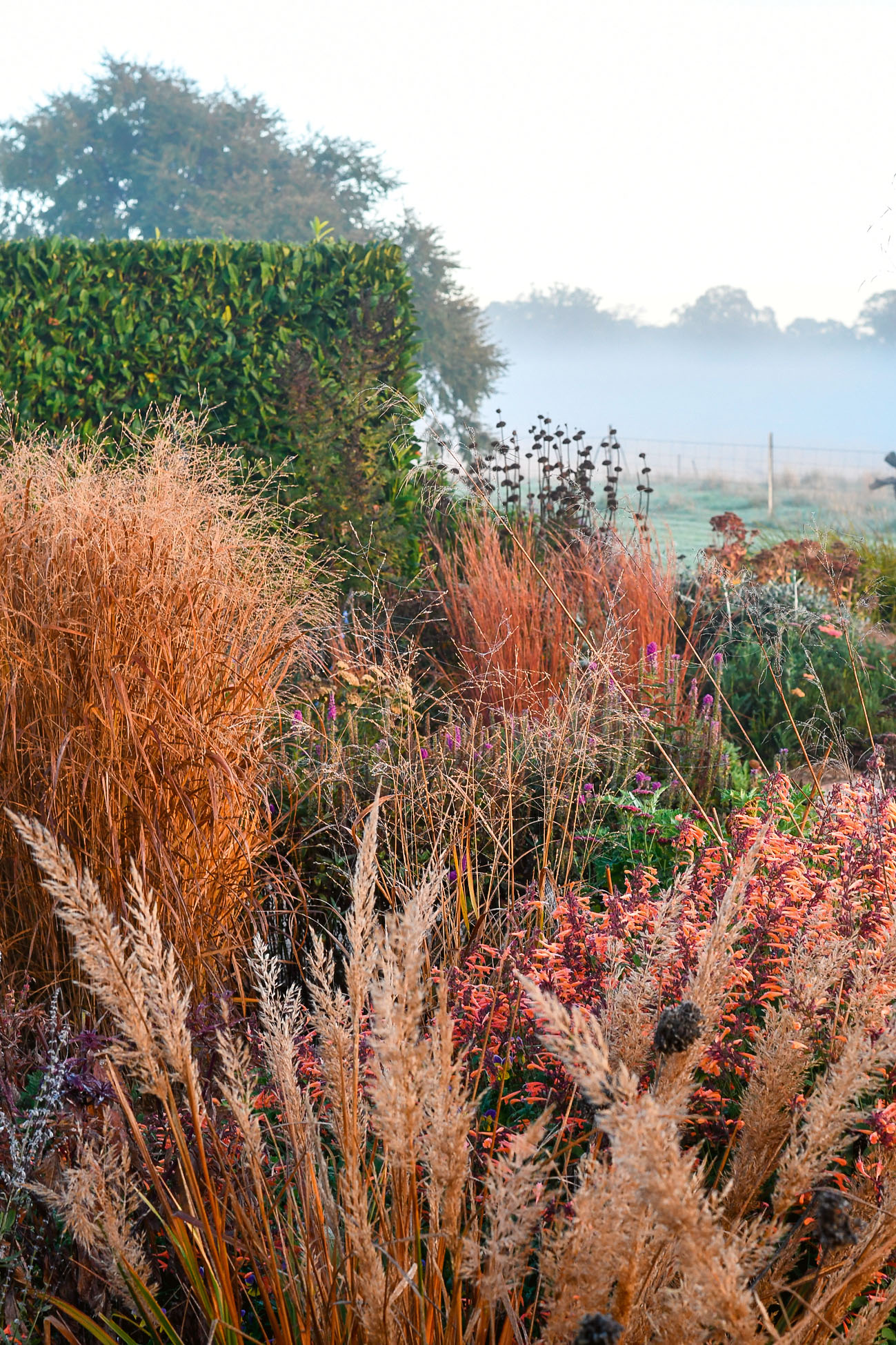
Plumes of Calamagrostis brachytricha in the foreground are layered with peachy Agastache aurantiacha ‘Copper Rose’ flowers and panicum grasses.
In the absence of a zealous gardener these plants return to the ground each year in their natural habitats, so why not in the garden? A note of warning though, check for birds’ nests before you cut back: the blue wrens adore the dried clumps as nesting spots.
Many flowering perennials have beautiful seed heads. The giant thistle-like cardoon (Cynara cardunculus) is spectacular, with its tufted spiky globes and luminous metallic sheen. Turkish sage (Phlomis russeliana) and the shrubby lion’s tail (Leonotis leonurus) have fabulous dry whorls threaded like beads on tall upright stalks: they look stunning in contrast with feathery and ethereal dried grasses, and will stay firmly in place until snipped off to make way for new spring growth.
Other favourites are the spindly forms of Sanguisorba, baubles of rudbeckia, canopies of sedum and achillea, and spikes of veronica and agastache. They age gracefully together to hues of charcoal, chocolate and rust.
PHOTOGRAPHY COLLEEN SOUTHWELL
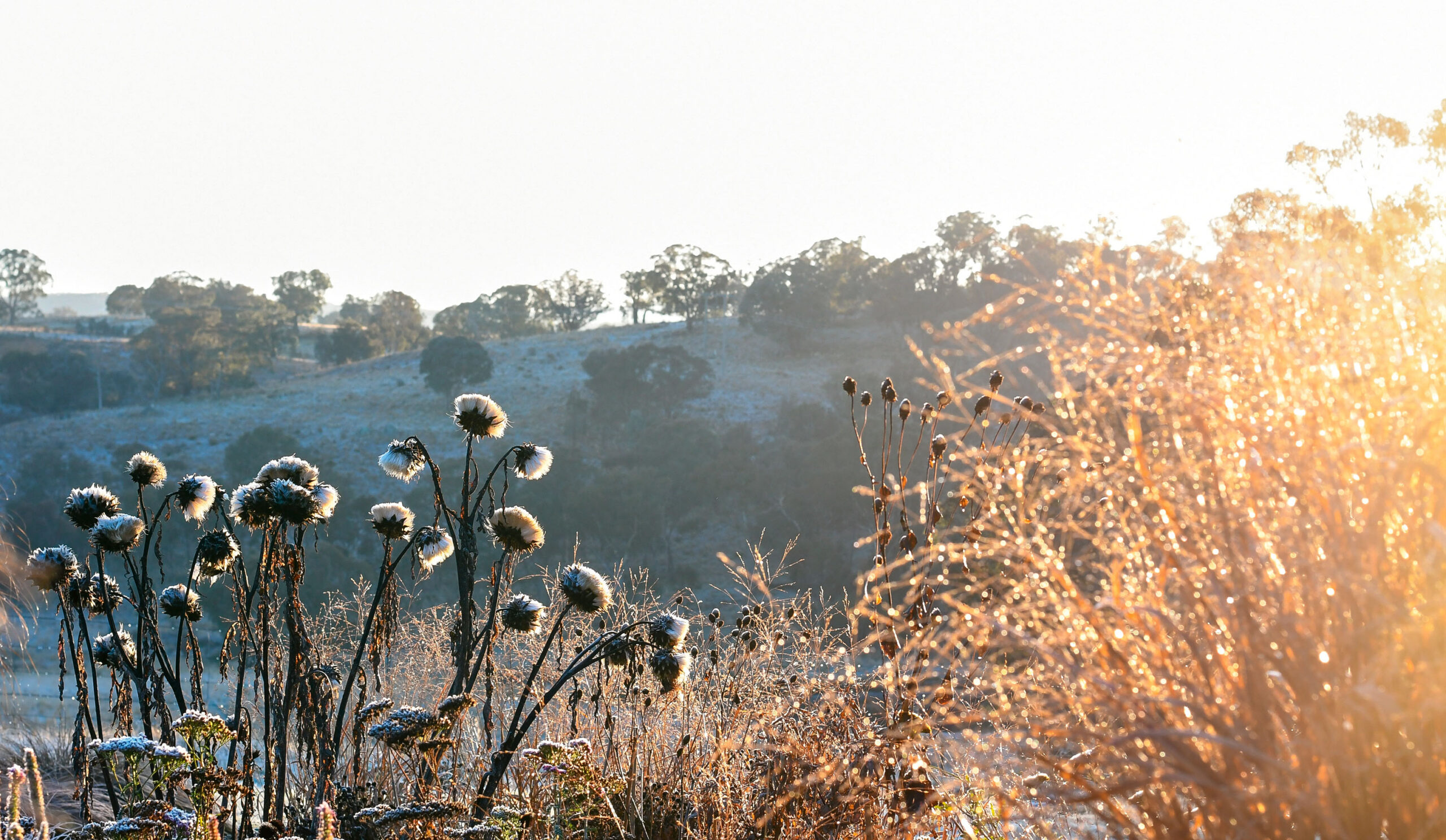
The tweedy tones of dried cardoons, rudbeckia stems and panicum sparkle with frost in Colleen’s central western New South Wales garden.
PHOTOGRAPHY COLLEEN SOUTHWELL
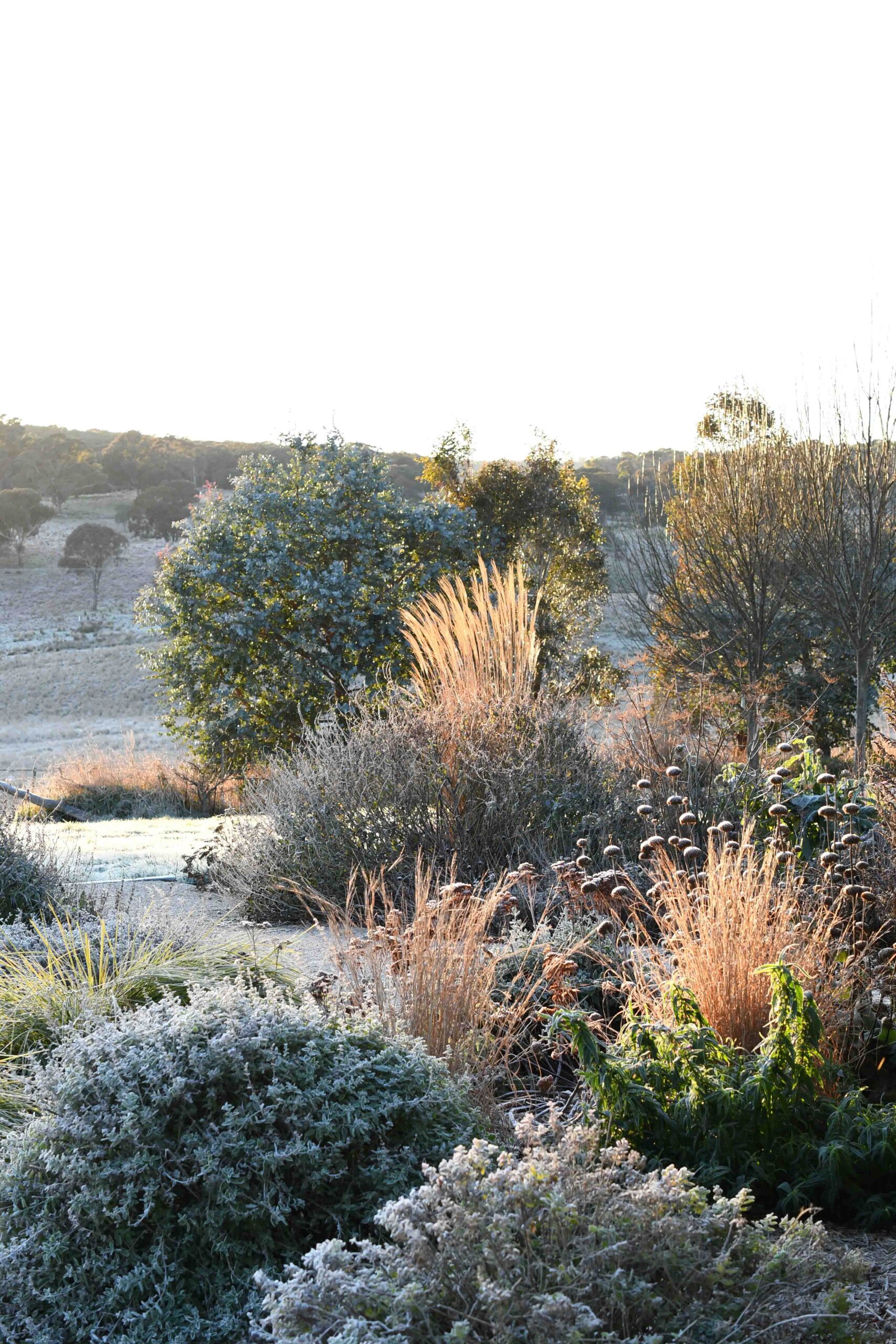
Frosty foliage adds to the subdued garden palette catching the morning light.
A plant that is loved and safely grown in one location may be considered a weed in another, so do your research before putting them into your garden.
While seed heads and dry silhouettes are particularly spectacular in frosty regions, the principle remains the same wherever you are gardening: embrace the cycle of plant life and fill the permanent bones of your garden with a variety of plants that will provide an ever-changing picture throughout the year.
Colleen Southwell is the Garden Curator. Visit her website at thegardencurator.com.au.
Subscribe to Graziher and you’ll never miss an issue of your favourite magazine. Already a subscriber? Consider a gift subscription for someone special in your life.
There are many ways to find a meaningful role in the industry, says Beef Australia’s Beth Rands.
Hailing from a small Irish town, Lisa Fryer found love at Daly Waters’ Hi-Way Inn. Today, she and husband John are ushering in a new era for Tabletop Station, near Townsville, Queensland.
A weatherboard cabin in Alexandra MacAlpine’s garden becomes a guest cottage, thanks to the imagination of her sister-in-law.

The annual olive harvest inspires Jane Smith to share recipes that showcase the tangy flavour of freshly pressed oil.
Take advantage of the cooler temperatures and slower growth, writes Claire Austin.

