







Photography supplied
Sign up to our mailing list for the best stories delivered to your inbox.

Where curiosity leads, this curated weekend follows — through breathwork, cold water, seaweed and stars, all guided by science.
Words Amanda Ducker

Photography supplied

Photography supplied
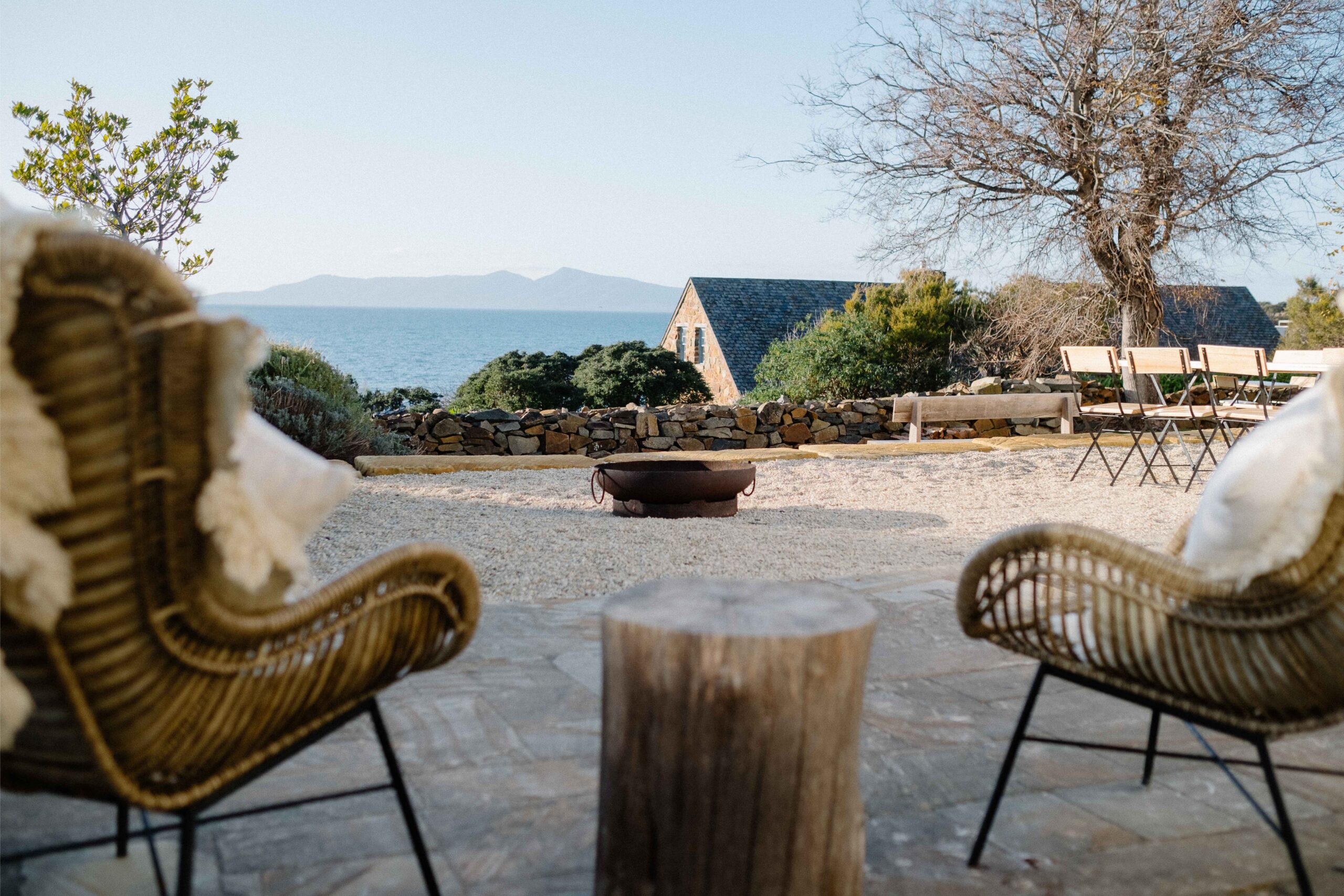
We take the plunge on Saturday morning at Piermont, a boutique resort on Tasmania’s East Coast. The Hazards range glows pinkish across Great Oyster Bay as a dozen of us follow Dr Margo Adler into the chilly sea. Our shrieking fades as we adjust to the 15°C temperature. Twenty minutes later, we emerge from the water, reinvigorated and ready for whatever this unusual weekend of scientific seduction may bring.
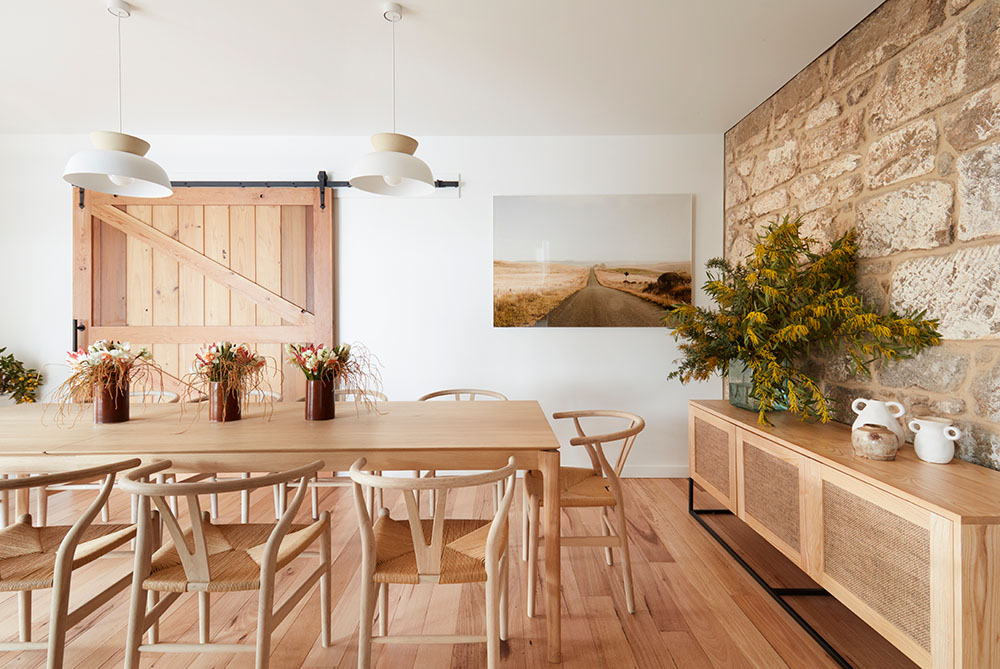
After drying off, we walk back along the bay to our accommodation in gorgeous stone cottages dotted on the hillside behind the shoreline. “It’s still a bit of an experiment,” says Margo, founder of Hobart’s popular winter science festival Beaker Street and the quiet architect of this second annual weekend, the Beaker Street Retreat. “We’re trying to build community through scientific understanding. And it is a lovely little break from life.”
Margo herself came to science in a roundabout way. She had been trying to break into magazine journalism in her hometown of New York City when the industry began to contract. One night, she decided to take a completely different path and a few detours later, she found herself studying neuroscience, then evolutionary biology, completing a PhD at the University of New South Wales (UNSW), in Sydney in 2013.
Beaker Street began with her wish to make science more conversational. “I was always organising something,” Margo says, “and I was bored of boring talks.” At the UNSW, she launched a short-talk series called Big Ideas and Pretty Pictures. From there, her vision expanded: science bars, public talks and fermentation nights.

Photography supplied
When she and her Tasmanian partner moved to Hobart about a decade ago, she joined the National Science Week committee and pitched a pop-up science bar to the Tasmanian Museum and Art Gallery. It took off. “We thought the top end would be 3000 people. We had 5000 come through the doors.”
Now in its ninth year, Beaker Street Festival features Antarctic scientists, field trips, telescope dinners, Finnish sauna tents, dance parties and more than 200 ‘roving scientists’ stationed at bar tables across Hobart. “It places such a premium on connecting with people,” Margo says. “We really encourage people to talk one-on-one with scientists and the public. That’s the point of the festival.”
The Piermont retreat is a newer initiative, and the guest list has doubled this year to about 30. Late on Saturday morning, we gather in the resort’s Homestead Restaurant for a workshop on the science of happiness, led by Dr Rebecca Chabot. “Happiness is a choice,” Rebecca says. “Why is happiness a practice? It’s because we are wired with a negativity bias. We notice, remember and ruminate on the negative way more than the positive. It’s a relic of our evolutionary past.”
The vivacious scientist turned wellness guide strikes a note both hopeful and challenging: happiness is a skill and cultivating it requires repetition. “If we don’t practise happiness,” she adds, “we will become grumpy old people.”
Her talk is rooted in neurobiology. “There is no biological barrier to happiness,” she says. Through neuroplasticity — our brain’s ability to create and prune synapses throughout life — we can change our habits of mind. Rebecca’s first suggestion: start scanning for the positive. On waking each morning, choose three new things to be grateful for. “We are rewiring the brain to scan the horizon not for danger but the good things.”
It is Rebecca’s second session of the weekend, following a Friday breath workshop in which she introduces the physiology behind different breathing techniques. She leads us through slow, diaphragmatic nose breathing — five-count inhale, five-count exhale — for calming the nervous system. We move on to a slow four-count inhale, eight-count exhale, then shift to what she calls “activation breath”: three quick sniffs in and one out. I notice a distinct difference in effect between the latter two: I feel remarkably soothed after the controlled slow breathing, then revved up and ready for action after the fast, greedy uptakes.
Photography supplied
Saturday rolls on with an afternoon walking tour of Sea Forest, a neighbouring facility cultivating Asparagopsis, a
carbon-capturing red seaweed native to Australian coastal waters, from which they produce a methane-abating livestock feed. Dr Masa Tatsumi and Professor Rocky de Nys explain the science behind SeaFeed. The company is the first globally to commercialise the method, infusing the active ingredient into canola oil and even salt licks. It works by inhibiting the
enzymatic pathway that produces methane at the last stage of digestion. It is a gamechanger. “An animal whose diet is sup-plemented with SeaFeed can achieve methane reductions up to 90 per cent [in feedlot situations],” Rocky says.
The windswept waterfront site — a former abalone facility — resembles a Scandi-noir film set, but its starkness belies its stunning potential contribution to agricultural emissions reduction. We dip our hands into vast outdoor vats of spores, soft as pompoms. Rocky says it’s up to the market to do the work now. The science is waiting.
Later that afternoon, as the clouds lift and the breeze drops, I launch a kayak from a rustic old boatshed on the bay. I paddle with artist Emma Bahama, a returning guest from Daylesford, Victoria. It is sheer bliss, and every bit as restoring as a good breathwork session. That evening, over scallops in seaweed butter, Cape Grim beef cheeks and a dark chocolate crèmeux with tonka bean, we listen to astrophysicist Dr Simin Salarpour. Her style is poetic as she describes phenomena such as black holes and gravitational waves, which she calls “the heartbeat of the universe”. Sadly, clouds obscure the night sky, cancelling the planned telescope sessions on the
restaurant terrace.
On Sunday morning, the retreat closes with a dramatic breath workshop. This time, we lie on yoga mats as Rebecca leads an activation session: sharp, rhythmic nasal inhales that build to an intense mental state some compare to the effect of psychedelics. My chest grows so hot and tingly I pull back a few times. Afterwards, Rebecca returns to her theme: if we want to change how we feel, we must change what we do, starting with the breath.
What I come away with is the renewed belief that there’s no substitute for curiosity. And that a shared interest in science is a great way to bring people together without getting flaky. “We’re not a wellness retreat,” Margo says, “but there are
evidence-based practices we can enjoy without feeling like we’ve given up part of our brain.”
The Beaker Street Festival is running in and around Hobart from August 12–19, 2025. For more information and bookings, visit beakerstreet.com.au.
There are many ways to find a meaningful role in the industry, says Beef Australia’s Beth Rands.
Hailing from a small Irish town, Lisa Fryer found love at Daly Waters’ Hi-Way Inn. Today, she and husband John are ushering in a new era for Tabletop Station, near Townsville, Queensland.
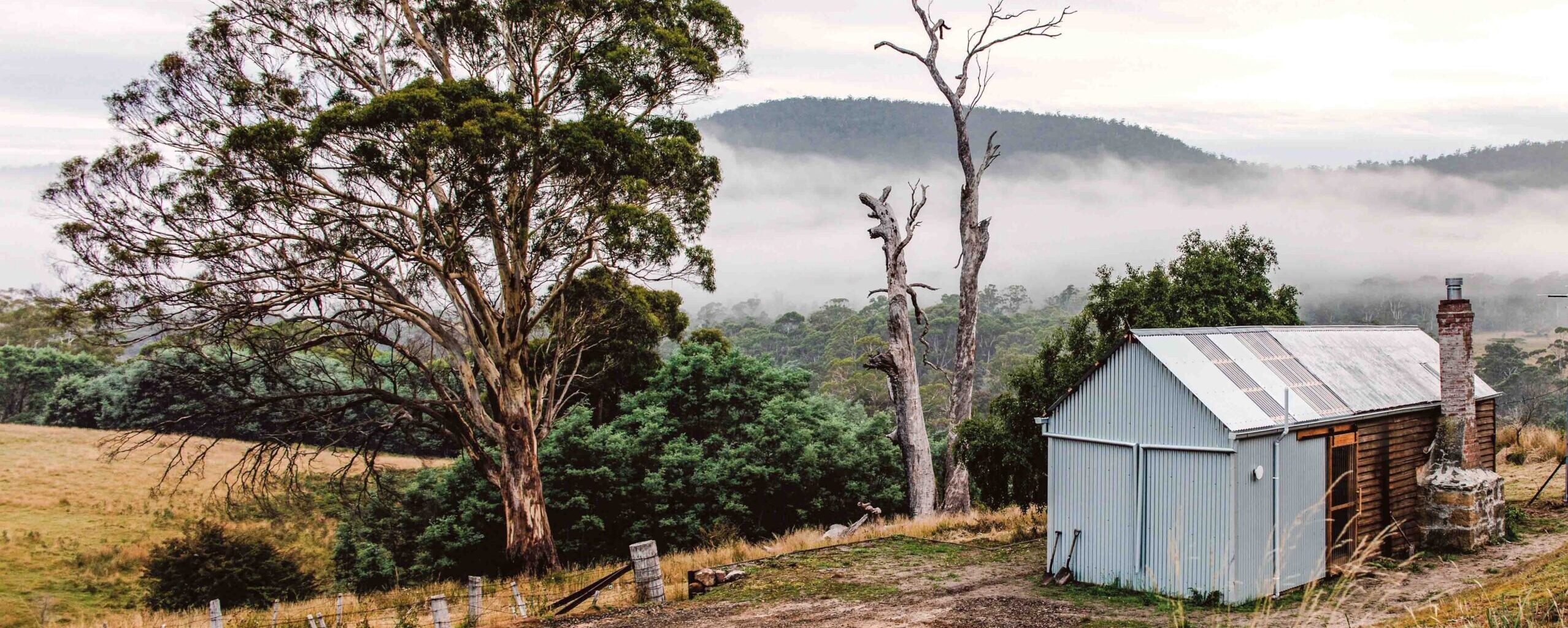
From sleeping in rustic shearers’ quarters to eating crayfish by the sea, this is the Graziher guide to the gems of Tasmania’s East Coast.
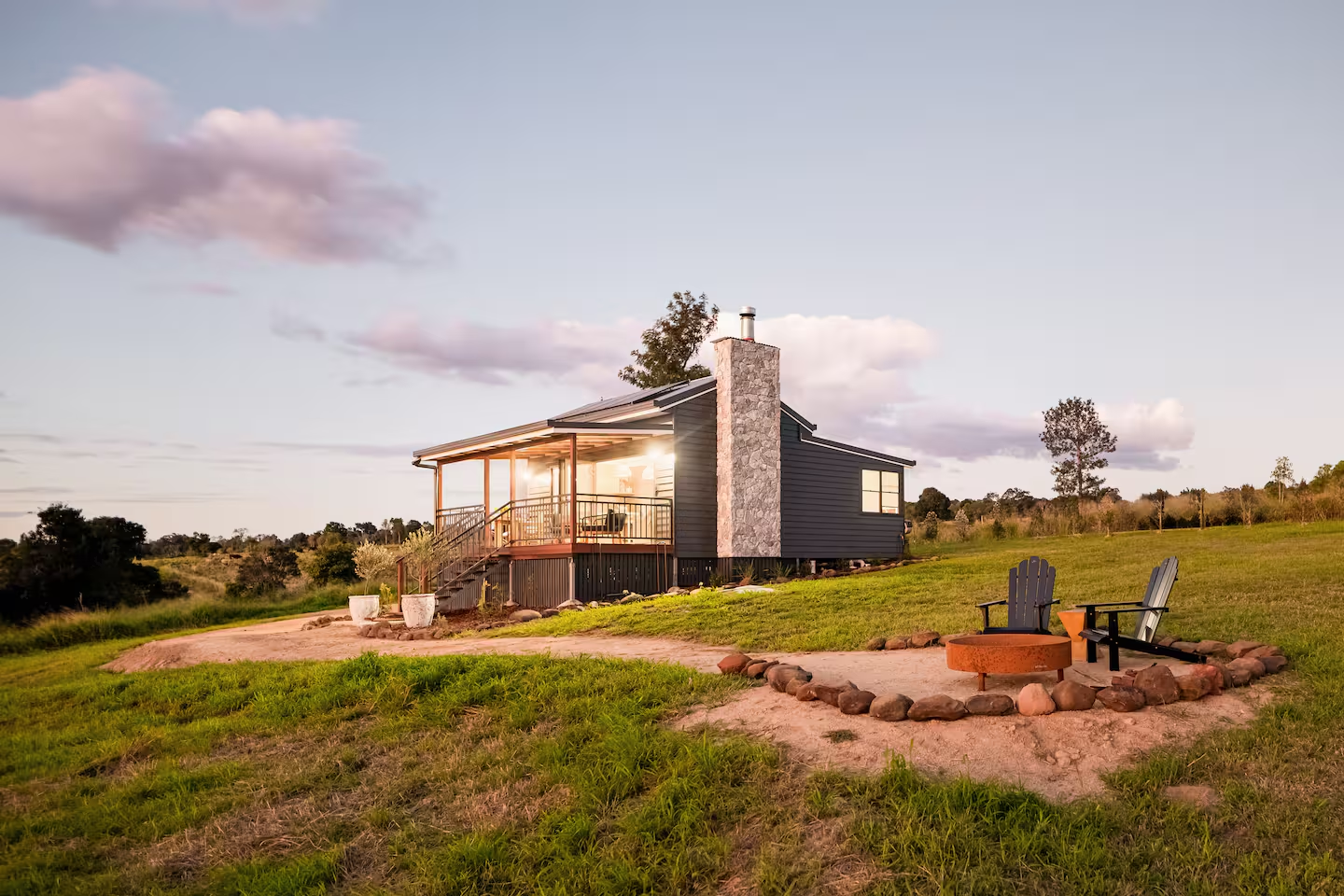
If you like the idea of a private plunge pool, mountain views and a glass of local verdelho, it’s time to start planning your Firebreak Farm escape.
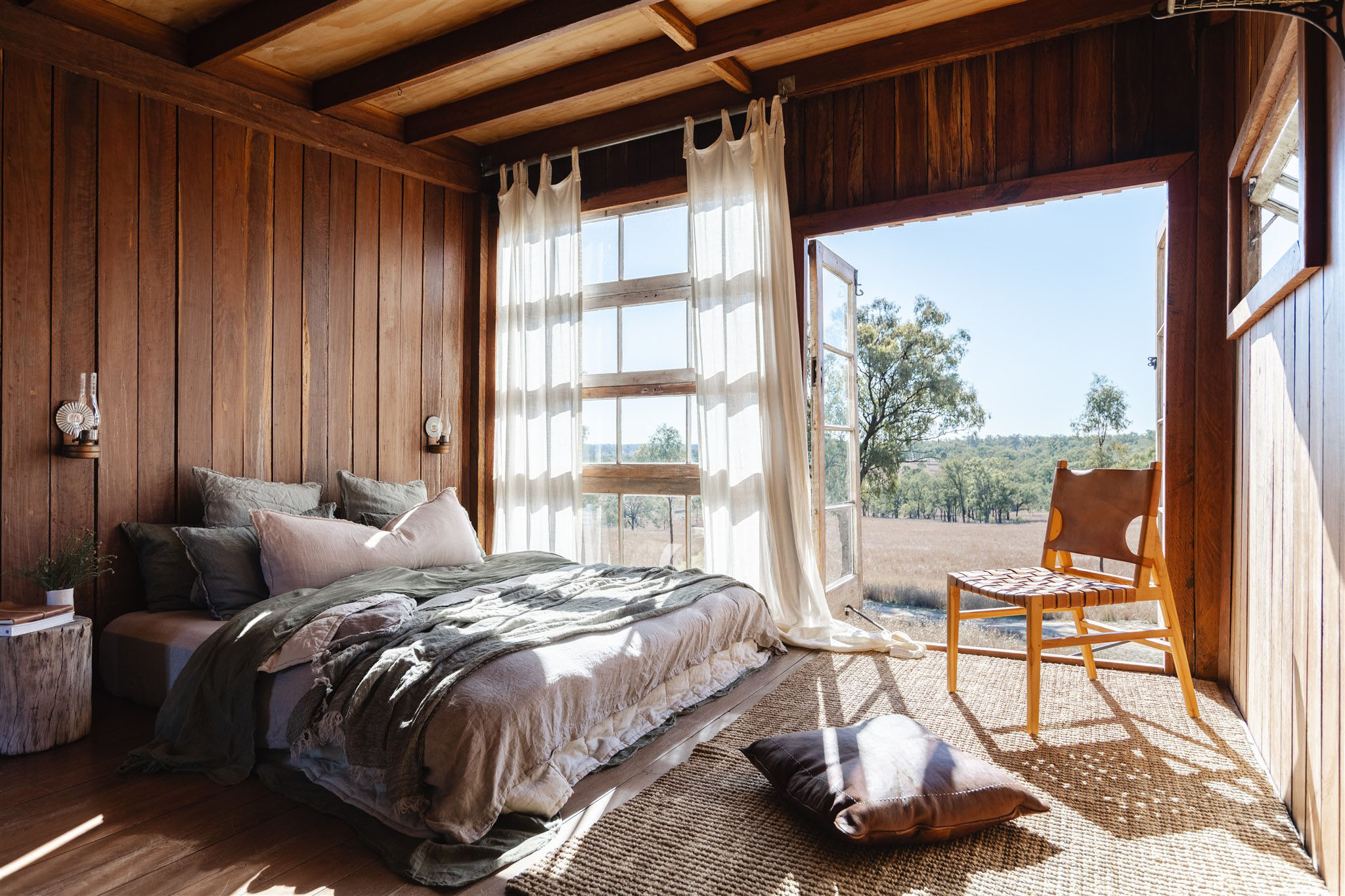
We chat with Carly Baker-Burnham, of Bloodwood Cabin, who says running a farm stay is less work than you think.

