
PHOTOGRAPHY AMELIA SCHOLTZ
Etching on a metal plate and hand colouring is Bridget Farmer’s preferred method of working.
Sign up to our mailing list for the best stories delivered to your inbox.
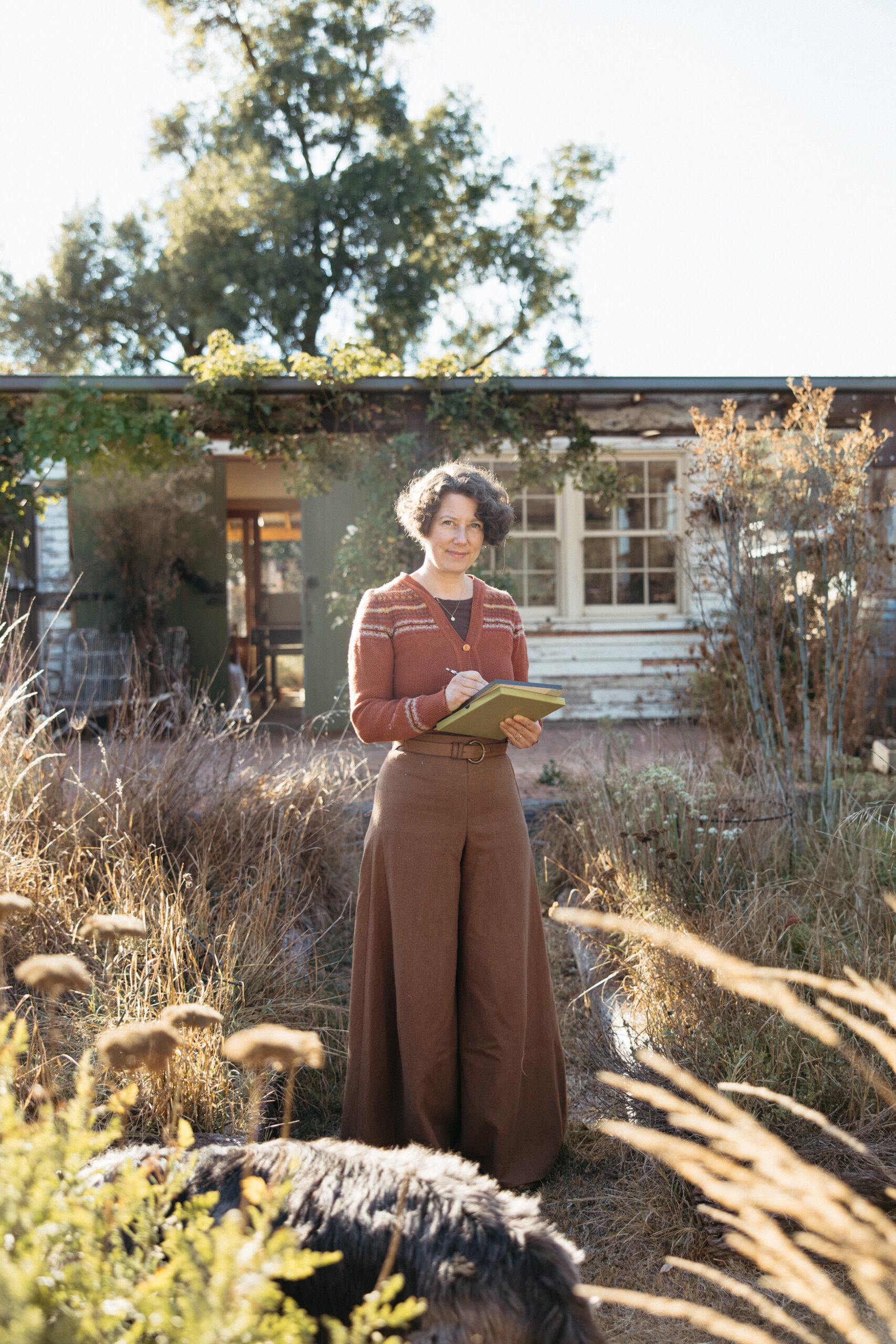
“It’s the wildness of Australia… it fills my heart,” says the printmaker, who was raised in Northern Ireland.
Words Phoebe Hartley Photography Amelia Scholtz
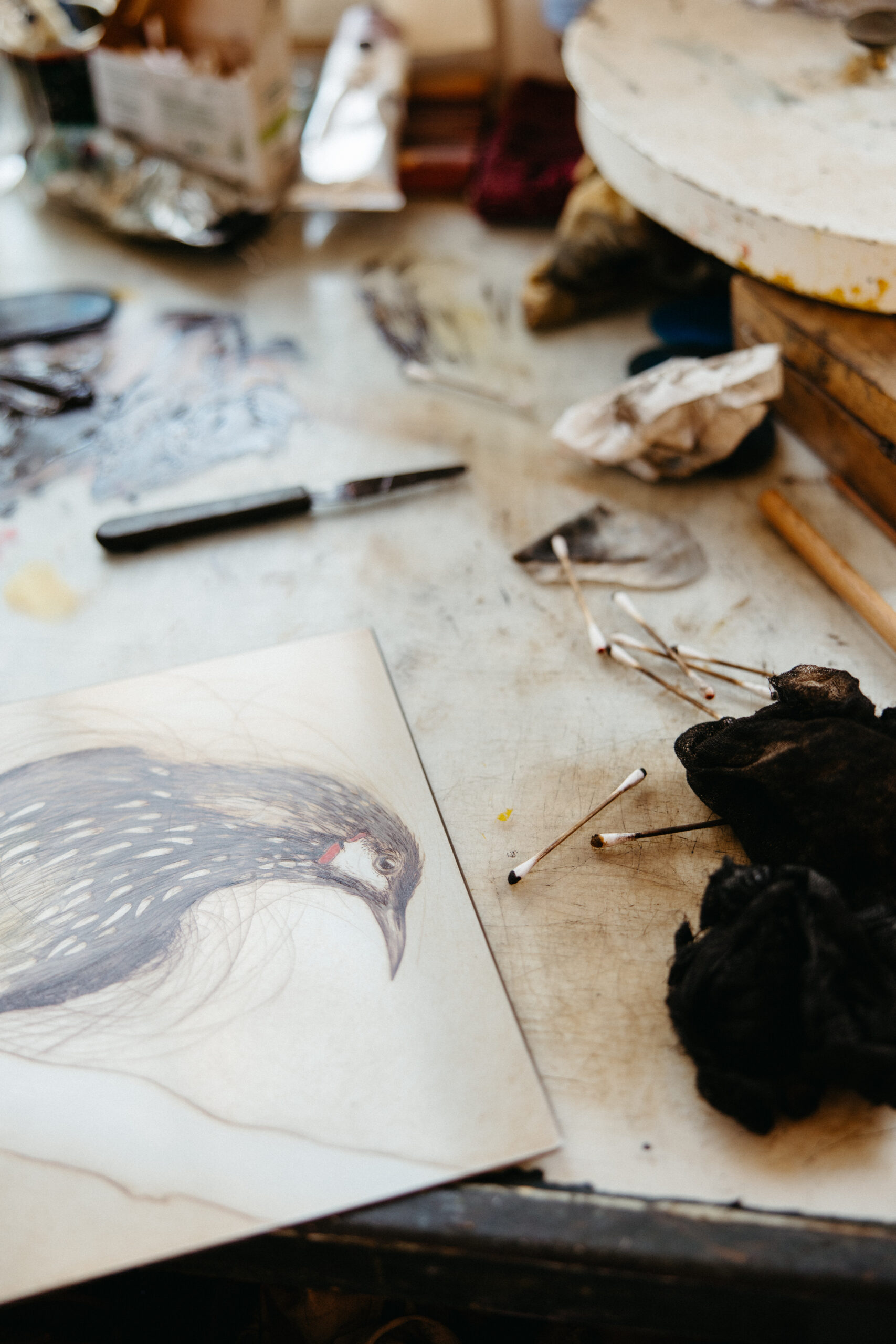
PHOTOGRAPHY AMELIA SCHOLTZ
Etching on a metal plate and hand colouring is Bridget Farmer’s preferred method of working.
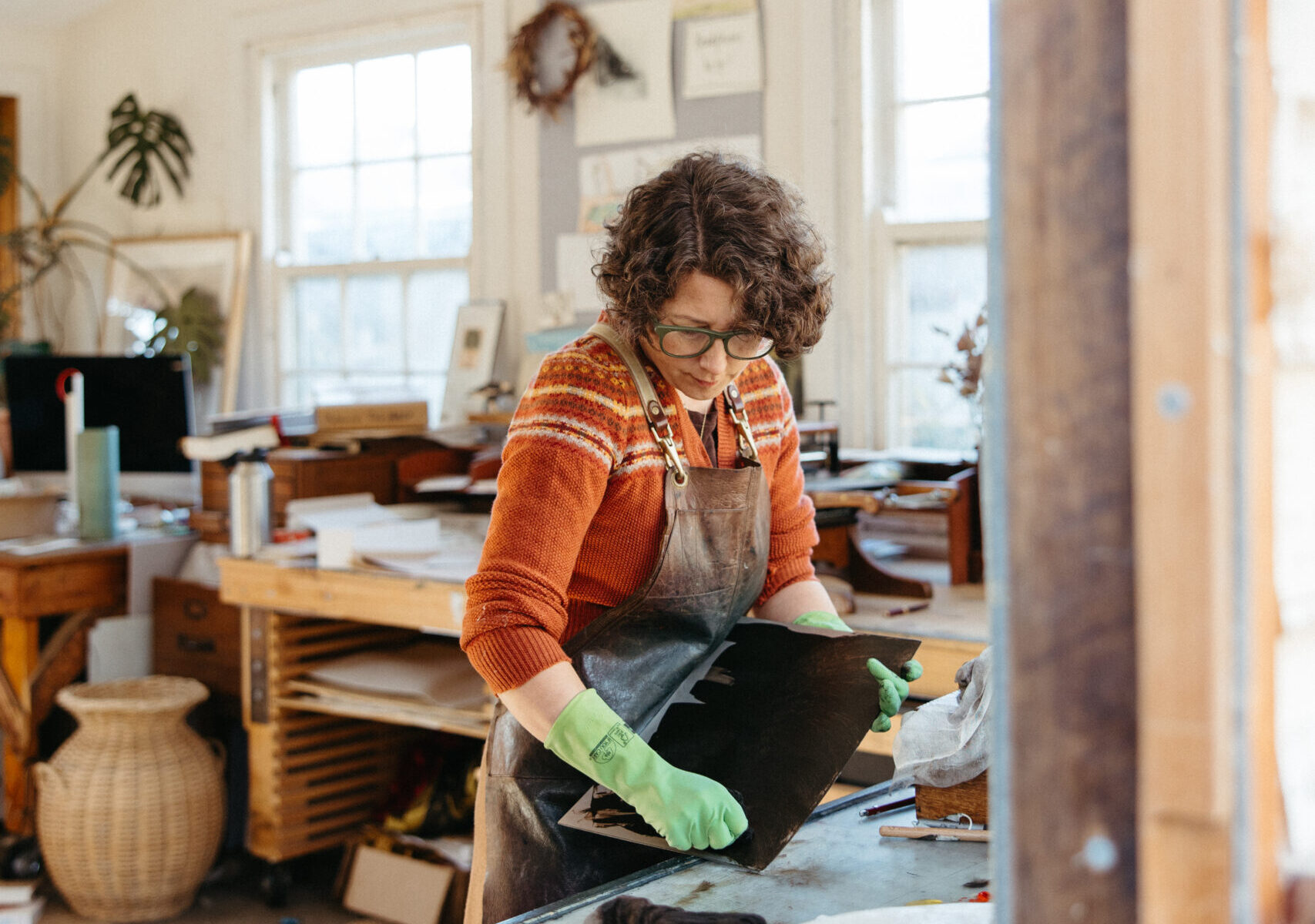
PHOTOGRAPHY AMELIA SCHOLTZ
The process of drypoint etching is slow but satisfying.
The brilliant blue bird perches on the brass knob of an enormous printing press in the middle of the printmaker’s cluttered creative space, and poses like a tiny feathered catwalk model. The 46-year-old artist picks up a pencil and starts to sketch. “You have to get the beak shape right, you have to get the eye right to give it life, and then the rest can be a flurry of lines to give it movement,” she explains.
Bridget calls herself a bird artist and works primarily in drypoint, a printmaking technique that involves scratching an image into a metal plate and transferring it with colourful ink onto paper. Born in England and raised in Northern Ireland, Bridget says her urge to draw animals came early.
“Apparently at playgroup I just painted big colourful cats all day long,” she says with a smile. “My mum wishes she’d kept some of my drawings.” She studied jewellery and silversmithing in Edinburgh, and went on to discover drypoint printmaking during a visit to Australia in 2005. “And then — age-old story — I met a man and stayed,” she says.
PHOTOGRAPHY AMELIA SCHOLTZ
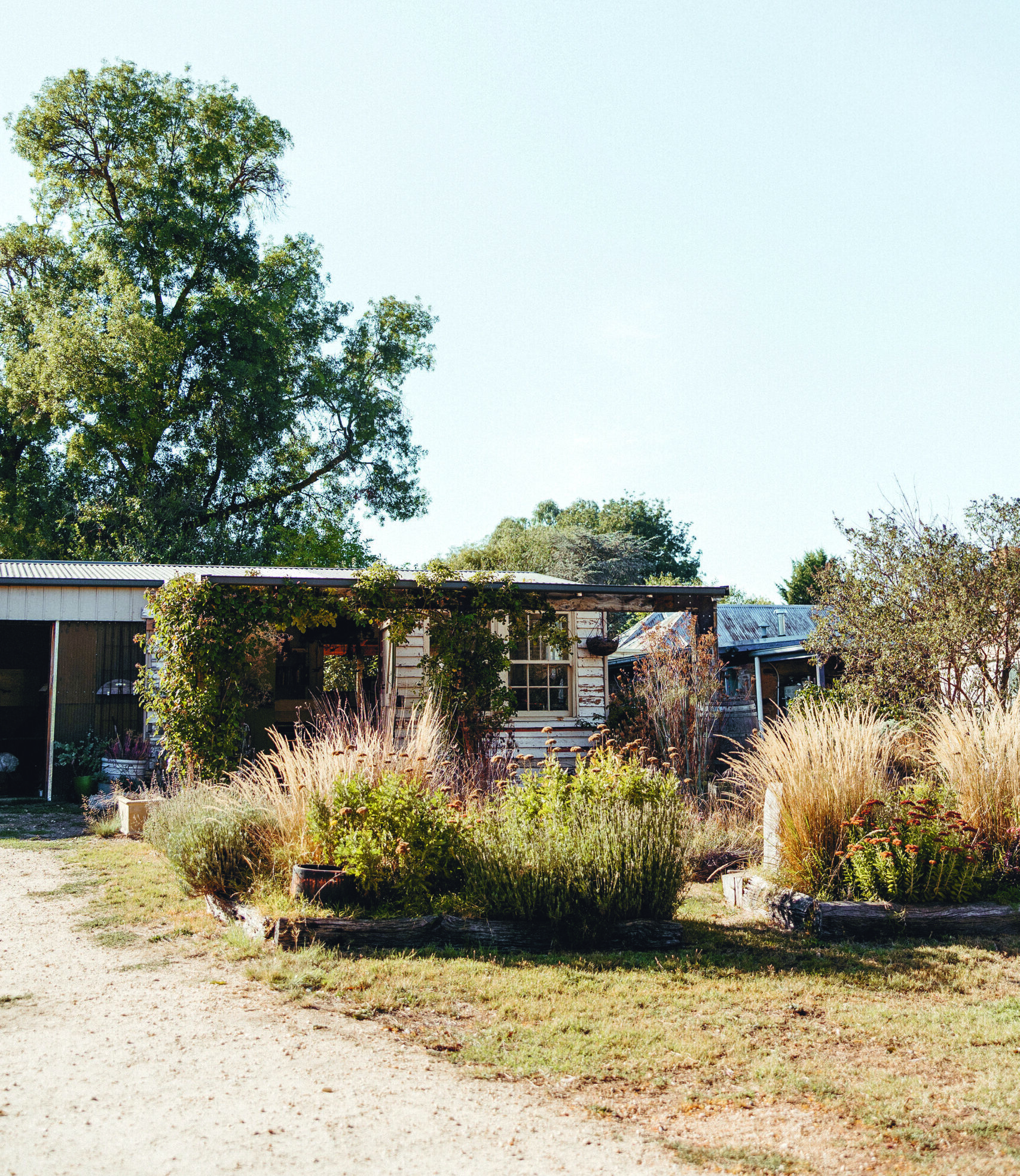
The garden includes climbing roses ‘Golden Gate’ and ‘Gold Bunny’, beds of native grasses and flowering plants with dried seed heads.
PHOTOGRAPHY AMELIA SCHOLTZ
Bridget loves to sketch the birds who visit her garden.
The felines fell out of favour long ago, and now Bridget’s art is all about Australian birds. “There are so many amazing birds, and they’re not all hiding like they do in the UK — they are there screeching in front of you, on full display,” she says with delight. Her original fine art prints feature a menagerie of feathered fauna, and she continues the bird theme with hand-printed wooden mobiles, enamel brooches and greeting cards, which sell like hotcakes in her online shop and at design markets.
The artist lives with her musician husband Jeremy Meaden, 41, and their children Wolfie, 11, and Yorek, nine, on a half-acre block in Guildford, a tiny town between Daylesford and Castlemaine, about 125 kilometres north-west of Melbourne. With the bush at her doorstep, Bridget’s work and wellbeing is informed by her adopted landscape.
PHOTOGRAPHY AMELIA SCHOLTZ
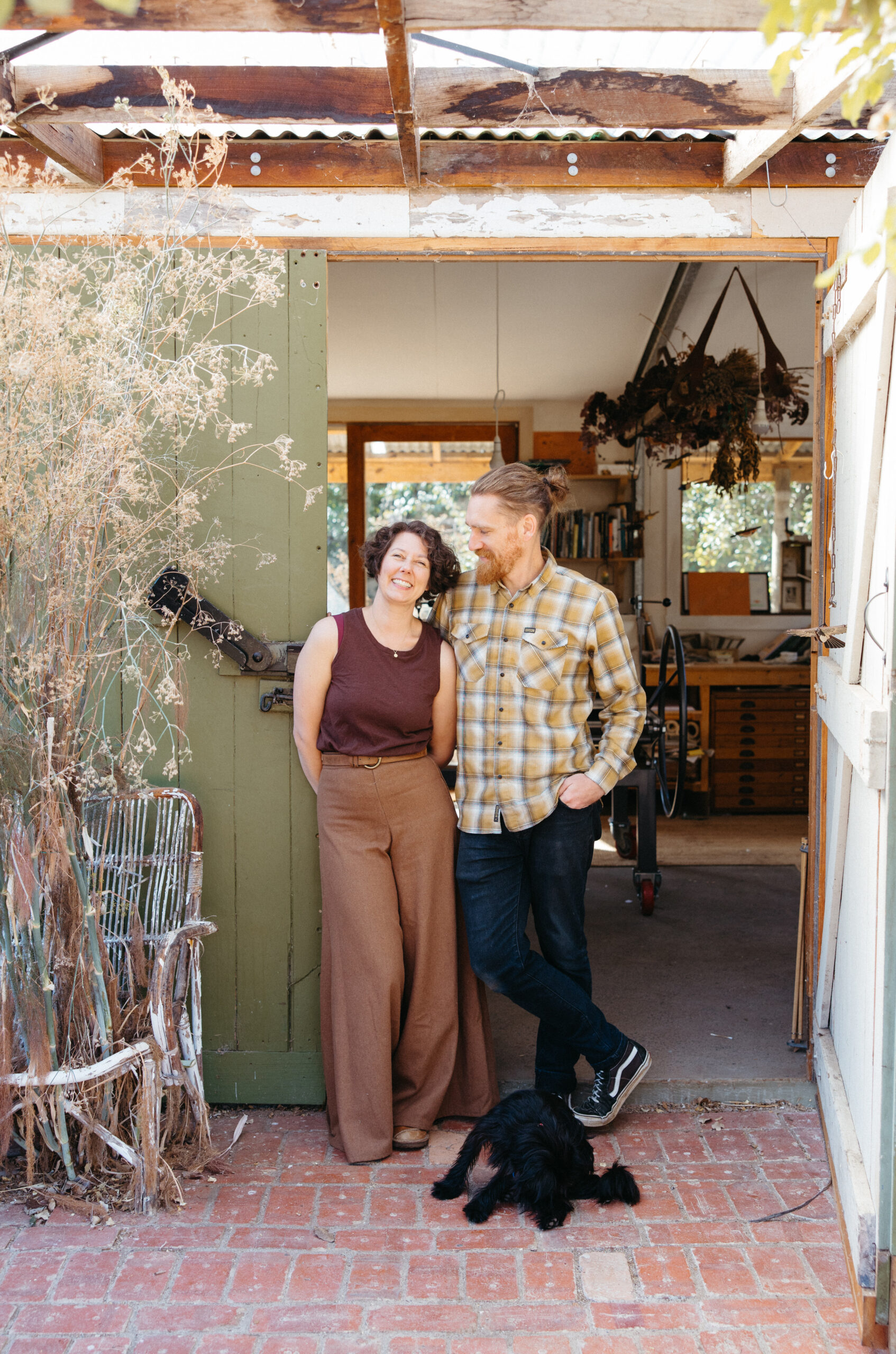
Bridget and Jeremy stand outside the barn door with their beloved Brussels Griffon, Viktor.
PHOTOGRAPHY AMELIA SCHOLTZ
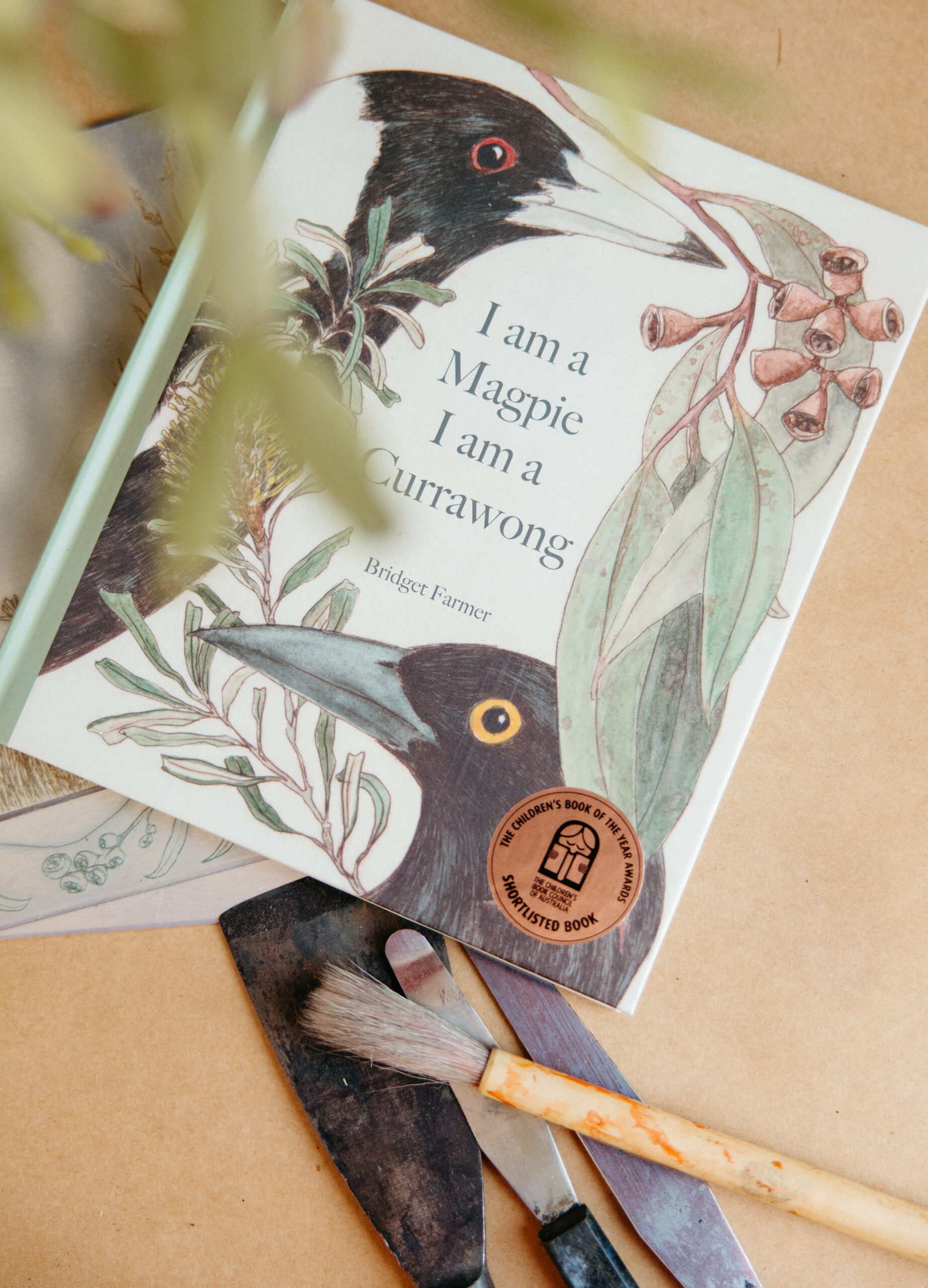
Bridget’s latest book, "I am a Magpie, I am a Currawong".
Just don’t call her a birdwatcher; she prefers the more accurate term “bird noticer”. “It’s a nightmare going birdwatching with young kids,” she explains. “So wherever I am, I notice the birds. I started using this phrase more and more, and it really resonated with people. You can still label yourself a birdy person, even if you don’t have the time to go birdwatching.”
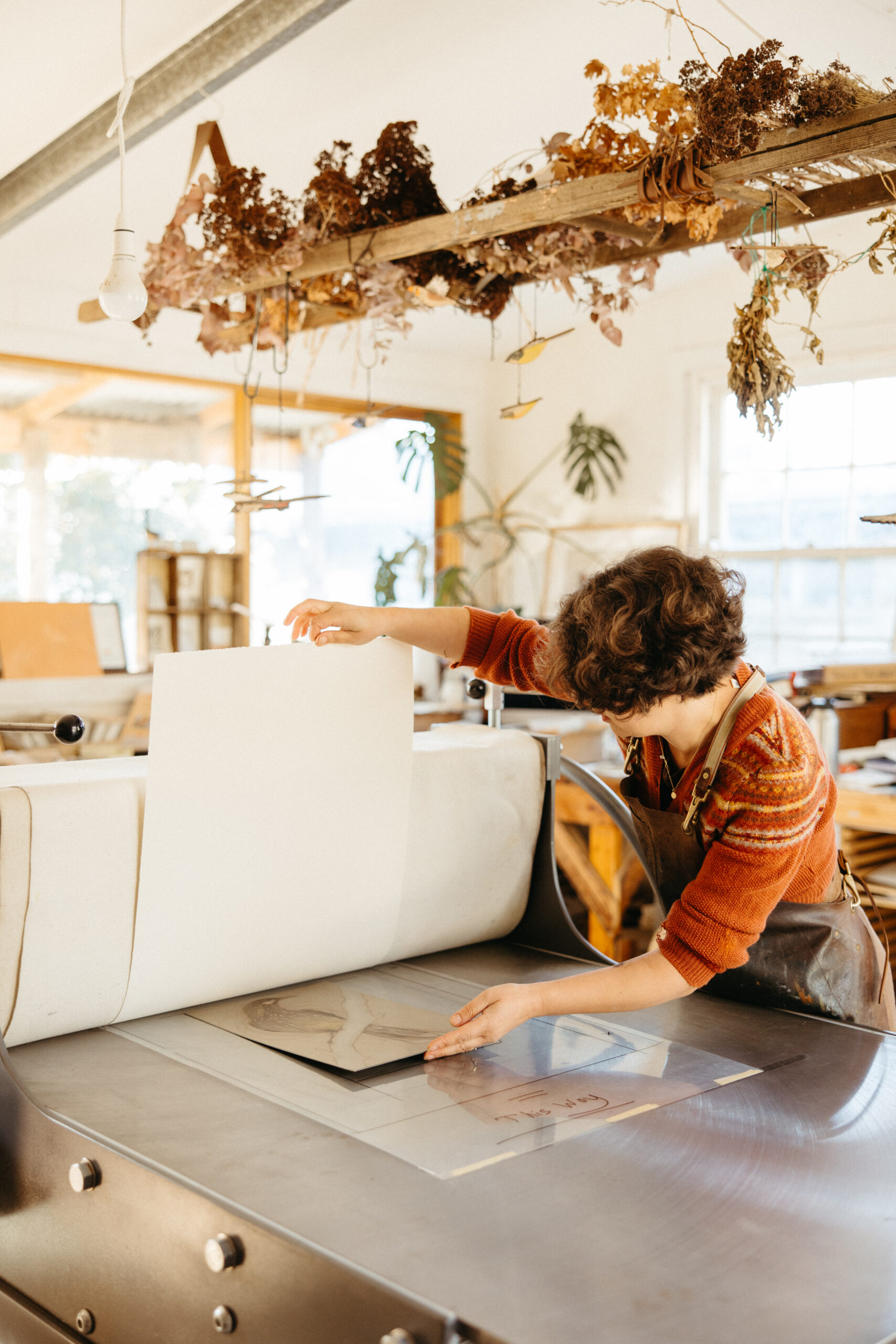
From opportunistic pencil sketches of busy local birds, Bridget moves to small aluminium plates, which are shipped to her from across the ocean. The many steps of drypoint follow: the filing of metal edges, the scratching of the design into the plate with a sharp needle, the rubbing of ink into the grooves, and the wiping away of the excess pigment — all before she even gets to the printing press, of which Bridget owns three in varying sizes.
PHOTOGRAPHY AMELIA SCHOLTZ
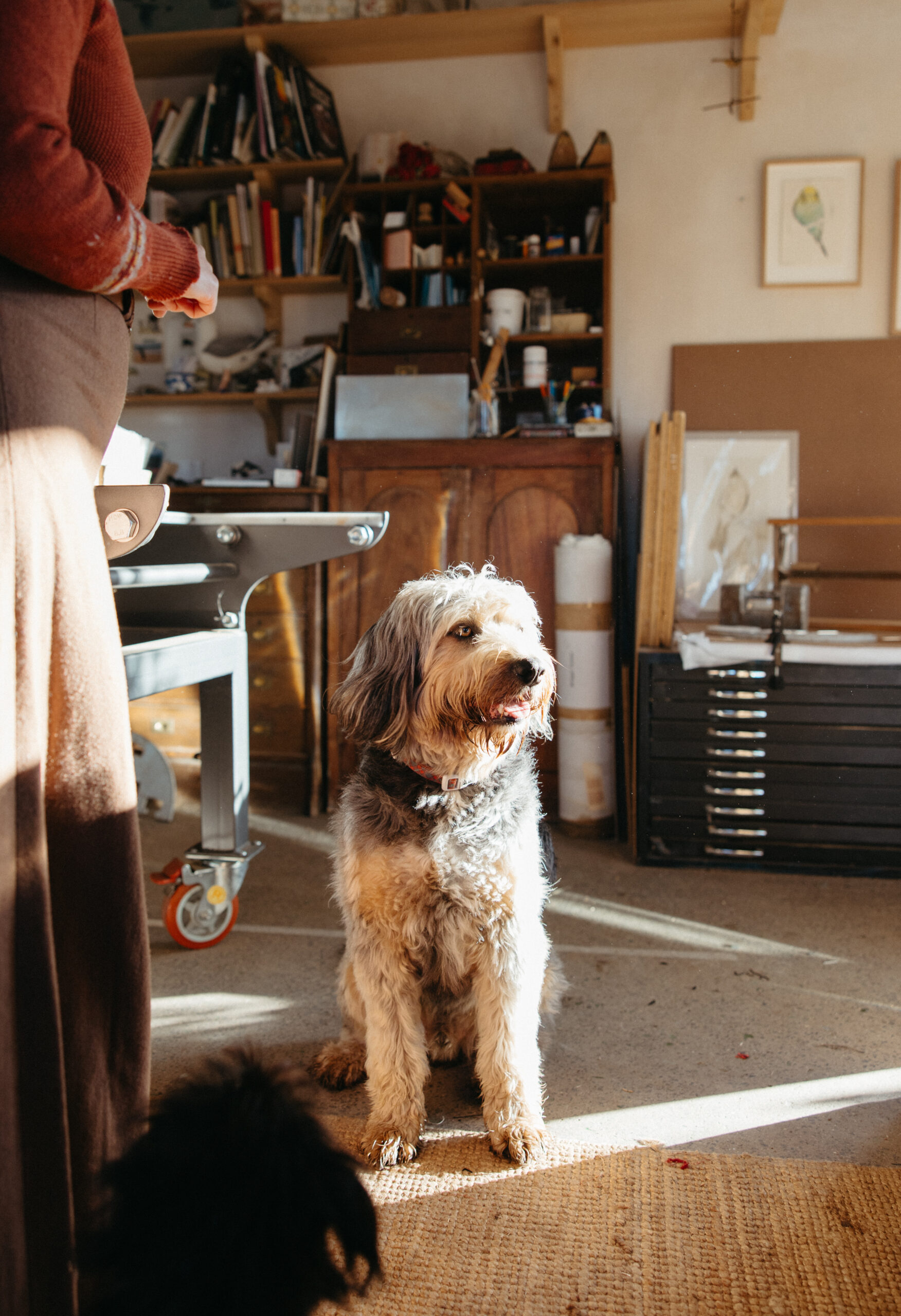
Bertram, a Smithfield, is a regular in the studio when he comes to work along with his human, Christina.
PHOTOGRAPHY AMELIA SCHOLTZ
Bridget positions an etching plate in a printing press.
She grapples with the paradox inherent in her chosen medium: “I want the lines to be loose and fluid, and you’re trying to do that with a steel-tipped etching needle into metal. It’s not a fluid way of drawing,” she says. But she revels in the uniqueness of each print. “I love the happy accidents, I love the slightly fuzzy lines you get with drypoint… the preciousness is that they are ever so slightly different.”
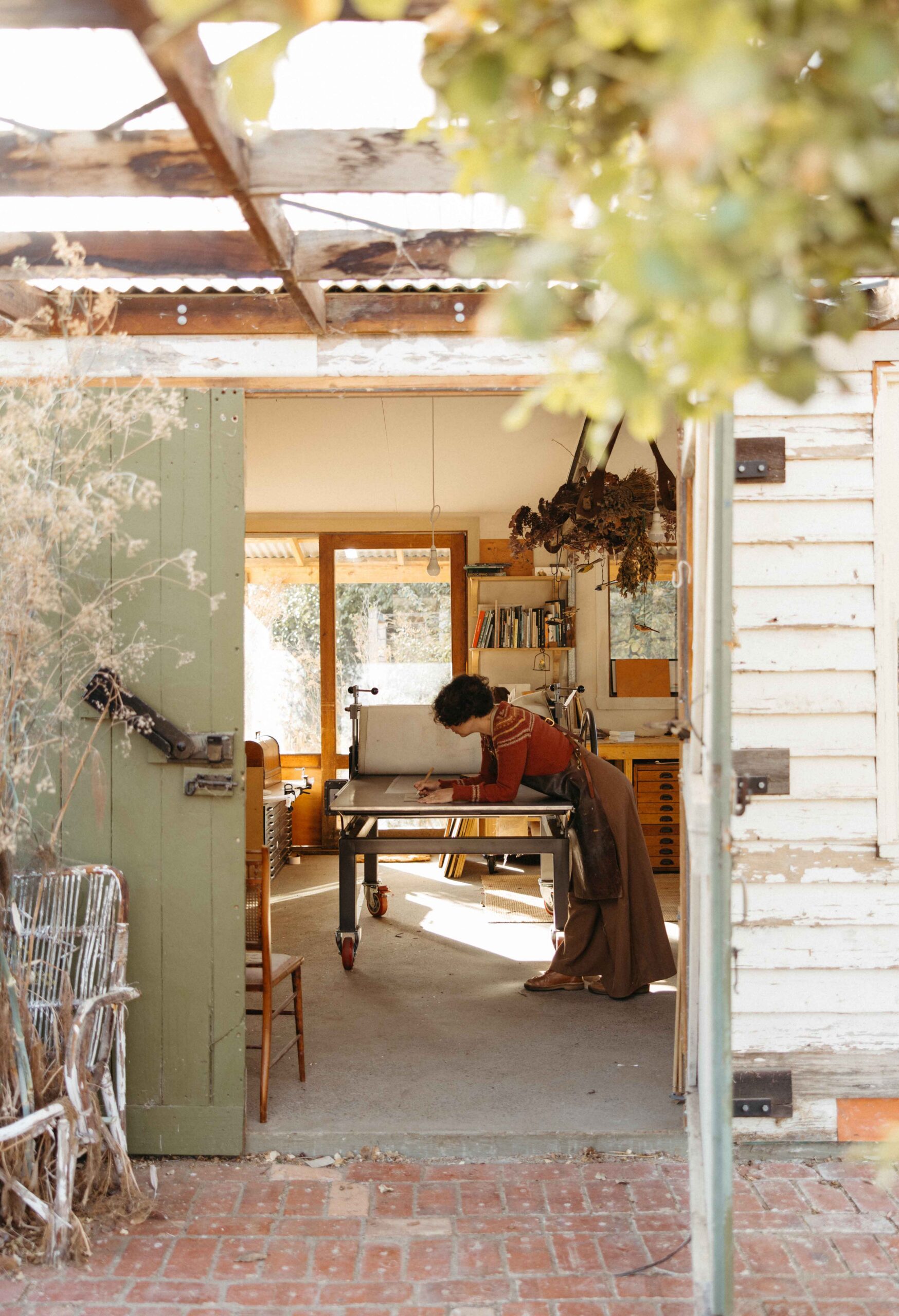
Bridget runs her art practice as a full-time business from her studio — a converted garage in the garden. “It was a double carport when we bought the property in 2016, it had a gravel floor and no windows,” she says. “In 2019 I found these amazing big green double barn doors in a salvage yard, and I said, ‘We need to build around these’.” Further salvaging of second-hand fixtures followed; for example, character-filled sash windows and plenty of shelving, to help create just the right vibe.
PHOTOGRAPHY AMELIA SCHOLTZ
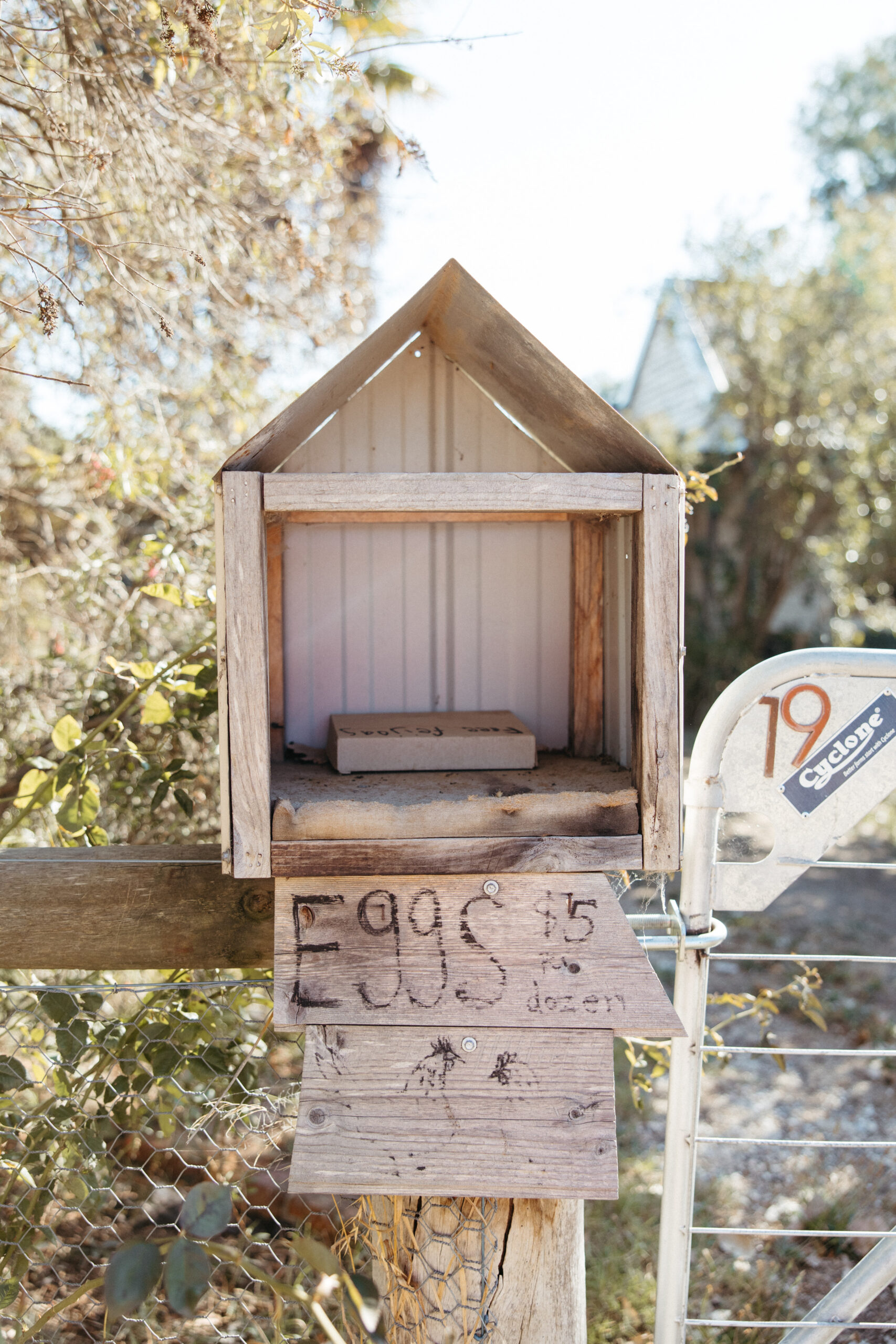
At the front gate, an honesty box is decorated with a whimsical sketch by Bridget of the family’s chooks.
PHOTOGRAPHY AMELIA SCHOLTZ
Second-hand fixtures such as sash windows and plenty of shelving give the studio atmosphere and character.
She admits there are challenges involved in working as a regional artist: distance means higher shipping costs for supplies, and more time spent waiting for deliveries. But Bridget wouldn’t have it any other way. “I can only last about three days in a city and then I have to get out,” she says.
The past five years have seen her bush-based business grow exponentially, and she’s taken on a handful of staff to help with the increasing admin, which has been a game changer. “Balancing the business side with the creative side is difficult. I couldn’t fathom doing this without [support] now,” she says. “I can focus on getting more etchings out and working on my next book.”
Publishing her own illustrated children’s books has become “one of the most important parts” of Bridget’s work, “because that is where the fulfilment is: in educating, and getting kids and parents involved in nature.” She has created four picture books so far, filled with fine drypoint etchings, watercolours and rhyming text, aimed at encouraging the next generation to recognise, love and protect local birds.
PHOTOGRAPHY AMELIA SCHOLTZ
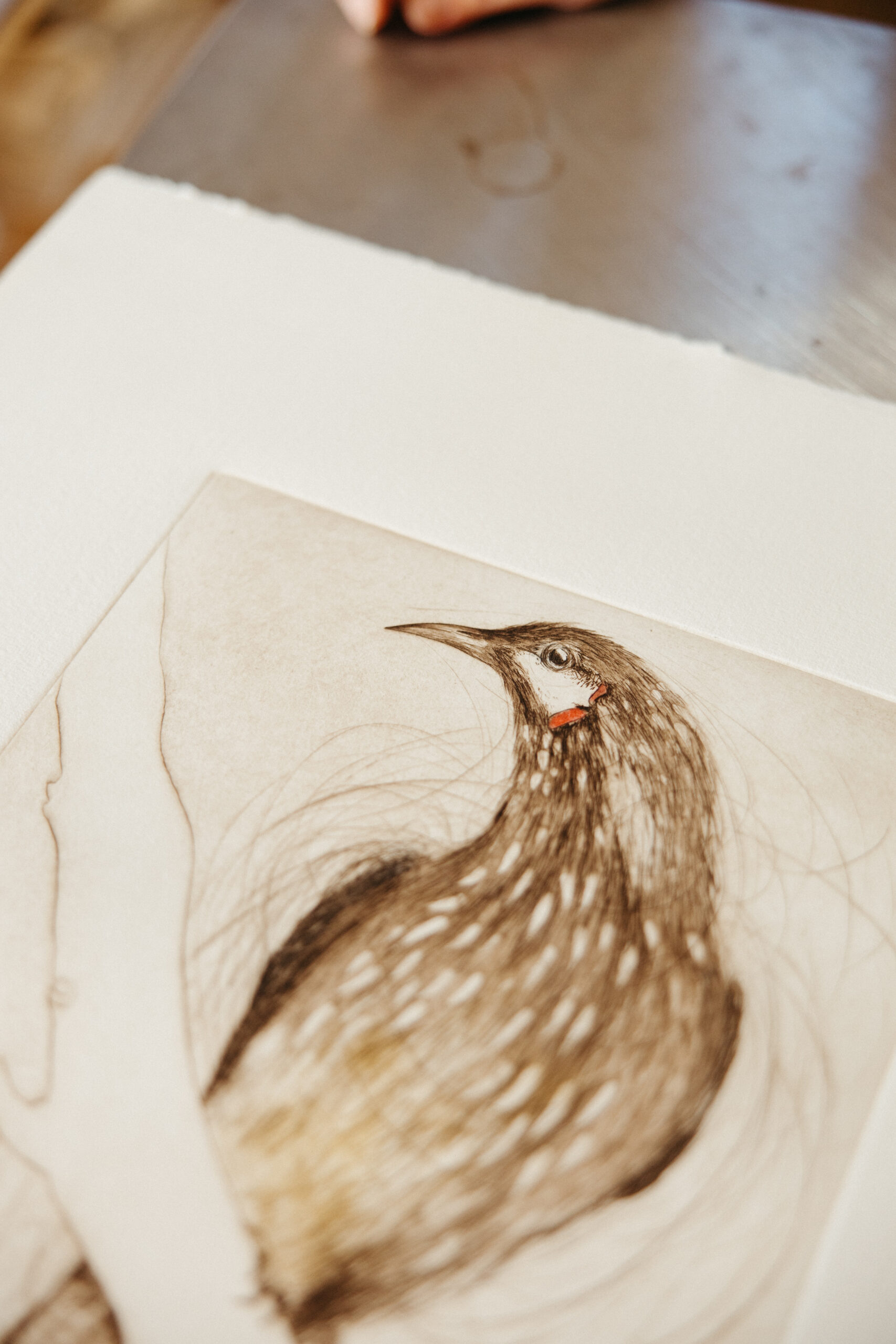
"Red Wattlebird from Chiltern", a limited edition of 16 prints.
PHOTOGRAPHY AMELIA SCHOLTZ
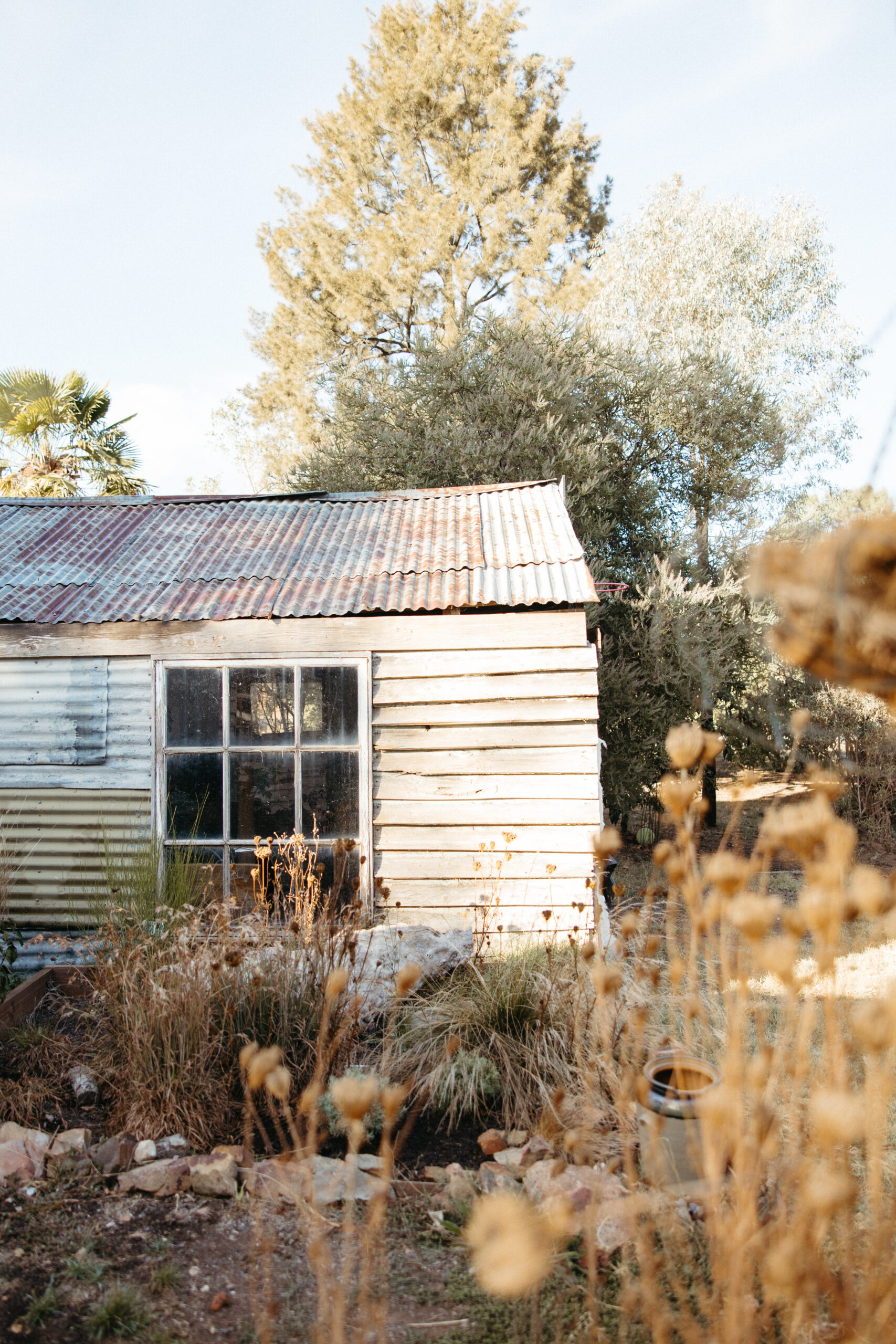
The weathered exterior adds to the charm opf the backyard studio.
Her latest book, I am a Magpie, I am a Currawong, is shortlisted for the prestigious 2025 Children’s Book Council of Australia Eve Pownall award, for informative books that extend children’s knowledge on a given topic, which she cites as a career highlight: “It’s an absolute thrill,” she says proudly.
And if all that’s not enough, Bridget has begun another ambitious project with her nearby Campbells Creek-based birder friend and artist, Jane Rusden: the pair are embarking on a 10-year quest they call The 700 Birds Project, to see and draw all of Australia’s 700+ birds on purpose-led camping trips around the country.
“We’ve been on one trip so far!” Bridget laughs. “We’d be pretty lucky, the way we’re going, to see the 700.” They are yet to decide what to do with the drawings — perhaps an exhibition or a book — but Bridget says it’s not about the end goal. “It’s just the doing really: spending time with Jane, going camping, seeing birds, drawing birds and exploring.”
It’s this explorer’s ethos that drives Bridget and her art. Like one of her beloved feathered friends, the sky’s the limit when considering what to do next. She’s in the early stages of a new book, and she’s itching to put her largest printing press to better use: “I would like to do some really big works”, she says.
For now, those enormous green barn doors remain open, letting in a constant flow of visiting birds and inspiration. “There’s just so much still to do.”
For more information, go to bridgetfarmerprintmaker.com; @bridgetfarmerprintmaker; @700_birds_project.
Subscribe to Graziher and you’ll never miss an issue of your favourite magazine. Already a subscriber? Consider gifting a subscription to someone special in your life.
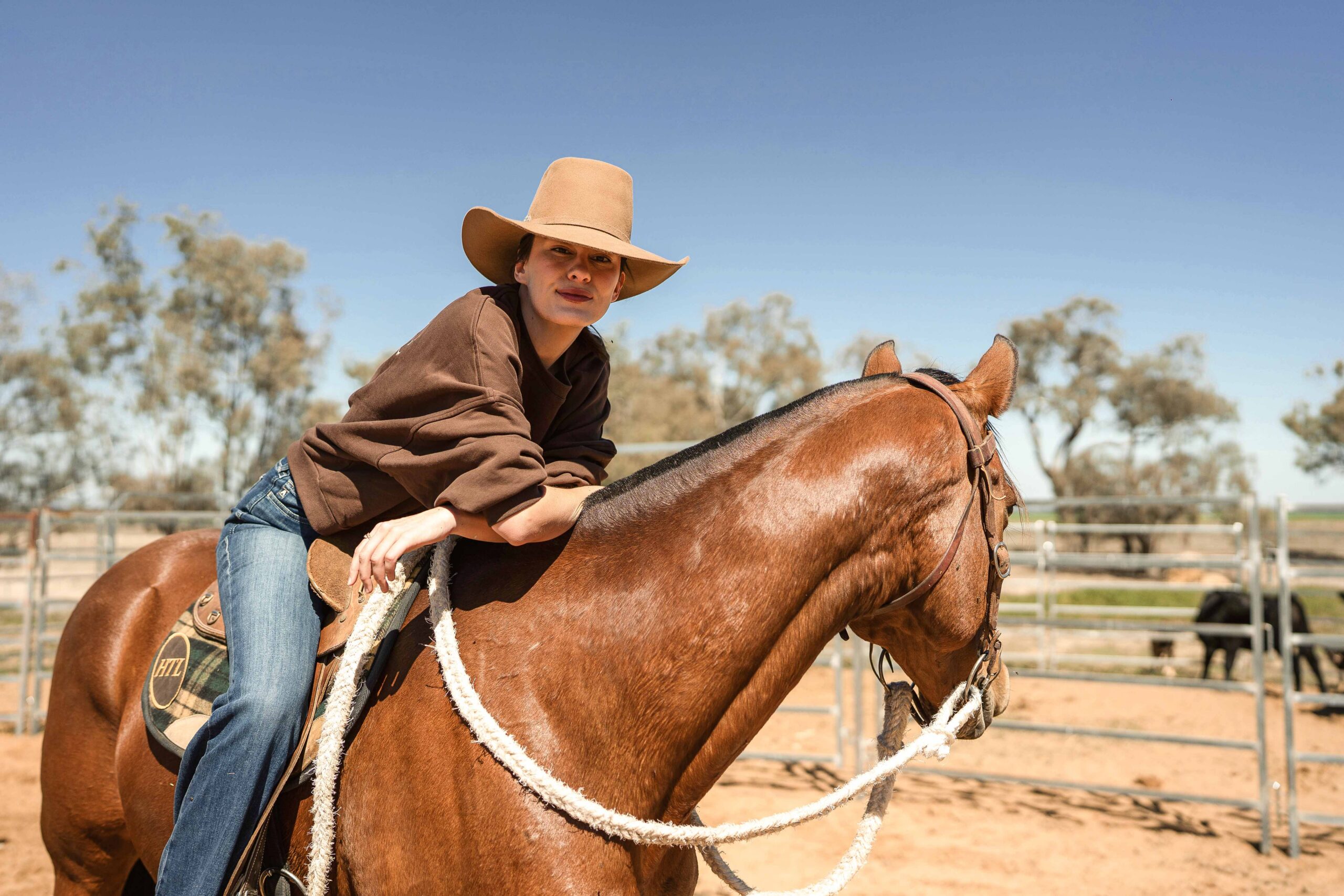
There are many ways to find a meaningful role in the industry, says Beef Australia’s Beth Rands.
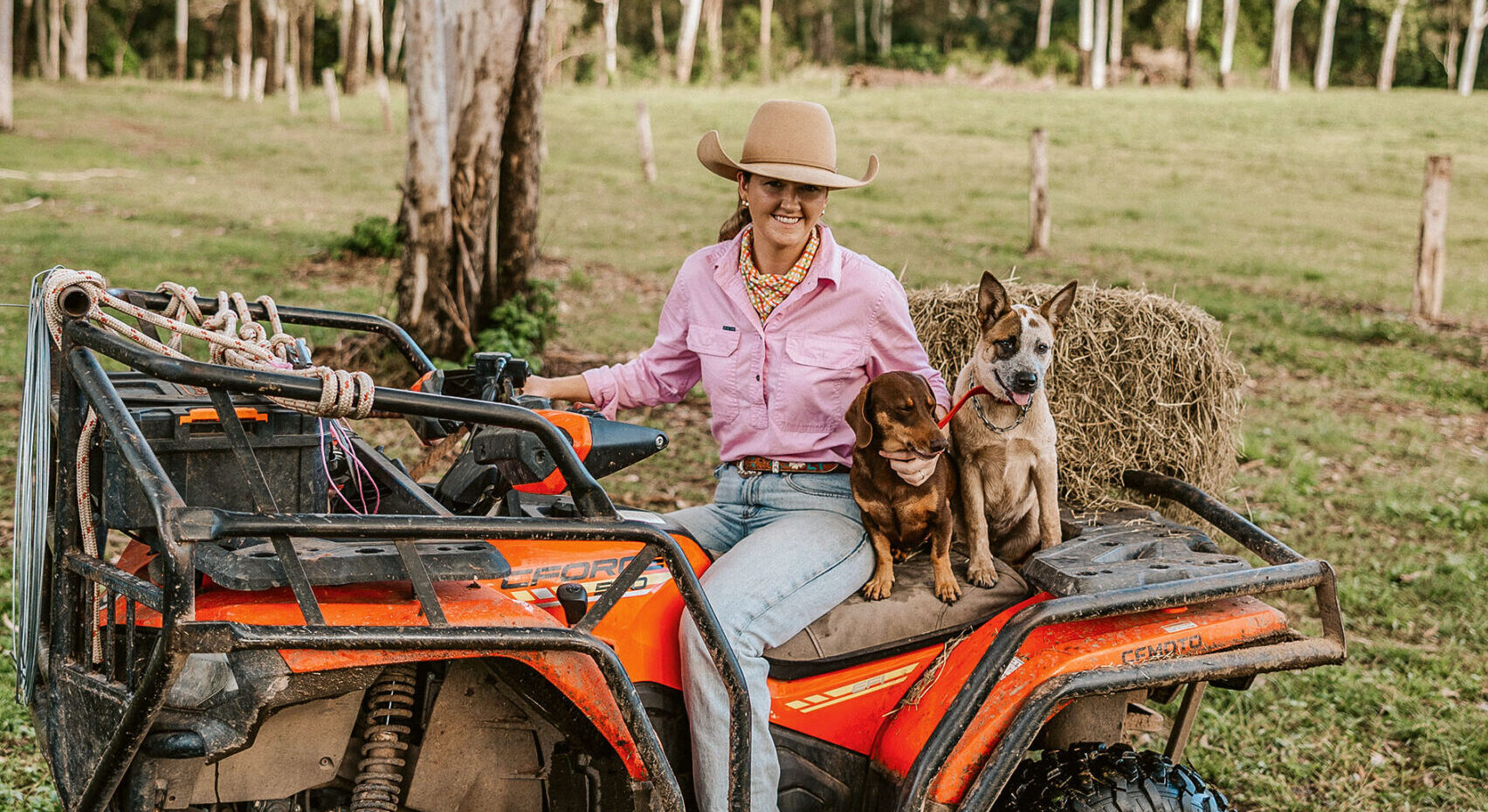
Hailing from a small Irish town, Lisa Fryer found love at Daly Waters’ Hi-Way Inn. Today, she and husband John are ushering in a new era for Tabletop Station, near Townsville, Queensland.
There are many ways to find a meaningful role in the industry, says Beef Australia’s Beth Rands.
Hailing from a small Irish town, Lisa Fryer found love at Daly Waters’ Hi-Way Inn. Today, she and husband John are ushering in a new era for Tabletop Station, near Townsville, Queensland.
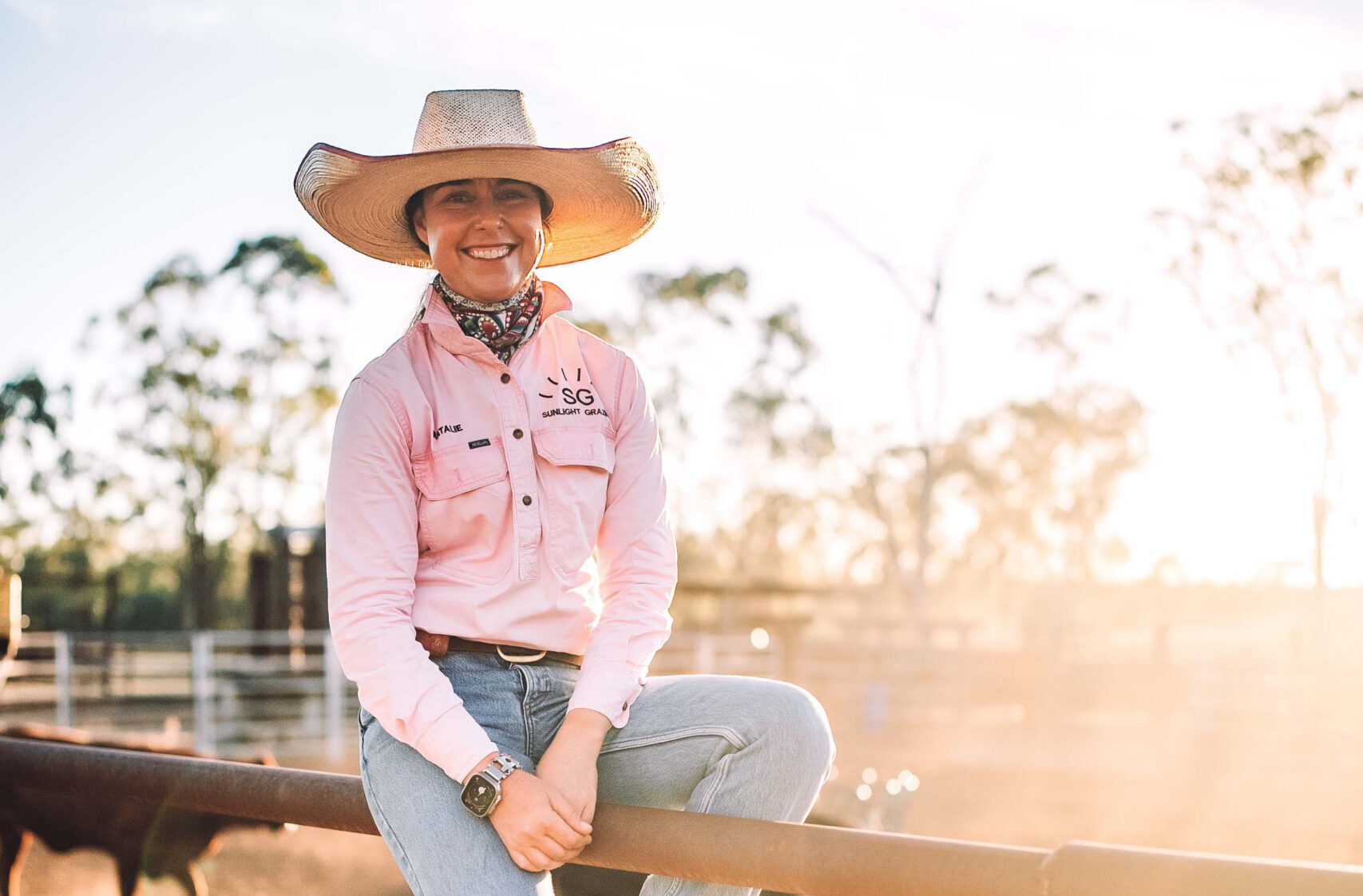
She says clever tech makes it possible to go it alone on the 4000 hectare beef-finishing property in central Queensland.

