





PHOTOGRAPHY PIP FARQUHARSON
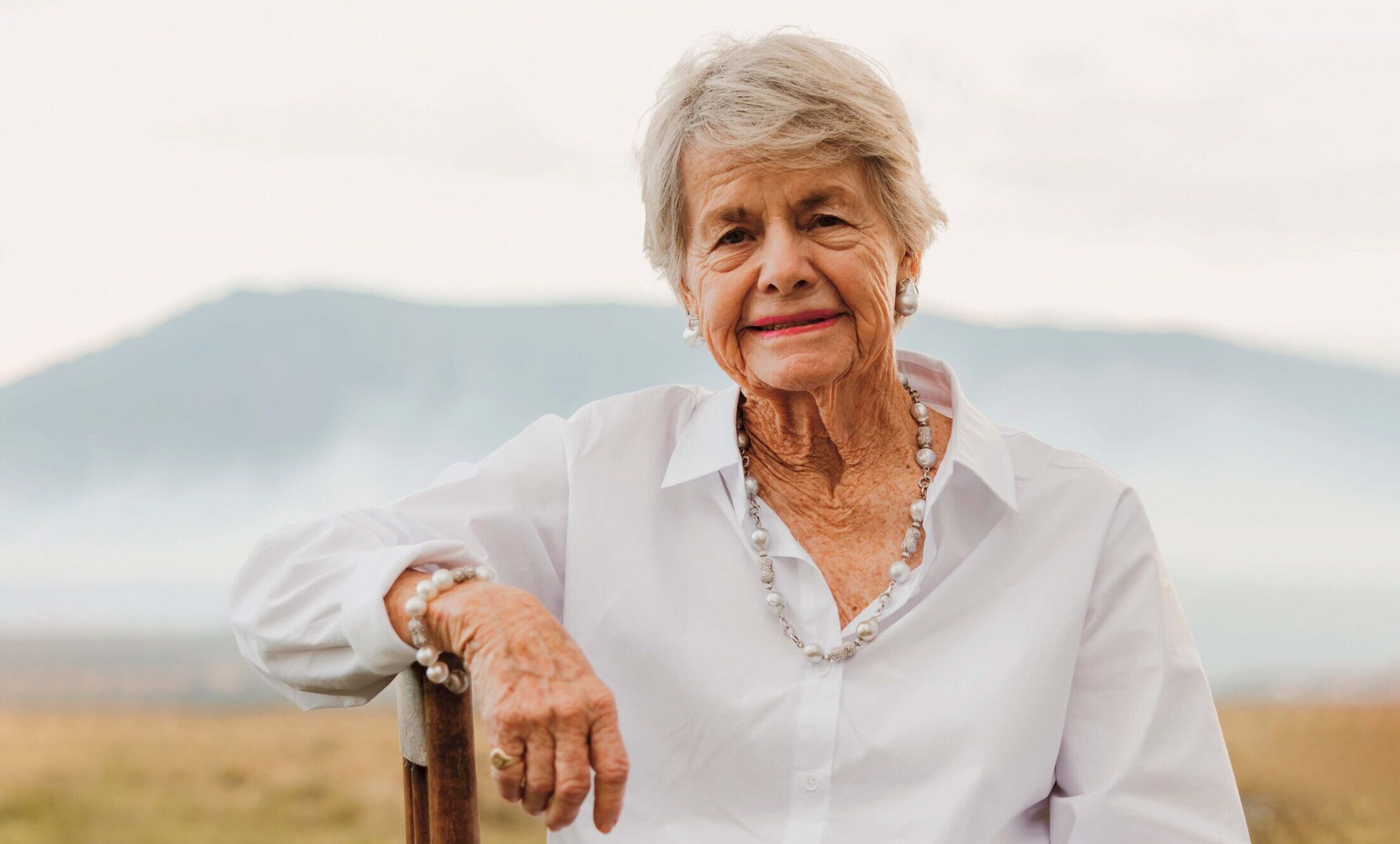
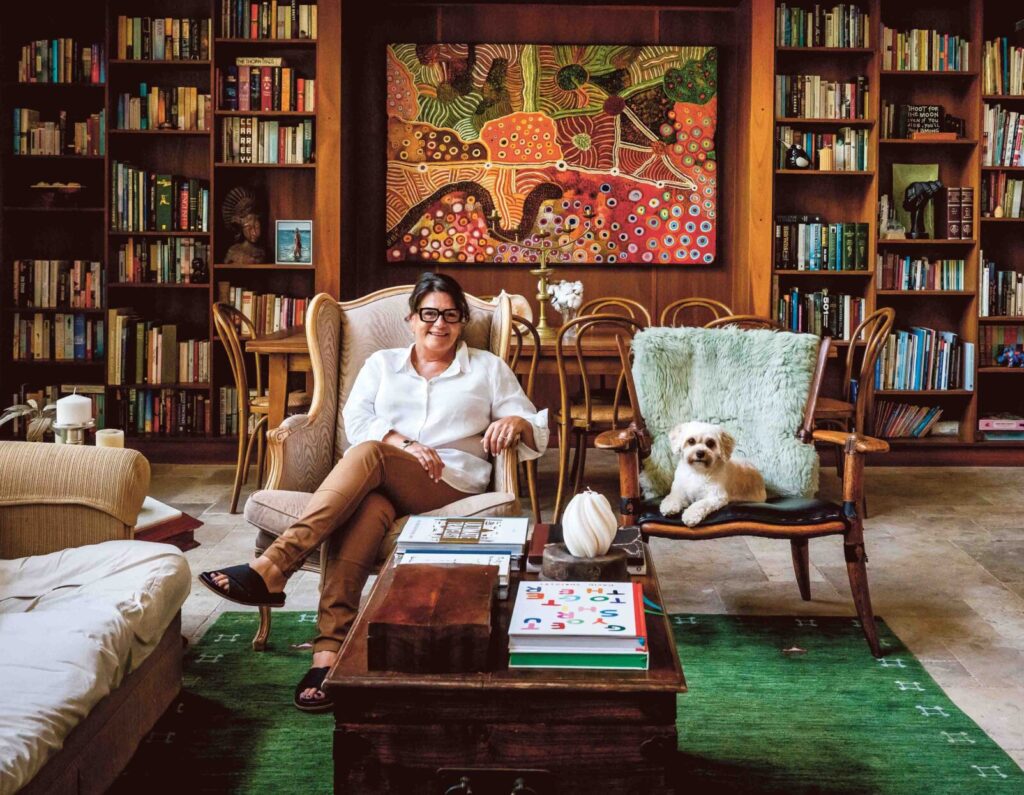
“She’s a grand old lady, but she’s also a very friendly house,” says Jillie Arnott of her Coolah Creek home.
Sign up to our mailing list for the best stories delivered to your inbox.
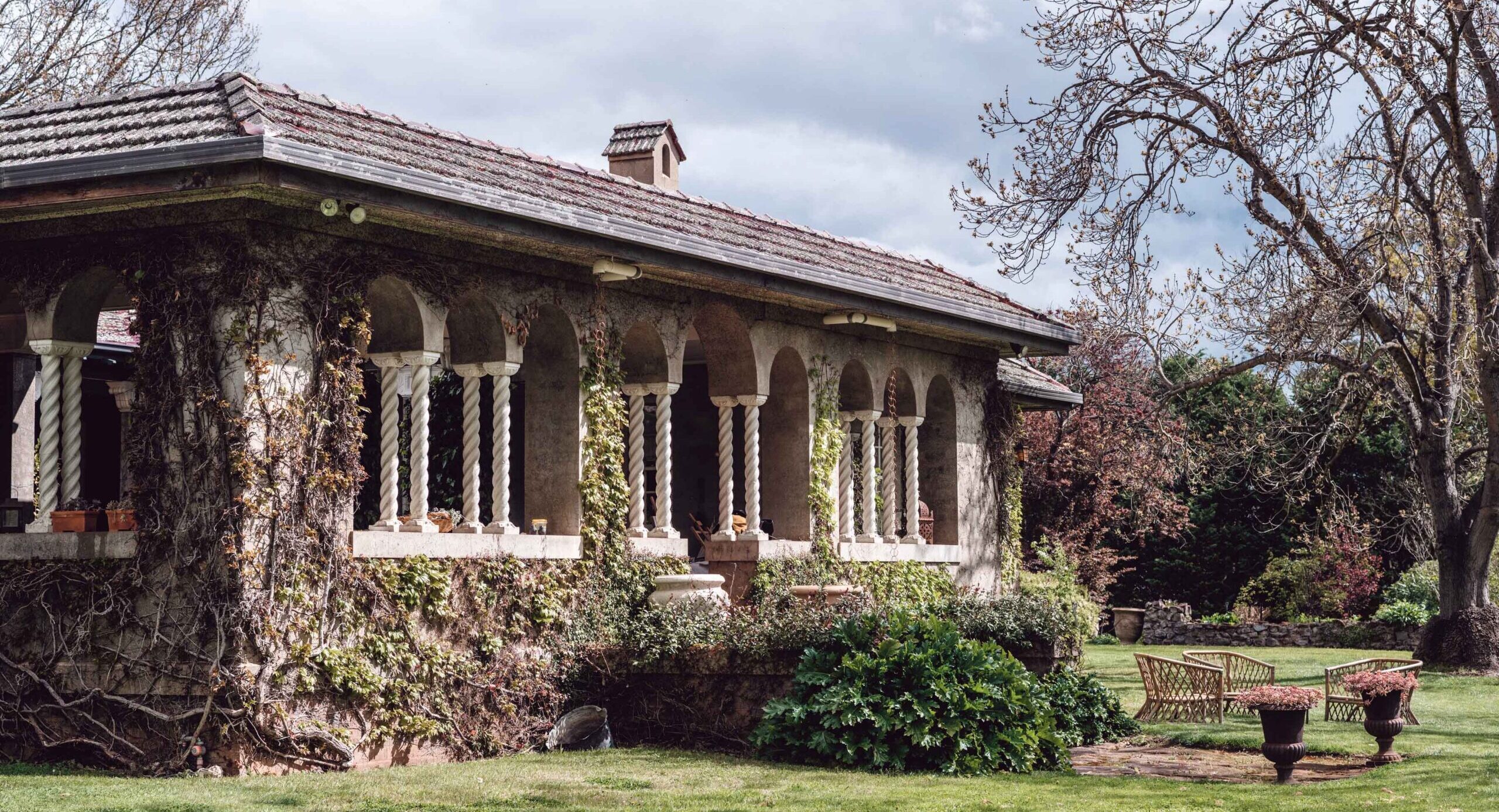
“She’s a grand old lady, but she’s also a very friendly house,” Jillie Arnott says of the century-old home, now open to artists and guests.
Words Amanda Ducker Photography Pip Farquharson
PHOTOGRAPHY PIP FARQUHARSON
“She’s a grand old lady, but she’s also a very friendly house,” says Jillie Arnott of her Coolah Creek home.
PHOTOGRAPHY PIP FARQUHARSON
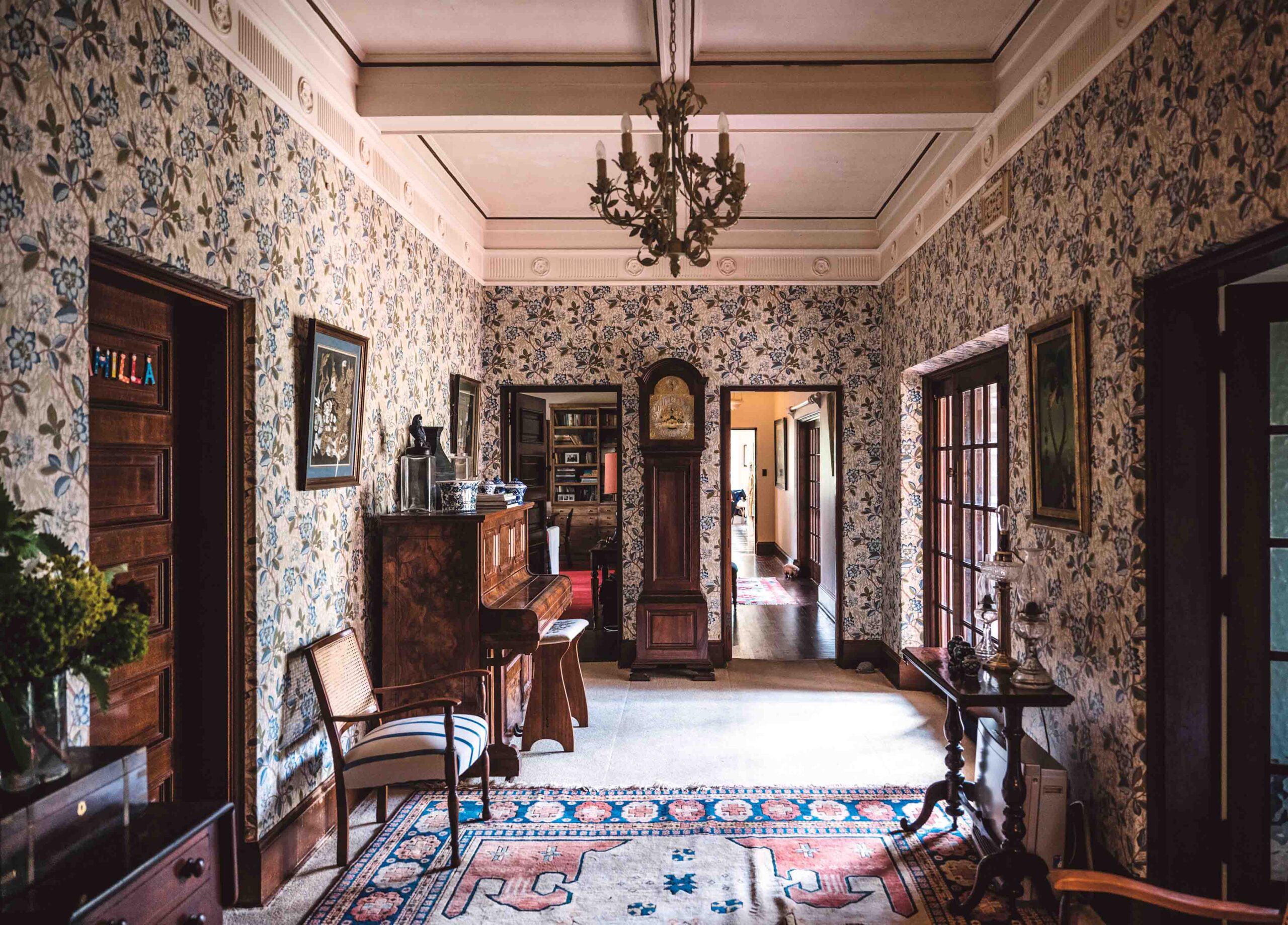
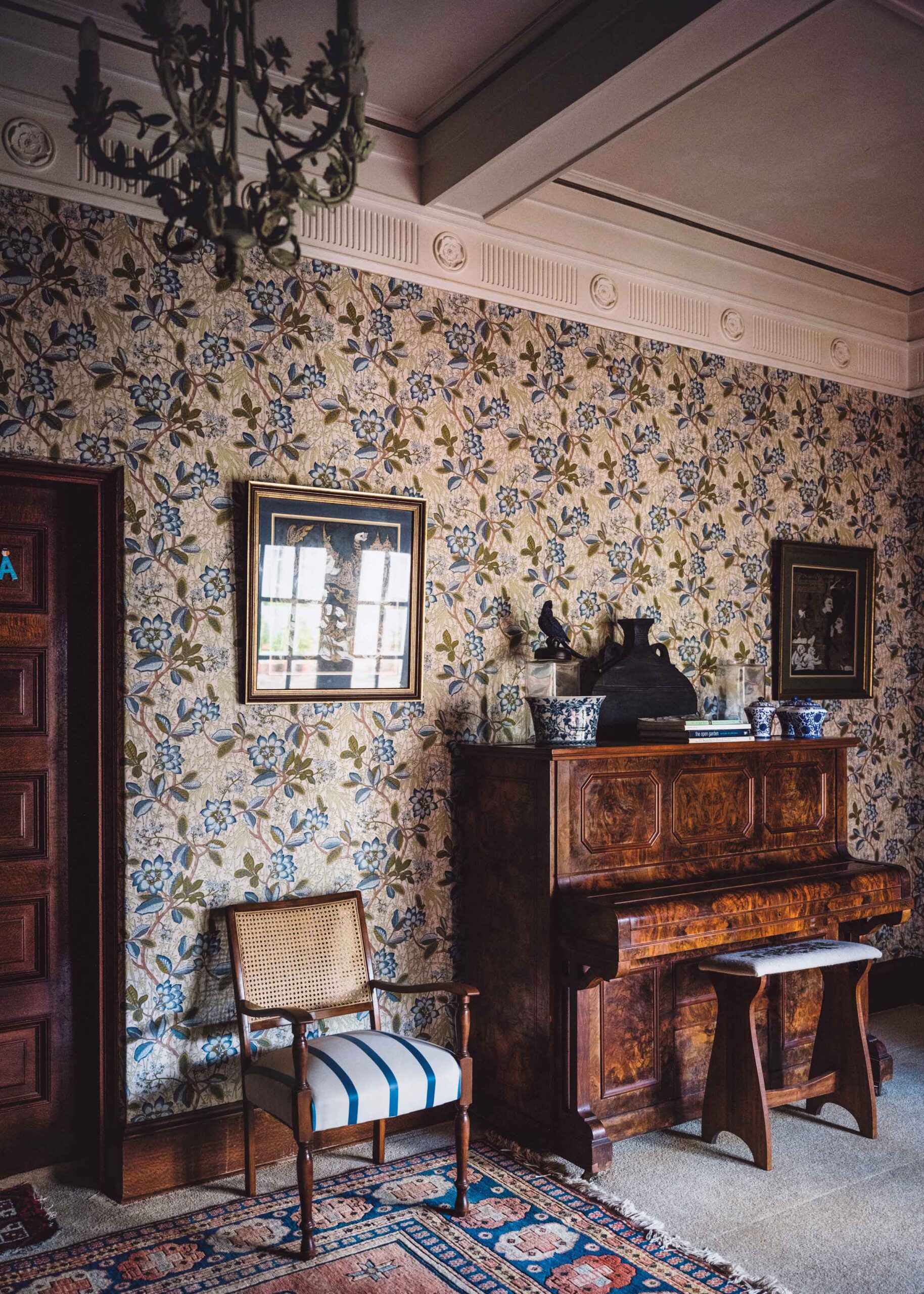
Jillie kept much of the existing decor, like this luxurious wallpaper in the entrance hall. The clock has been in the same spot as long as Will, who moved into the house with his parents in 1971, can remember. The piano is a newer addition: it was a gift from Jillie’s great-grandmother.
Once a sheep station, it is now a working cattle farm and a creative retreat for paying guests, balancing tradition with renewal. When Jillie and Will Arnott’s turn as custodians came up, they had to find a contemporary way to sustain the 3240 hectare farm’s legacy while keeping it viable.
Coolah Creek, which borders the Coolah Tops National Park to the east, has been in the Arnott family since the mid-1920s when it was bought by Colonel John McLean Arnott, of Sydney’s Arnott’s Biscuits fame. Initially, it was a country retreat for the city-based family. It transitioned into a full-time working farm, with each successive generation reshaping its purpose and function.
For Jillie, then 50, the move to Coolah Creek in 2013 from the family’s long-established home — on a few acres near Scone in the Hunter Valley, two hours away — was major. “I knew one person when I moved to Coolah,” she says. Despite initial challenges, she soon felt the warmth and industrious spirit of the local Warrumbungle Shire community. “People were incredibly welcoming, and I was lucky to be scooped up.”
PHOTOGRAPHY PIP FARQUHARSON
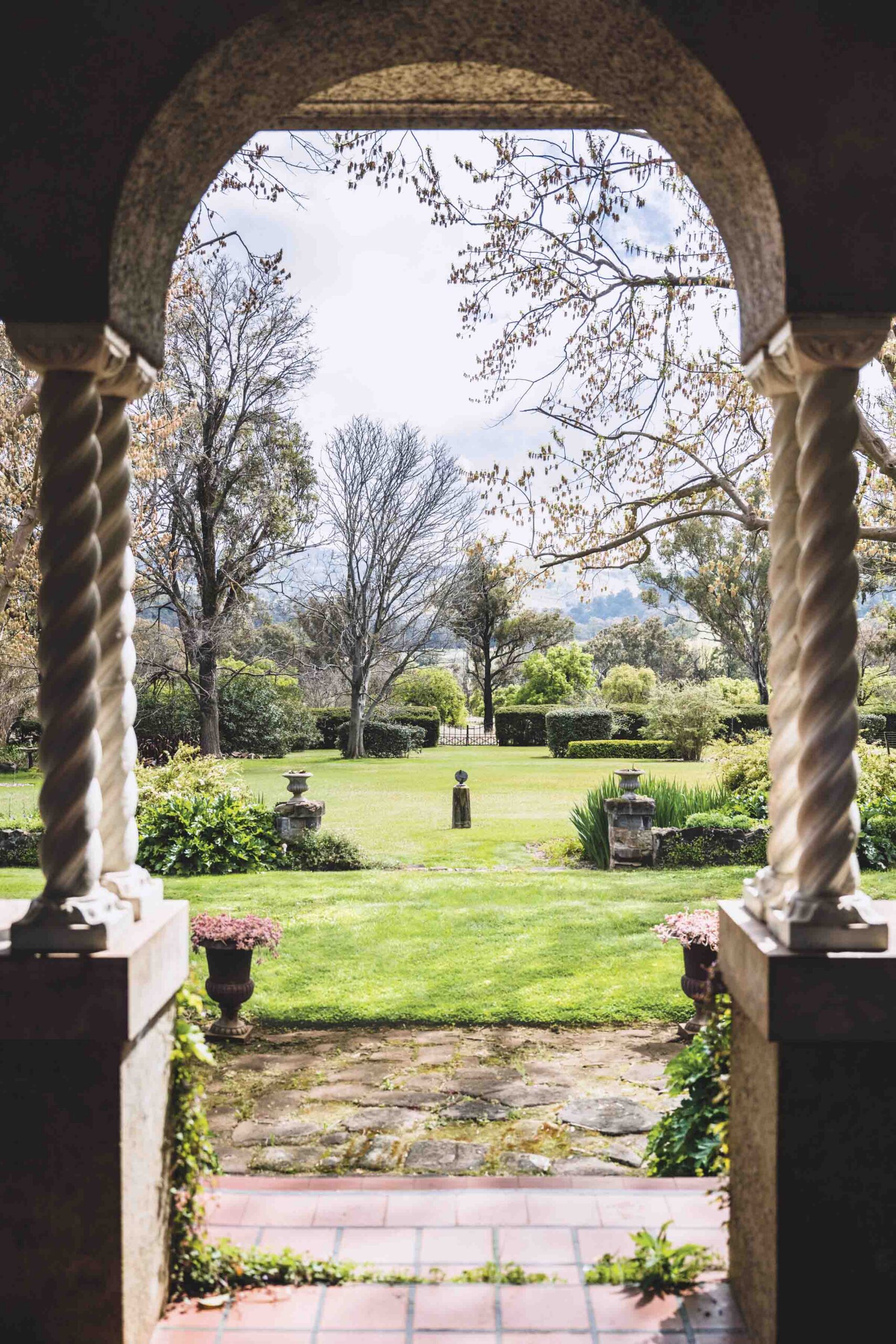
Twisted columns on the front courtyard frame a view over the five hectare garden.
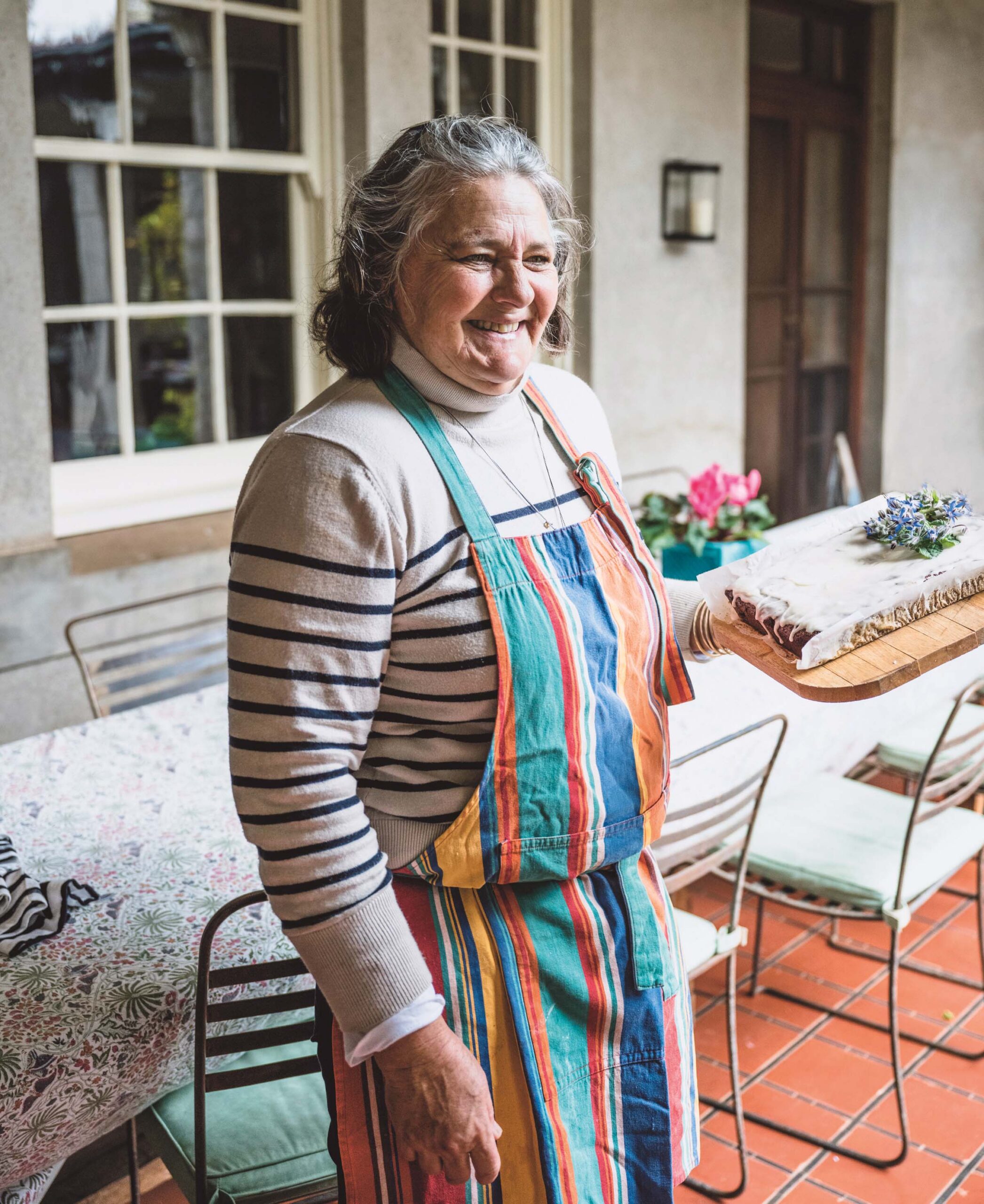
PHOTOGRAPHY PIP FARQUHARSON
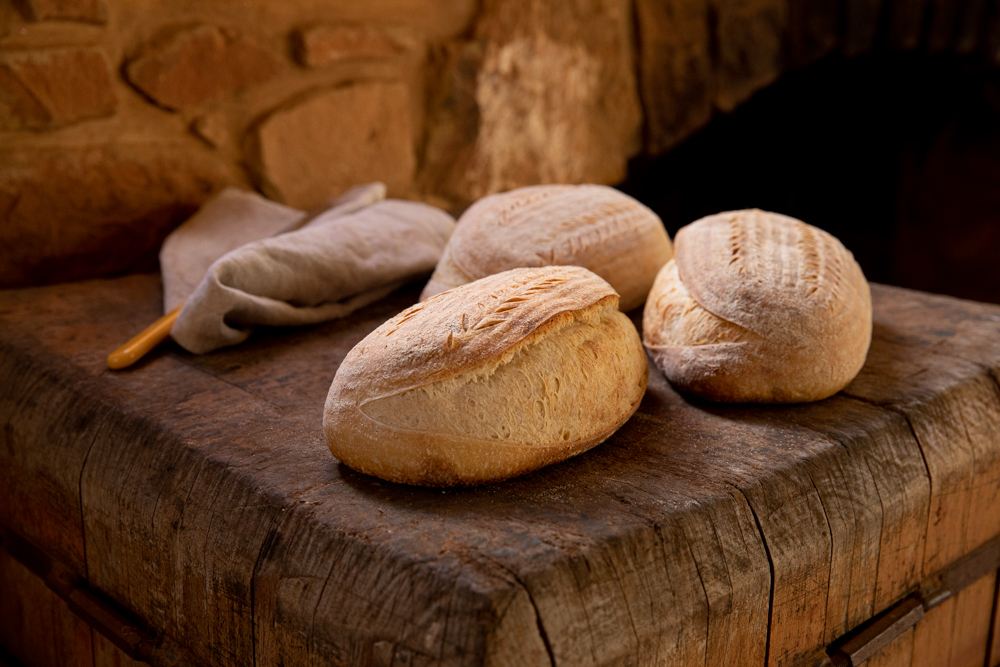
Jillie is ready to serve her famous gingerbread slab with lemon glaze.
As Will, now 63, embarked on a steep learning curve to hands-on farming after decades in logistics and accounting, Jillie faced her first challenge: refreshing the expansive homestead and garden to create a true sense of home for their three teenagers (now all adults). As she laboured, she realised she needed a larger purpose, a more encompassing vision, to drive her.
“To make sense of it, I needed to earn an income from it. Given I’d been in the catering industry for more than 20 years, working all over north-west New South Wales, I knew that part of the offering would be easy for me. We had the perfect recipe: this gorgeous old house, unique in its situation, a beautiful garden, and someone who loved to cook and feed people. Opening and sharing Coolah Creek through the workshops was a no-brainer for me. Will was hesitant but then he saw the joy in me and a reason to have the garden respectable.”
Today, her curated events and creative workshops are fixtures on many calendars. It’s been quite a journey.
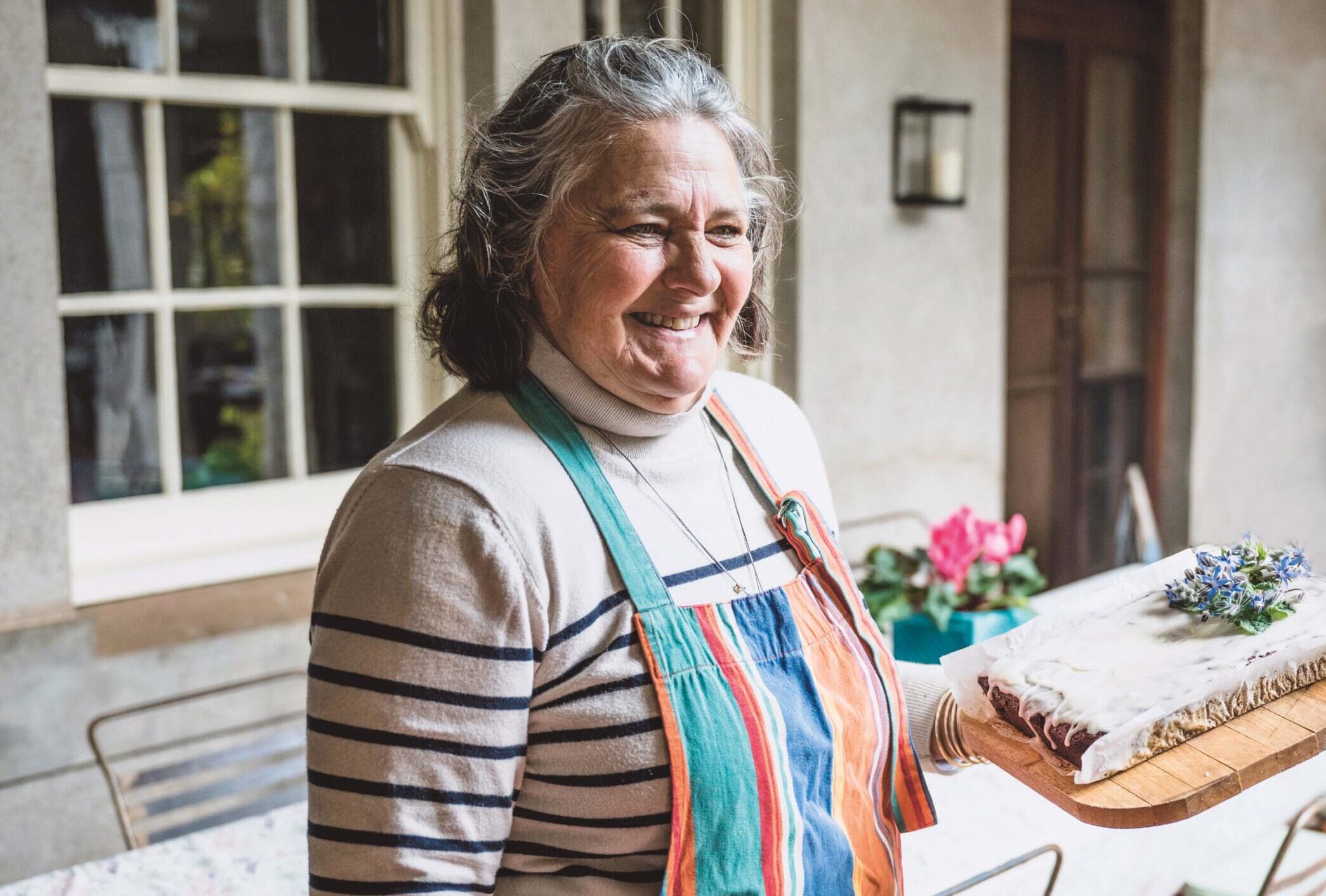
Once a caterer, Jillie now hosts creative workshops at her century-old homestead. She shares the recipe for a morning-tea favourite.
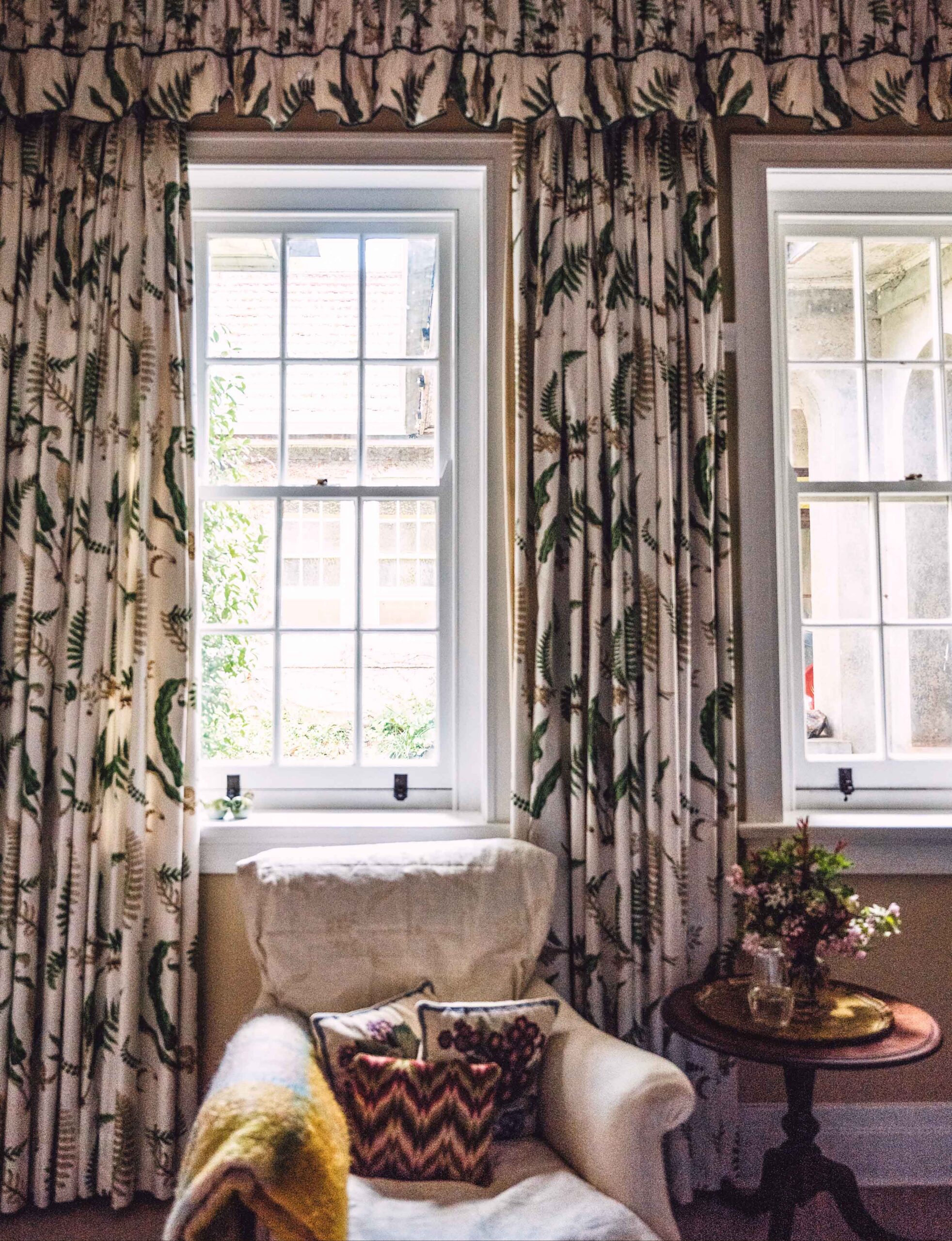
PHOTOGRAPHY PIP FARQUHARSON
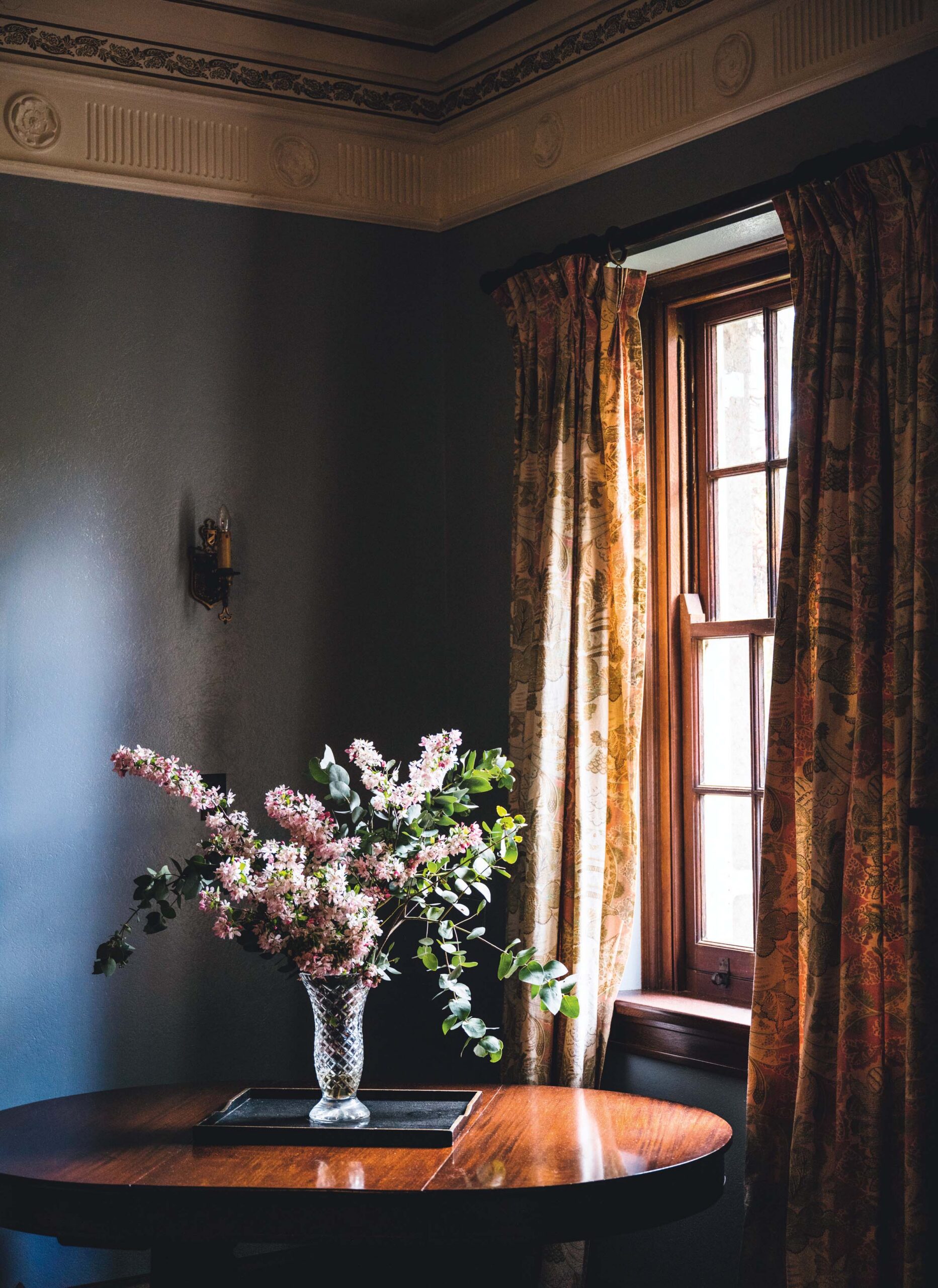
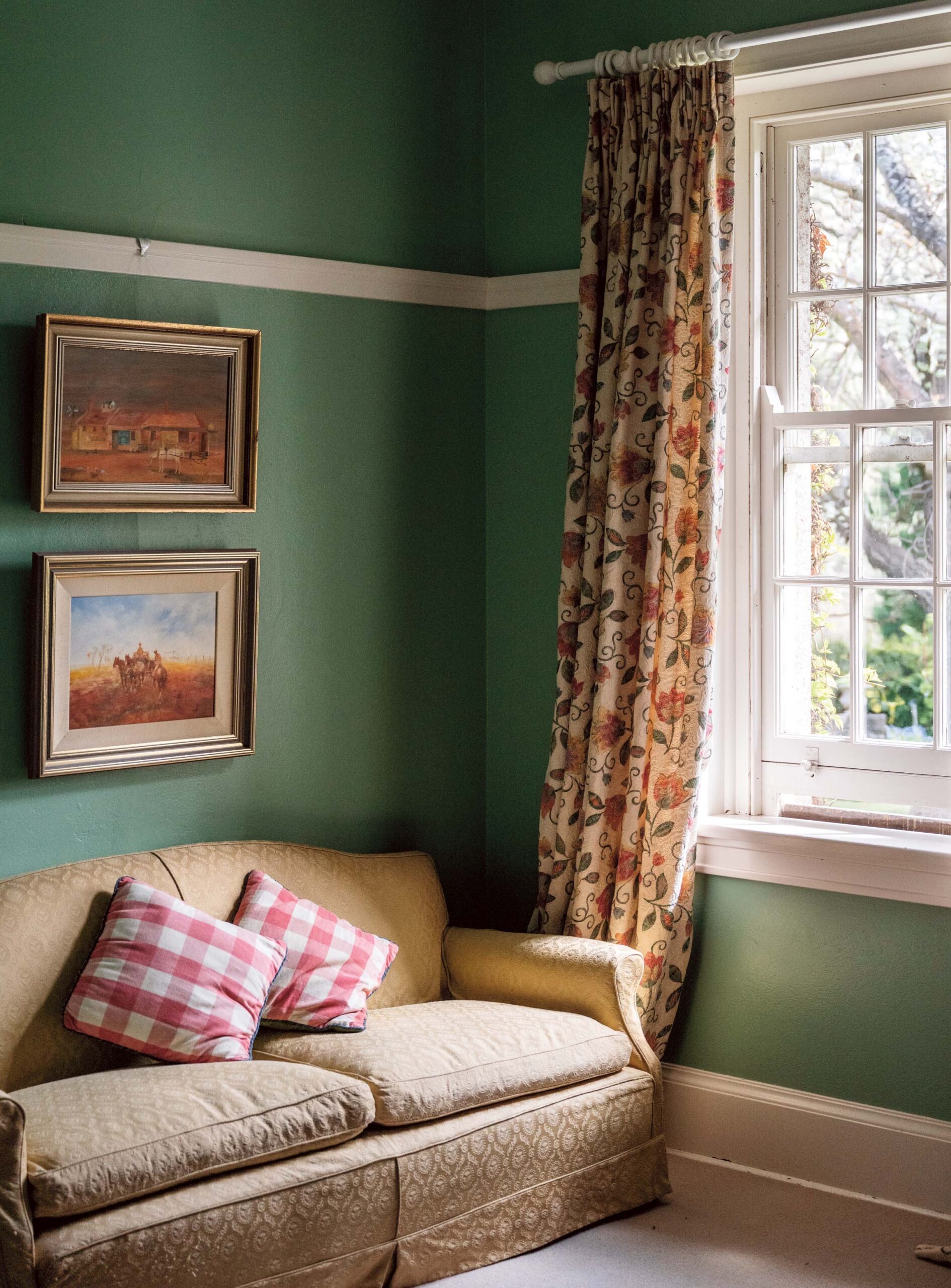
A guest room features floor-to-ceiling curtains in Fern by Lee Jofa from GP & J Baker.
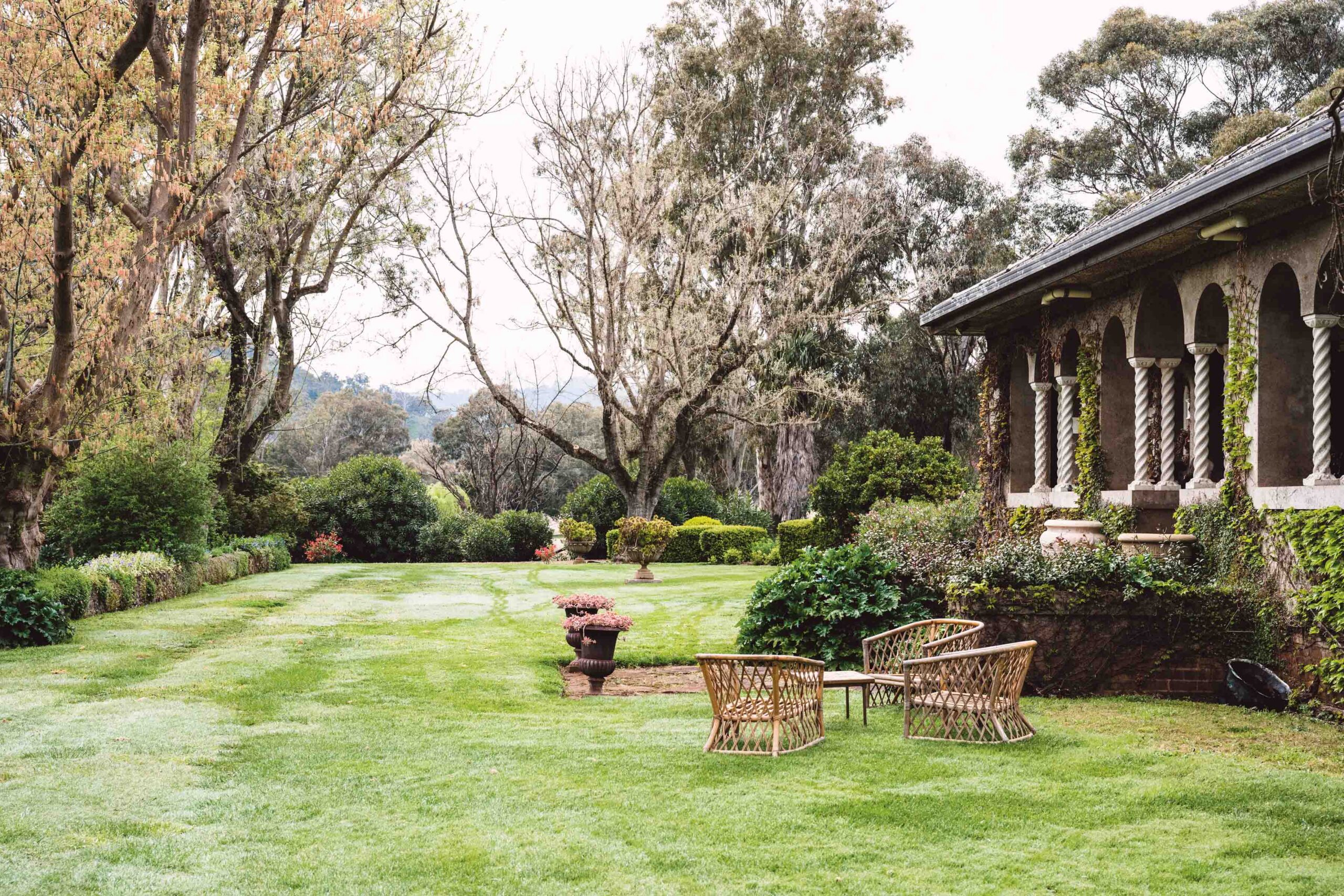
PHOTOGRAPHY PIP FARQUHARSON
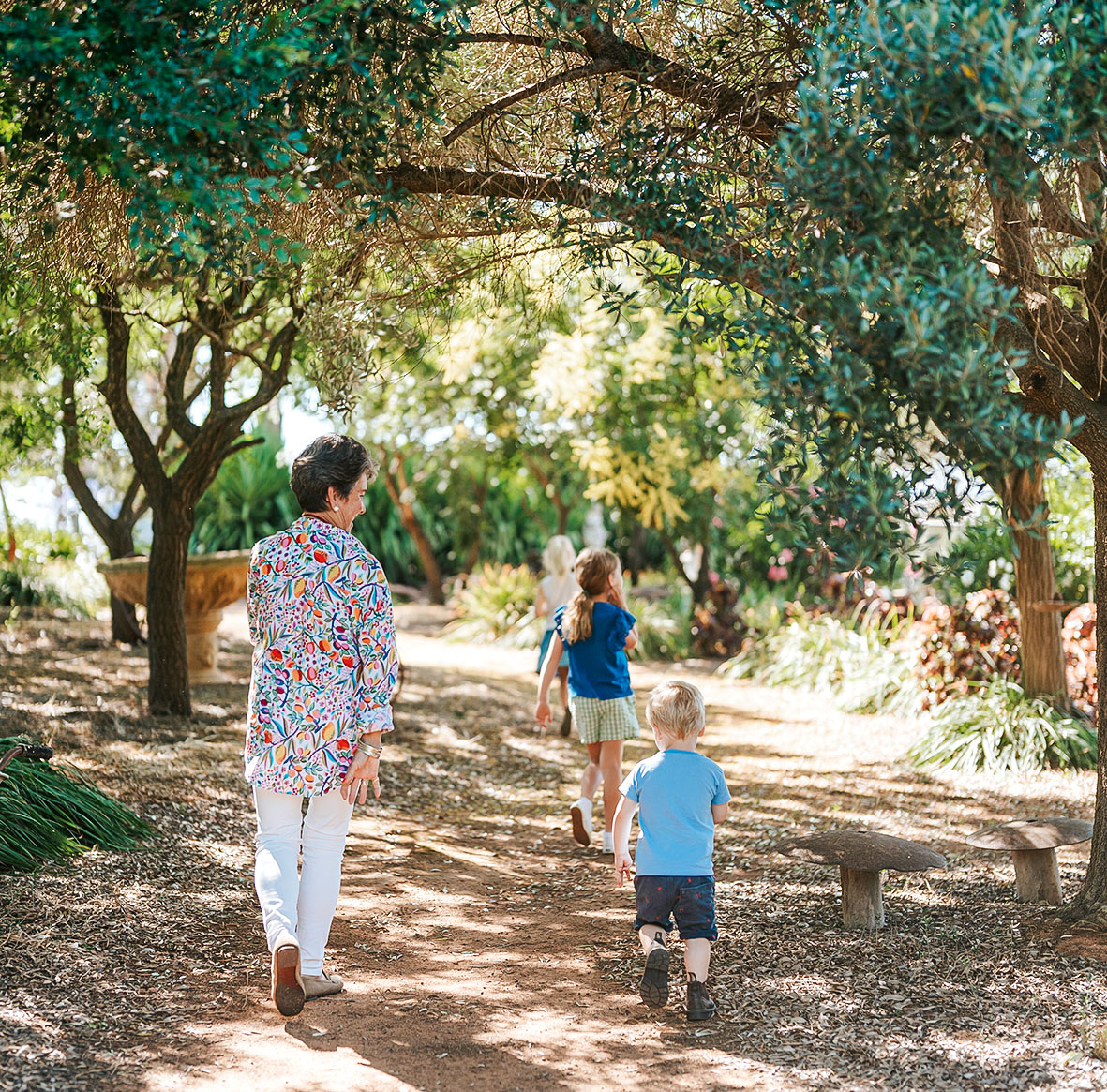
A grassy terrace looks out over the vast arboretum featuring many different types of trees.
PHOTOGRAPHY PIP FARQUHARSON
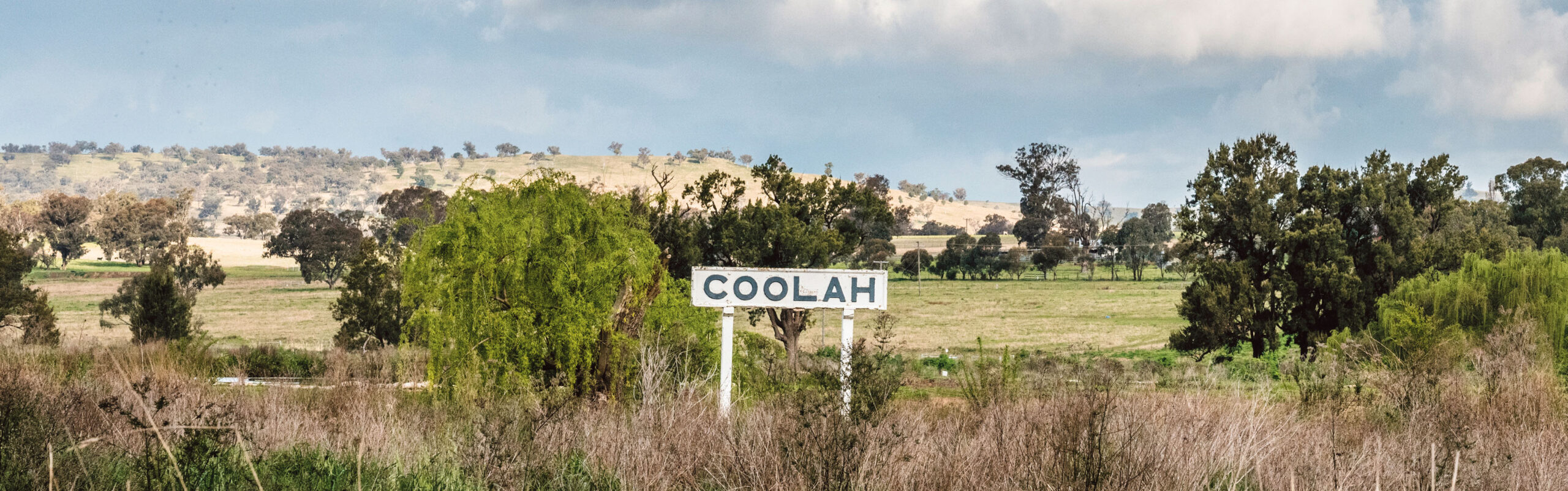
The nearby town of Coolah is in the Warrumbungle Shire of New South Wales.
The homestead’s architect was Clement Clancy, better known for his Sydney church designs. The “grand old lady”, as Jillie calls the eight-bedroom, four-bathroom rendered double-brick home, was built over three years from 1927, with many bricks quarried from a local pit and timber harvested from local forests.
The footprint is an ‘H’ formation, with a central living area leading off to bedroom and kitchen wings. Much of the interior remains original, including all the bathrooms with their subway tiles.
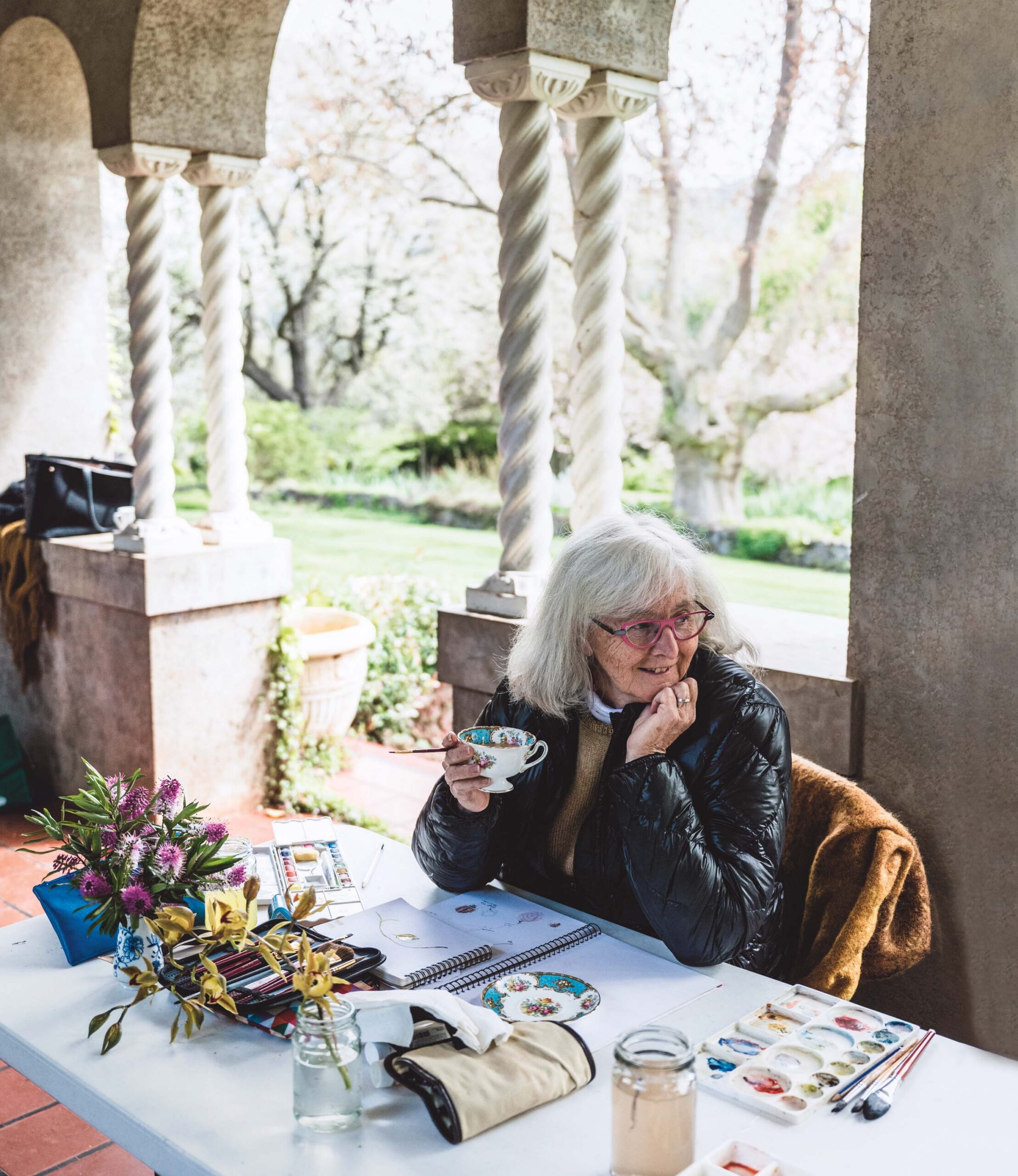
The family suspect that the subtly eastern-influenced front and back courtyards may have been inspired by Colonel Arnott’s World War I experiences in the Middle East with Australian Light Horse regiments. The front courtyard, with its distinctive arches and columns, is a hub of hospitality. It’s here, overlooking the landscaped front garden with its low stone wall edging a terraced lawn, that family, friends and paying guests alike gather for meals, art classes and more.
PHOTOGRAPHY PIP FARQUHARSON
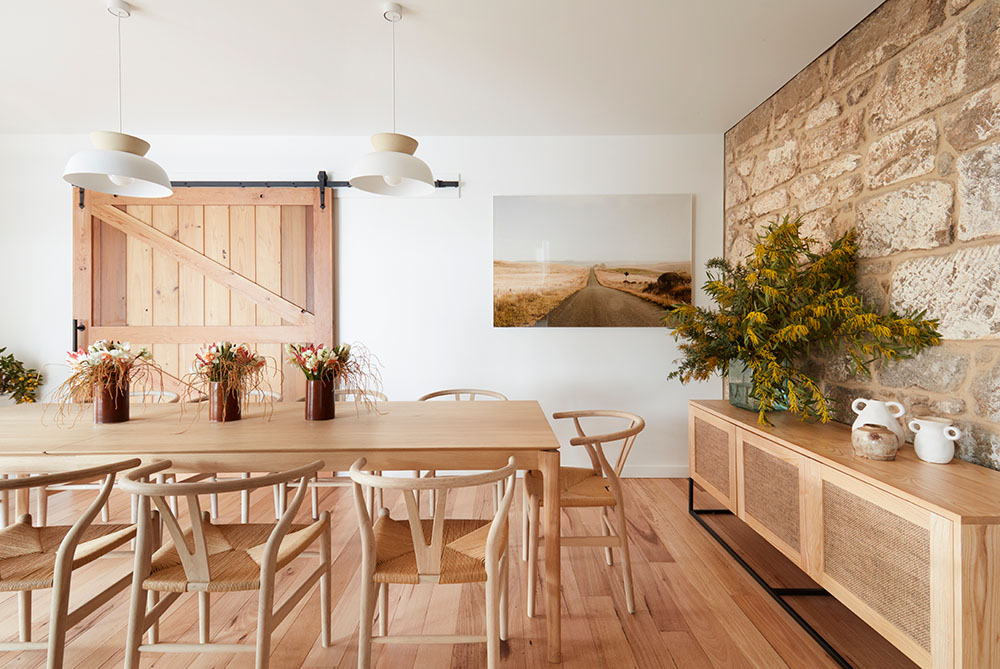
This custom deep green paint colour adds a rich background and links the interior to the garden.
PHOTOGRAPHY PIP FARQUHARSON
A guest sips tea from family heirloom china.
The vast five hectare garden, lovingly tended over generations, is a veritable arboretum. “It’s an established space that holds so much history,” Jillie says. “My focus has been on maintaining and simplifying it, rather than reinventing it, so it remains a space where the family gathers and guests can experience its beauty.”
Feature trees include boxelder maple (Acer negundo), golden ash, desert ash and claret ash (Fraxinus spp.), cherry plum (Prunus cerasifera), crab apples, hackberry (Celtis australis), willow, elm, London plane, liquidambar and Lombardy poplars. More recently, the family has planted Chinese poplars (Populus simonii), snow pears (Pyrus nivalis), various pines, dogwood, Japanese maple, Chinese tallow tree (Triadica sebifera), holm oak (Quercus ilex), lemon-scented gum (Corymbia citriodora) and Sydney blue gum (Eucalyptus saligna).
“The trees in the front garden are just magnificent,” Jillie says. “In autumn, the colour is breathtaking.” It’s the back garden, though, that is Jillie’s happy place. “My passion was to recreate a sustainable food garden at the back,” she says.
PHOTOGRAPHY PIP FARQUHARSON
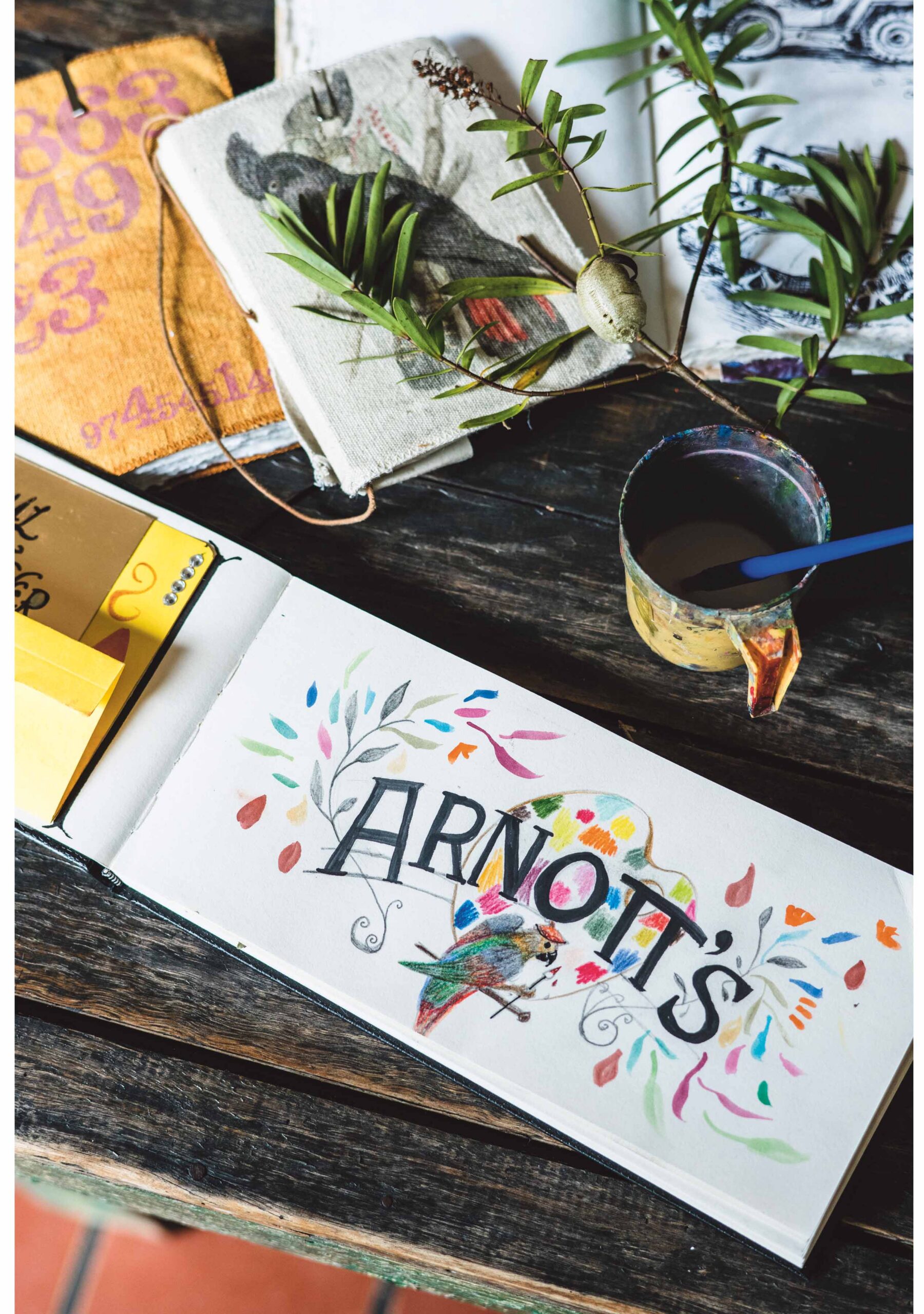
Art retreats allow visitors to explore their creativity and the Arnotts’ family heritage.
PHOTOGRAPHY PIP FARQUHARSON
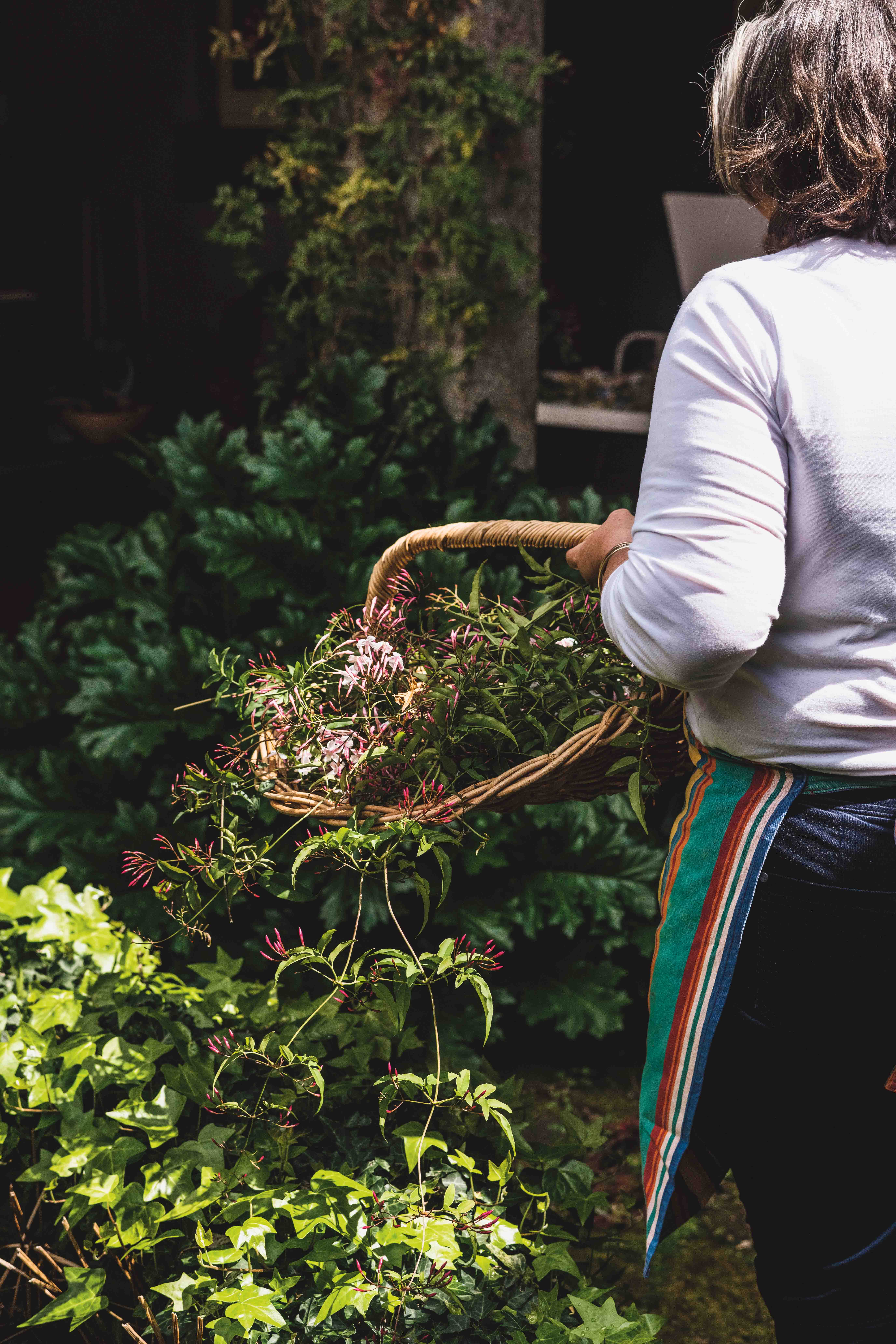
Jillie enjoys the bounty of the garden.
Orchard trees include yellow and white peach, three types of plum, two types of apple, quince, beurre bosc pear, apricot, mulberry, olive, walnut and loquat. As well as chooks and guinea fowl (and a small mob of crossbred sheep, kept for their meat), there are nine large raised vegetable beds producing spinach, kale, Jerusalem artichoke, globe artichoke, asparagus, beetroot, cabbage, tomato, cucumber and squash.
She staggers the planting of vegetables so crops peak over spring and autumn, when she hosts workshops, and not in February, when she typically escapes to the family’s beach house at Hawks Nest, New South Wales, to recharge her batteries for the year ahead.
PHOTOGRAPHY PIP FARQUHARSON
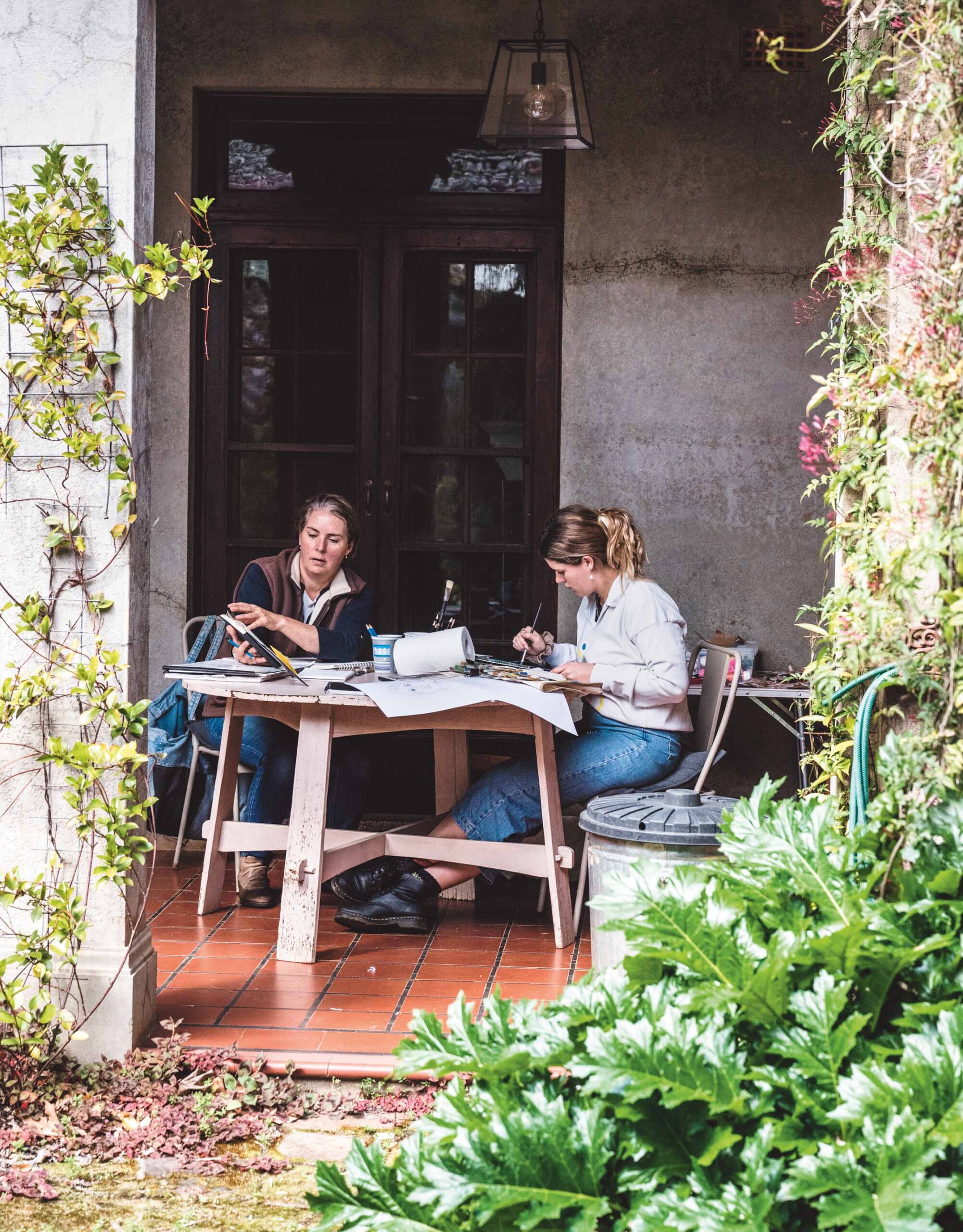
Workshop participants absorbed in their painting.
PHOTOGRAPHY PIP FARQUHARSON
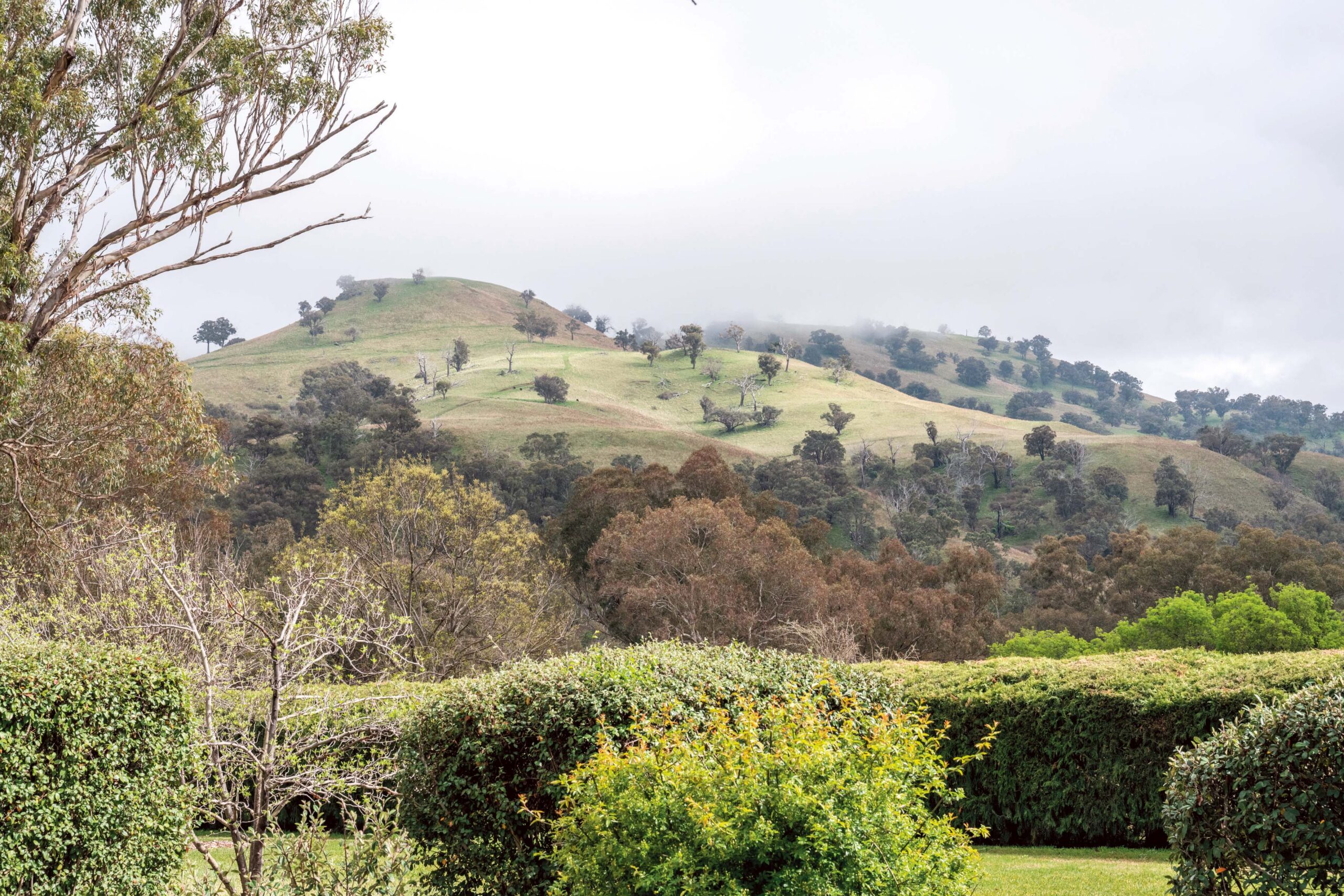
The rugged Warrumbungle Shire landscape.
In her new professional hostess role, Jillie is drawing on her many years of experience as a country caterer. She was a cook at Belltrees Country House, near Scone, New South Wales, in the 1990s and later founded her own catering business, Turanville Kitchens, which evolved into The Cooking Tree in the early 2000s. Warm and gregarious, she learned the art of making people feel comfortable from her mother, Libby Robertson, who co-founded Scone’s famous destination homewares and gift store Potter Macqueen in 1968. The store is still going strong with Jillie’s sister Prue Robertson at the helm.
Jillie is thrilled to have her daughter Holly, now 29, working alongside her at Coolah Creek, wrangling everything from the garden to social media and guests’ requests. Sydney-based son Tom, 30, works in film as a lighting technician. And their other daughter Camilla, 27, is an account manager at Rabobank and lives in Tamworth, New South Wales.
An upcoming retreat in May will be a food memoir writing workshop, led by food writer and restaurant reviewer Barbara Sweeney. Between writing sessions, guests will be invited into the kitchen to help cook up a storm.
PHOTOGRAPHY PIP FARQUHARSON
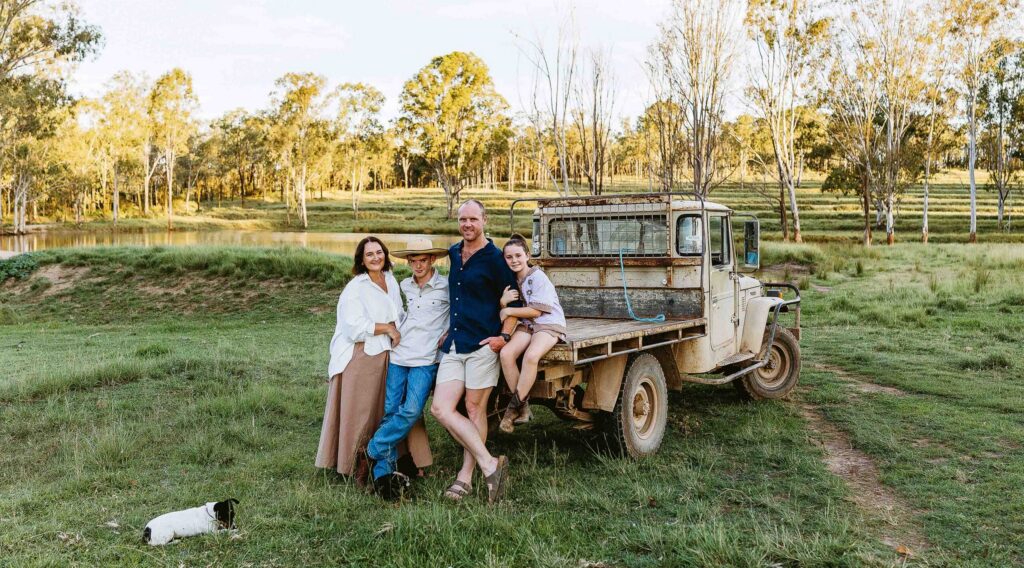
Five generations of the Arnott family have lived at Coolah Creek.
PHOTOGRAPHY PIP FARQUHARSON
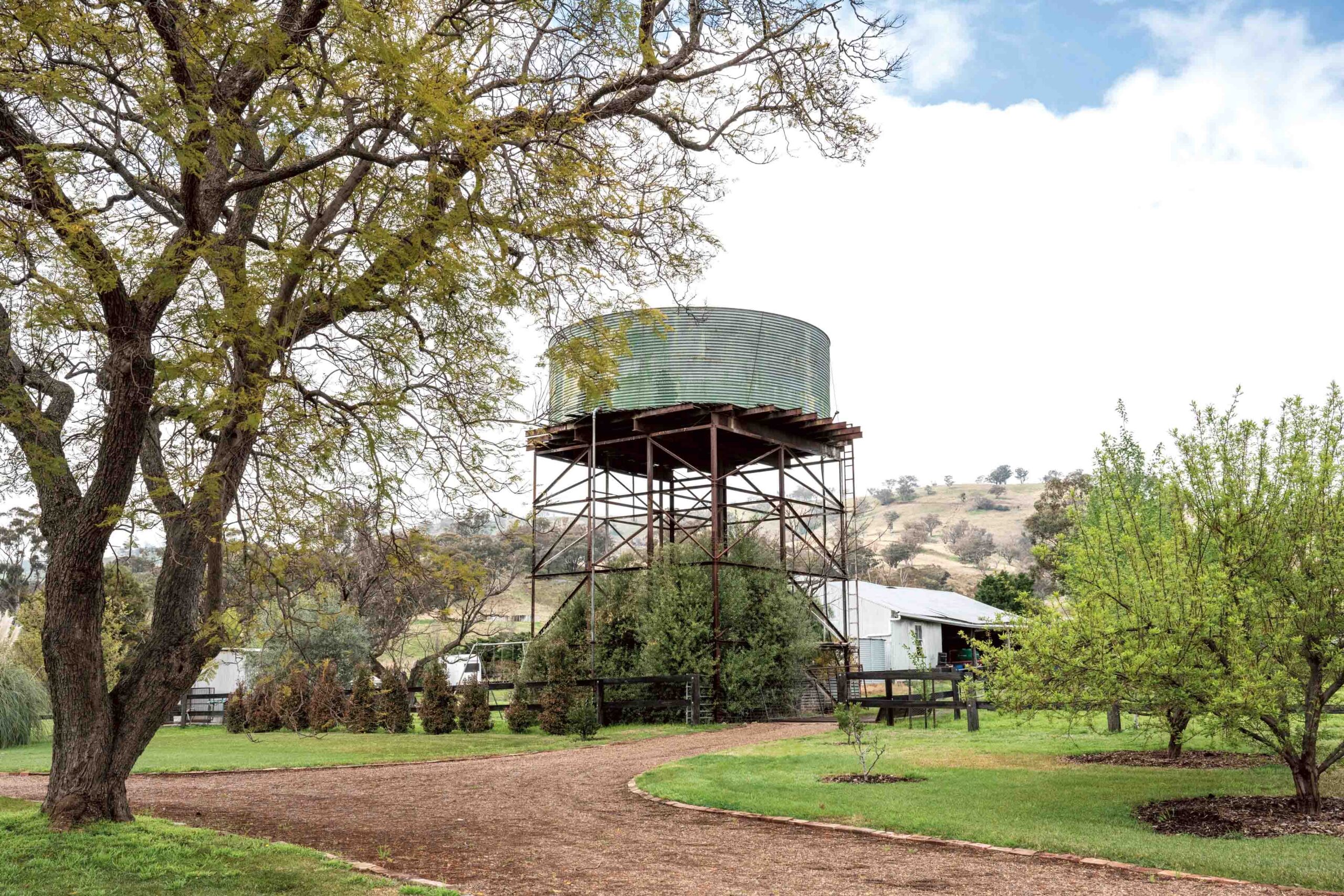
Mature trees planted by previous generations grace the property.
Accommodation for some is in four of the homestead’s guest rooms, with the remaining guests finding accommodation in Coolah village.
A watercolour workshop with artist Gillian Hook, who is returning for the fourth time, is also slated for May this year. “Gillian is an extraordinary watercolour teacher,” says Jillie. “She makes people feel at ease, no matter what their level of experience. You look around the garden, which is the focus of Gillian’s workshop, and you see people lost in their work, completely in their element. It’s so special to be part of that.”
In September, watercolourist Julianne Ross Allcorn will lead students to Coolah Creek via Binnaway’s Bilby Blooms Native Plant Nursery and the Coolah Tops National Park — traditional lands of the Wiradjuri and Kamilaroi People — as part of a four-day workshop. There are wellness retreats, cooking workshops, writing workshops, girls’ weekends. “There are plans to have walking and riding trips in the future, staying in eco-style tents in our very special valley,” Jillie adds.
Through experimentation and determination, the Arnotts are crafting a model that honours their farm heritage while embracing the future. “Our whole ethos with Coolah Creek is to look after it in the best ways we can, that suit today,” Jillie says.
Jillie shares the recipe for Coolah Creek’s much-loved gingerbread slab cake with lemon glaze, here.
For more information about the workshops, visit coolahcreek.com.au.
Subscribe to Graziher and you’ll never miss an issue of your favourite magazine. Already a subscriber? Consider a gift subscription for someone special in your life.
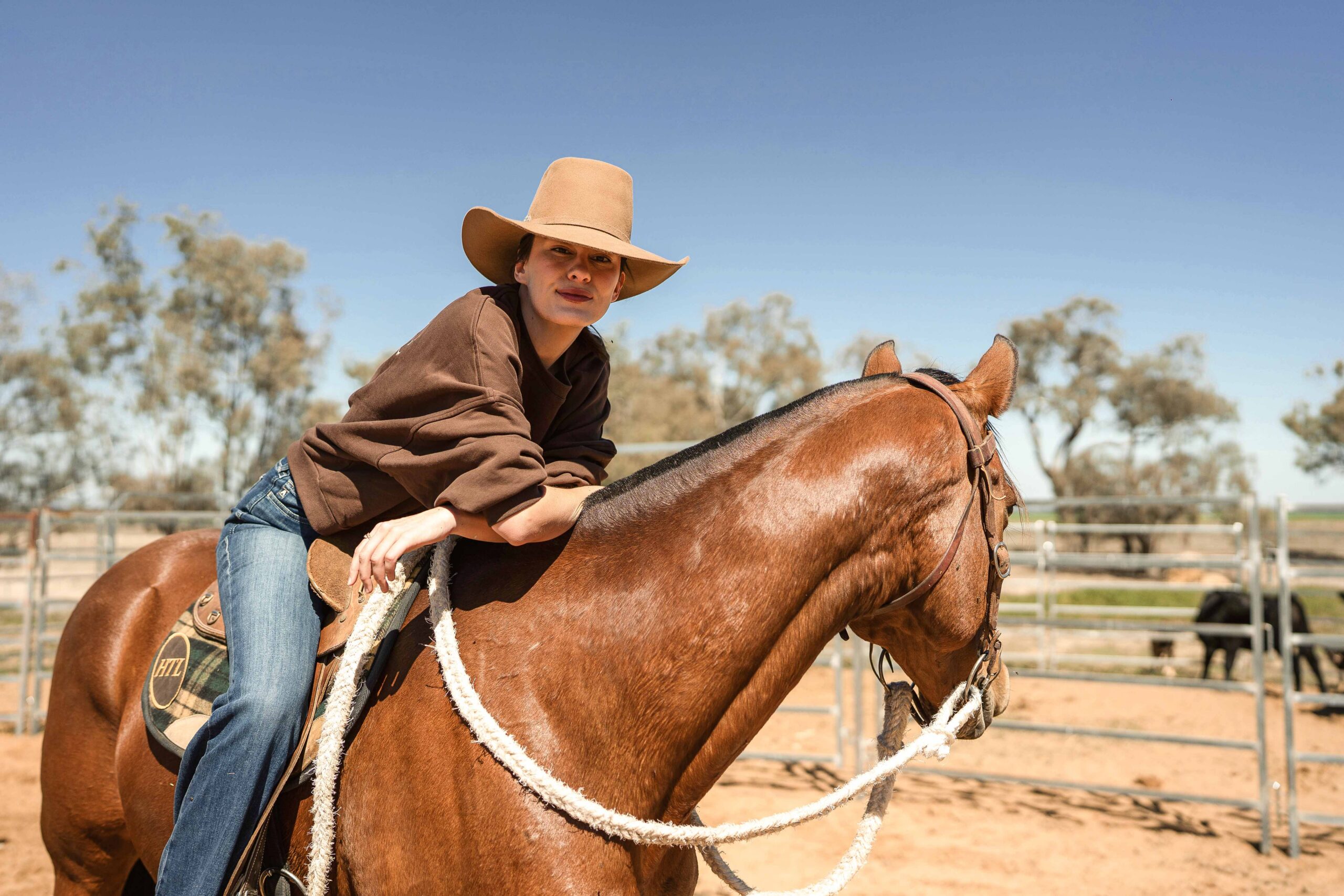
There are many ways to find a meaningful role in the industry, says Beef Australia’s Beth Rands.
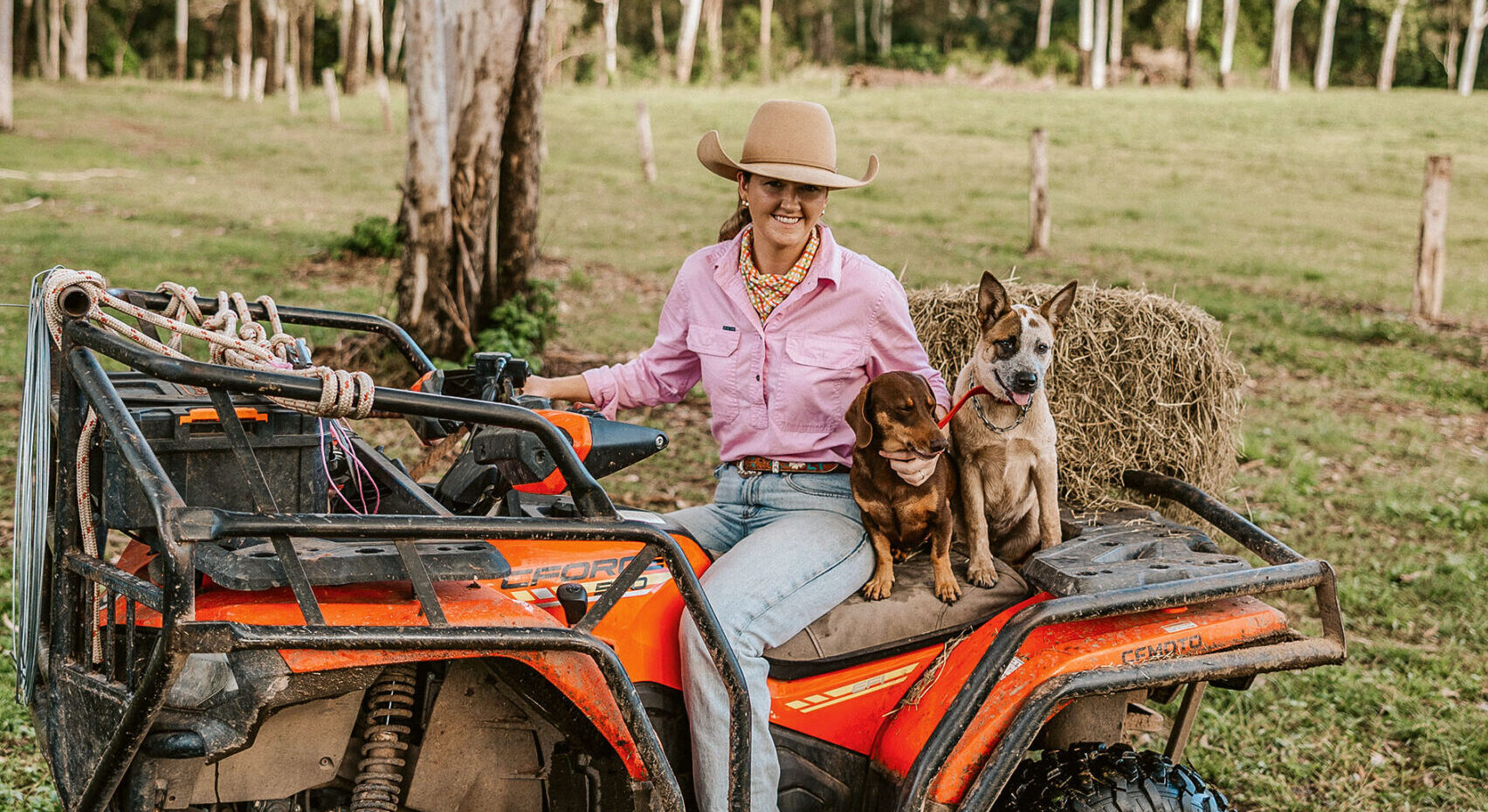
Hailing from a small Irish town, Lisa Fryer found love at Daly Waters’ Hi-Way Inn. Today, she and husband John are ushering in a new era for Tabletop Station, near Townsville, Queensland.
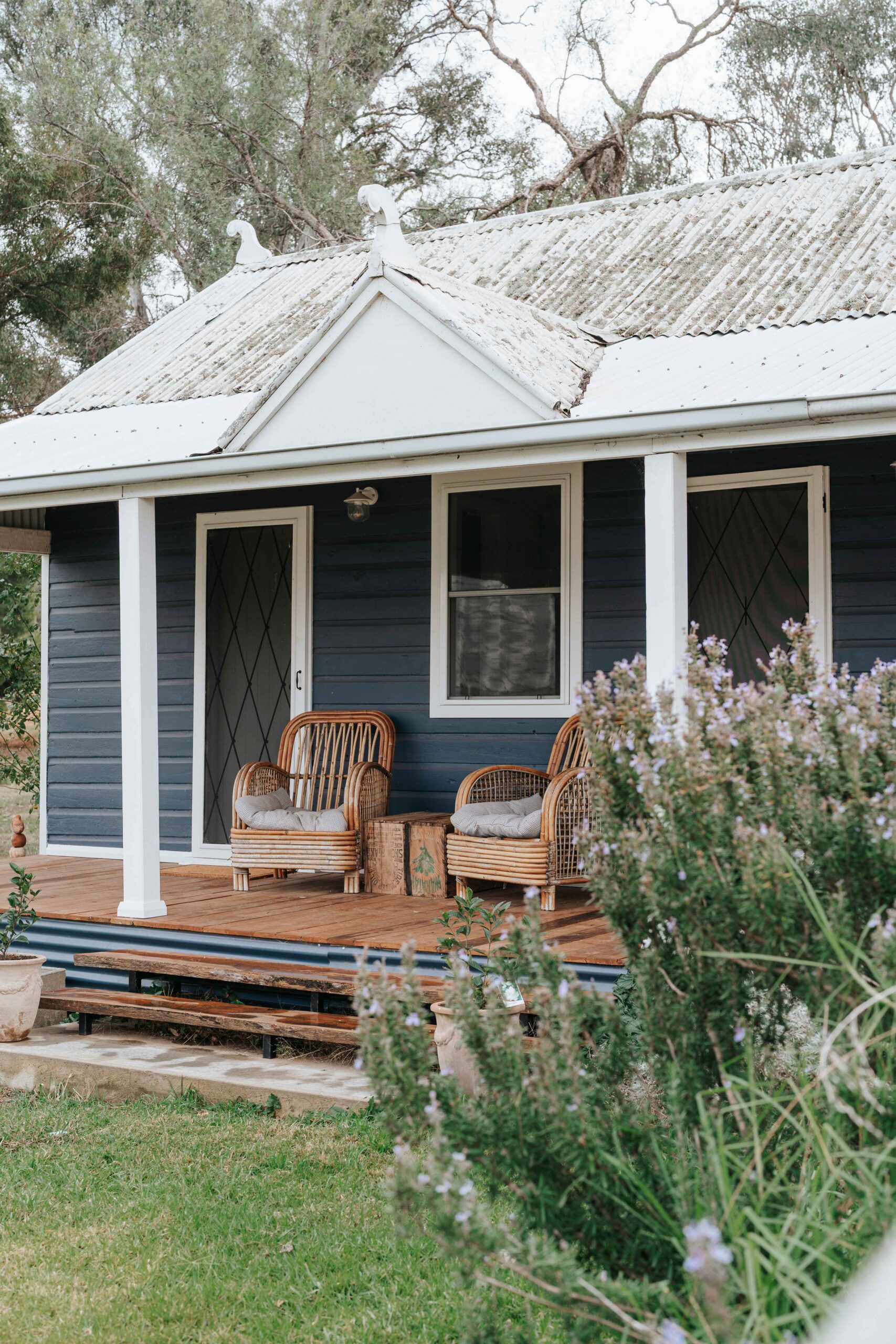
A weatherboard cabin in Alexandra MacAlpine’s garden becomes a guest cottage, thanks to the imagination of her sister-in-law.
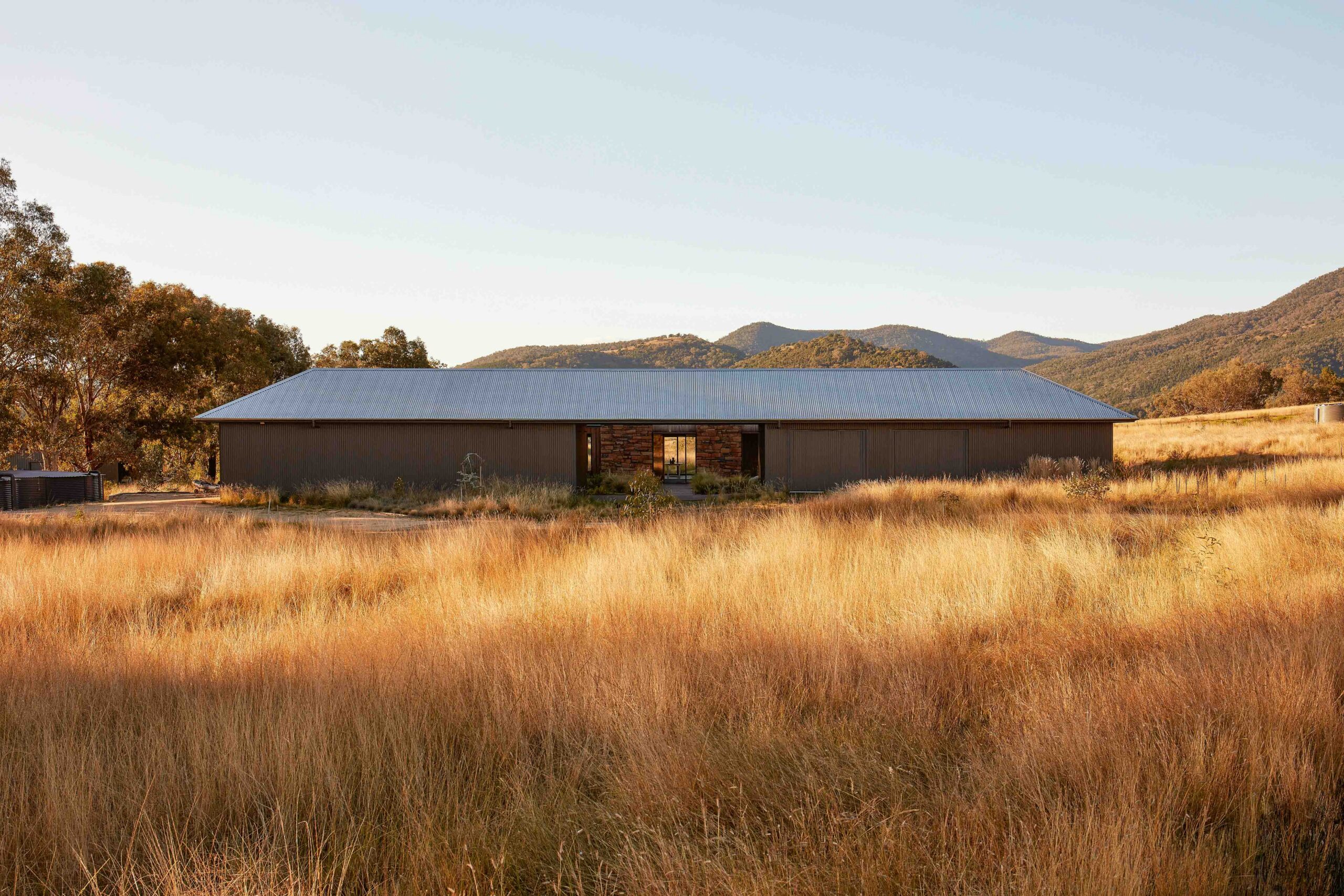
A harsh climate and a wish to blend in with the landscape inspired this energy-efficient contemporary home at Moore Creek, New South Wales.
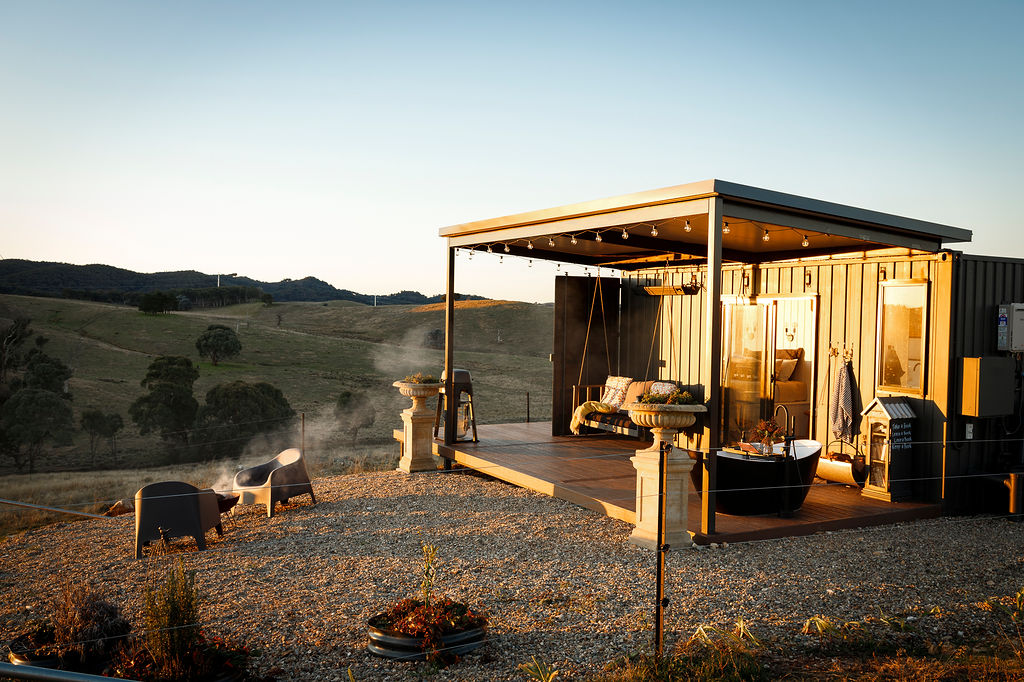
The Barlow is the perfect spot to relax and unwind.

