

Photography Lisa Alexander
Sign up to our mailing list for the best stories delivered to your inbox.
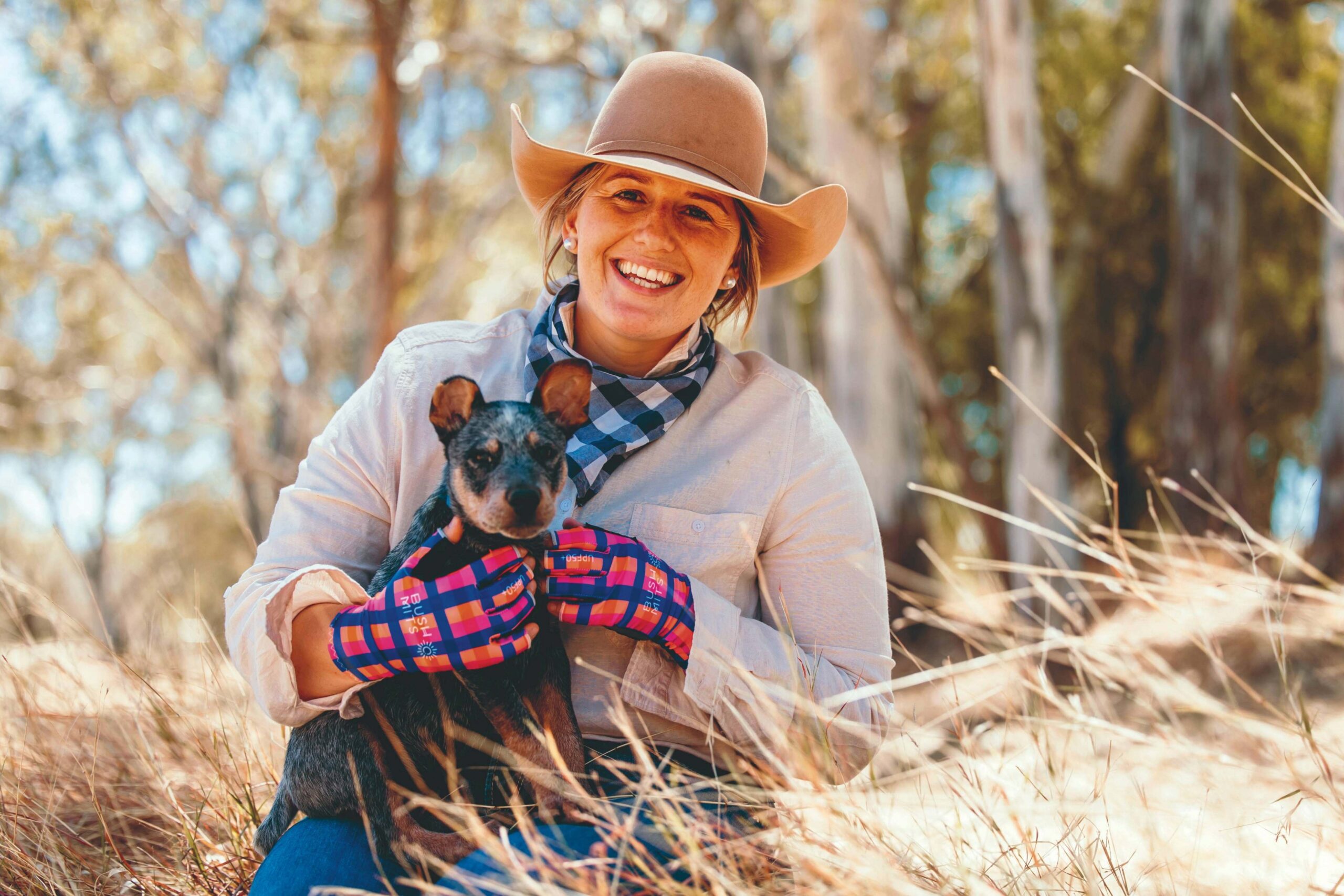
Abbie Lewis arrived in outback Queensland with zero cattle station experience, but instantly felt at home. Her brand, Bush Mits, is a tribute to that time — and the rural women who helped her along the way.
Words Tom Lazarus
Photography Lisa Alexander
Photography Lisa Alexander
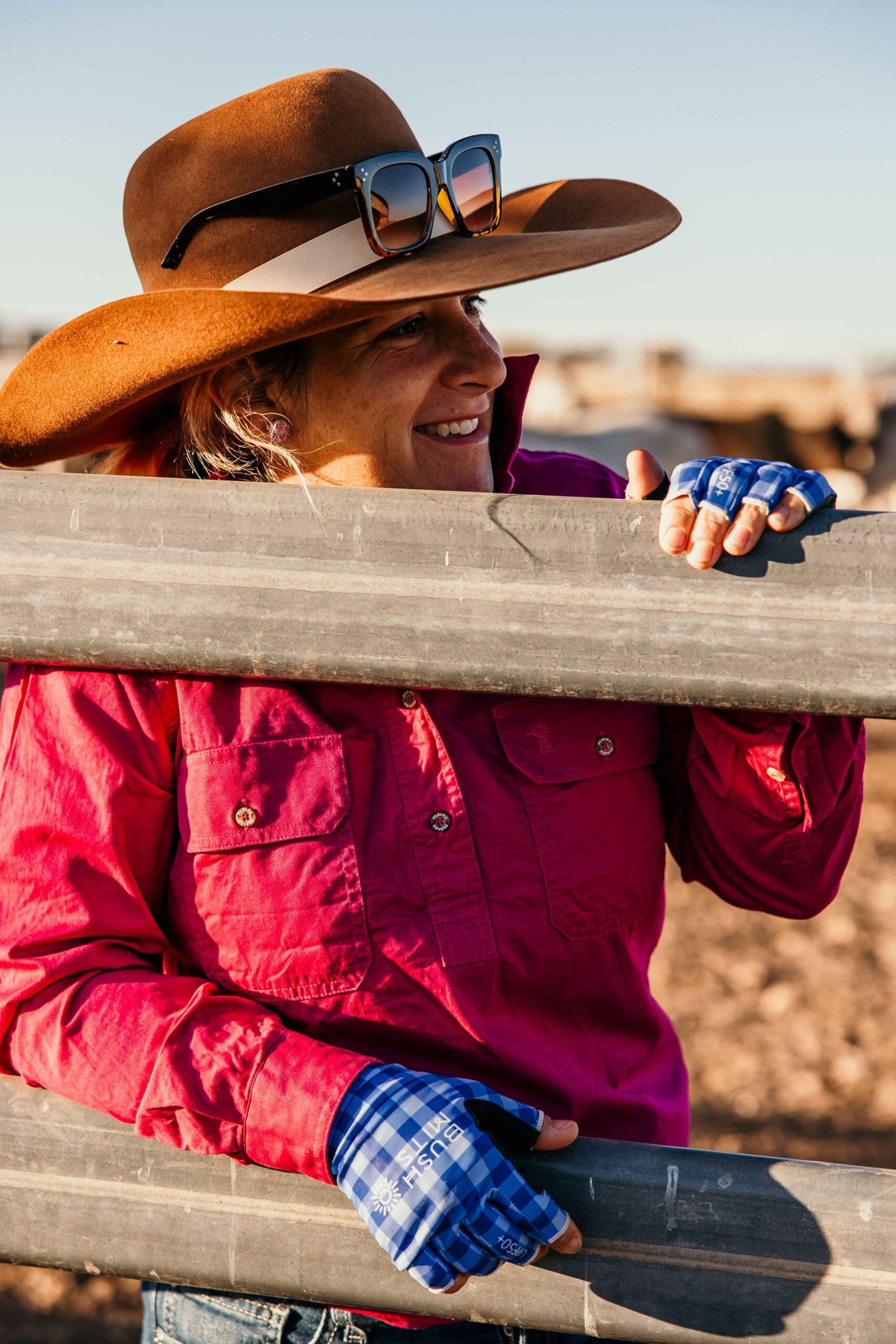
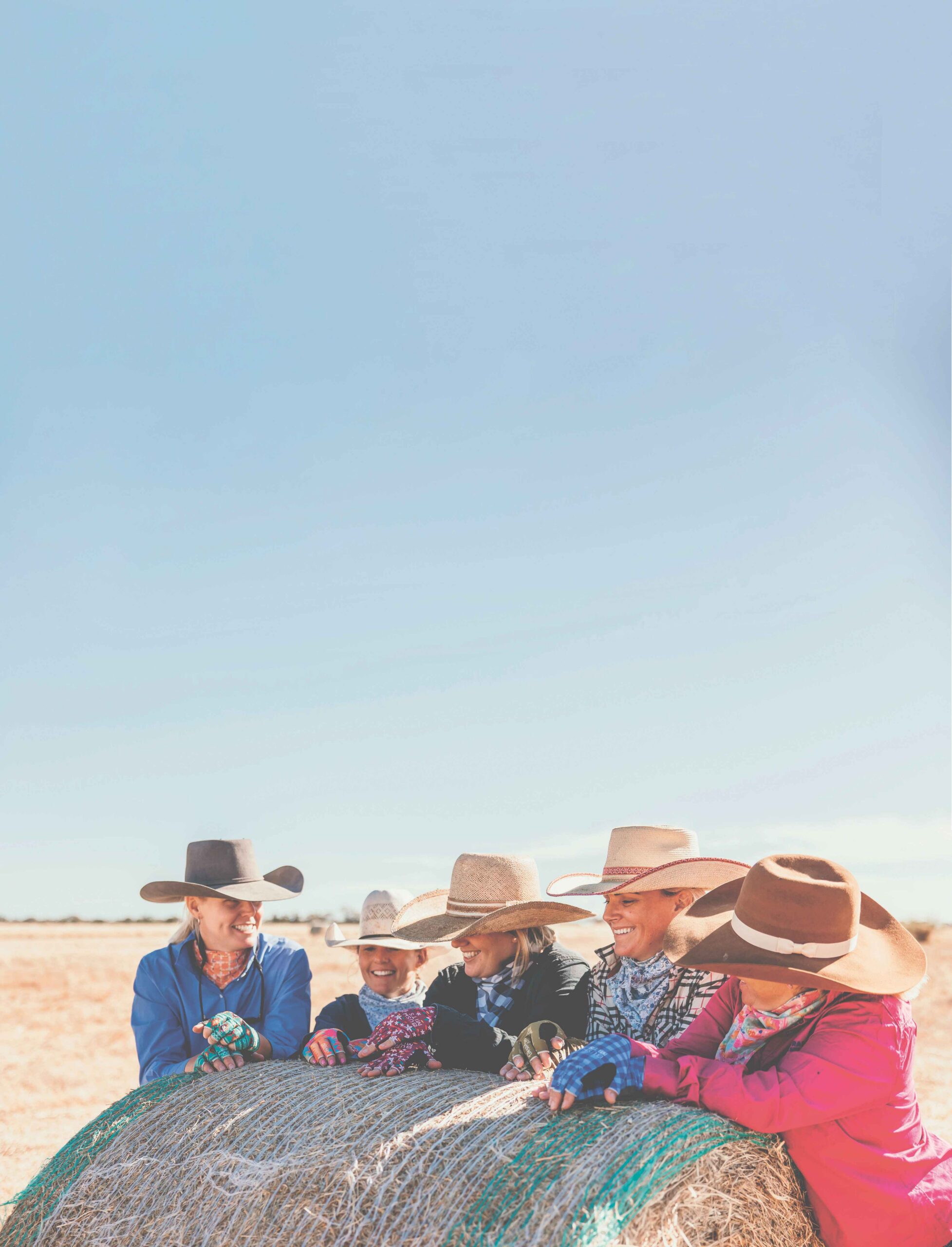
While many company founders cast their backstory in a flattering glow, burnishing their ‘lone genius’ mythology, Abbie Lewis, 32, offers a characteristically ego-free take on the origins of Bush Mits, her brand of patterned UPF 50+ gloves that have become staples for those who work on the land. She acknowledges the rural sisterhood who helped her achieve her dream.
“I don’t have any family history with these people,” she says on a video call from her garden office in Herefordshire, England. “These are just genuine women who have families and who have come to support me.”
While Abbie wasn’t raised on a farm, farming is in her genes. Her dad’s side of the family had always been farmers, and Abbie and her brother, Sam, were deeply influenced by their grandmother, who taught them how to grow their own vegetables and took them to local ploughing matches and country shows. “My brother and I were so invested in agriculture and farming,” Abbie says. “I just wanted to give it a go. We were farming at a young age.” At 10 years old, Abbie was already a committed Young Farmers’ Club member. “It was a really amazing childhood where I was able to explore all things agriculture,” she says. “Then between uni [semesters], I did lambing and helping on farms. Most of my summers were spent working.”
Abbie now divides her time between Herefordshire, where she grew up, and Charleville, Queensland, which became her adopted home during the most transformative period of her life, a time full of surprises.
She pitched up in Australia in June 2019 after seeing a friend’s Facebook post for a job on a beef, sheep and cropping farm called Tullinga, outside Condobolin, New South Wales. She’d been on a working holiday at Walter Peak High Country Farm near Queenstown, New Zealand, and “thought it was time to go and see what Australia was all about”. A habitual light traveller, she was unprepared for the cold winter that awaited her. “I didn’t have any work clothes with me,” she recalls.
Hosts Anne Coffey and Robin Sanderson (“lovely people”, since retired) had raided the local op shop to kit her out. Abbie helped out for lambing season, but came down with Q fever. “It absolutely rolled me,” she says. On a return visit to New Zealand, she collapsed. “It was a bit of a shock to the system.”
Photography Lisa Alexander
Another Facebook message led to a job as a cook-slash-station hand at Wellclose Station, 175 kilometres west of Charleville.
Her imagination flared with images of confident women mustering on horseback. “I’d always wanted to work on a cattle station,” she says. “It was the last opportunity to go and do it.”
She caught a plane to Charleville, and her destiny. The next surprise was the tininess of regional planes, a fact that was brought home when a dust storm forced the flight to divert to Roma. During the hours-long drive out to Wellclose through mulga country, Abbie tried to banish thoughts of kidnappings. She needn’t have worried. Managers Carolyn and Dale Chicken welcomed her warmly, allowing her time to ease into the physical work. The property — around 230,000 hectares of ochre-hued plains ribbed by ancient escarpments, amid the traditional lands of the Punthamara and Margany peoples — captivated Abbie. “The sunsets are phenomenal,” she says. Having been taught by her nan to be a ‘feral farm kid’, with countless summers spent running around shoeless with Sam (now a farmer himself), she took to the life instantly. “I thrived,” she says. “It was such hard work, but I absolutely loved it. Loved being covered in dirt, loved the clothes, everything about it.”
As a cattle station novice, she had to learn fast to keep up with the skilled crew who shared the quarters with her. “I felt I was always the one who was a bit behind, so I wanted to be better, do better,” she says. “I was never going to be the handiest, because I just didn’t have the experience, but I was gonna try.” What she lacked in expertise she made up for in grit: what Carolyn Chicken called her ‘mongrel’ side. “She’d say, ‘Just use your mongrel’,” Abbie says, smiling. Says Carolyn, “She had a can-do attitude and wanted to give everything a go, which is a rare thing.”
Carolyn, Dale and their three young boys came to feel like family, and they asked Abbie to stay on. “We just clicked,” Carolyn says. “She’d come everywhere with us.” Abbie was still raw from the death of her beloved nan when she was 16; she suspects the loss fuelled her wanderlust. She’d quit her corporate career as a chartered surveyor at Fisher German in the UK with an inchoate but irresistible urge to chase adventure. At Wellclose, riding in choppers and on motorbikes, fixing engines and driving to rodeos with a swag and an esky, she found it. “You’re just out there,” Abbie says. “I was living the dream.”
Photography Lisa Alexander
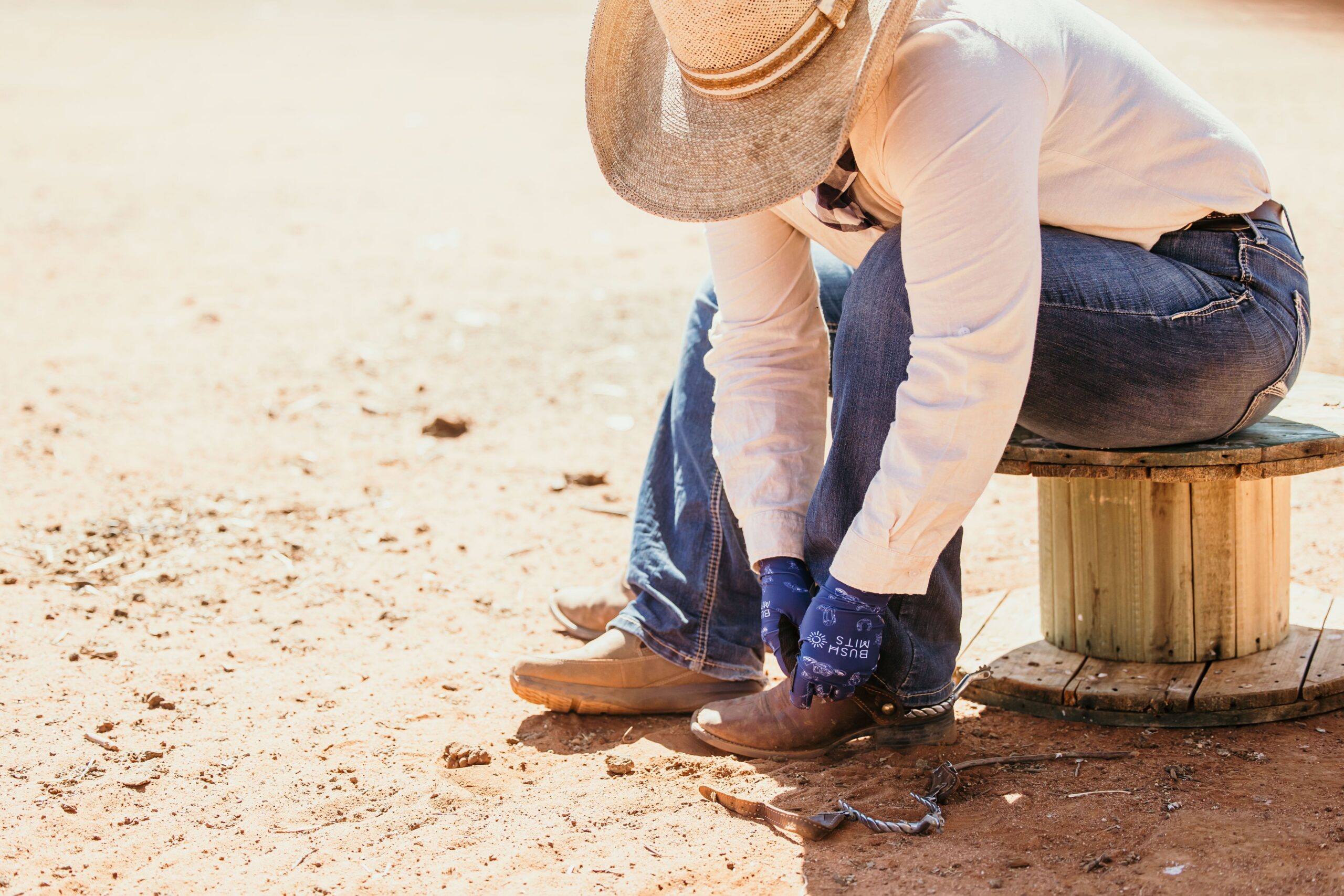
Then a horseriding accident at another property put her on the sidelines. While she healed, she joined fencing crews with Carolyn and Dale, who had started their own business. It was less physically intense, but harsh on the hands. “My English rose skin was not okay with the rough work I was doing,” she says. “I went through gloves like there was no tomorrow.” Going gloveless to do precise measurements, or operate her phone, meant the backs of Abbie’s hands and wrists were burned by the outback sun.
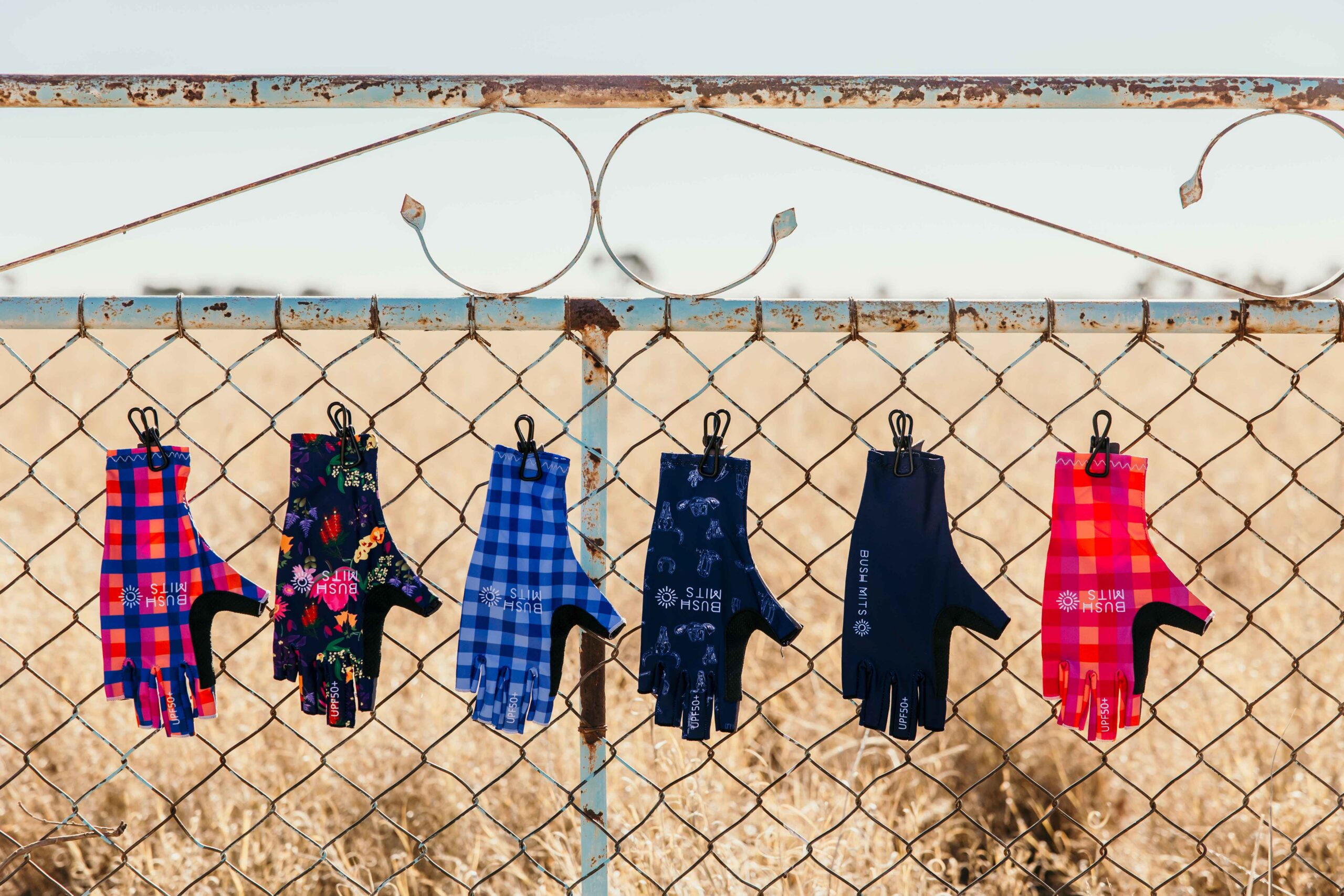
One day she was helping to build a horse arena at Clonagh Station, north of Cloncurry. Holding posts in place while waiting for more concrete, she chatted to Maddy Hamilton from the Clonagh crew about finding better gloves. “And that was it,” Abbie says. “From that afternoon I’d spend every single spare minute designing them.” (The naming of the Hamilton’s Blue Gingham design is a tribute to that conversation.)
Abbie made a composite of her ideal fingerless gloves in Photoshop and ordered a prototype pair, then put them through their paces in her day job. They held up amazingly well. “I’d tried everything from hardware gloves to biker gloves, so I knew what I wanted,” she says. “They were designed from my real-life experience and today I’m constantly improving them to meet the needs of the people wearing them.”
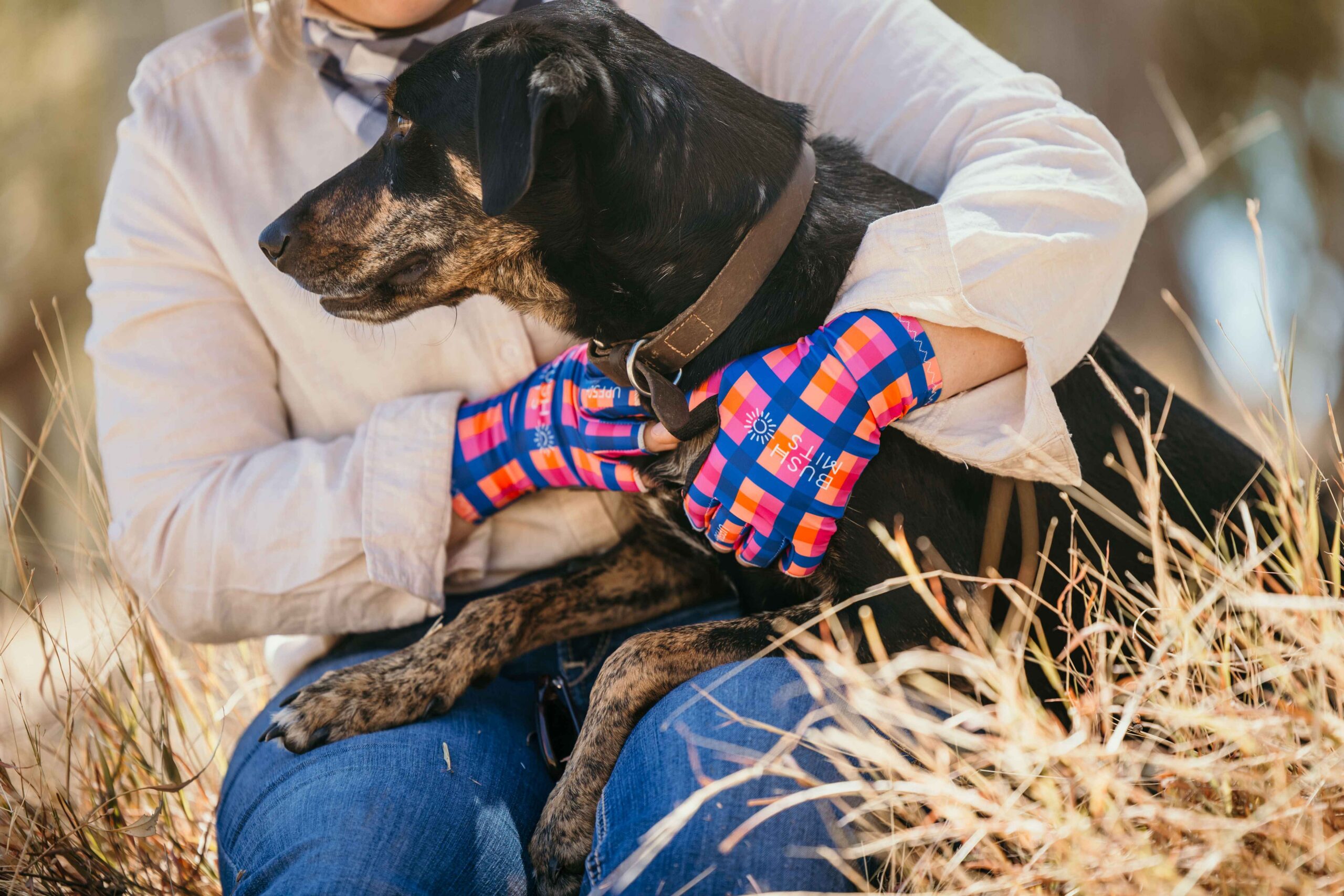
She mocked up fabric designs inspired by the bush and her nan’s love of flowers (she’s the ‘Dorothy’ in the design Dorothy’s Daisies) and straw-polled the crew for favourites. She took the plunge and ordered 1000 pairs; the name Bush Mits came to her while she was running the dogs in a horse paddock.
Abbie launched the brand in March 2023 from a fold-out table in a spare corner of the Chicken boys’ schoolroom at Dale’s family pecan farm in Mundubbera, Queensland. Having teased the date on socials, Abbie sold 50 pairs on day one, a validation so hard-won, she was giddy. Buying a label printer “felt like a big moment”, as did graduating to a ‘Santa sack’ for her post office runs. The next month, with the fencing crew on hiatus, Abbie moved to Charleville to live with Courtney ‘Courto’ Bylett, whom she’d befriended on her Saturday odysseys to get iced coffee at Bylett’s homewares emporium, Charlotte’s Nest. Courto gave her part-time work and storage space, and became one of the first bricks-and-mortar stockists for Bush Mits.
Photography Lisa Alexander
“I really wanted to do an Australian harvest like all the boys from home do,” Abbie recalls. In November, she drove 11 hours south to friend Lucy Pattingale’s grandparents’ farm in Barellan, New South Wales. Abbie enjoyed the experience so much, she decided to return for sowing the next year. “I was running Bush Mits from the tractor cab, essentially,” she says. “I’d finish work at six o’clock, or if we were sowing I wouldn’t finish till 10pm, then I’d be packing orders and answering customer service and stockists’ queries.”
The pace proved to be super demanding. Being apart from her Queensland network compounded the overwhelm, as did the deaths of loved ones whose funerals she missed due to Covid travel bans. “I’d maxed my limit of fight-or-flight mode and just needed some silence,” Abbie says.
Again, connections with rural women sustained her. Abbie connected with mindset coach Alys Green of Revive With Alys and was mentored by Amanda Loy, the director of Cowgirls Gathering, whom she’d met at the Nutrien horse sale in Tamworth. She collaborated with other female-led startups such as the clothing label Dusty Wattle, founded by teenage artist Lauren Barlow, and launched a fabric design competition that was won by Mackenzie Taylor, aged just 18, with her Aussie Drifter design. Another friend, Jess Scott from Yaraka, Queensland, sketched the western motifs for the Navy Eston Jones gloves on the back of an envelope.
“There are so many people in the bush who are talented,” Abbie says. “They choose to work in the bush, living on the land, and sometimes their dreams and talents kind of get squashed because they don’t have time for it. So I want to celebrate all of their hidden talents whatever way I can.
“The whole point of Bush Mits is for us to look after ourselves,” continues Abbie, who supports charities including Farm Angels and Dolly’s Dream. “Everything in Bush Mits and my journey comes back to some amazing opportunities: being so isolated but forming the best relationships and supporting one another. All I’ve wanted to do is give back to the people who have given to me.” She pauses, her mind reaching over the globe. “That community is so very special to me.”
For more information, visit bushmits.com or @bushmits_
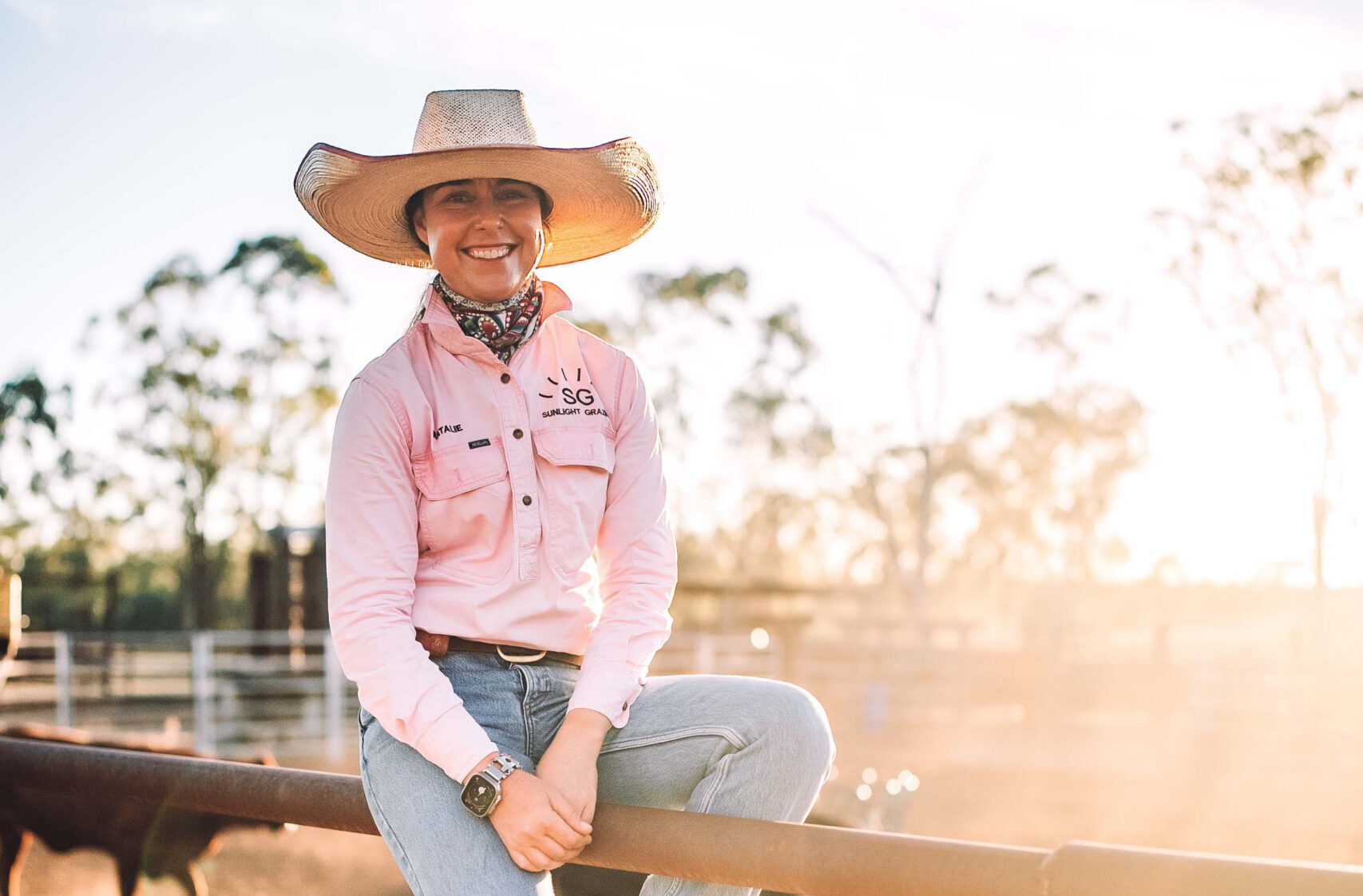
She says clever tech makes it possible to go it alone on the 4000 hectare beef-finishing property in central Queensland.
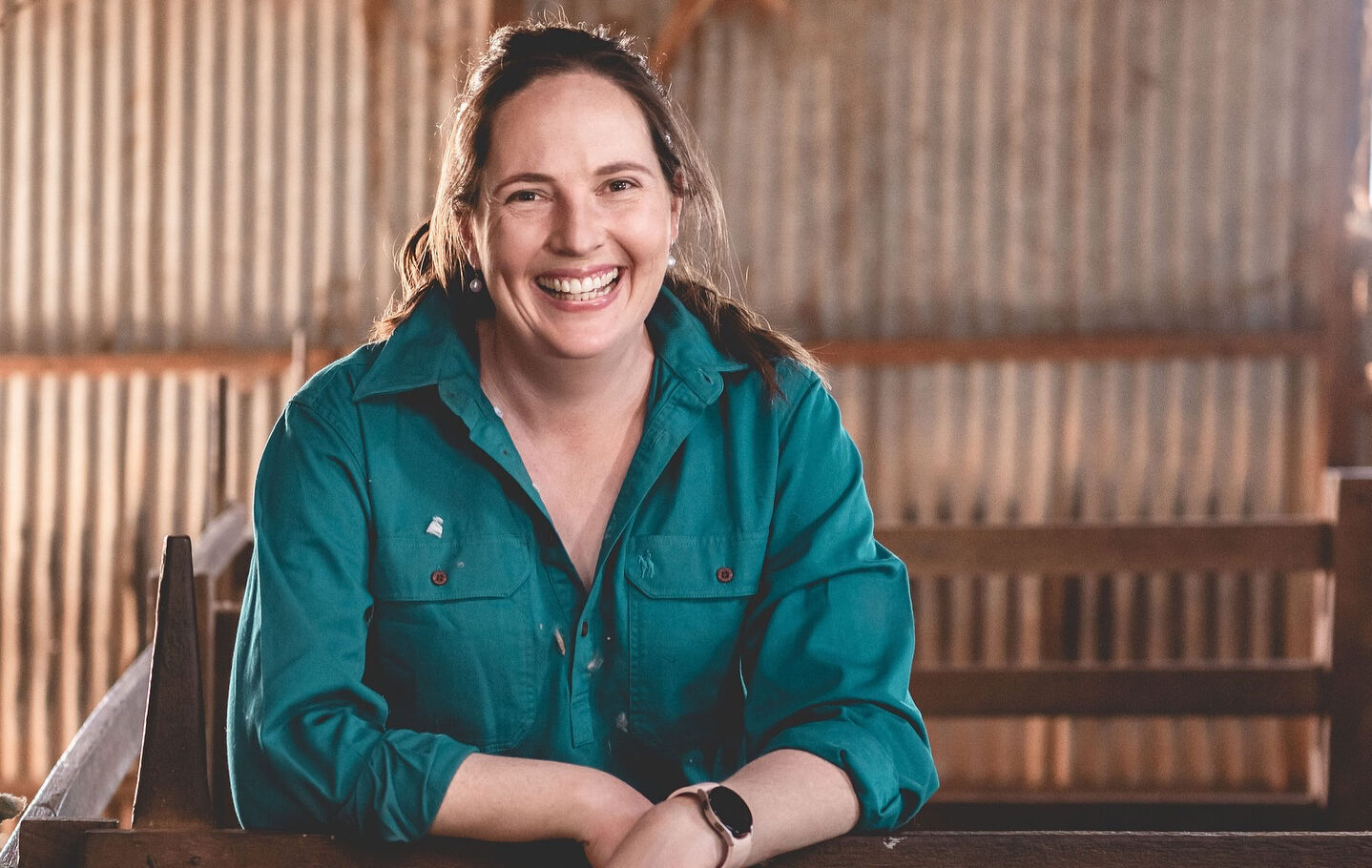
A farmer, mother-of-three and psychologist, Steph Schmidt understands what it’s like to be deep in the trenches.
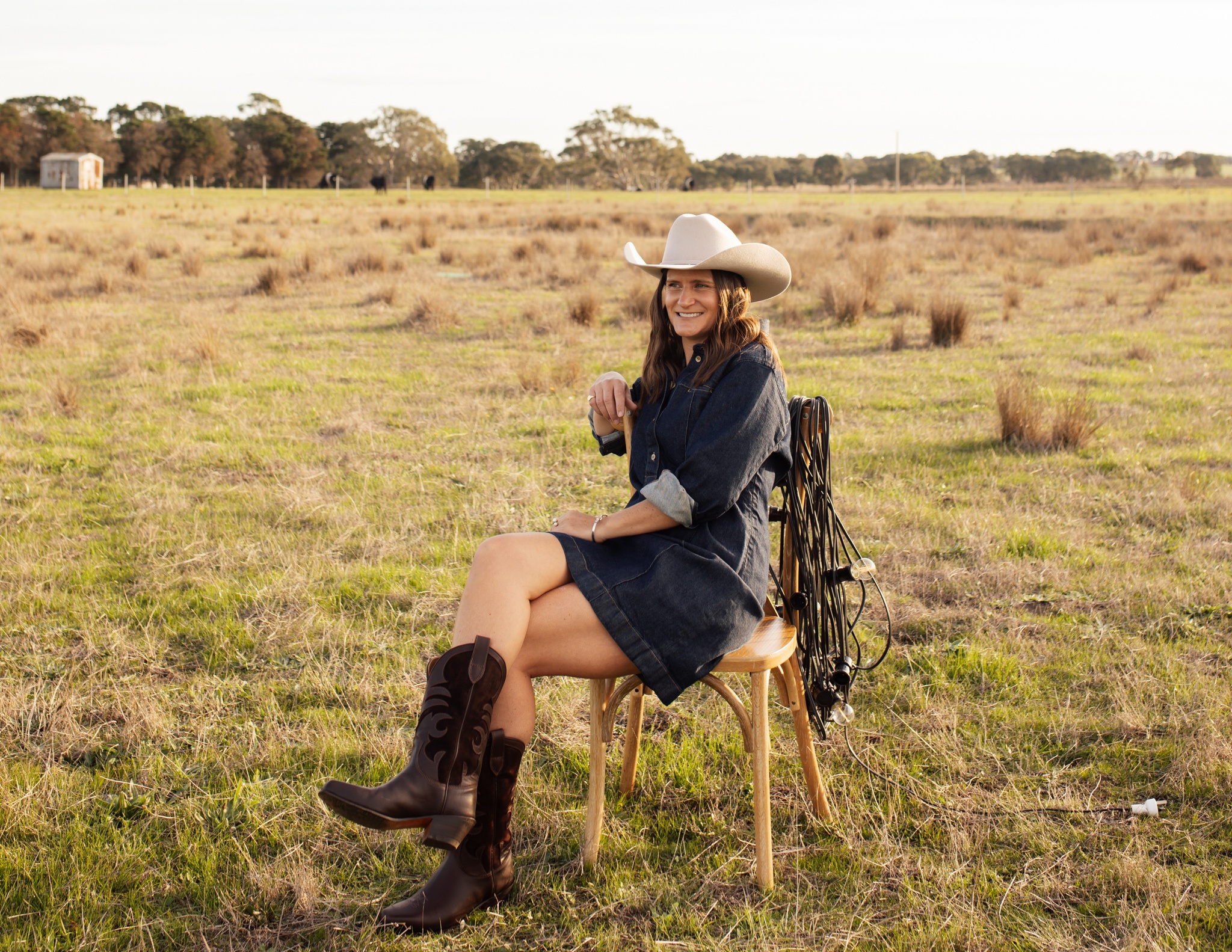
After two years in the Northern Territory, Ginnie Hope-Johnstone launched her own business, focusing on rural and regional events.
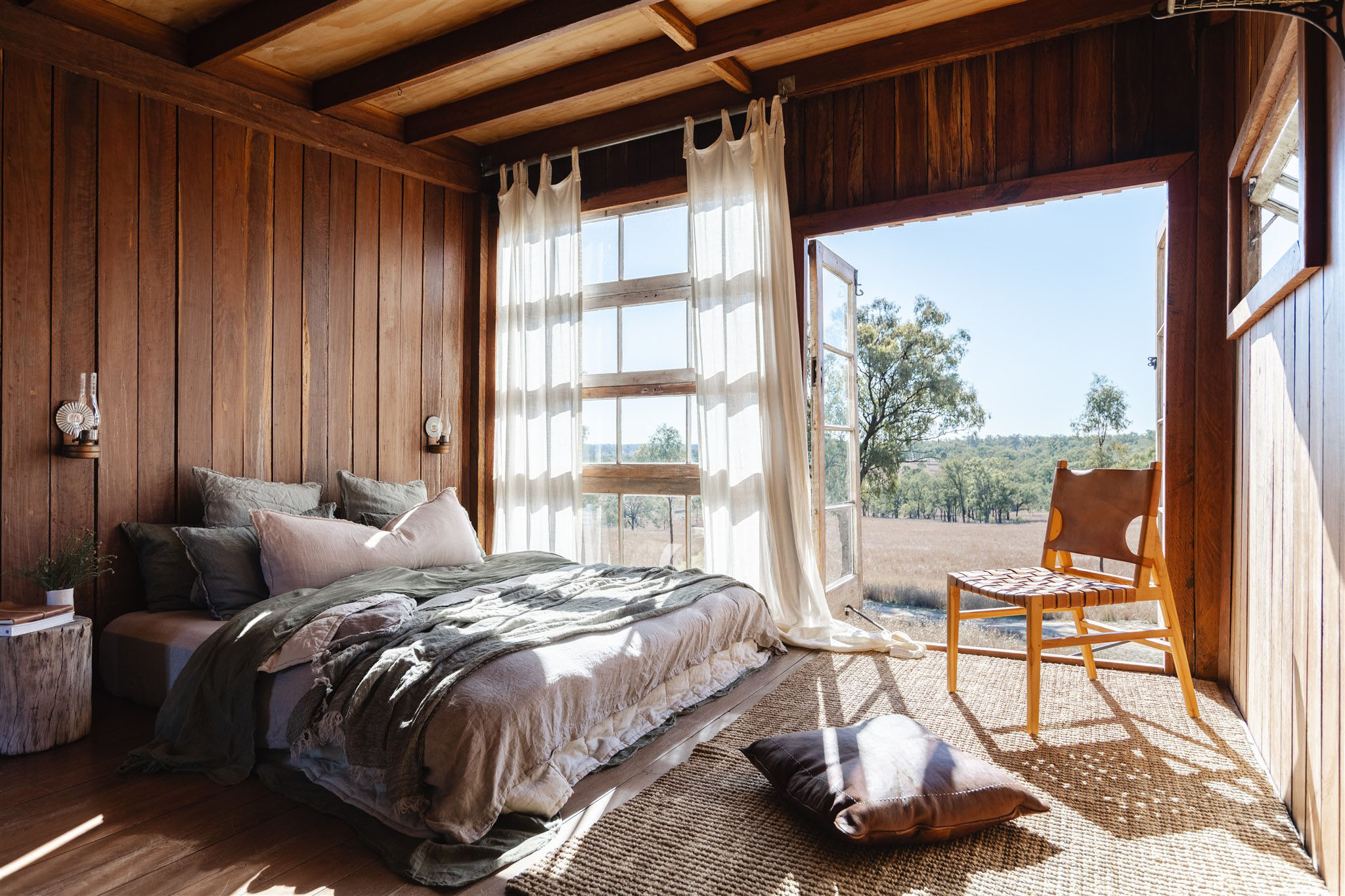
We chat with Carly Baker-Burnham, of Bloodwood Cabin, who says running a farm stay is less work than you think.
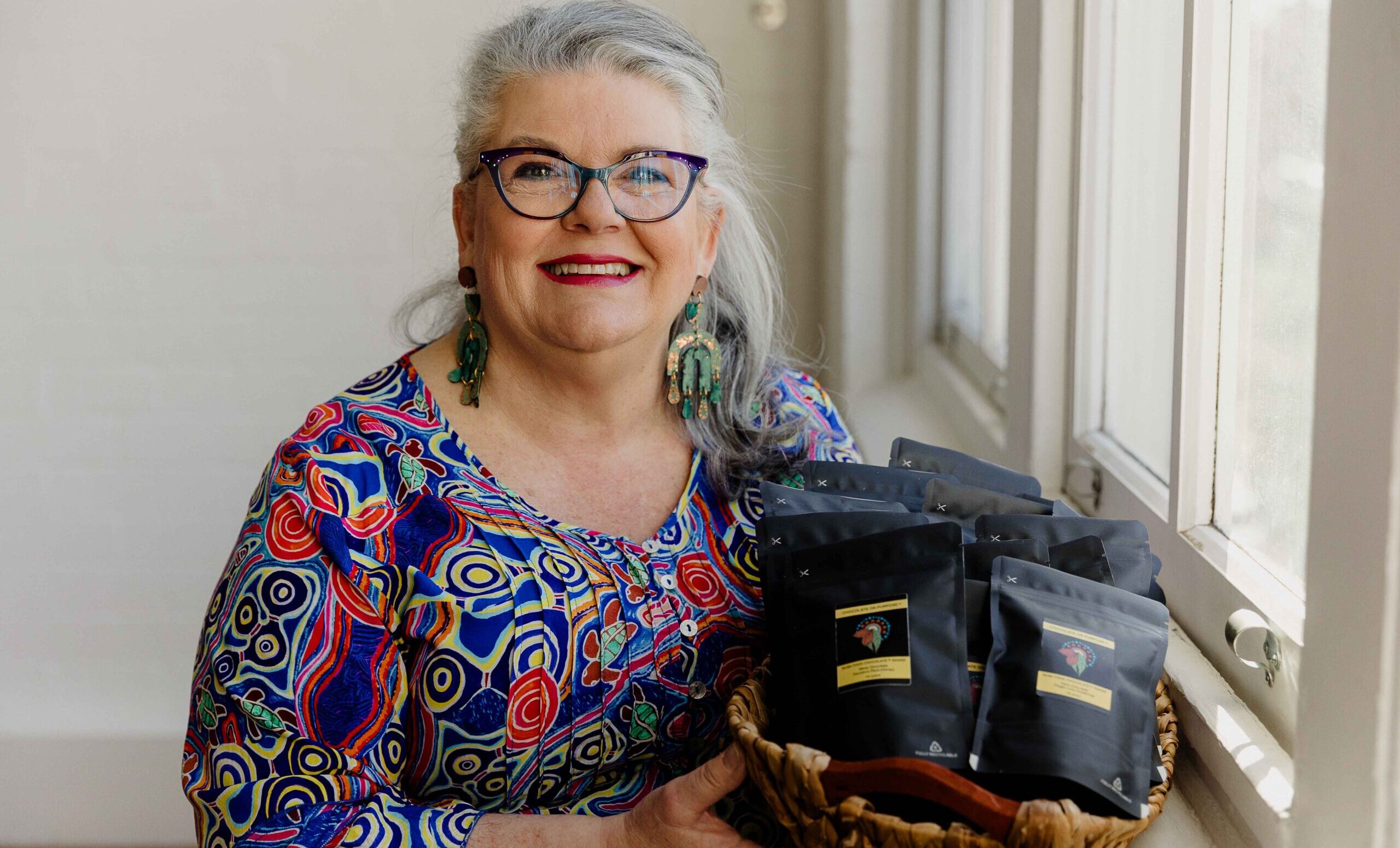
Fiona explains the radical reset that led to her chocolate business.

