








PHOTOGRAPHY LYDIA KALLESKE
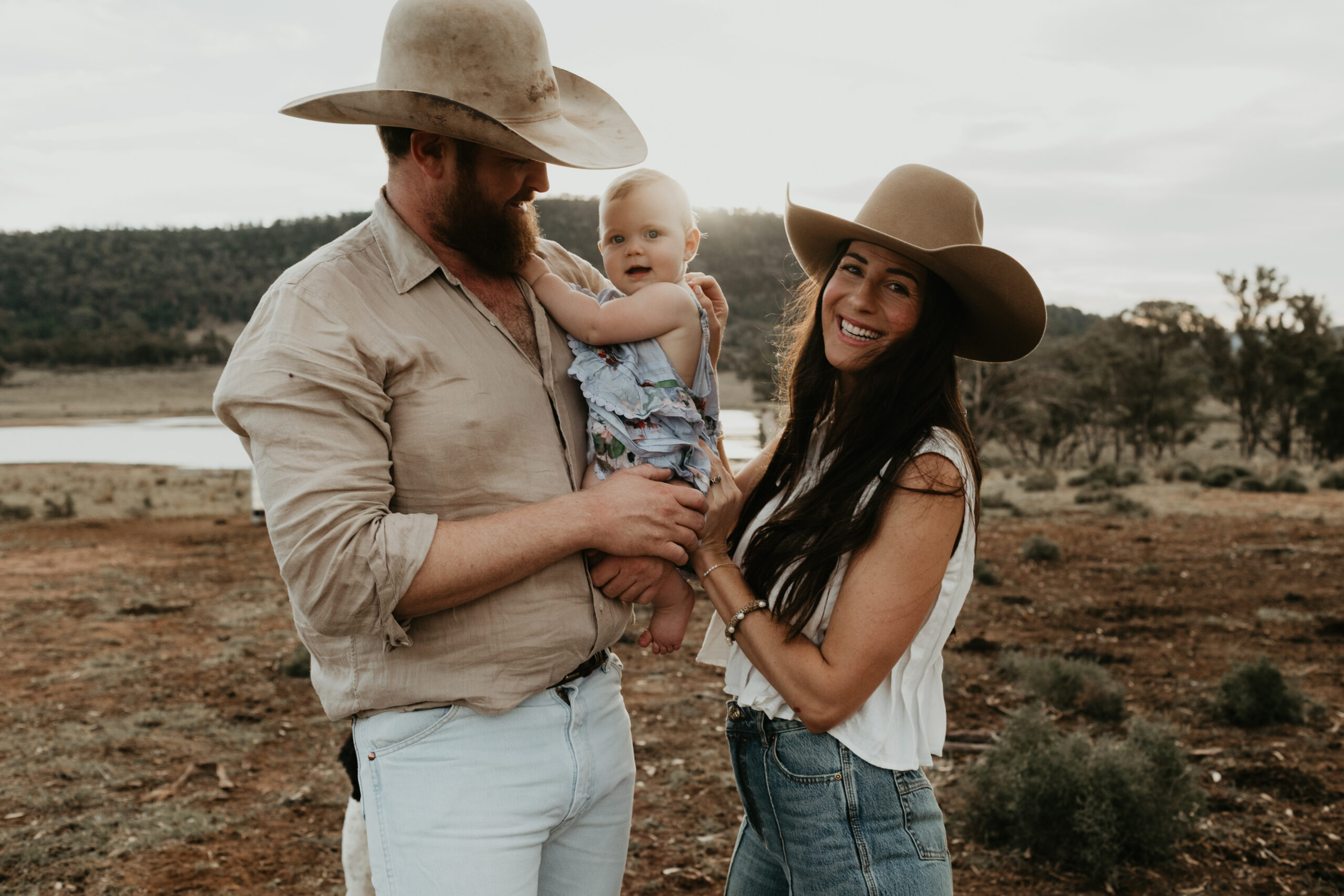
Steph at work on the family’s sheep-cropping property in South Australia.
Sign up to our mailing list for the best stories delivered to your inbox.
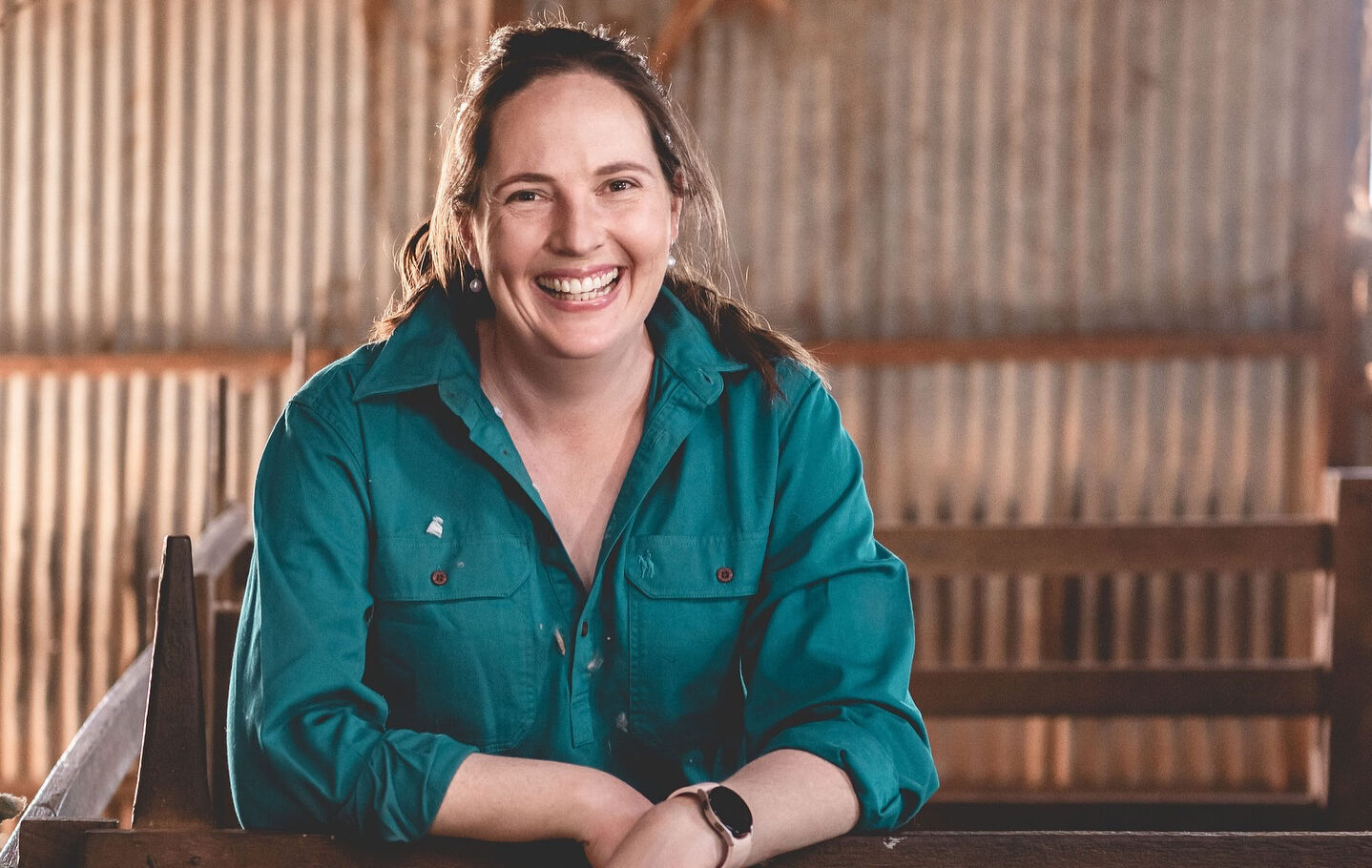
“It becomes impossible to know what is true,” writes Steph Schmidt, a farmer, mother-of-three and founder of Farm Life Psych.
Words Steph Schmidt Portrait photography Lydia Kalleske
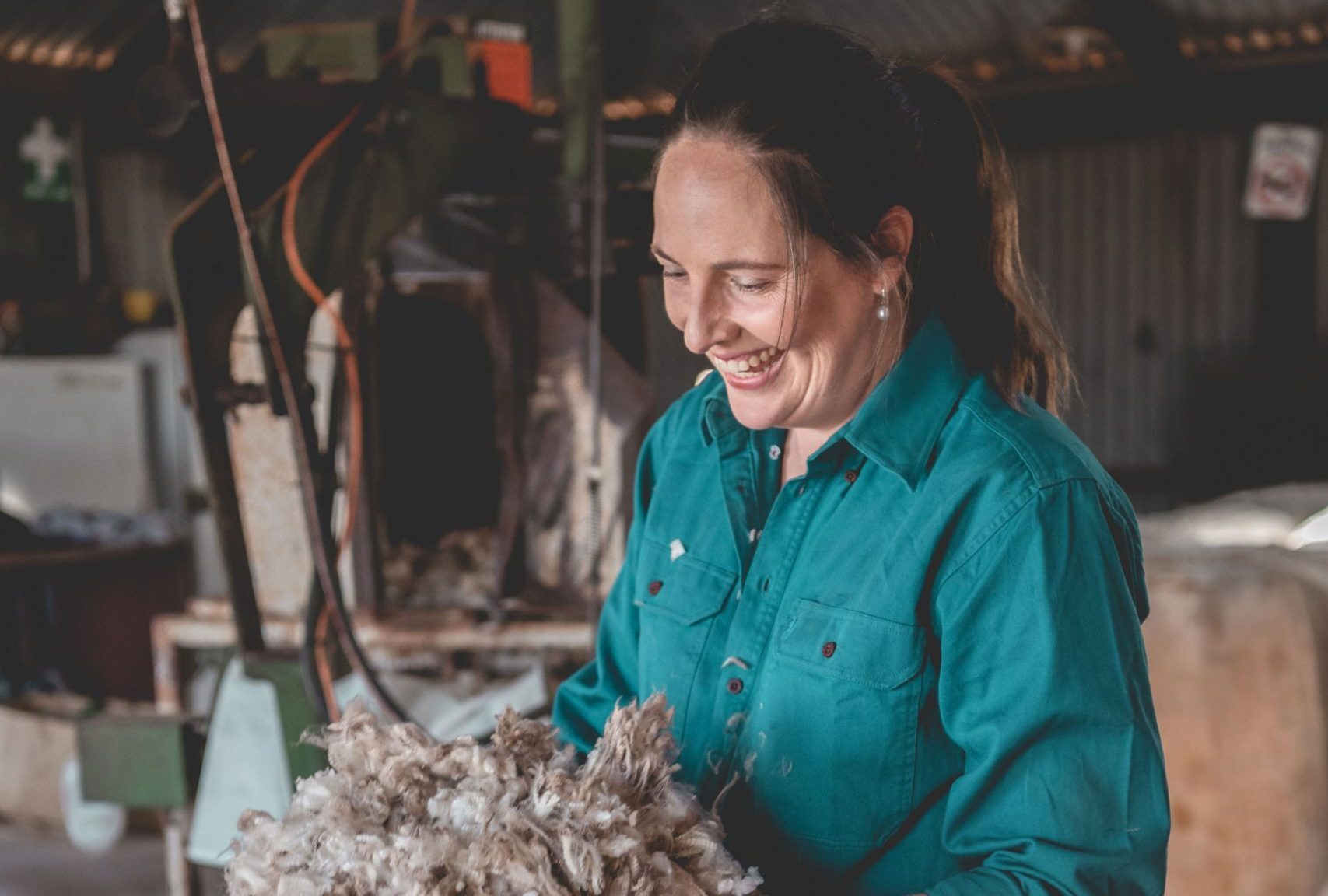
PHOTOGRAPHY LYDIA KALLESKE
Steph at work on the family’s sheep-cropping property in South Australia.
Content warning: This article discusses postpartum depression, anxiety and psychosis. Please read with care.
Note from writer: This article is informed by my background as a psychologist but it’s not a literature review. This is me — as a mum, as someone with lived experience — reflecting on something many of us probably think about.
You see, recently I’ve been thinking a lot about Helena Wright, a young woman who died in rural South Australia, together with her toddler, while her infant remains missing. I’m not going to add words about how they died as so much remains unknown. But what I know is that she was a rural woman with an almost-two-year-old and a three-month-old infant. She presented to a police station just hours before her death. Asking for help.
I’m not here to diagnose and add to speculation, but my reaction on hearing the story was: “There but for the grace of God go I.”
My first thought was, “That could’ve been me.”
Then I put social media back on my phone and immediately saw post after post about Lindsay Clancy, a woman in the US who was on trial for the murder of her three children. I have tried hard not to dive into the stories and speculation, but the posts that share her diary entries and phone notes… Again, I’ve had the same thoughts and feelings.
I experienced postnatal depression after the birth of my first and third sons. And to be honest, while I wasn’t diagnosed with postnatal depression after the birth of my second son, we were navigating extreme drought on our farm, stress was high and those years are a fuzzy blur in my memory.
So many of us have heard of postnatal depression and anxiety, but not many have heard of postnatal psychosis. When I look at my own experiences, again I’m struck by the overwhelming thought: “There but for the grace of God” (and I’m not deeply religious).
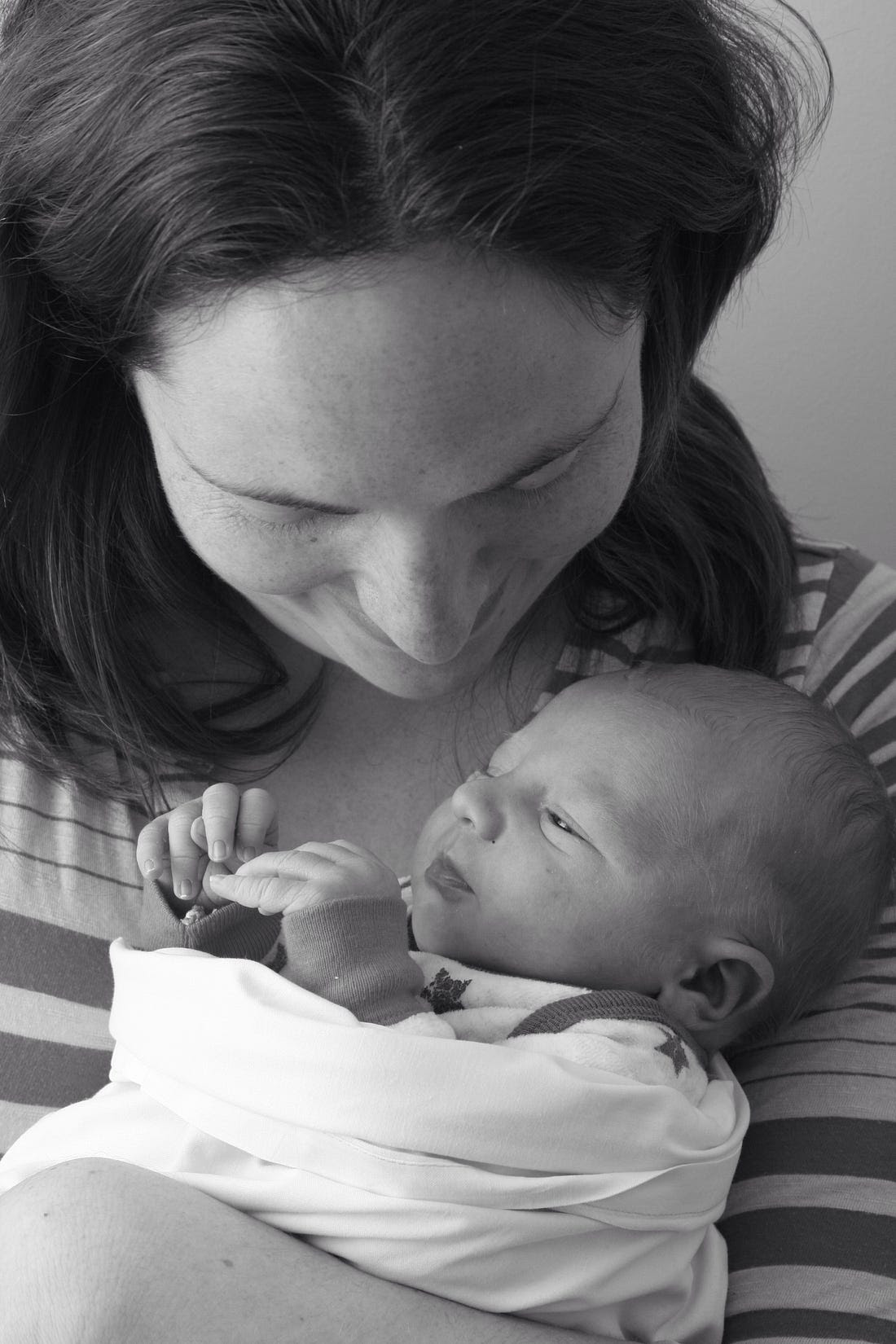
As a new mum, "completely oblivious of what was to come", she says.
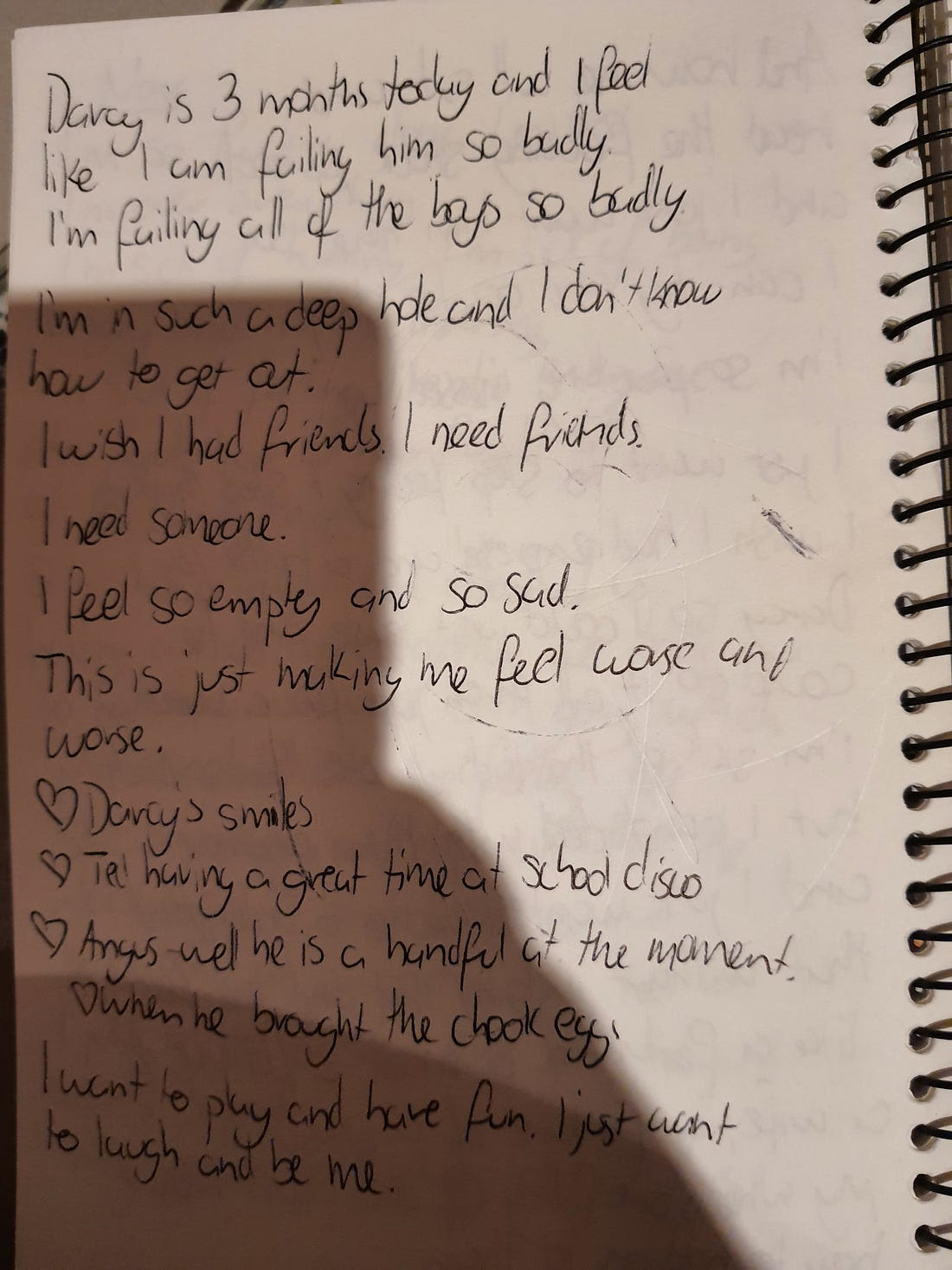
A journal entry, three months after the birth of Steph's third son.
Our struggles are also minimised by the bloody patriarchy. Because to say to your husband or family, “I just want someone to put the damn dishes away” or “I’m tired of being the only one who gets up for this baby every night”, it can seem like we’re not grateful for what we have. The dishes, the housework, the load we carry — it’s often made to seem as if it’s not as big as we think it is.
I also have experience with premenstrual dysphoric disorder. Once a month for almost half the month (approximately 10 to 14 days, which can feel like 100 days), my world shifts. My perception of the world tilts on its axis and, as my husband describes it, “the second version of me takes over”. I stop seeing the world as it is and instead get tangled in the web of thoughts my mind casts. Although I know why it happens, and I know that it won’t last, some days it becomes impossible to know what is true.
And then, almost like blue sky popping through on a seemingly endless overcast day, my period arrives and after a day or two my mood dramatically shifts. The world seems open again. I can see the trees in the forest, and I can once again fall in love with my family, my life, and me.
It is this experience that hits me every month that also gives me a different lens to look at women’s postpartum experiences. Because when we are so damn deep in the trenches of sleep deprivation, hormonal roller-coasters and the general feeling of loss of control that can envelop us, it’s almost impossible to know what’s true, what’s our reality and what’s in our control.
PHOTOGRAPHY LYDIA KALLESKE
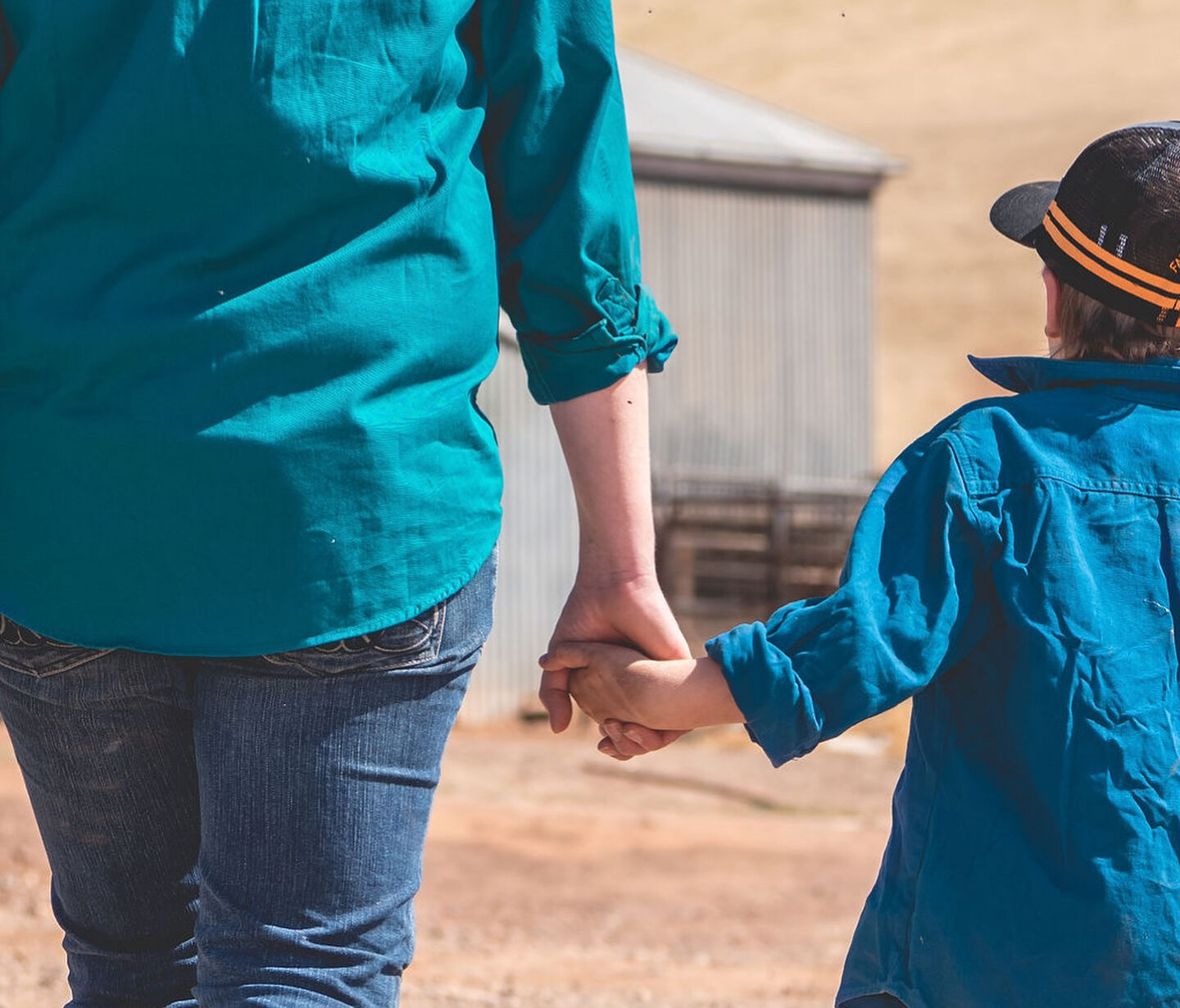
Hand-in-hand with one of her three beloved boys.
I still vividly remember going to my firstborn son’s six-month check-up with the child health nurse. I was trying to explain, as openly as I could, that I was drowning, but maybe I wasn’t directly saying the words. Her response (as he crawled under her desk and began to pull out the computer cables) was, “Perhaps you’ve just got an active baby and you need to get used to it.”
I walked away from this experience feeling hurt, unheard and also deeply flawed. But thankfully, I had a sister, a husband and a mums’ group that didn’t let me drown. They made sure I got the help I needed from a GP and then subsequently medication and a psychologist.
Because when we are deep in that moment, much like when I’m in the depths of my luteal phase, we can find it impossible to know our truth from our reality. We find it impossible not to believe the stories in our mind that tell us “This will never end”, “I’ll never get any rest”, “I’m failing as a mother”, “I’m letting my baby down” and the cascade of other thoughts that can overwhelm.
And in those moments, perhaps more than any, that’s when we need those around us to step in and see that we’re drowning, to extend a hand and pull us out of the depths when we can’t pull ourselves out. It’s our friends and family, yes, but it also needs to be the professionals and the support services out there.
I’m grateful to be a Gidget Foundation ambassador and a Gidget Angel (someone who shares their story of living with postnatal depression and/or anxiety). The Gidget Foundation offers support services for expectant and new parents. While it has been around for 25 years, its impact has really increased over the last 10 years or so, with telehealth and in-person services growing across Australia. I wonder if my first experience 12 years ago might have been somewhat different?
Steph Schmidt runs Farm Life Psych, which gives farmers practical, evidence-based mental health strategies through online resources, workshops and corporate consulting. This article first appeared in Steph’s Paddock Lessons Substack (you can subscribe here).
For mental health help and support, call Lifeline on 13 11 14 (provides 24/7 crisis support), PANDA on 1300 726 306 (for perinatal and postnatal mental health support) or the Gidget Foundation on 1300 GIDGET (offers bulk-billed psychological services).
“It becomes impossible to know what is true,” writes Steph Schmidt, a farmer, mother-of-three and founder of Farm Life Psych.
Members of the Graziher community capture rural life as they experience it, from Pompapiel in Victoria to Queensland’s Elrose station.
Members of the Graziher community capture rural life as they experience it, from Pompapiel in Victoria to Queensland’s Elrose station.
The South Australian massage therapist and mum of four turned to bush salves when she could no longer use her hands to heal.
A leader in the world of cattle genetics, Dr Sophia Edwards puts her learnings to work on the family farm.

