

PHOTOGRAPHY SAMUEL SHELLEY
The 19th century stable became a maternity ward when Holly Young’s first batch of Valais lambs was born.
Sign up to our mailing list for the best stories delivered to your inbox.
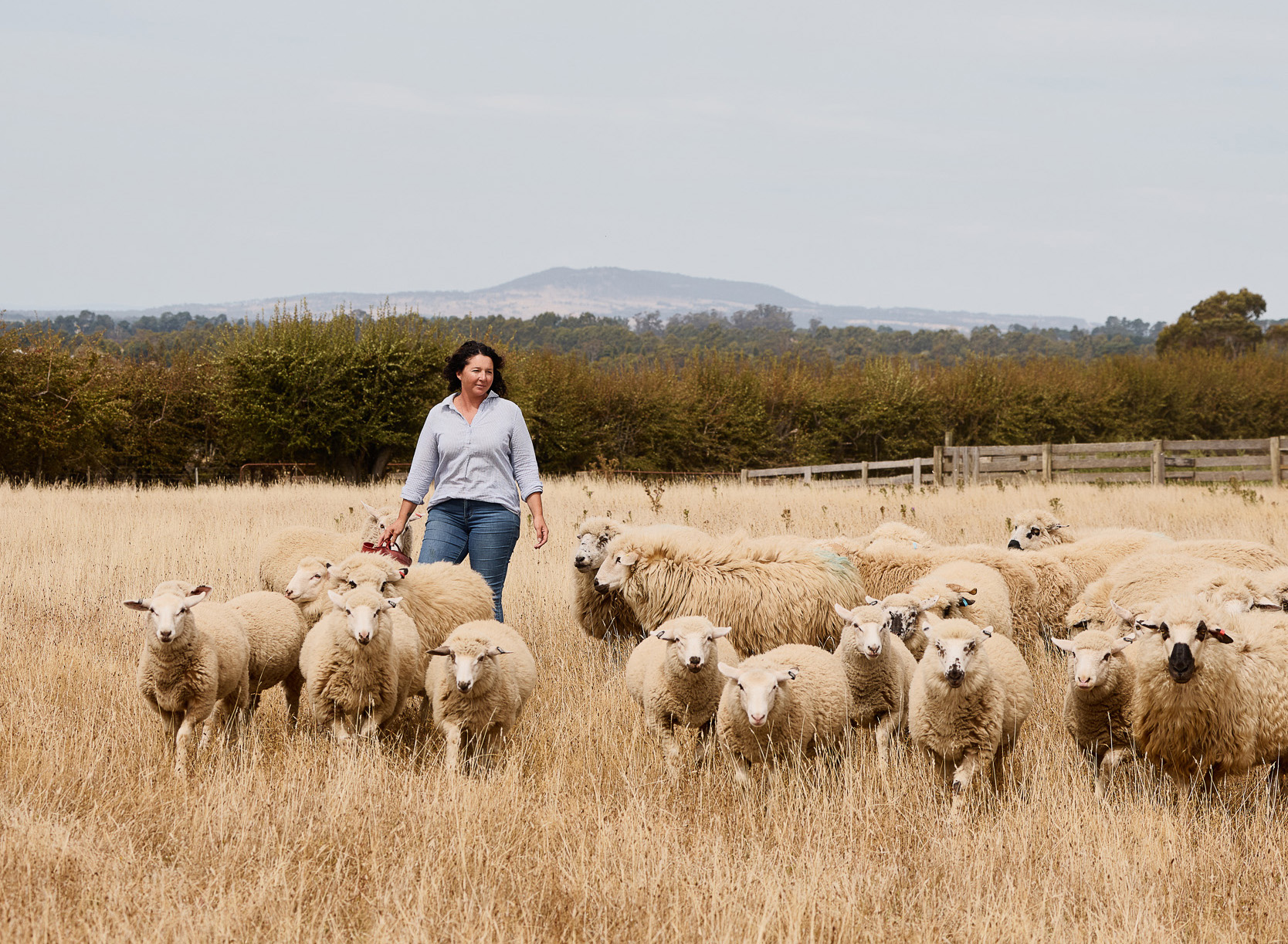
Maggie MacKellar meets Holly Young of Kinlet Farm and her small — but very valuable — mob of blacknose sheep.
Words Maggie MacKellar Photography Samuel Shelley
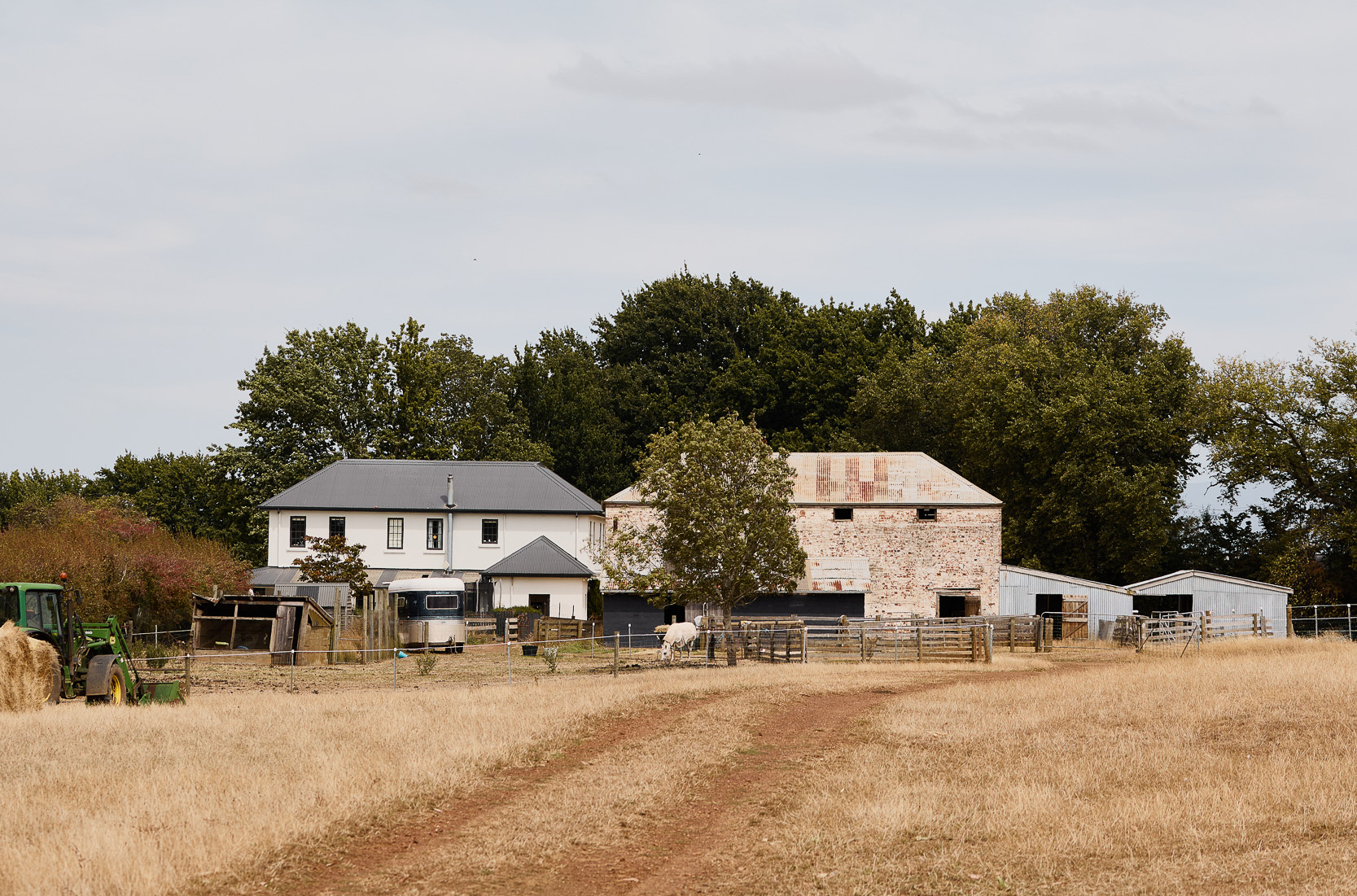
PHOTOGRAPHY SAMUEL SHELLEY
The 19th century stable became a maternity ward when Holly Young’s first batch of Valais lambs was born.
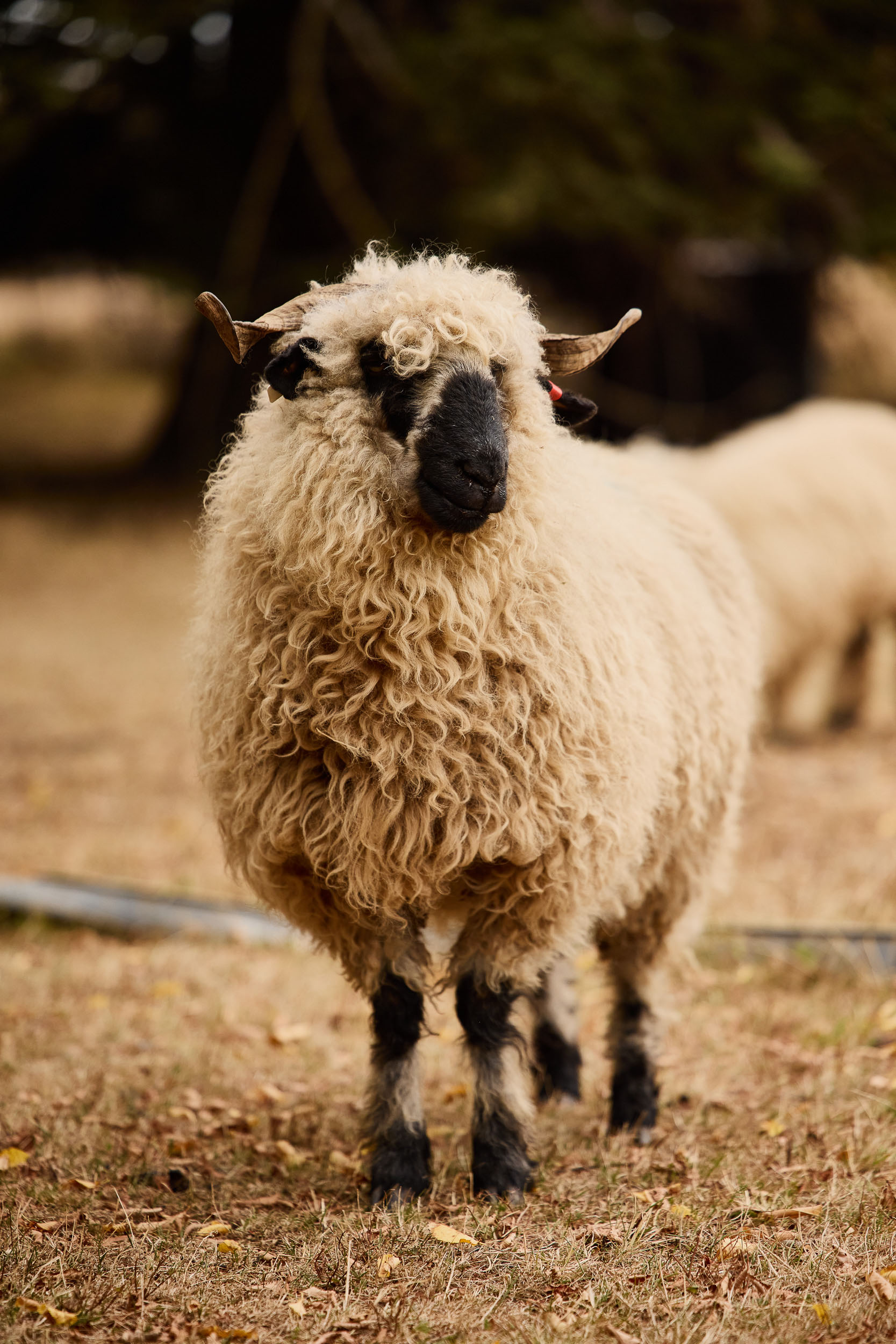
PHOTOGRAPHY SAMUEL SHELLEY
A second-cross ewe from Holly’s flock.
Its wool is crimped as if it’s spent the day at the hairdressers and your heart squeezes a little bit and you think, “How, how could such an adorable creature be a sheep?” It’s more like a little muppet than a sheep, as if the creator decided to toss the rule book about what sheep should look like and make Swiss Valais blacknose sheep the most heart-melting creatures ever. As if that same creator knew there would be a time when we all needed the simple joy of looking at the screens of our phones and finding diversion in the sweetest sheep with black faces and mops of curly wool as a fringe.
Now you and I might, if we saw such a lamb on Instagram, hit the heart button. Probably there is a small proportion of us who would repost a story and write something like #wantone #lifegoals. There’s an even smaller proportion who would research whether these black-nosed, curly wool sheep can be found in Australia. Then there’s perhaps one per cent of us who, having googled and found that Valais blacknose sheep are not in Australia, would still try and find a way to source these sheep.
Holly Young is one of those people.
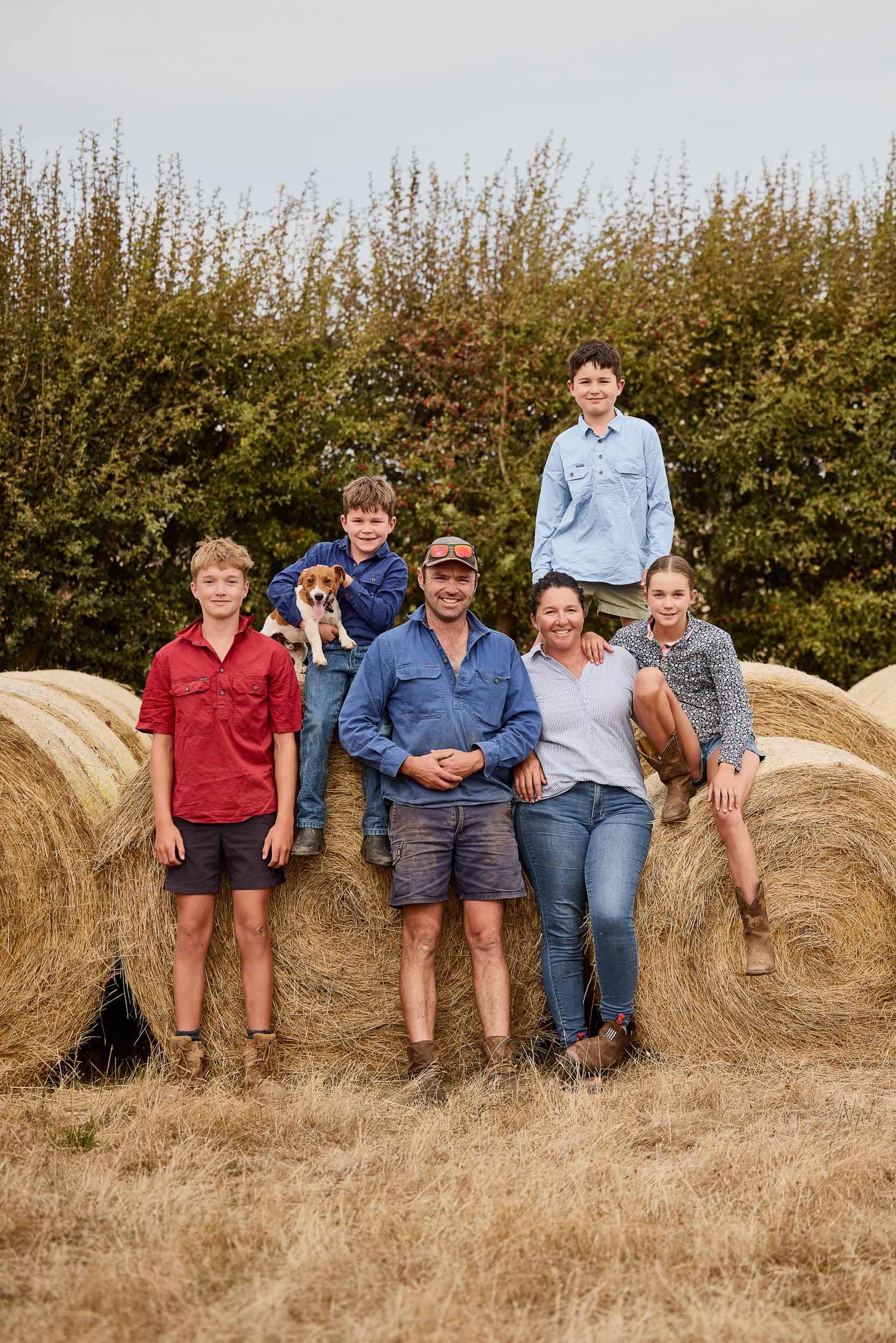
PHOTOGRAPHY SAMUEL SHELLEY
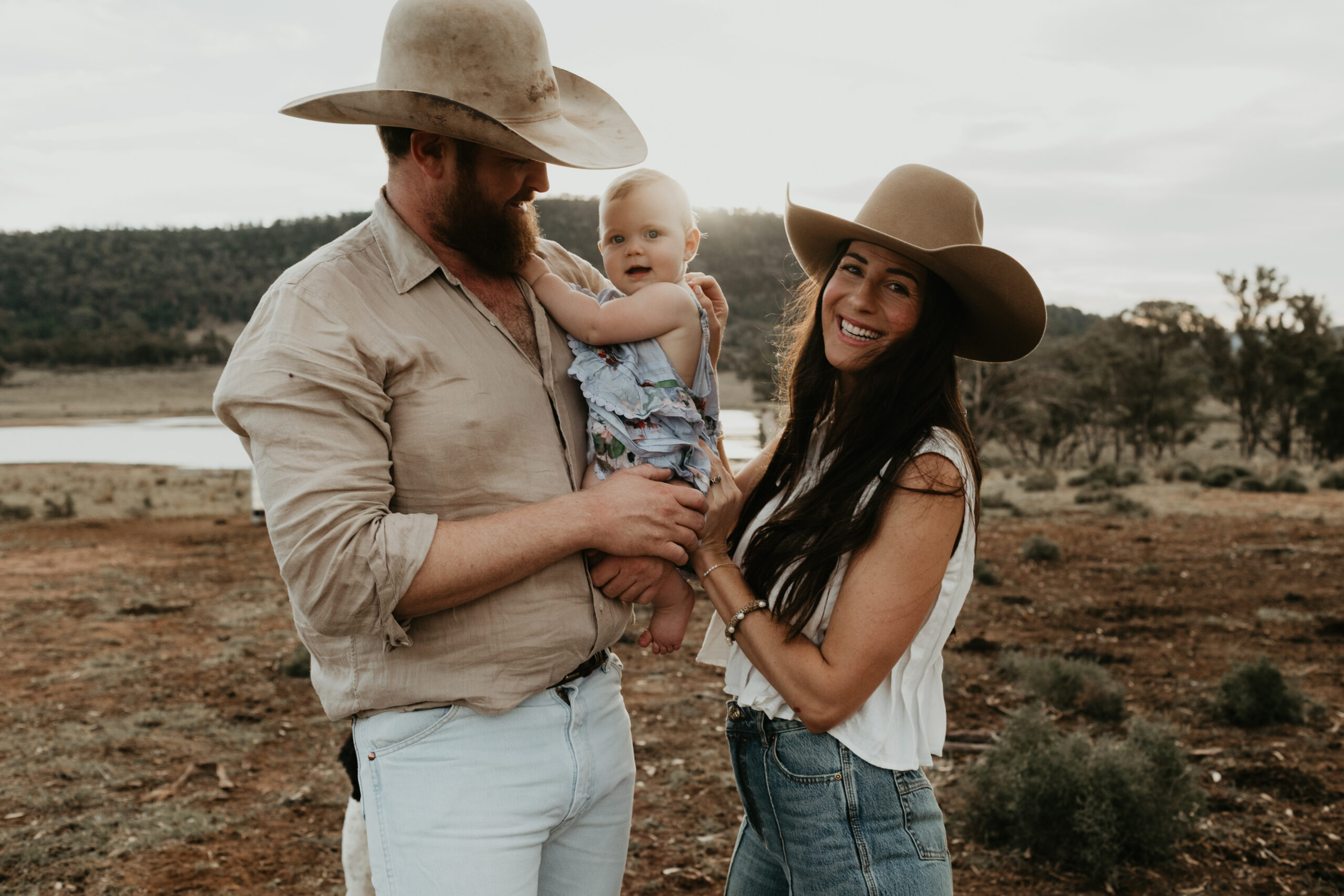
The Young family, from left: Archie, Winnie (holding Chester the Jack Russell), Gareth, Holly, Evie and Humphrey standing behind.
PHOTOGRAPHY SAMUEL SHELLEY
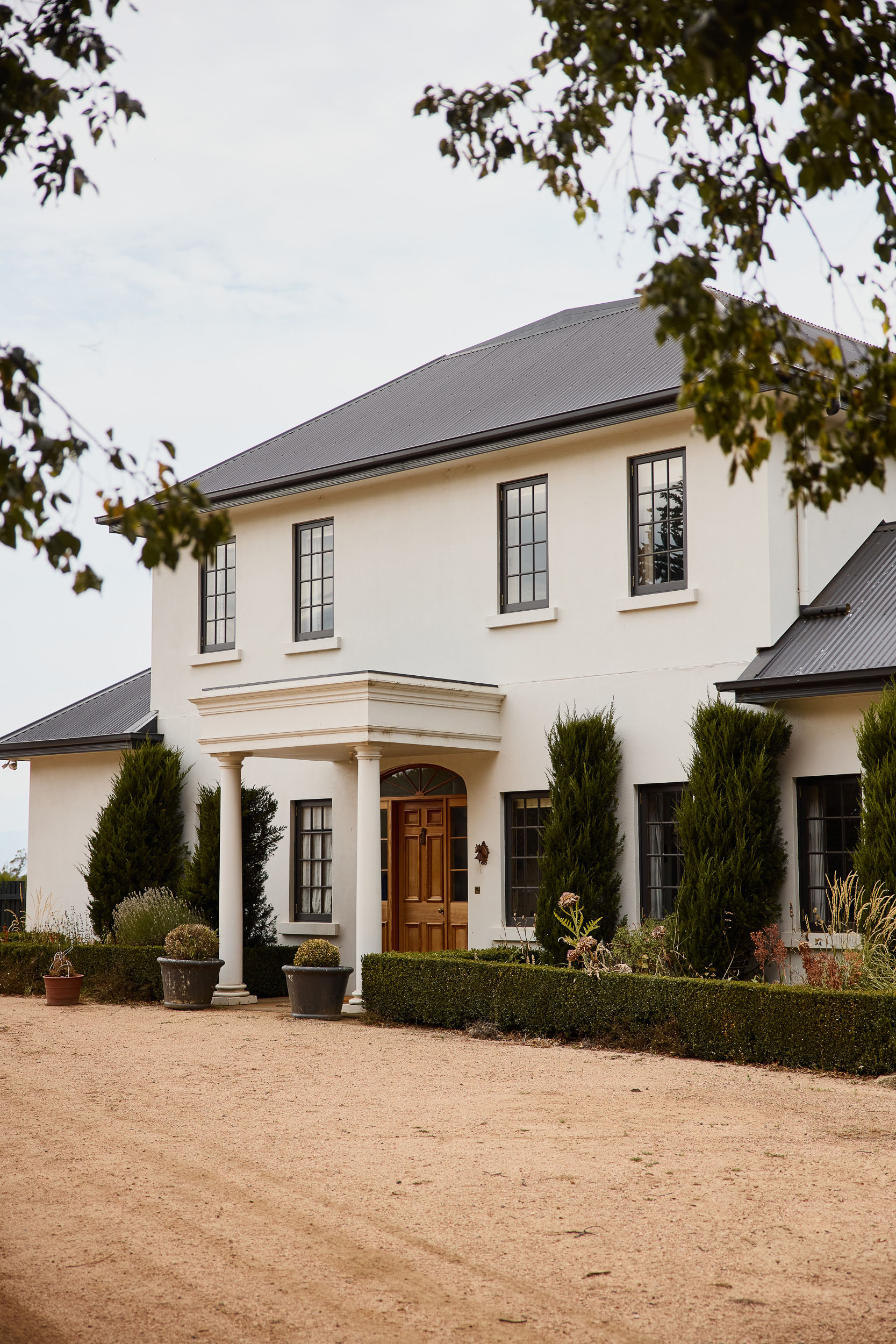
The imposing entrance of Kinlet farmhouse.
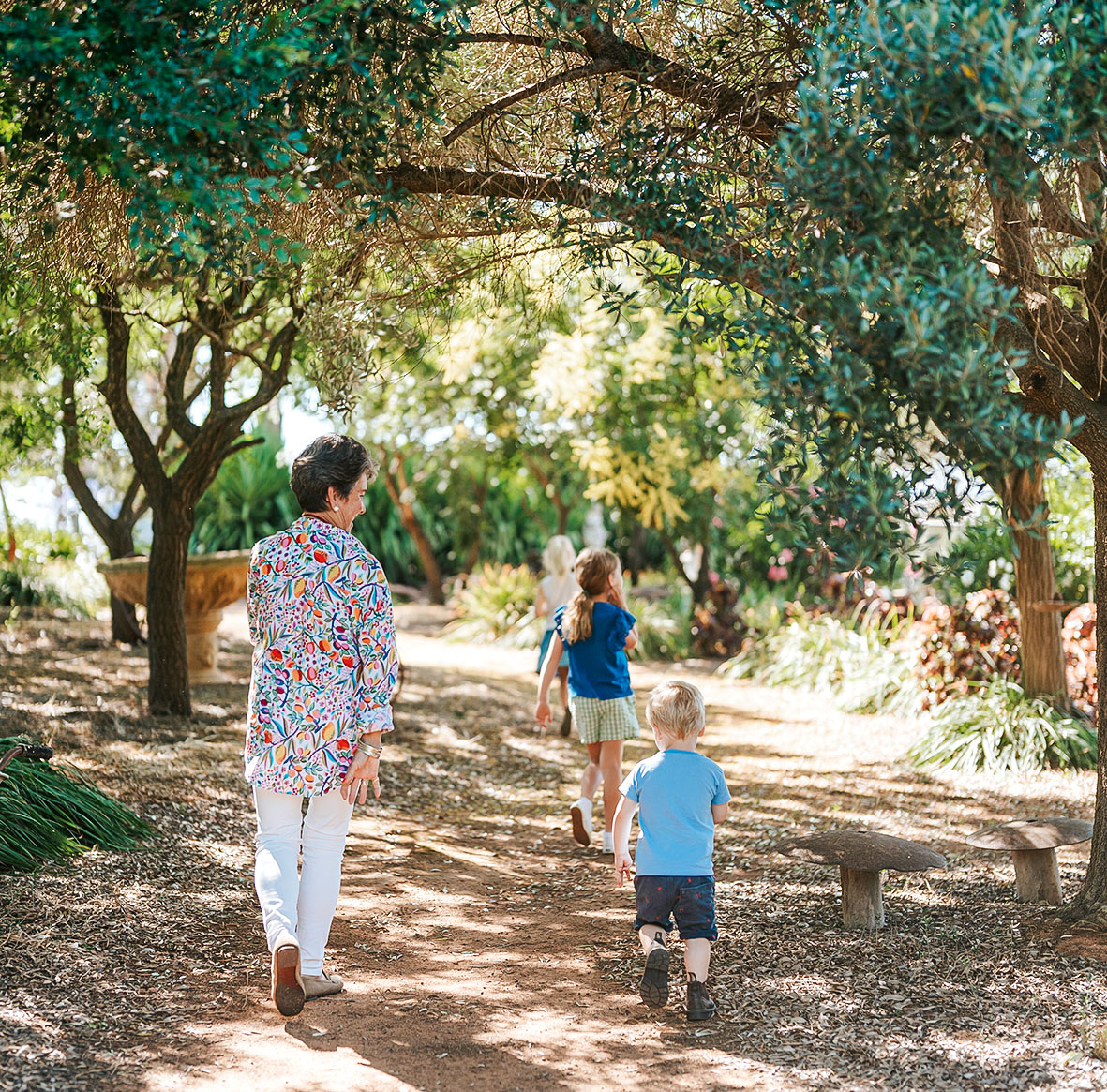
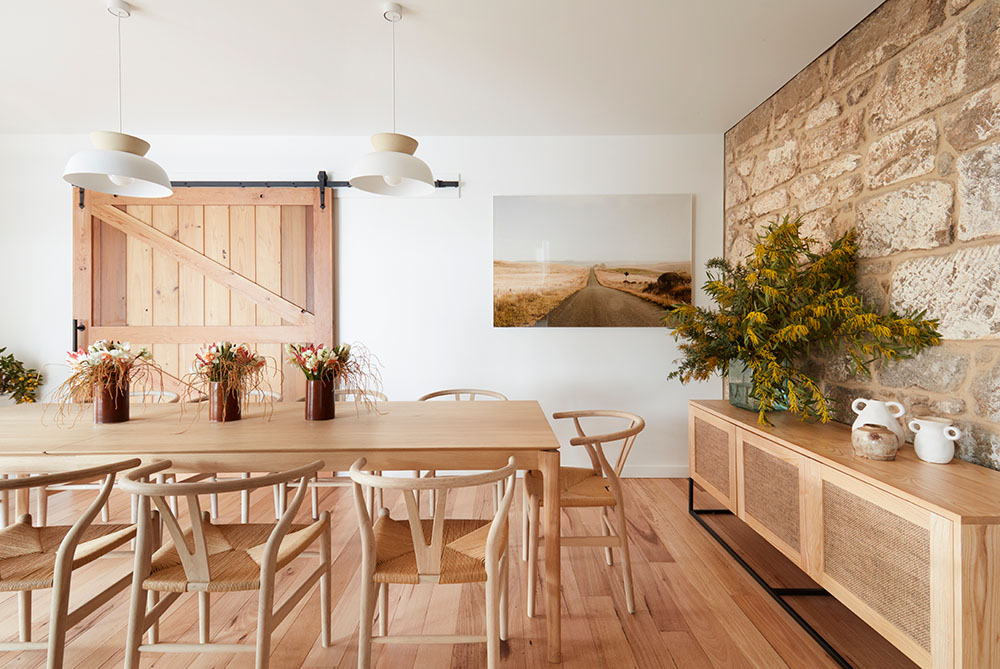
I park in what would have been the old stable yard. I’m greeted by a Jack Russell and a Hungarian vizsla, and then Holly. She apologises for the bad guard dogs and we all troop through the front door. I sit at the kitchen table while Holly boils the kettle. There’s a delicious smell of a cake pulled out of the oven ready for hungry children coming home from school. Beside the cake there’s a slow cooker filled with home-killed beef and veggies from the kitchen garden. The house is beautiful: big rooms, lots of light, and very much the locus for a busy family. This is not a stylised version of a family life: it’s a home, a busy one.
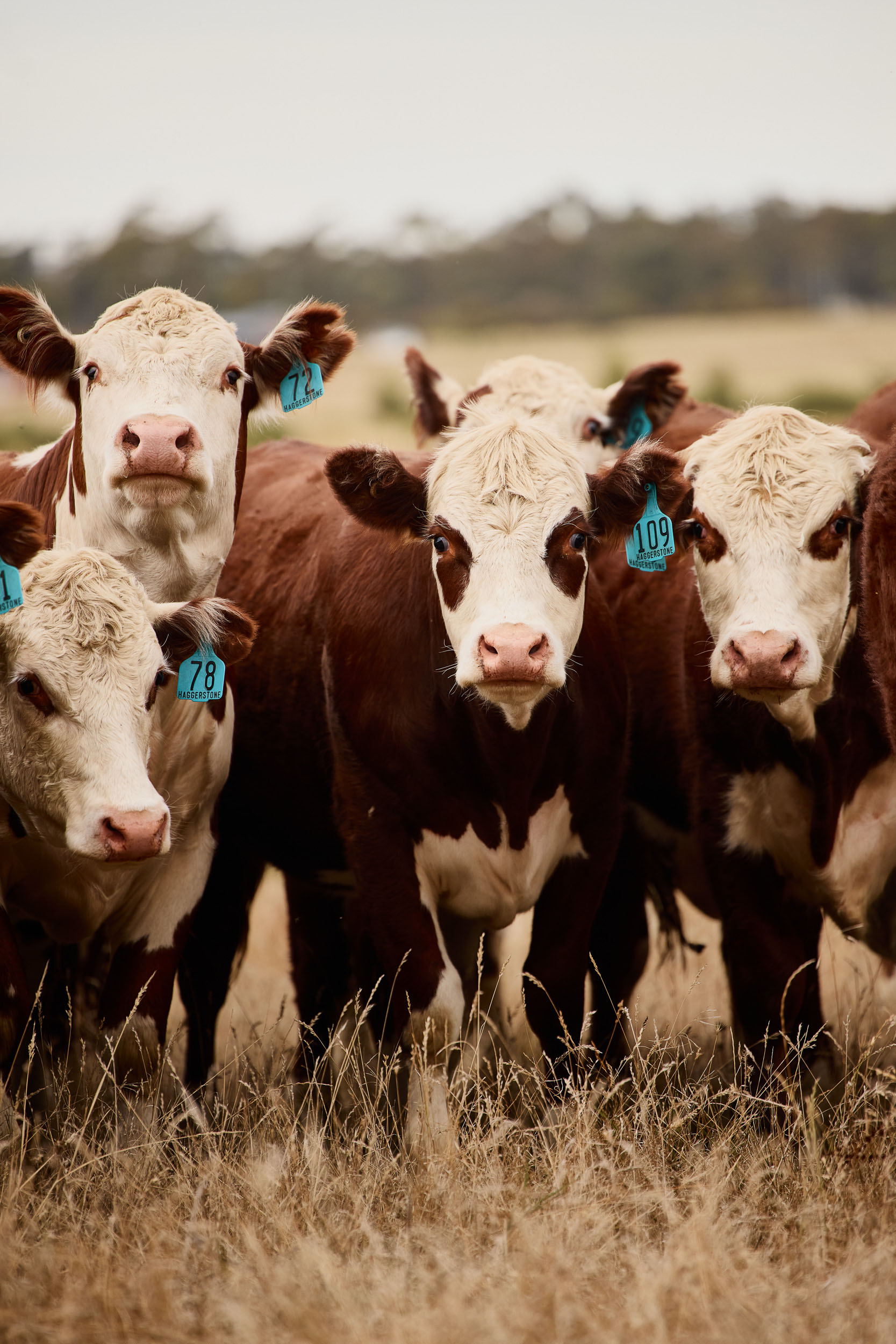
Kinlet Farm is the manifestation of Holly and her husband Gareth’s dream. They met when Holly was 15 and Gareth was 17; Gareth grew up on a farm outside of Launceston and Holly grew up riding horses on the banks of the Tamar. They now have four children: Archie, 14, Evie, 12, Humphrey, 10, and Winston (Winnie), seven. There are dogs, chooks, a commercial Hereford mob and a small but very valuable mob of Valais blacknose sheep. Holly works two days a week at the Longford vet clinic and juggles the schedules of her four children, who have gone in for the most time-consuming sports (horseriding, cricket and rowing) as well as managing her stud. Gareth juggles his full-time job as a diesel mechanic with working on the farm.
PHOTOGRAPHY SAMUEL SHELLEY
Hereford cows stare curiously.
PHOTOGRAPHY SAMUEL SHELLEY
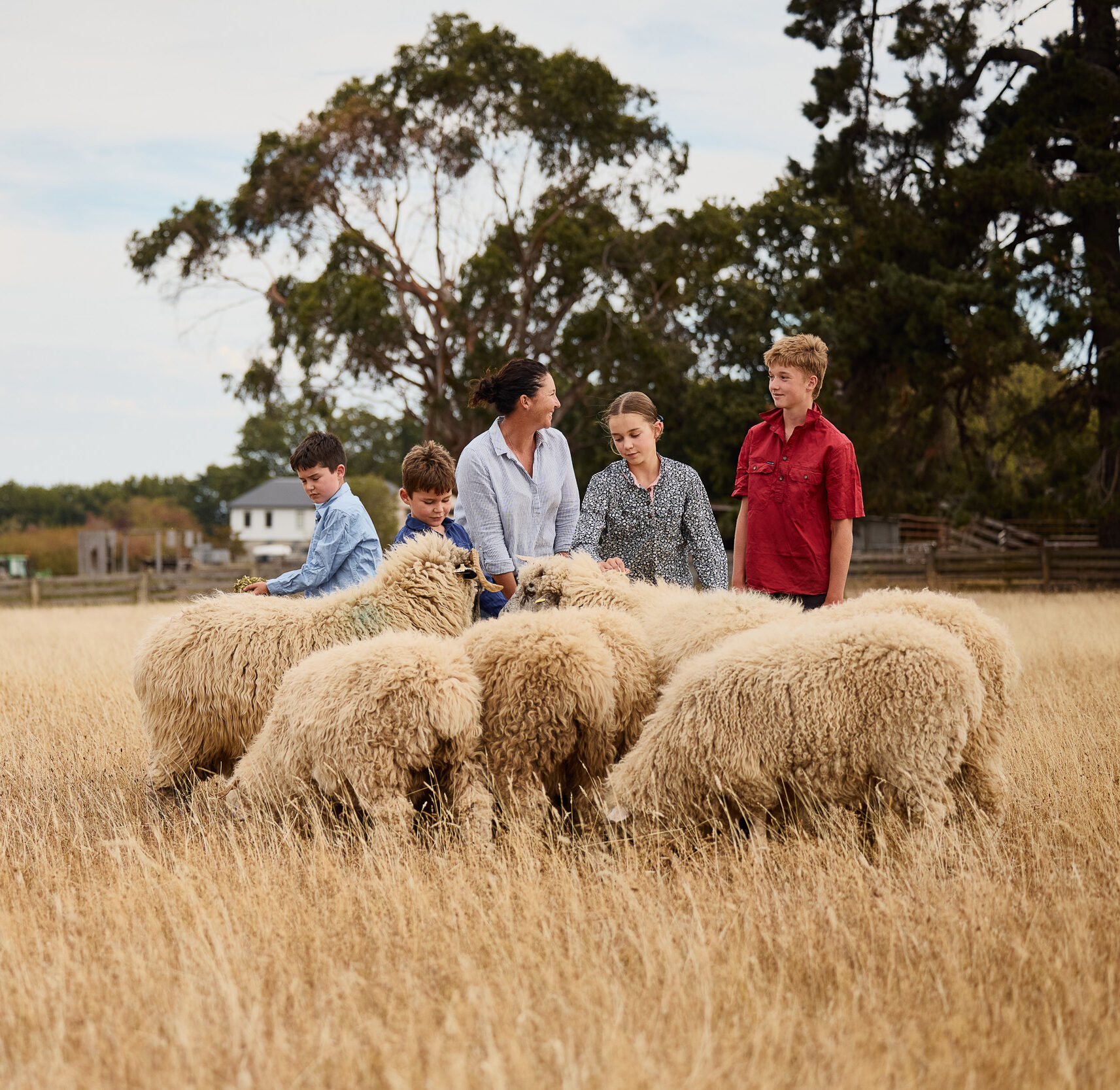
Holly has been breeding Valais blacknose sheep since 2021.
“I just loved them,” she says, “and I collect animals. I can still remember where I was (swimming lessons with the children) when Gareth rang me to say he’d heard a Country Hour interview with the stud who had imported the first Valais blacknose sheep into Australia.”
I say, “He knows you well!” and she laughs, “Yes, but he’s a farmer: if I was going to get these sheep, they would have to pay their way.”
Holly doesn’t do things by halves. She drafted off a small mob of ewes from their commercial Coopworth flock. She chose ewes who’d had a lamb, who had good temperaments and conformation. She bought 21 straws of semen for artificial insemination. She laughs and tells me that that first year, she watched those ewes as if they were her children.
PHOTOGRAPHY SAMUEL SHELLEY
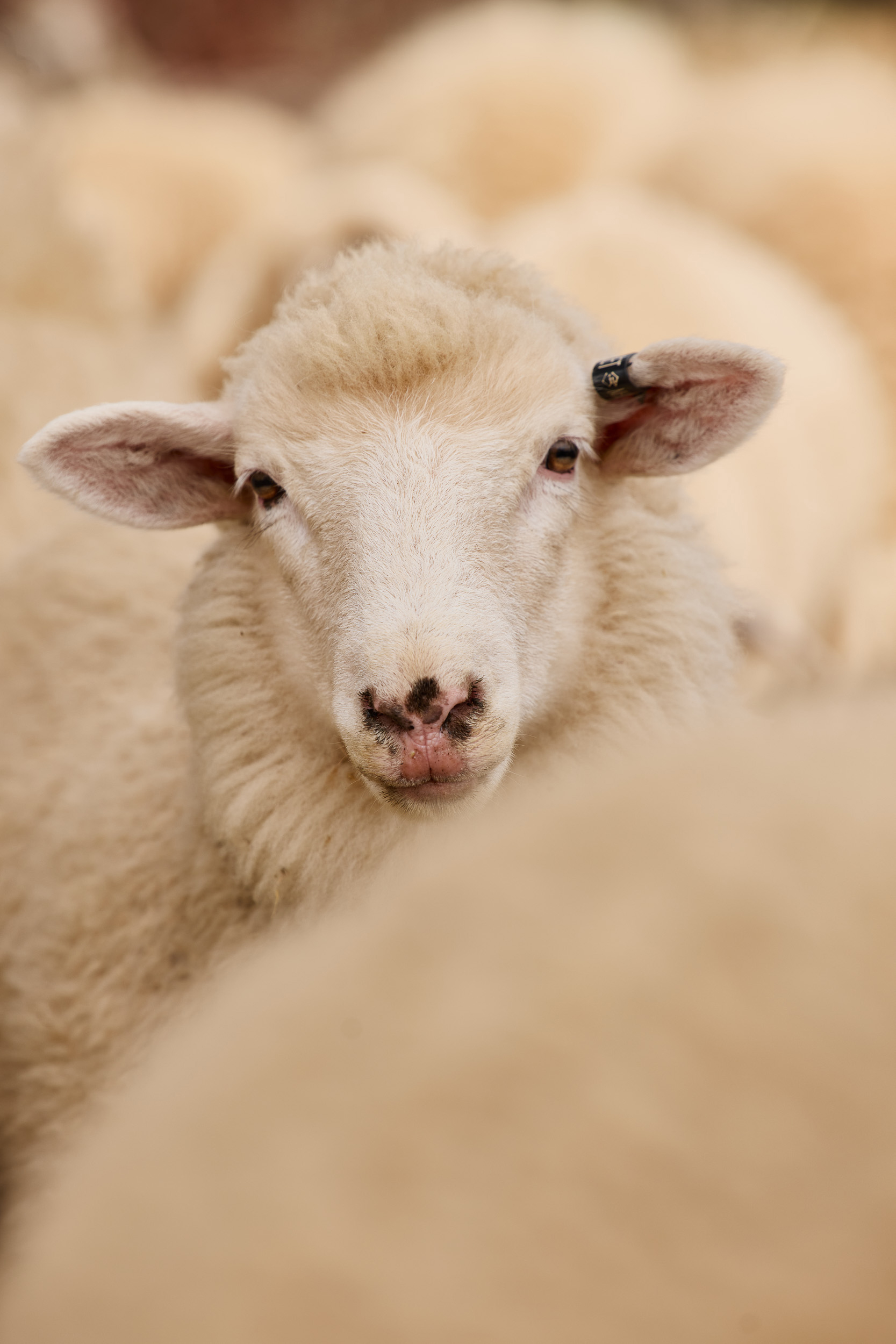
Coopworth sheep were the original flock on Kinlet.
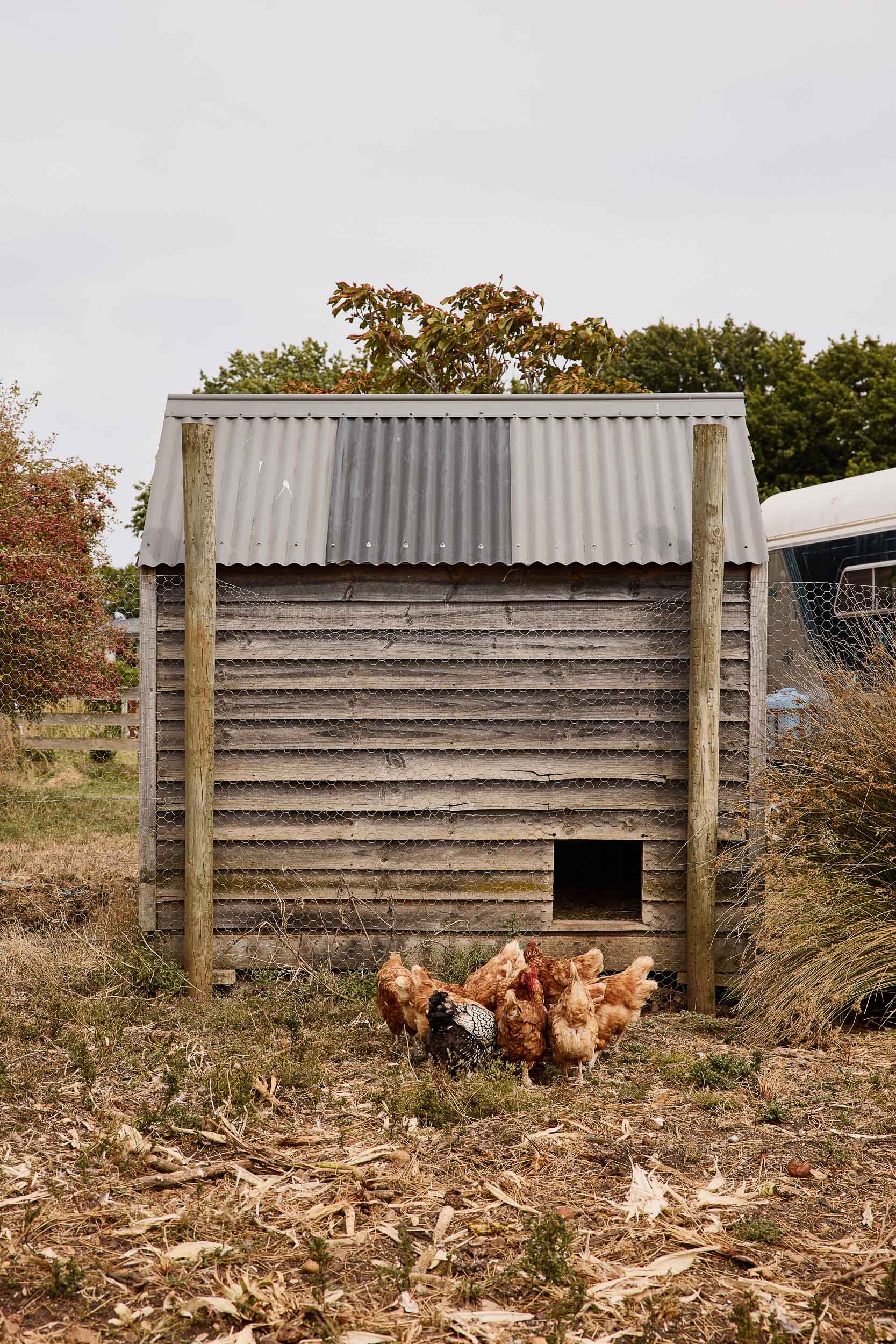
PHOTOGRAPHY SAMUEL SHELLEY
The chicken shed.
She moved her ewes in there and lambed 31 lambs from her 21 ewes. She kept the first-cross ewes and sold the wethers to people who wanted the delight of looking out the window at a blacknose sheep on their hobby farm or vineyard. That was in 2021. At the end of 2024, with third-cross ewes, Holly was ready to sell some of her hard-won breeders. All the lambs are DNA tested and registered. Her plan is to keep breeding until she has a small mob of Australian pure, which is a fifth cross animal.
Valais blacknose sheep aren’t rare in their native Switzerland, where the earliest mention of the breed dates back as far as 1400 CE. They’re bred for wool and meat and do well on the steep rocky slopes of the Valais region. But they are rare (though increasingly popular) in Australia. I ask Holly why people want them. She says, “ The same reason I do: to look out the kitchen window and be delighted by utterly adorable sheep. They are such characters, and very easy to make into pets.”
Adorable blacknose sheep are just one part of what is going on at Kinlet Farm. I look around at the world Holly and Gareth have created for their children. Holly says, “I’m not sure the kids realise how lucky they are, but this life was always my dream.” She says it a little wryly. “I’m not sure I realised quite how much work such a dream was, but I love it.”
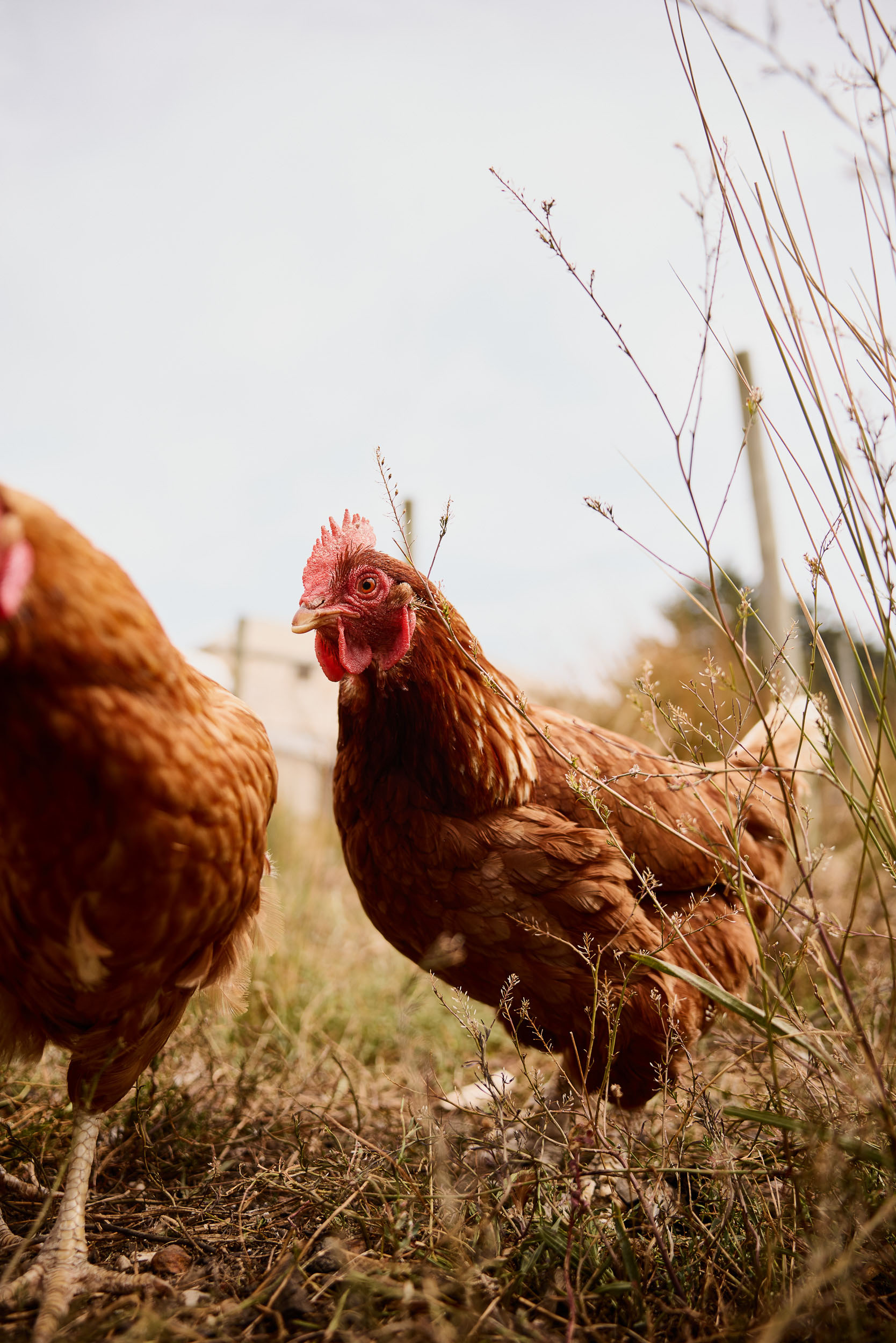
PHOTOGRAPHY SAMUEL SHELLEY
Chickens roam the yard.
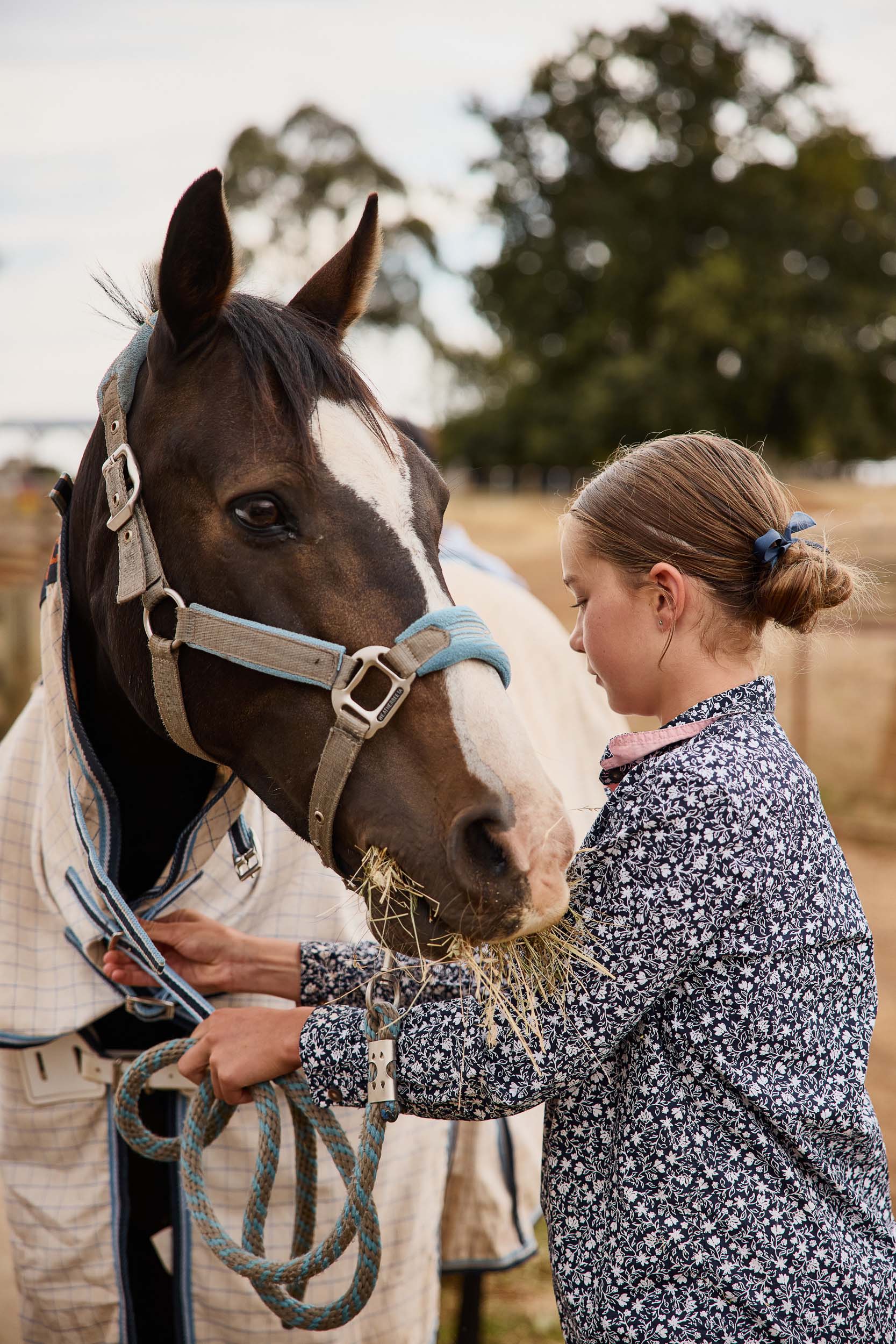
PHOTOGRAPHY SAMUEL SHELLEY
Evie with her horse, Matari.
She’s just spent the weekend driving one child to rowing at Lake Barrington and another child to a dressage qualifying event on the other side of the island, so I understand the fatigue. From the perspective of a mother whose children are grown up, I say, “They can’t see it now, but you’re showing them how to live, you’re filling them up with experiences.
We have this conversation as the ewes, third-cross now, butt gently against our legs. “Where do you see this enterprise ending up?” I ask, and Holly laughs. “With me looking out my window at the little mob of sheep with their black noses, their curly wool, little black knees and ankle socks, and knowing I bred them.”
And this is it, these animals are a delight. Holly has invested money, time and energy and in return she’s received joy. I drive back down the oak-lined drive, renewed in my determination to track down the miniature donkey I’ve always wanted.
For more information, go to kinletfarmvalais.com.au.
Subscribe to Graziher and you’ll never miss an issue of your favourite magazine. Already a subscriber? Consider a gift subscription for someone special in your life.
“It becomes impossible to know what is true,” writes Steph Schmidt, a farmer, mother-of-three and founder of Farm Life Psych.
Members of the Graziher community capture rural life as they experience it, from Pompapiel in Victoria to Queensland’s Elrose station.
“It becomes impossible to know what is true,” writes Steph Schmidt, a farmer, mother-of-three and founder of Farm Life Psych.
Members of the Graziher community capture rural life as they experience it, from Pompapiel in Victoria to Queensland’s Elrose station.
The South Australian massage therapist and mum of four turned to bush salves when she could no longer use her hands to heal.

