


PHOTOGRAPHY ALEXANDRA MACALPINE
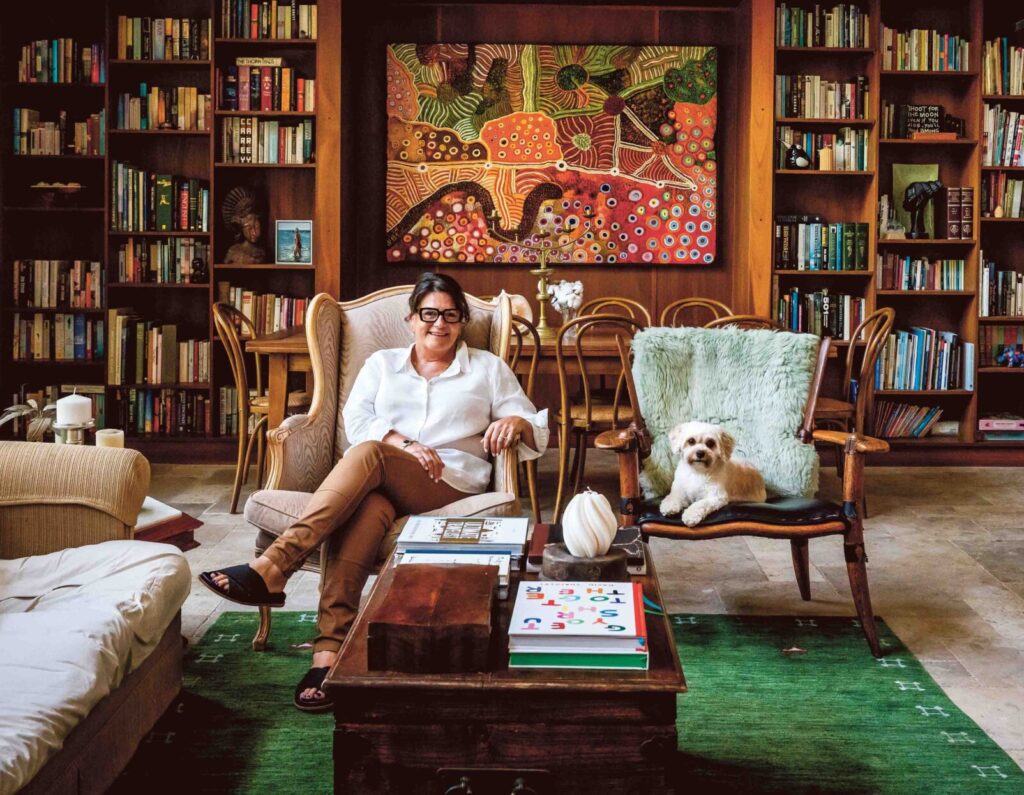
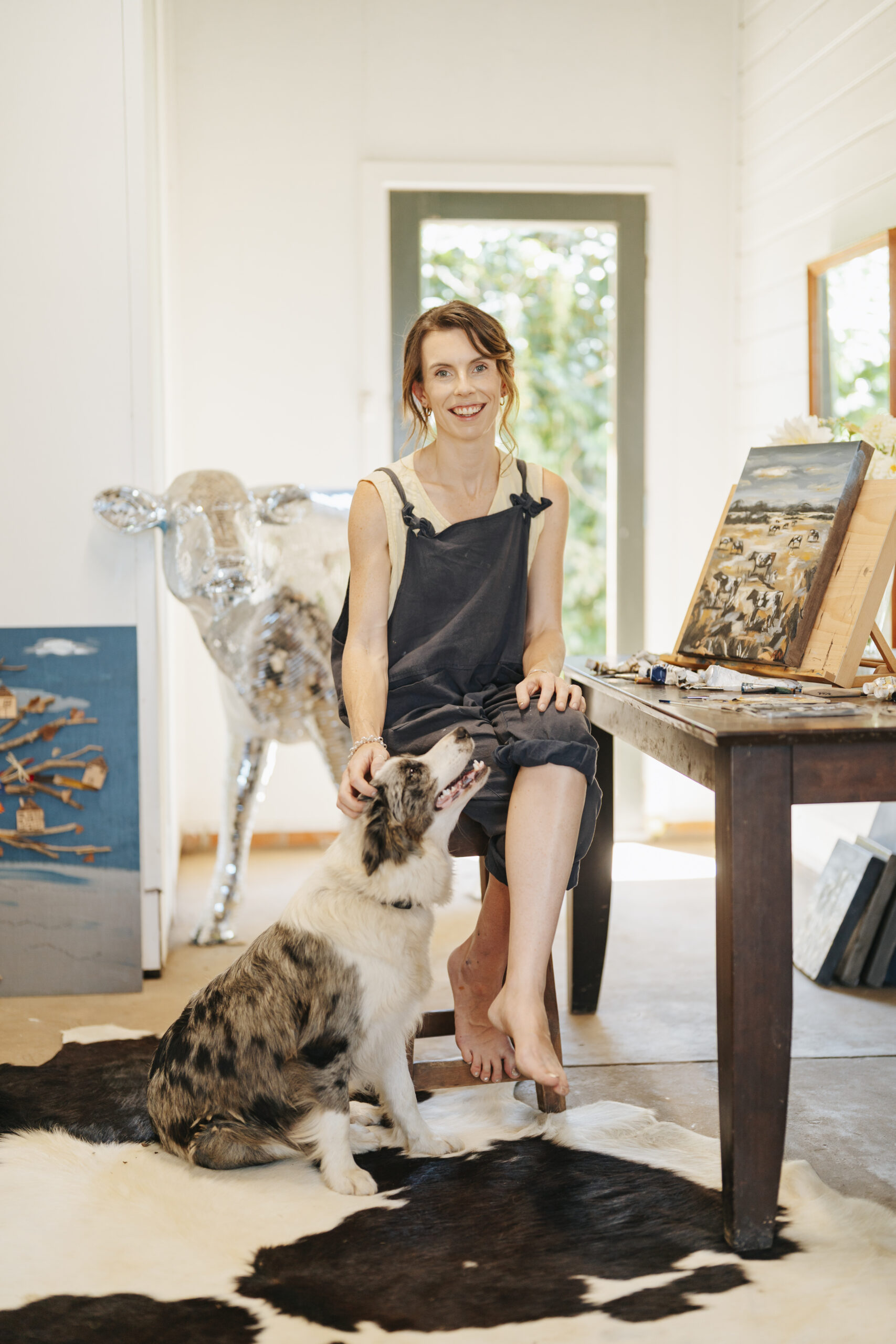
Rachel Nicholson with Stella the border collie in her home studio.
Sign up to our mailing list for the best stories delivered to your inbox.
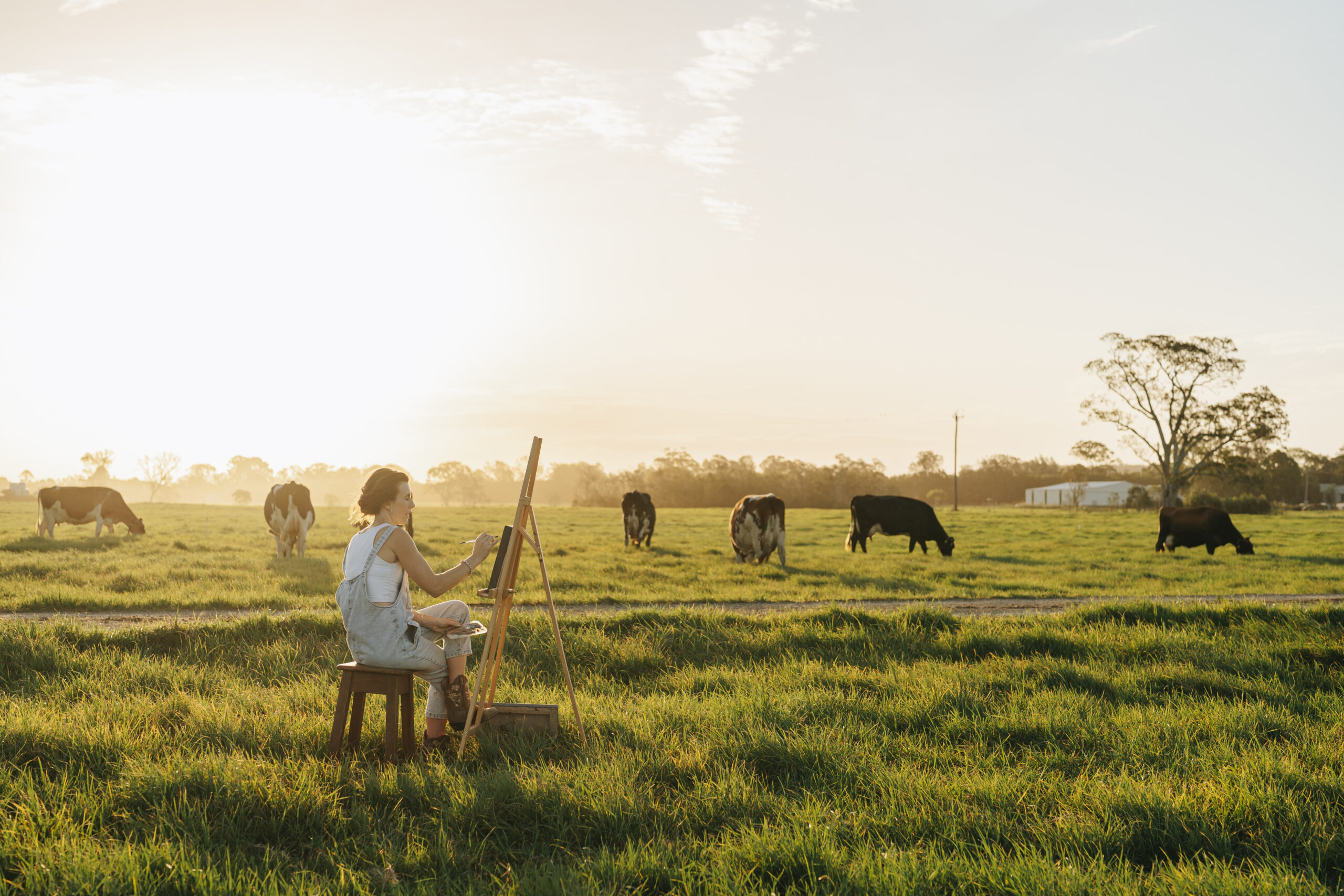
A dairy farmer proves that out of tough times can come beautiful things.
Words and photography Alexandra MacAlpine
PHOTOGRAPHY ALEXANDRA MACALPINE
Rachel Nicholson with Stella the border collie in her home studio.
PHOTOGRAPHY ALEXANDRA MACALPINE
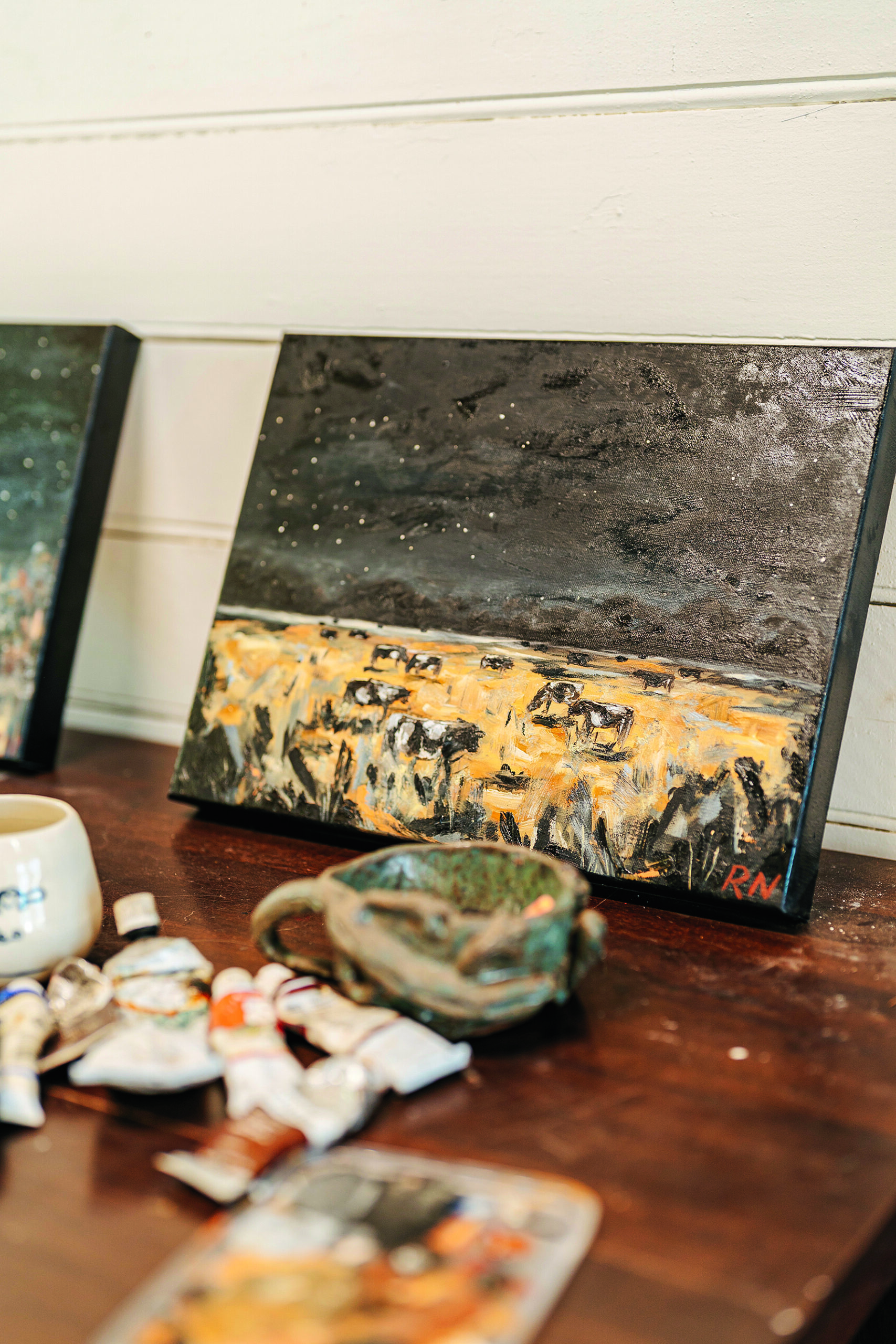
One of Rachel's cow paintings.
IT’S 5.15AM ON A FRIDAY and Rachel Nicholson has just woken up.
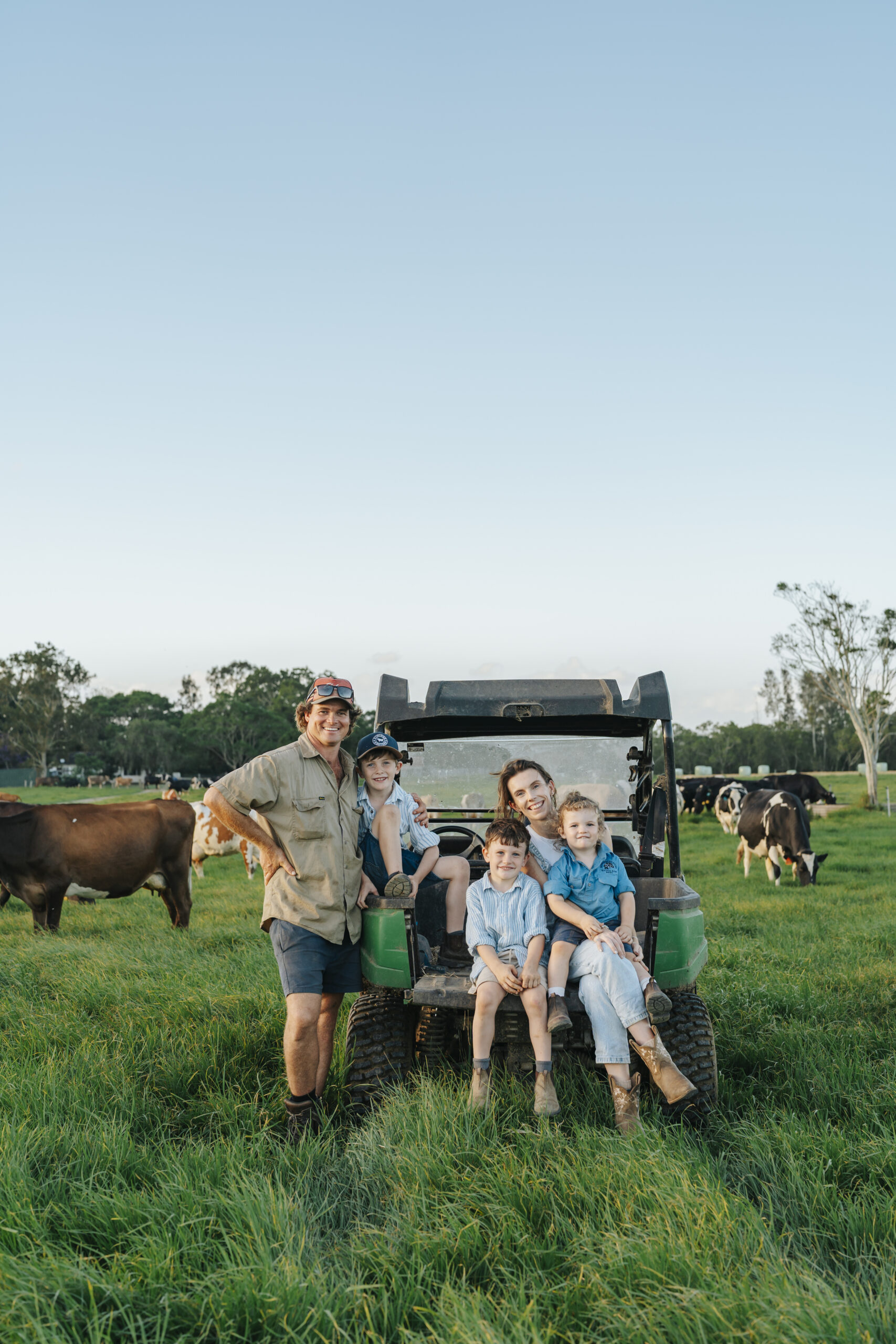
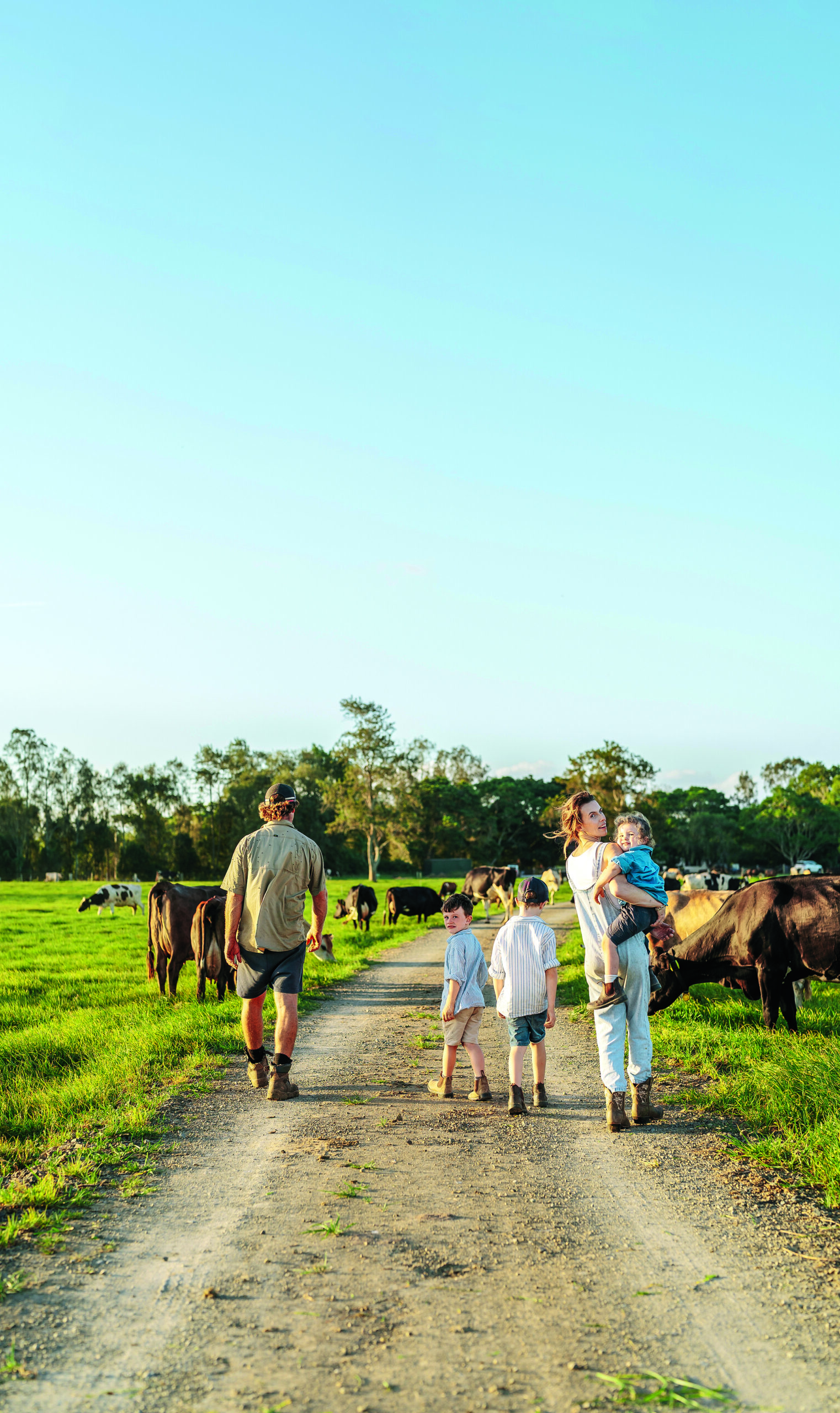
It’s still dark, but her husband, Sam, has already been up for hours milking their 250 dairy cows. Some mornings, Rachel, 31, will join him, but today she’s eager to get to her studio, which adjoins the house, before the couple’s three sons — Albert, seven, Joey, five, and three-year-old Wilbur — wake and the morning rush begins. As she heads out of the kitchen with a cup of tea, she hears the familiar plodding of hoofs and the rumble of a quad bike outside. It’s Sam, bringing their mixed herd of Jerseys, Holsteins, brown Swiss and Ayrshires back along the laneway that lies mere metres from the door of their home.
This is Rachel’s favourite time of day. Tea in hand, she walks outside and watches as, lit by the quad bike headlights, the be loved herd ambles to their paddock under a blanket of stars. For the past decade, Rachel and Sam, 33, have called Boondabah home, where they operate Boondabah Holsteins, aka Nicholson Dairy, alongside Sam’s parents, Megan and Geoff Nicholson, and a team of 10. The 170 hectare farm is on Jones Island, 18 kilometres north of Taree on the Mid North Coast of New South Wales, an area known for its fertile river plains.
“Jones Island is such an interesting island,” Rachel says.“Ghinni Ghinni Creek is on one side and the Manning River, which is the only double delta river system in the southern hemisphere, is on the other.” The area’s high rainfall makes it an ideal location for a dairy, and the Nicholson’s produce two million litres of milk a year for Woolworths in the 16-a-sideherringbone milking shed.
Rachel and Sam’s love for farming life runs deep. You can see it in their smiles, their interactions with their herd, their passion to grow good pasture. They consider their cows part of the family. “Dairy farming isn’t just a job, it’s a life,” Rachel says. “Even on Christmas Day, you’ll find us in the dairy. We love that we get to be surrounded by our cows, have cuddles with them any time of day or night. I’m proud of the work we do to produce and harvest such a pure, nutritionally rich product.”
PHOTOGRAPHY ALEXANDRA MACALPINE
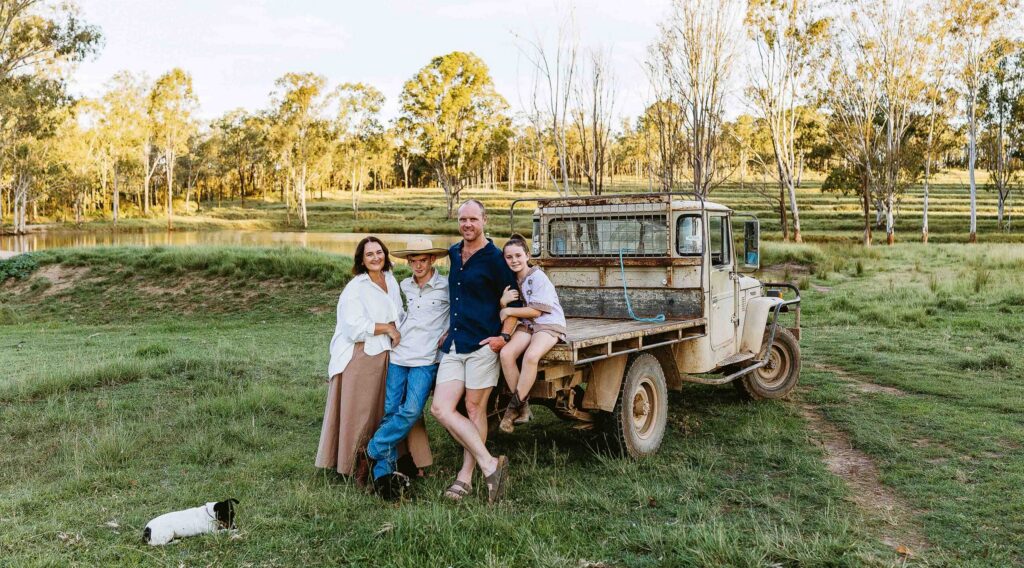
Rachel with her husband, Sam, and their three boys, from left: Albert, Joey and Wilbur.
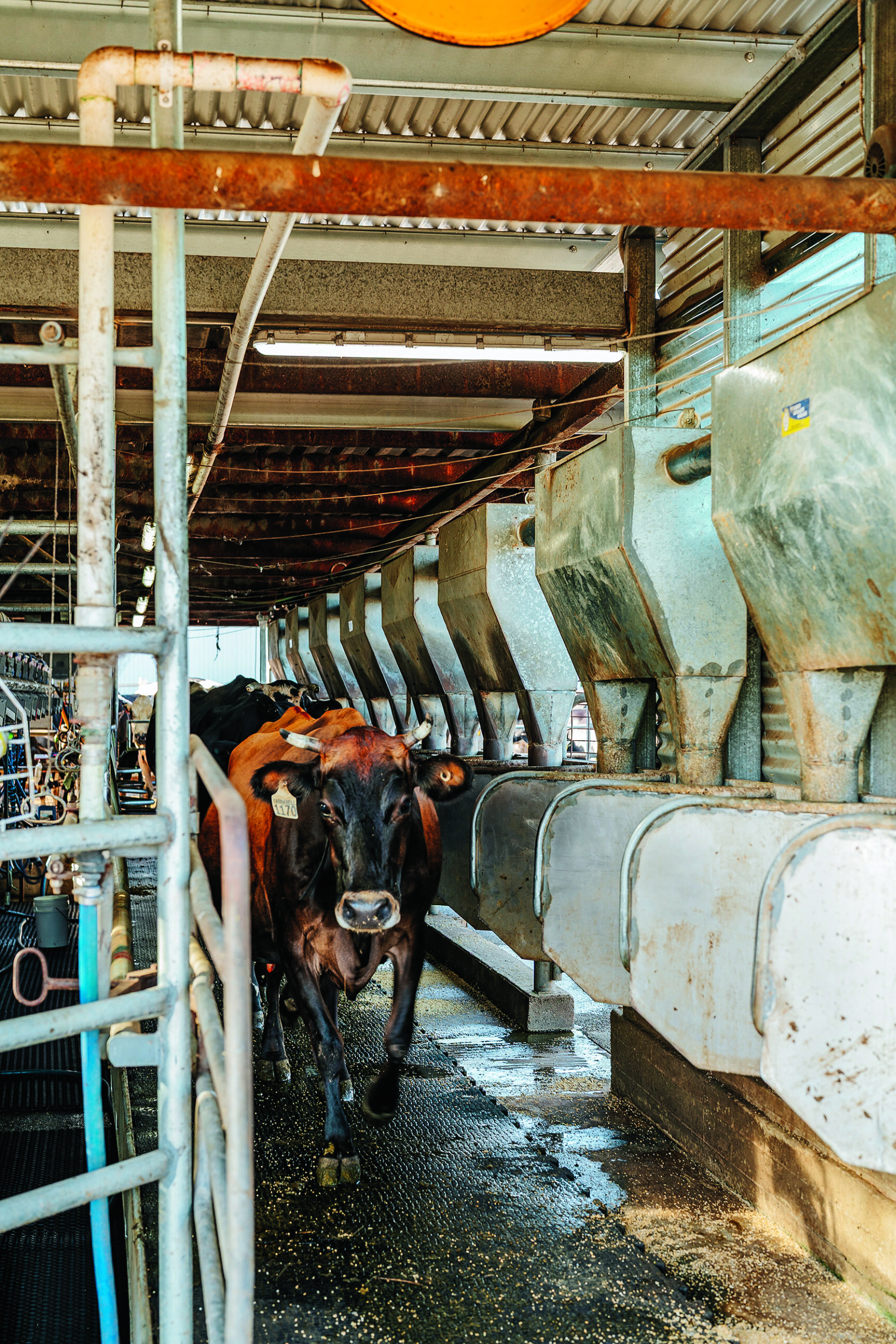
PHOTOGRAPHY ALEXANDRA MACALPINE
In the dairy.
Their cows are also subjects for Rachel’s other preoccupation. Through a variety of media — including oil paint and coffee, ceramics and linoprinting — Rachel, a self-taught artist who practices under the name Ghinni Ghinni Studio, works to cap-ture the unique personalities of the herd, along with the simple joys of the farm. But it wasn’t until 2022, a year after the couple experienced a once-in-a-century flooding event, that she began to explore art. In March 2021, three weather systems crashed together, flooding large parts of the New South Wales coast. Rachel vividly remembers the days leading up to Boondabah’s flooding. “The rain was relentless,” she says. “The first night it flooded, we could hear our cows blaring on constantly. The second night, when it was at its peak, we couldn’t hear them at all, even though they were only 100 metres from the house.”
Boondabah was submerged, with the house spared by millimetres; fencing and dairy infrastructure was damaged and young stock lost. At the first opportunity, Sam hopped into a kayak to herd the cows into the dairy, where he could assess their health and relieve their pain. “We worked hard to turn our pastures and herd health around quickly and made the most of any government disaster funding,” Rachel says. They put in place proactive infrastructure, such as a 250-cow concrete feed pad designed to not only sit above the flood height but also reduce feed waste.
In February 2022, when Lismore was experiencing the biggest flood in modern Australian history, Rachel was glued to the rolling coverage. They too were experiencing flooding of the Manning River and it had been raining persistently for days. Feeling helpless, she started painting to relieve the stress.
PHOTOGRAPHY ALEXANDRA MACALPINE
"Our cows are not just animals, they're our co-workers," says Rachel.
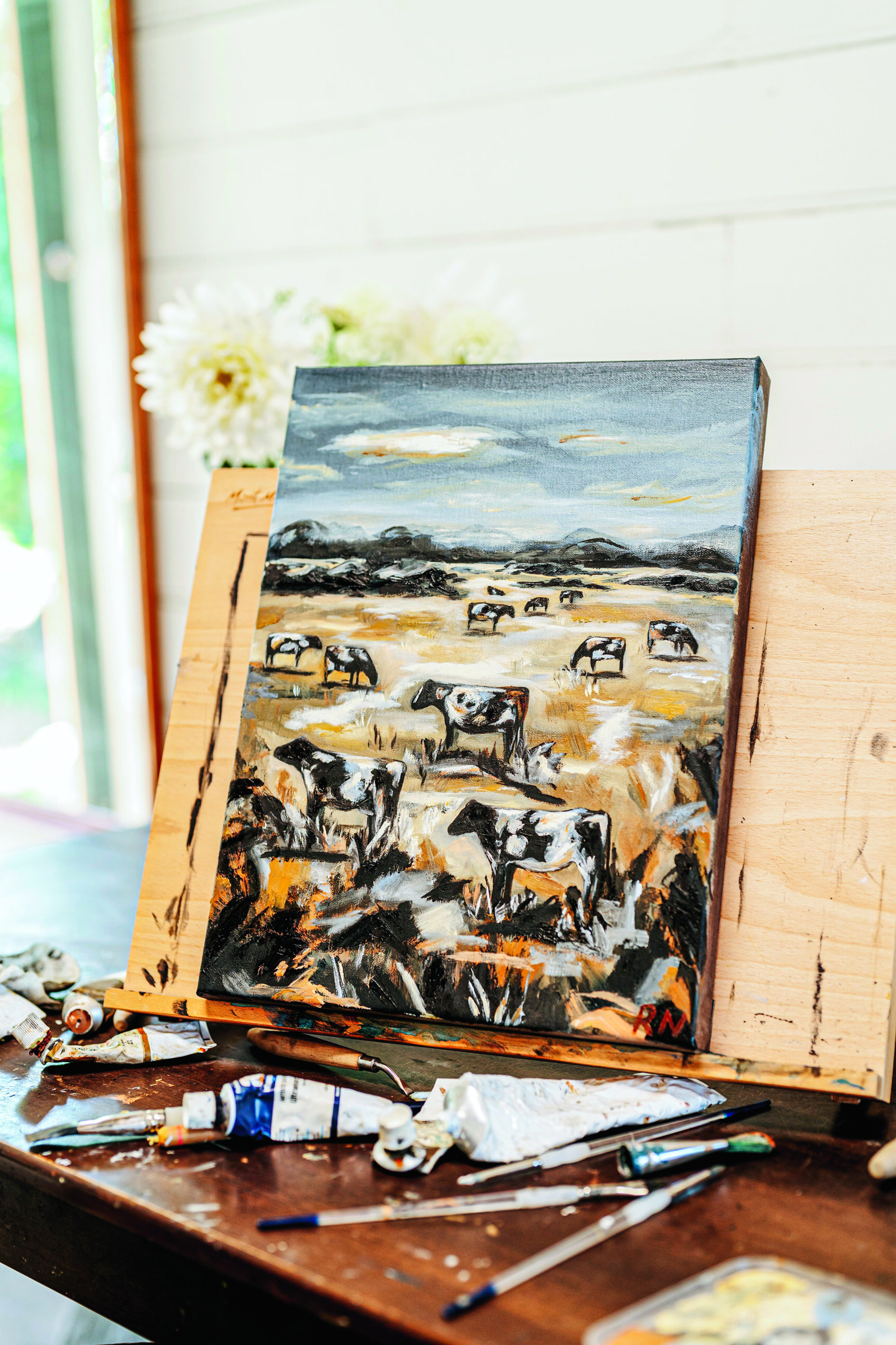
PHOTOGRAPHY ALEXANDRA MACALPINE
Cows are always and forever Rachel's main inspiration for her art.
“Our cows are not just animals, they’re our co-workers,” she says. “I had this image pop into my head of these Jersey cows: one’s holding a bucket, one’s got an umbrella, one’s got a mop. I created a series and titled it We’re Here To Help. It was a moment when I realised how powerful art is in processing our emotions.”
In the ensuing years, the couple felt optimistic about the work they’d done since the 2021 flood. “Our property is one metre above sea level,” Rachel says. “People regularly ask, ‘Why would you live on a floodplain?’ It’s a question I’ve asked myself many times, because when it’s bad, it’s really bad. But when you buy a farm on a floodplain, you expect maybe a minor flood each year. Never, in the 10 years we lived here, or before that, did floodwater go into the house.”
In May 2025, a devastating once-in-500-year flooding event hit the Mid North Coast. The Nicholsons’ property was once again inundated. “We were awake all night watching the radar and the water levels rise,” Rachel says. “Sam made the decision at 2am to take the cows to the dairy before the bridge went underwater. But while he was over there, he was in contact with farmers upstream from us who were saying it was going to be worse than the ’21 floods.”
At 5am, Rachel and Sam evacuated. “It wasn’t even something we’d discussed,” Rachel says. “We had a flood plan for the dairy, but we felt too confident that it wouldn’t reach us in the house. I packed two bags, Albert’s motorbike and my pottery wheel and waved goodbye to the place I felt safest.” Things quickly got hairy. “Sam was wading around in water up to his neck with calves on his shoulders and then trying to rest in a home where the furniture had become floating islands that our dogs lay cautiously upon,” Rachel says. With all roads submerged, Sam phoned his uncle, an oyster farmer, who collected him on his punt. After the floodwater receded, Rachel and Sam again had to deal with a huge clean-up. “That first day we came back, I didn’t want to do anything except cuddle my cows,” Rachel says. The family lived with friends for six weeks. While Sam took care of the dairy, Rachel, with an army of friends, cleaned their home. The damage to the dairy and pastures was so extensive, the entire herd was moved off farm for two months to be milked by eight different dairies. “I’m so grateful for friends, family and our dairy community during what was a really difficult time for us,” says Rachel, holding back tears. “I’d still be stuck in the mud without them all. They came and helped me completely gut and rebuild our home as well as provided food for us.”
A year later, Rachel and Sam have again revisited their flood plan and are installing elevated shipping containers to store belongings in the event of another bad flood. For Rachel, out of this extremely tough time also came some joy. The artisanal cultured butter–maker Pepe Saya commissioned her to paint 13 of the world’s most common milking animals. “The call from Pepe Saya came just after the flood,” she says, smiling. “Their confidence in my work gave me such a huge boost.”
Back in her studio, the morning light dazzling on the mirror-embellished life-size cow standing in the corner, Rachel is finishing a linocut. It’s a new medium she’s been experimenting with recently. One thing that hasn’t changed, though, is her muse: forever the dairy cow. “I hope to use my art as a way of communicating our love, our story and our passion for dairy farming,” she says with conviction. “Despite what the last decade has thrown at us, we’re not going anywhere”.
To see Rachel’s work, visit ghinnighinnistudio.com.
For more rural artists’ stories, go to graziher.com.au
The Shady Baker relishes island life and simple food after floods bring much-needed water to her outback home.
A dairy farmer proves that out of tough times can come beautiful things.
There are many ways to find a meaningful role in the industry, says Beef Australia’s Beth Rands.
Hailing from a small Irish town, Lisa Fryer found love at Daly Waters’ Hi-Way Inn. Today, she and husband John are ushering in a new era for Tabletop Station, near Townsville, Queensland.
She says clever tech makes it possible to go it alone on the 4000 hectare beef-finishing property in central Queensland.

